
Luxury construction cost overruns are rarely caused by one large surprise. They are the sum of small, predictable gaps: documents priced before they were finished, allowances set below the selections the owner intends, site conditions nobody tested, and changes priced after the work was already underway.
Key takeaways
- What counts as an overrun?
On a South Florida luxury build an overrun is any difference between the contract sum and the final amount paid that was not a deliberate owner upgrade. - Why do unfinished documents cost so much?
Unfinished documents cost South Florida owners so much because a price built on incomplete drawings is an estimate wearing a contract's clothing. - Why do allowances turn into overruns?
Allowances turn into overruns on South Florida builds because an allowance is a placeholder, and placeholders are usually set at a level that keeps the contract sum attractive. - Why does the site surprise people?
A South Florida site surprises people because soil, groundwater, existing structures, seawalls, and utility positions are cheap to investigate and expensive to discover.
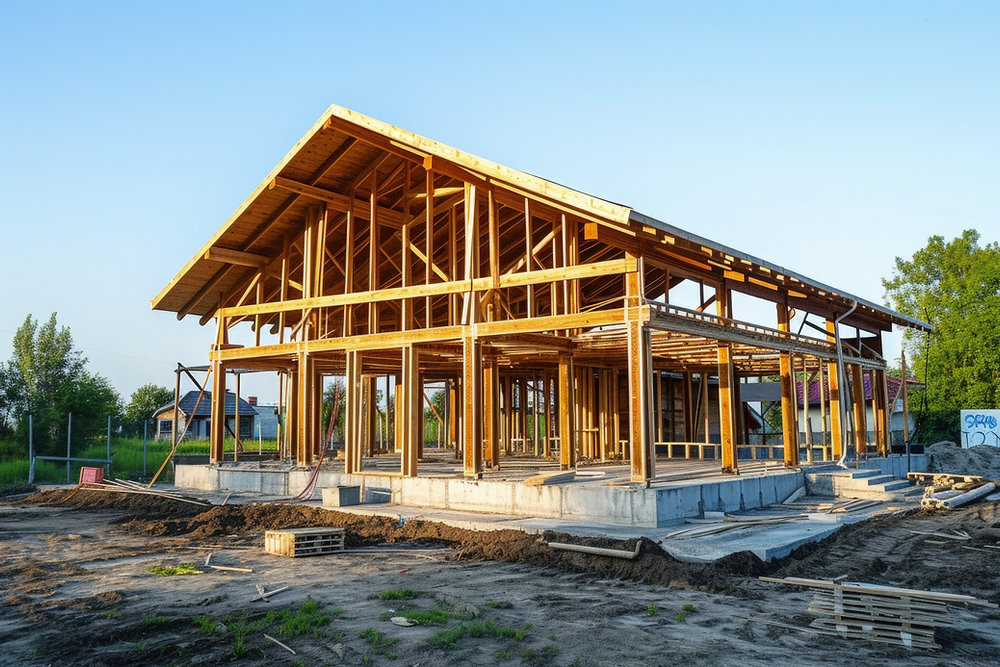
What counts as an overrun?
On a South Florida luxury build an overrun is any difference between the contract sum and the final amount paid that was not a deliberate owner upgrade. Separating the two is the first useful step, because much of what gets called luxury construction cost overruns is actually money the owner chose to spend and never tracked.
The budget structure that separates luxury construction cost overruns from owner choices is described in how to budget a luxury home build in South Florida.
Why do unfinished documents cost so much?
Unfinished documents cost South Florida owners so much because a price built on incomplete drawings is an estimate wearing a contract’s clothing. Every detail resolved after signature becomes a change, and the change is priced without competition. Incomplete documents are the largest single source of luxury construction cost overruns on custom homes.
The sequence that avoids it is set out in pre-construction planning for a luxury custom home.
Why do allowances turn into overruns?
Allowances turn into overruns on South Florida builds because an allowance is a placeholder, and placeholders are usually set at a level that keeps the contract sum attractive. When the actual stone, millwork, glazing, and fittings are selected, the difference is charged. Allowance drift is the most quietly destructive form of luxury construction cost overruns.
Sizing allowances against real selections is covered in payment schedules, contingency, and budgeting for custom estates.
Why does the site surprise people?
A South Florida site surprises people because soil, groundwater, existing structures, seawalls, and utility positions are cheap to investigate and expensive to discover. On South Florida waterfront parcels the ground and the shoreline are the two conditions most likely to move a number after work starts.
Site testing is part of the feasibility work in a feasibility study for luxury home builds, and shoreline structures are covered in seawall construction permitting.
Why do changes cost more than they should?
Changes cost more than they should when the pricing method was not agreed in advance in the Florida contract. A change instructed verbally and priced afterwards has no benchmark, no competition, and no schedule consequence attached to it. Undisciplined change pricing converts ordinary revisions into luxury construction cost overruns.
The controls that stop this becoming luxury construction cost overruns are described in change order abuse in luxury construction.
Why does time become money?
Time becomes money on a South Florida build because general conditions, supervision, insurance, financing, and temporary services are all paid by the month. A build that runs long carries those costs whether or not any additional work is performed, which is why schedule slippage shows up as luxury construction cost overruns rather than as delay.
Realistic durations are set out in a realistic timeline for luxury custom home construction.
Why do approvals move the number?
Approvals in Broward, Palm Beach, or Miami-Dade move the number because a condition attached at review can require engineering, elevation, or specification changes that were never priced. Coastal, flood, and environmental reviews in Broward, Palm Beach, and Miami-Dade attach conditions frequently enough that they should be anticipated rather than absorbed.
Approvals are a frequent source of luxury construction cost overruns, and the review path is mapped in the South Florida luxury home permitting process.
What actually prevents overruns?
What prevents luxury construction cost overruns in South Florida: complete documents before pricing, allowances tested against real selections, site investigation done early, a written change method, a contingency held by the owner, and a monthly forecast to completion. Nothing prevents luxury construction cost overruns as reliably as a forecast that is updated before the money is spent.
Market and material exposure is covered in protecting your build budget from inflation and price spikes, and national construction activity is published by the US Census Bureau.
How does Kass Construction & Development control the number?
Kass Construction & Development controls the number with a forecast rather than a reassurance. Kass Construction & Development is a state-licensed (CGC1529472) boutique luxury builder in East Fort Lauderdale led by Mitch Kass, a licensed general contractor and attorney, with 100+ luxury residences delivered by Mitchell Kass and the firms he has led across Broward, Palm Beach, and Miami-Dade, and the estimating discipline that record produces is what keeps luxury construction cost overruns visible early enough to decide about.
A custom build often runs 18 to 36 months and a high-end renovation often 6 to 12 months. Contact Kass Construction & Development or call 954-607-4335.
| Cause | How it shows up | The control |
|---|---|---|
| Incomplete documents | Details resolved after signature, priced without competition | Finish the drawings before pricing |
| Understated allowances | Selections cost more than the placeholder | Test each allowance against three real selections |
| Untested site conditions | Soil, groundwater, seawall, and utilities | Investigate before the contract sum is fixed |
| Open change pricing | Work instructed first and priced later | Agree markup and basis in the contract |
| Schedule slippage | General conditions paid by the month | A critical path with notice requirements |
| Permit conditions | Engineering or elevation changes attached at review | Anticipate coastal and flood review early |
Where do luxury construction cost overruns actually come from?
Luxury construction cost overruns in South Florida cluster in a handful of categories, and each one has a control that works when it is applied before the contract is signed.
| Source of overrun | Typical share of the total drift | Control that prevents it |
|---|---|---|
| Allowances set below the owner’s real selections | Largest single category | Allowances tied to named reference products, selections made before pricing |
| Incomplete or uncoordinated drawings | Large | Coordinated CD set, clash review, pricing only on finished sheets |
| Owner-directed changes after mobilization | Large and self-inflicted | Design freeze before mobilization, priced change orders with schedule impact |
| Site and subsurface conditions | Moderate, but lumpy | Geotechnical borings, seawall survey, utility locates before design |
| Permit comment cycles and redesign | Moderate | Zoning confirmation first, complete submittal, slowest review opened first |
| Schedule extension and general conditions | Accumulates monthly | Long-lead releases on time, milestone-based draws |
| Material price movement | Variable by year | Early buy-out of steel, glazing and roofing; escalation clause with a cap |
The budgeting method that sizes these categories in advance is in how to budget a luxury home build in South Florida, and the effect of inflation is covered in protecting your build budget from inflation and material price spikes.
What should a contingency cover, and how large should it be?
A contingency is not a slush fund for luxury construction cost overruns; it is a set of named reserves, each with an owner and a release rule.
- Design contingency, held during design and released as the drawings are completed, covering the gap between concept pricing and bid pricing.
- Construction contingency, held by the owner and released only against documented unforeseen conditions, not against owner upgrades.
- Owner upgrade reserve, kept separate so that a better stone or a larger dock does not consume the reserve meant for a hidden seawall failure.
- Site reserve on waterfront parcels, sized to the seawall, dock and submerged-land work that surveys cannot fully predict.
- Escalation reserve, tied to an index and to the dates on which major packages are bought out.
How the reserves are drawn and reported alongside milestone payments is described in payment schedules, contingency and budgeting for custom estates.
Which South Florida conditions push a luxury budget past the estimate?
Luxury construction cost overruns in Broward, Palm Beach and Miami-Dade have regional causes that an inland estimate never includes.
- Wind design pressures in the high-velocity hurricane zone, which change window, door, roofing and connector costs under the Florida Building Code.
- Design flood elevation and local freeboard, which can add fill, stem walls, or a raised structural slab; check the FEMA Flood Map Service Center before design.
- The FEMA substantial improvement rule on renovations, which can convert a remodel into a full elevation project once the work exceeds 50 percent of the structure’s market value; see FEMA on substantial improvement and our guide to teardown vs renovation.
- Pile foundations on canal-front and reclaimed land, where soils reports decide the structural approach.
- Corrosion-resistant specification for fasteners, railings, mechanical equipment and glazing, covered in coastal corrosion-resistant materials.
- Permit review time across several agencies, the subject of permit delays on South Florida luxury homes.
How is the number controlled month by month once construction starts?
Preventing luxury construction cost overruns during the build is a reporting discipline, and the report has a fixed format.
- A cost report that shows original budget, approved changes, pending changes, committed cost, cost to complete and forecast at completion for every line in the schedule of values.
- A change log with every proposed change priced and dated before the work starts, which is the defense against change order abuse.
- A procurement log showing long-lead items ordered, confirmed and delivered against the schedule.
- A contingency ledger with every draw on each reserve and the reason for it.
- Independent verification by an owner’s representative, whose value is set out in what an owner’s representative does.
The pricing model chosen at the outset shapes how much of this reporting the owner sees; the trade-offs are in GMP vs cost plus vs fixed price contracts.
Frequently Asked Questions
What causes cost overruns on luxury homes?
Incomplete documents at pricing, understated allowances, untested site conditions, undisciplined change pricing, schedule slippage, and conditions attached during permit review.
How much contingency should an owner hold?
Enough to absorb unknowns without touching the upgrade budget, held by the owner rather than the builder, and reported monthly so the remaining balance is always visible.
Is an allowance overage really an overrun?
Only partly. If the allowance was set below any realistic selection it was an underpricing. If the owner chose an upgrade, it is a decision that should be recorded as one.
Can a fixed price contract prevent overruns?
It fixes the price of the described scope only. If the drawings are incomplete, a fixed price simply moves the argument to what was included.
When do overruns usually appear?
At selections, at concealed conditions, and at closeout. The first two are avoidable with earlier information, the third with a properly managed punch process.
Does a longer schedule always cost more?
Time-related costs continue whether or not work progresses, so extended duration usually carries cost even when no additional scope is added.
What is the single best control?
A monthly forecast to completion, line by line, issued in writing. It converts a surprise into a decision while there is still time to make one.