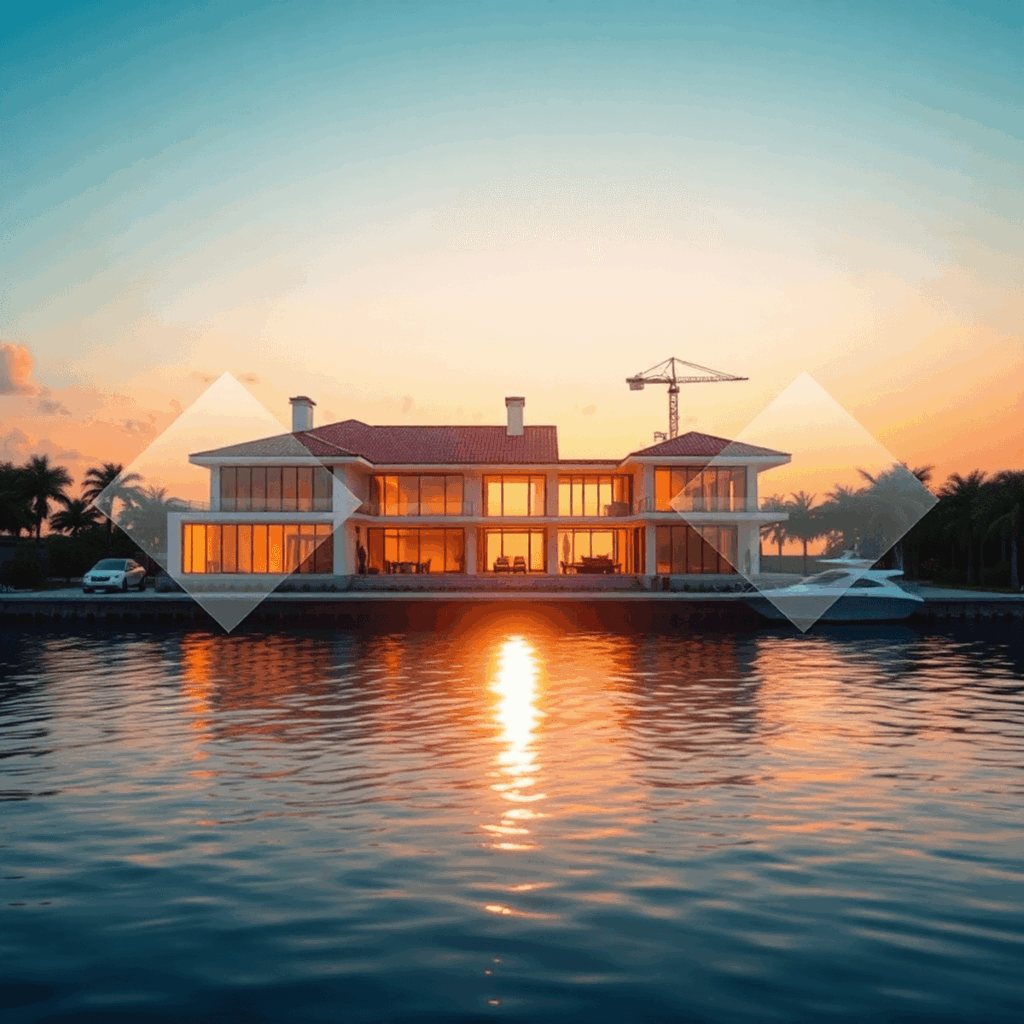
Luxury construction in South Florida is not “hard” simply because the homes are bigger. It becomes challenging due to tighter tolerances, higher expectations, and a rapidly multiplying number of stakeholders.
Whether it’s an architect-driven custom home, a waterfront estate renovation, or a high-end remodel involving luxury home renovations, the project typically includes an architect, interior designer, structural engineer, MEP engineers, specialty trades, millwork and stone vendors, an HOA or condo association, and multiple city or county departments. One missed detail can ripple into permitting, procurement, schedule, and finish quality.
That is where an Owner’s Rep steps in.
An Owner’s Rep (owner’s representation) acts as the owner’s advocate on the business and execution side of the project. They coordinate scope, budget, schedule, quality, and risk. Importantly, an Owner’s Rep does not replace the architect or the general contractor. Instead, they ensure the project stays aligned and that problems are handled early, documented clearly, and resolved with minimal disruption.
In Broward, Palm Beach, and Miami-Dade, issues tend to escalate for a few predictable reasons: complex permitting processes, coastal conditions affecting construction methods, hurricane and flood requirements adding to the complexity, long lead-time finishes causing delays, and a level of fit and finish that leaves little room for improvisation.
This article is built as real-world case studies showcasing these challenges. For each case study presented you will see what went wrong during the project execution phase. You will also see what role the Owner’s Rep played in resolving these issues and achieving measurable outcomes in terms of project success.
Why luxury builds in South Florida break down (and where an Owner’s Rep steps in)
Most “major problems” in luxury construction are not surprises. They are predictable risks that were not managed early enough.
Common breakdown points include:
- Architect-driven complexity: custom details, specialty materials, and design intent that requires disciplined execution.
- More stakeholders: every additional consultant, trade, and vendor adds handoffs, approvals, and opportunities for conflict.
- Coastal realities: salt air, high water tables, corrosion risk, and waterproofing details that must be perfect.
- Code and permitting pressure: hurricane impact requirements, flood elevation constraints, and jurisdiction-specific review cycles.
- Long-lead dependencies: windows and doors, generators, elevators, imported stone, custom cabinetry, lighting packages.
- Luxury tolerances: tight reveals, clean seams, and “it should feel perfect” expectations that can expose weak workmanship fast.
An Owner’s Rep adds control without adding noise. They create a clear system for decisions, budgets, documentation, and issue resolution so the owner is not forced into emergency calls from the field.
What an Owner’s Rep actually does on a high-end project
On a luxury project, the highest value work is usually not “more meetings.” It is governance, documentation, and disciplined follow-through.
Owner-aligned governance
- Sets communication protocols (who decides what, and by when).
- Establishes meeting cadence, agendas, and decision logs.
- Tracks open items so approvals do not stall procurement or inspections.
To better manage these predictable risks in luxury construction projects in South Florida or anywhere else for that matter, resources such as those provided by Kass Construction can be invaluable.
Budget control
- Creates cost forecasts and cost-to-complete tracking.
- Levels bids and validates scope coverage.
- Reviews and challenges change orders with documentation, not emotion.
- Tracks allowances and contingency strategy so “upgrades” do not quietly become a second budget.
Quality control
- Coordinates submittals and shop drawings across architect, engineer, and trades.
- Pushes mockups for high-visibility details (stone seams, baseboards, plaster levels, waterproofing transitions).
- Runs punch strategy early so the end does not become a quality crisis.
Risk mitigation
- Maintains documentation discipline (site reports, photo logs, decision records).
- Supports contract administration and dispute avoidance.
- Keeps insurance and indemnity awareness in view when scope shifts or unknowns appear.
Where Kass Construction & Development fits in naturally: Kass Construction & Development is a boutique, precision-focused luxury builder based in East Fort Lauderdale. The firm serves the Broward, Palm Beach, and Miami-Dade areas with licensed general contractors plus real estate attorneys and professionals under one roof. This unique structure allows the firm to support owners representation with transparent execution, tighter risk control, and cleaner decision-making across complex luxury projects. Their expertise also extends to understanding South Florida luxury real estate trends and investment strategies, providing clients with valuable insights.
Case Study #1: Waterfront estate, hidden structural conflict discovered after demolition
Scenario
A high-end renovation on a waterfront home begins smoothly until demolition exposes an unexpected structural condition: a beam and column configuration that does not match the drawings, with signs of prior unpermitted modifications.
Core issue
This kind of discovery threatens everything at once:
- Design intent (open spans, sightlines, ceiling heights)
- Timeline (engineering redesign, inspections, trade stoppages)
- Budget (structural remediation is rarely cheap)
- Risk of stop-work or failed inspections if handled informally
What the Owner’s Rep did
- Immediate containment: paused affected work areas and documented conditions with photos, dimensions, and field notes.
- Design and engineering coordination: pushed a rapid structural assessment and a clean revision package.
- Permitting and inspection strategy: coordinated revised drawings and communicated proactively with the building department and inspectors to prevent “surprise” inspection failures.
- Cost and schedule controls: created a mini-GMP approach for remediation, using capped time-and-materials where necessary, validating labor and material pricing.
- Resequenced trades: kept progress moving by shifting crews to non-impacted scopes such as MEP rough-ins in unaffected zones, waterproofing prep, and window/door coordination.
Outcome
- Avoided extended downtime by resequencing and rapid redesign.
- Preserved critical architectural elements by solving structure correctly, not by “value engineering” away the design.
- Reduced change-order exposure through clear scope definitions, documented pricing, and inspection-aligned revisions.
Case Study #2: Custom home, major permitting delays and plan review comments across jurisdictions
Scenario
An architect-driven custom home triggers multiple rounds of jurisdiction comments, including zoning, flood, fire, stormwater, and building plan review. Each resubmittal risks new “conflicting information” rejections when drawings are not perfectly consistent across disciplines. Navigating through these permitting processes requires meticulous attention to detail and effective communication across all involved parties.
Core issue
Permitting delays create expensive secondary damage:
- Financing and hold costs rise.
- Start dates slide, and trade availability tightens.
- Long-lead orders become a gamble without approvals.
- Redesign spirals begin when comments are misread or handled in isolation.
What the Owner’s Rep did (expedite without shortcuts)
- Pre-application coordination: set early conversations to clarify local requirements and reviewer expectations.
- Single-source resubmittal control: assembled complete, consistent resubmittal packages so comments were answered once, correctly, across all sheets.
- Conflict elimination: ensured architectural, structural, MEP, and site plans aligned to avoid “sheet-to-sheet mismatch” rejections.
- Procurement protection: released long-lead items with smart contingencies, tying deposits to milestone approvals and confirmed dimensions, especially for windows/doors, generators, elevators, and stone.
Outcome
- Compressed review cycles by reducing the number of resubmittals and preventing avoidable rejections.
- Protected the construction start window.
- Delivered more predictable timelines and fewer surprise fees tied to rushed plan changes.

Case Study #3: High-end finishes, supplier failure and long-lead materials threatening delivery
Scenario
A luxury project relies on imported stone and custom cabinetry. A vendor misses production dates and ships material with the wrong specs. The delay threatens to cascade into tile installation, millwork, paint schedule, final trim, and substantial completion.
Core issue
In luxury projects, one late material can stall four or five trades behind it. And when substitutions happen late, quality suffers and rework skyrockets.
What the Owner’s Rep did
- Contingency planning early: maintained a long-lead log and forced confirmation of shop drawings, finish samples, and production slots before the schedule depended on them.
- Alternative sourcing that protects design intent: identified alternates that matched veining, finish level, and edge profiles, not just “similar color.”
- Partial shipment negotiation: secured partial releases so installation could begin in priority areas while corrections continued.
- Resequenced installations: shifted work to keep crews productive (prep, backing, blocking, paint stages, non-dependent trims).
- Commercial leverage and professionalism: enforced contract terms, managed deposits carefully, coordinated claims or credits where appropriate, and kept owner relationships with vendors intact.
Outcome
- Recovered meaningful schedule time through resequencing and partial shipments.
- Preserved finish quality by controlling substitutions and approvals.
- Reduced rework and freight surprises by tightening chain-of-custody and receiving inspections.
Case Study #4: Budget blow-up, change orders from incomplete drawings and scope gaps
Scenario
A luxury custom home or remodel moves forward with drawings that are not fully coordinated. Allowance items like kitchen, AV, landscape, and pool expand midstream. Change orders stack up quickly, and the owner starts to lose trust.
Core issue
This is where projects stall. The owner feels ambushed, the builder feels blamed, and the architect feels pressured. The result is often reactive value engineering that damages the design.
To mitigate such issues in the future, it’s essential to focus on pre-construction budgeting. Understanding the key elements of pre-construction budgeting can help ensure that all aspects of the project are properly coordinated from the outset.
What the Owner’s Rep did
- Change management system: enforced a clean workflow: change request, pricing, scope clarification, written approval.
- “Not-to-exceed” directives for unknowns: used capped authorizations for exploratory work so unknown conditions did not turn into open-ended billing.
- Monthly cost-to-complete forecasting: created consistent visibility into where the project would land, not just what had been spent.
- Value protection: proposed alternatives that preserved intent, such as performance upgrades that reduced long-term costs, smarter hidden-structure solutions, and finish substitutions that maintained the luxury feel without cheapening the home.
Outcome
- Restored cost certainty and reduced emotional decision-making.
- Reduced disputes by keeping approvals and scope in writing.
- Helped the owner make informed trade-offs instead of last-minute cuts.
Case Study #5: Quality disputes, precision tolerances, punch list overload, and rework battles
Scenario
Near the end of the project, “luxury” becomes a game of millimeters. Stone seams need to align. Baseboards must sit flush. Waterproofing details must be clean. Trades begin arguing about responsibility, and rework delays move-in.
Core issue
When punch is unmanaged, you get:
- Delayed completion and deteriorating relationships.
- Increased warranty risk when fixes are rushed.
- A home that technically passes inspection but does not feel finished.
What the Owner’s Rep did (evidence-based resolution)
- Photo logs and site reports: documented deficiencies with dates, locations, and responsible trade assignments.
- Submittal and spec comparisons: resolved arguments by referencing approved shop drawings and manufacturer requirements.
- Fast responsibility assignment: prevented “everyone vs. everyone” blame loops by making decisions quickly and fairly.
- Closeout discipline: drove commissioning checklists (HVAC, generator, smart home), as-builts, lien waivers, warranty binders, and owner maintenance training.
Outcome
- Faster closeout with fewer open loops.
- Fewer warranty calls because systems were commissioned and documented.
- A consistently “luxury” result because details were resolved to a standard, not negotiated down in the final week.

Patterns across every win: the Owner’s Rep playbook that prevents repeat issues
Across these scenarios, the pattern is simple: problems are normal. Unmanaged problems are expensive.
The Owner’s Rep playbook tends to look like this:
1. Start with alignment
- Define success metrics: budget range, timeline, must-have finishes, and risk tolerance.
- Decide what “non-negotiable” means before the first trade mobilizes.
2. Run the project like a system
- Clear meeting cadence and decision deadlines.
- RFI and submittal service levels so items do not sit idle.
- Document control so the field is always building from the current set.
3. Protect the critical path
- Long-lead log with approvals, lead times, and delivery plans.
- Storage and delivery coordination so materials are secure and undamaged.
4. Make issues measurable
- Dashboards for schedule, budget, selections, and open items.
- No hidden risks waiting until they become five-figure emergencies.
5. Keep transparency high
- Plain-English updates to owners.
- No surprises, only options with costs, timelines, and trade-offs.
How Kass Construction & Development supports owners through complex luxury projects
Kass Construction & Development operates as a boutique luxury builder in East Fort Lauderdale serving Broward, Palm Beach, and Miami-Dade. They focus on architect-driven custom homes, waterfront estates, and high-end renovations.
Where their Owner’s Rep support is especially useful:
- Preconstruction planning: This phase involves realistic budgeting, scope alignment, and early risk identification. Their expertise in preconstruction planning ensures a smoother project execution.
- Permitting and project management: Structured resubmittals, reviewer coordination, and schedule protection are key here. Their knowledge in construction permitting and project management, particularly in South Florida, is invaluable during this phase.
- Architecture and design partnerships: They maintain design intent while ensuring buildability. Their experience in luxury home architecture design in South Florida plays a crucial role here.
- Oversight through closeout: This includes punch control, commissioning, documentation, and clean turnover.
The integrated advantage is practical: licensed general contracting experience paired with real estate and legal professionals under one roof. This unique combination helps owners make clearer decisions, reduce exposure, and maintain leverage when projects get complex.
If you are building a custom luxury home, renovating a waterfront property, or managing a high-end remodel with many stakeholders, it is worth evaluating whether Owner’s Rep support matches the complexity of your project and the level of control you want.
Takeaway: luxury construction problems are normal, unmanaged problems are expensive
Every case study above points to the same value: faster resolution, fewer disputes, protected design intent, controlled costs, and a cleaner closeout.
An Owner’s Rep does not add bureaucracy. They add clarity, leverage, and accountability.
And the earlier the Owner’s Rep is involved—especially during preconstruction and permitting phases where their role is crucial in providing clarity and structure to the process—the fewer “emergency” decisions happen later in the field when the options are worse and the costs are higher.
FAQs (Frequently Asked Questions)
Why is luxury construction in South Florida more challenging than building bigger homes elsewhere?
Luxury construction in South Florida is challenging not just because of larger home sizes, but due to tighter tolerances, higher expectations, and a rapidly increasing number of stakeholders such as architects, interior designers, engineers, specialty trades, and local authorities. Coastal conditions, complex permitting processes, hurricane and flood requirements also add layers of complexity.
What role does an Owner’s Representative (Owner’s Rep) play in luxury home construction projects?
An Owner’s Rep acts as the owner’s advocate on the business and execution side of the project. They coordinate scope, budget, schedule, quality, and risk without replacing the architect or general contractor. Their role is to keep the project aligned, handle problems early with clear documentation, and minimize disruptions to ensure successful project delivery.
What are common reasons luxury builds in South Florida face breakdowns during construction?
Common breakdown points include architect-driven complexity with custom details and specialty materials; multiple stakeholders causing handoffs and conflicts; coastal realities like salt air and high water tables; strict code and permitting pressures including hurricane impact requirements; long-lead dependencies such as custom cabinetry and imported stone; and luxury tolerances demanding perfect finishes that expose workmanship weaknesses.
How does an Owner’s Rep help control budget on a high-end luxury construction project?
An Owner’s Rep creates cost forecasts and tracks cost-to-complete progress, levels bids while validating scope coverage, reviews and challenges change orders based on documentation rather than emotion, and manages allowances plus contingency strategies to prevent unplanned upgrades from inflating the budget.
In what ways does an Owner’s Rep ensure quality control during luxury home renovations or custom builds?
They coordinate submittals and shop drawings among architects, engineers, and trades; push for mockups on high-visibility details like stone seams or waterproofing transitions; and implement early punch strategies to address issues before they escalate into major quality crises at project completion.
Why choose Kass Construction & Development for luxury construction projects in South Florida?
Kass Construction & Development is a boutique luxury builder based in East Fort Lauderdale serving Broward, Palm Beach, and Miami-Dade areas. With licensed general contractors alongside real estate attorneys under one roof, they offer transparent execution, tighter risk control, cleaner decision-making, and comprehensive support including owner representation tailored for complex South Florida luxury real estate projects.