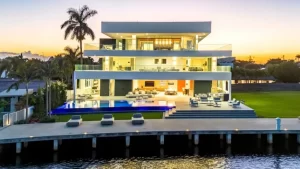
Wealth migration into South Florida stopped being a story about weather some time ago. What moved first were firms and families with the flexibility to choose a jurisdiction, and what followed was a construction market reshaped around what those buyers want: larger programs, deeper technical requirements, longer approval tracks, and a scarcity of the one thing money cannot manufacture, which is buildable waterfront land.
Key takeaways
- What is driving wealth migration to South Florida?
Four structural forces rather than any single event: Florida's absence of a state personal income tax, the arrival of financial and professional firms establishing real offices, the normalization of location-independent work at the executive level, and international capital seeking a stable jurisdiction. - How has it changed what gets built?
Wealth migration changed what gets built in South Florida: programs grew and specialized. - Why has land become the binding constraint?
Because South Florida's waterfront is finite and largely built out. - What does this mean for build cost and schedule?
For South Florida build cost and schedule it means pressure on both, concentrated in specialist trades and long-lead materials rather than across the board.
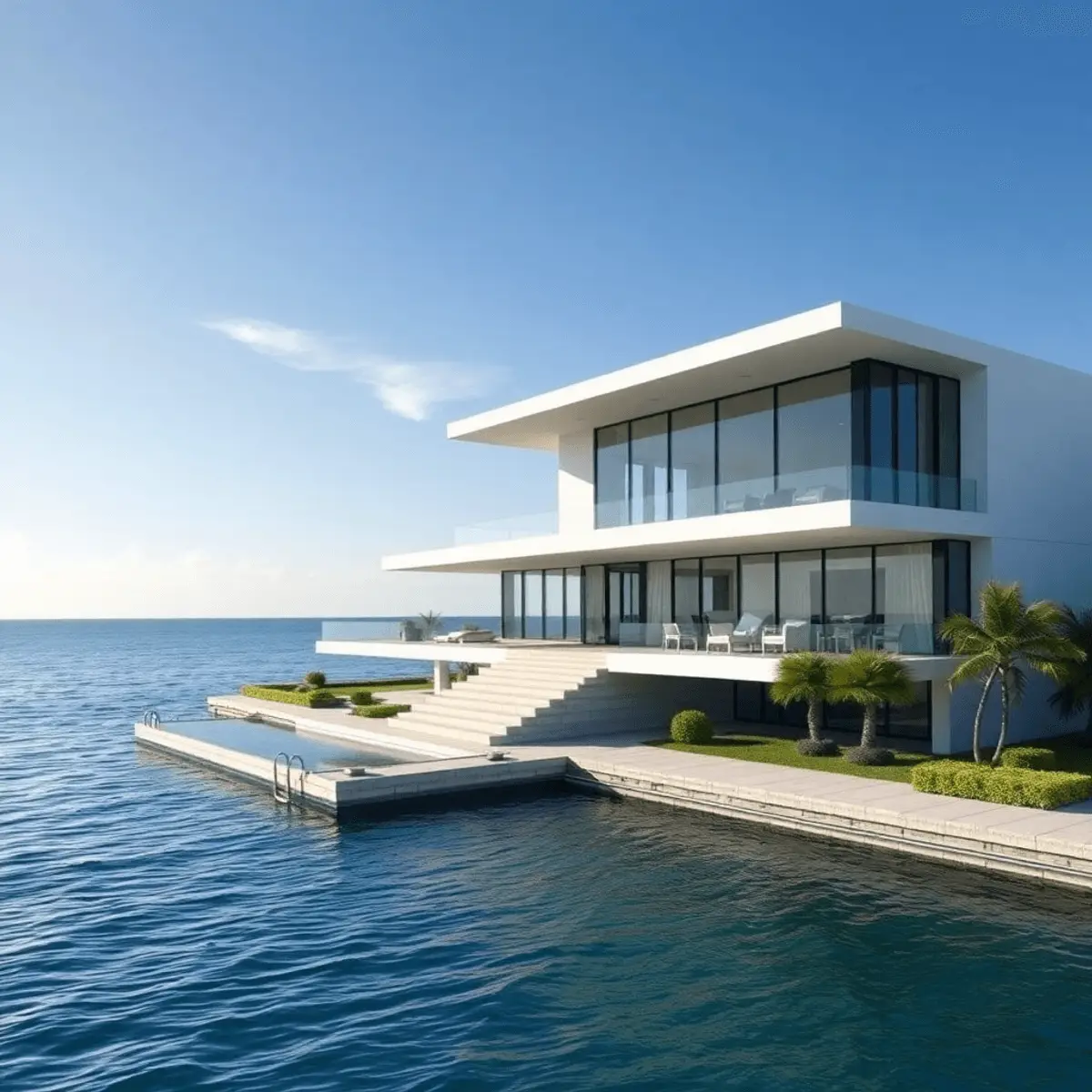
What is driving wealth migration to South Florida?
Four structural forces rather than any single event: Florida’s absence of a state personal income tax, the arrival of financial and professional firms establishing real offices, the normalization of location-independent work at the executive level, and international capital seeking a stable jurisdiction. Wealth migration here is durable because the drivers are structural, not seasonal.
Florida’s tax framework is published by the Florida Department of Revenue.
How has it changed what gets built?
Wealth migration changed what gets built in South Florida: programs grew and specialized. Home offices became genuine working suites with acoustic isolation and redundant connectivity; wellness space displaced formal dining; guest accommodation grew to host extended family for weeks; and back-of-house infrastructure, generation, water treatment, and storage, moved from optional to expected. Wealth migration imported a different brief, not just a bigger one.
Those program shifts are covered in modern coastal architecture trends.
Why has land become the binding constraint?
Because South Florida’s waterfront is finite and largely built out. Wealth migration added demand to a fixed supply of deep-water and oceanfront parcels, which is why so much high-end activity is now teardown and rebuild rather than new-lot development, and why the condition of an existing seawall can decide whether a parcel is worth pursuing.
The shoreline economics are in seawall construction costs and ROI.
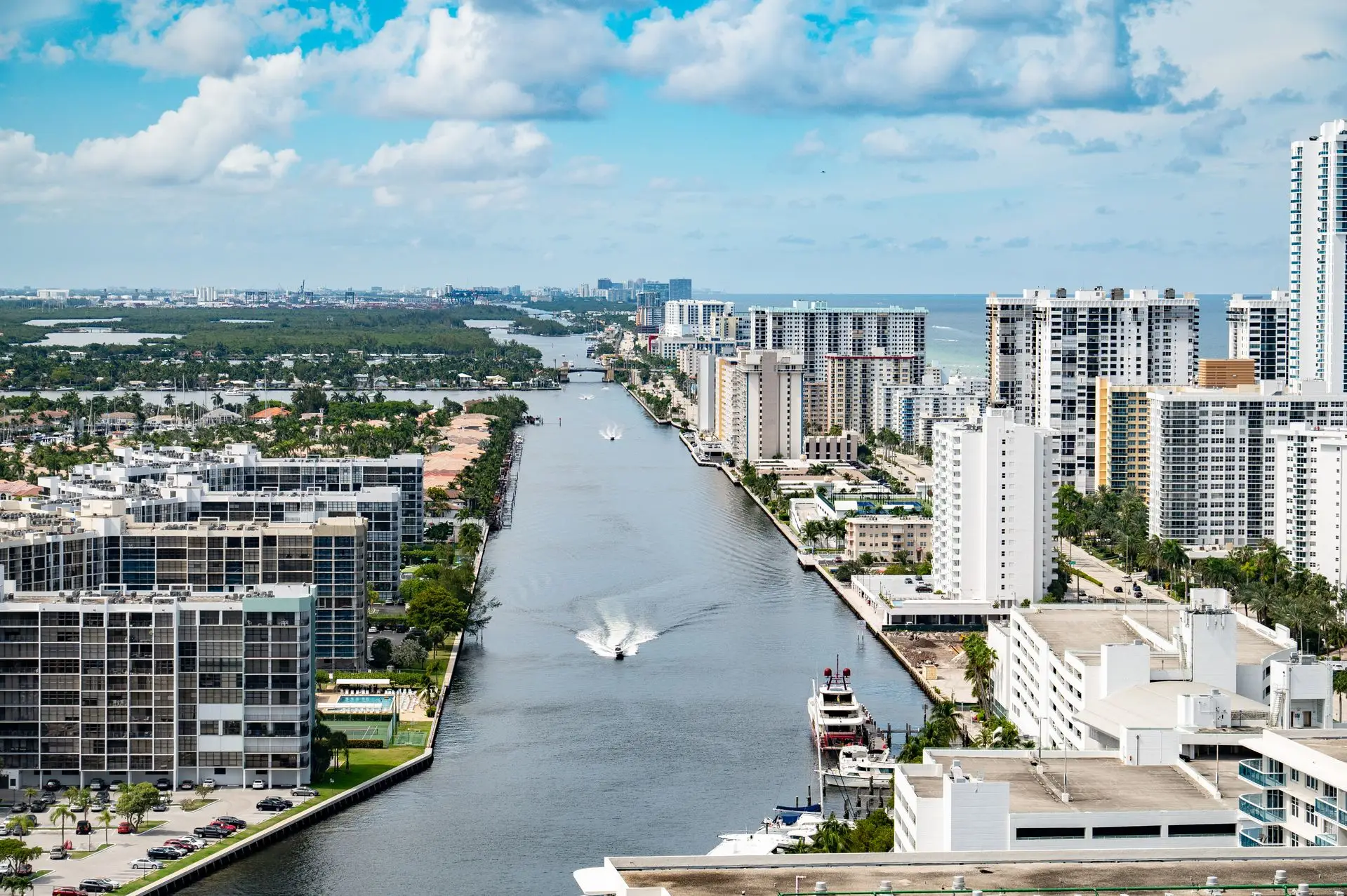
What does this mean for build cost and schedule?
For South Florida build cost and schedule it means pressure on both, concentrated in specialist trades and long-lead materials rather than across the board. A custom build often runs 18 to 36 months and a high-end renovation often 6 to 12 months, and the schedule risk sits in approvals and procurement. Wealth migration did not change how houses are built; it changed how many people want the same specialists at once.
Cost structure is detailed in the luxury construction cost breakdown.
How has resilience moved up the brief?
Resilience has moved up the brief from a code requirement to a purchase criterion. Buyers arriving through wealth migration ask about elevation, seawall condition, impact protection, backup power, and insurability early in the conversation, often before finishes. That is a genuine change in this market, and it favors homes designed with margin rather than to the minimum.
The technical answers are in hurricane-resistant construction and hurricane resilience design.
| Element | Previously | Now expected |
|---|---|---|
| Home office | A room with a desk | Acoustically isolated suite with redundant connectivity |
| Wellness | Optional gym | Dedicated wellness and recovery space |
| Guest space | Spare bedroom | Accommodation for extended family stays |
| Infrastructure | Standard service | Generation, water treatment, and storage |
| Resilience | Code minimum | Elevation and protection above minimum |
What does international capital add?
International capital adds a layer of structure around otherwise ordinary South Florida projects: entity ownership, cross-border funding, tax planning, and remote management. Wealth migration from abroad brings buyers who need the construction contract to fit a holding structure decided months earlier, and builders who have never worked that way discover it at contract signing.
The international process is mapped in how international buyers build safely in Florida.
Which submarkets absorbed the most?
The established deep-water and oceanfront corridors of Broward, Palm Beach, and Miami-Dade, where the existing housing stock is old enough to justify replacement and the locations cannot be reproduced. Wealth migration concentrated rather than dispersed, which is why competition is fierce on a small number of streets and unremarkable a mile inland.
The county-level picture is in Miami-Dade permitting, costs, and market trends, with national construction data at the US Census Bureau.
What should a buyer entering this market do differently?
A buyer entering the South Florida market should underwrite the land before the design, engage the approvals track before the drawings, appoint the tax and legal structure before closing, and choose a builder on verified local waterfront experience rather than reputation transferred from another market. Wealth migration brought many buyers whose home markets taught none of these habits.
The purchase-stage checklist is in what to know before building a waterfront home.
Is this a durable shift or a cycle?
The drivers behind wealth migration are structural: tax jurisdiction, employer presence, work flexibility, and international capital preference. Prices and volumes will move with rates and cycles, as they always do, but the underlying reason people relocate here has not depended on any single year, and the finite waterfront supply is not cyclical at all.
Long-term shoreline planning is discussed in sea level rise and waterfront design.
How does Kass Construction & Development serve this market?
As a boutique rather than a volume builder: Kass Construction & Development, state-licensed (CGC1529472), headquartered in East Fort Lauderdale and led by Mitch Kass, a licensed general contractor and attorney, with 100+ luxury residences delivered by Mitchell Kass and the firms he has led across Broward, Palm Beach, and Miami-Dade, builds for the technical and structural demands that wealth migration brought to this coast.
Contact Kass Construction & Development or call 954-607-4335.
How has wealth migration changed the brief for a South Florida luxury home?
Wealth migration into Broward, Palm Beach and Miami-Dade has moved the typical custom home brief in a consistent direction, and the shift shows up line by line in the specification.
| Element of the brief | Before the migration wave | What arriving buyers now ask for |
|---|---|---|
| Program | Seasonal residence, entertaining focus | Primary residence with home offices, staff quarters, wellness and multi-generational suites |
| Resilience | Code minimum, shutters | Impact glazing throughout, whole-home generation, elevated living levels, flood defenses |
| Systems | Basic automation | Integrated automation, enterprise-grade networking, energy storage |
| Site | Any lot in a good neighborhood | Deepwater frontage, bridge-free access, privacy and gated communities |
| Timeline expectations | Flexible | Fixed move-in dates tied to relocation and schooling |
| Ownership | Individual name | Entities and trusts, often with international elements |
The design side of this shift is covered in modern coastal architecture trends and the resilience side in hurricane resilience design. Population and migration data by state are published by the U.S. Census Bureau.
Where has the pressure from wealth migration landed hardest?
Wealth migration is felt unevenly across South Florida, and the pressure concentrates where deepwater lots, short commutes and established neighborhoods coincide.
- Fort Lauderdale’s finger-canal neighborhoods, where the supply of deepwater lots is fixed and most new homes replace mid-century houses; see custom home builders in Fort Lauderdale.
- Boca Raton’s Intracoastal and estate sections, where lot assembly and teardown activity has been strongest.
- Palm Beach and the barrier islands to the north, where design review and coastal permits lengthen the program.
- Miami-Dade’s waterfront islands and Coconut Grove, where the high-velocity hurricane zone and county permitting add technical layers; see Miami-Dade custom home permitting, costs and market trends.
- Inland gated communities in all three counties, which absorb buyers priced off the water.
What does wealth migration do to construction cost and schedule?
Wealth migration raises demand on a fixed base of contractors, trades, inspectors and deepwater lots, and the effect on a single project is measurable.
- Land: the lot is a larger share of total cost than it was, and teardown replacement dominates; the decision framework is in teardown vs renovation.
- Labor and trades: skilled coastal trades are booked further ahead, which lengthens the pre-construction period and rewards early contracting.
- Permitting: higher application volumes stretch review times, described in permit delays on South Florida luxury homes.
- Materials: impact glazing, structural steel and specialty finishes carry longer lead times, addressed in contingency planning for supply chain issues.
- Cost per square foot: the combination pushes luxury budgets upward; ranges and drivers are in cost per square foot for luxury homes and the Miami-Dade cost breakdown.
How should a buyer arriving on the wealth migration wave plan a build?
A buyer relocating to South Florida should plan the build around the constraints wealth migration has created, rather than around the timeline that worked in their previous market.
- Secure the lot first and test it before design: flood zone from the FEMA Flood Map Service Center, seawall condition, zoning envelope and utility capacity; see the waterfront home construction guide.
- Engage the builder during design so pricing, sequencing and long-lead procurement start early; the model is described in how builders and architects collaborate.
- Budget for resilience as a first-order item under the Florida Building Code rather than an upgrade; see hurricane-resistant construction.
- Expect 18 to 36 months from design to occupancy, and plan interim housing accordingly; see a realistic timeline.
- Settle ownership structure and tax position before contract, especially for international buyers; see international buyers of luxury homes in Florida.
- Plan for sea-level and drainage over the life of the home, discussed in sea-level rise in waterfront infrastructure design.
Frequently Asked Questions
What is driving wealth migration to South Florida?
No state personal income tax, financial and professional firms establishing local offices, executive-level work flexibility, and international capital seeking a stable jurisdiction. The drivers are structural rather than seasonal.
Has it made building more expensive?
It has concentrated pressure on specialist trades, long-lead materials, and approvals rather than raising every line uniformly. Real quantities from a local builder beat any per-square-foot average.
Why is waterfront land so scarce?
Because the supply is fixed and largely built out. Additional demand cannot create additional deep-water frontage, which is why teardown and rebuild dominates the high end.
What do relocating buyers ask about first?
Increasingly, resilience: elevation, seawall condition, impact protection, backup power, and insurability, often before finishes. That is a real change in this market.
Do international buyers face extra steps?
Yes: ownership structure, cross-border funding, tax planning, and remote management, all decided before construction so the contract fits the structure.
Which areas have absorbed the most demand?
The established deep-water and oceanfront corridors of Broward, Palm Beach, and Miami-Dade, where locations cannot be reproduced and the existing stock is old enough to replace.
Is this trend likely to continue?
The underlying drivers are structural and the waterfront supply is finite. Volumes will move with cycles, but the reasons people relocate here have not depended on a single year.