Three letters decide most of what a Broward County waterfront project will cost, look like, and insure for: AE, VE, and X. Flood zones are not bureaucratic trivia; they are the design brief. AE demands elevation and compliant enclosures, VE adds waves and the strictest structural rules in residential construction, and X offers freedom that owners routinely overestimate. This guide explains what each zone actually requires, how they compare, and how luxury homes are designed to work beautifully inside them.
Key takeaways
- What do flood zones actually represent?
Flood zones are FEMA's mapped judgments about how water behaves at a location: whether flooding is expected, how deep, and whether waves add destructive force. - What does an AE flood zone require?
Among flood zones, AE is the mapped high-risk designation without wave action: a base flood elevation is published, the lowest floor must sit at or above it plus local freeboard, foundations may use compliant walls, and any enclosure below the flood level needs flood openings that let water pass rather than push. - What changes in a VE flood zone?
In a Broward County VE flood zone, waves change everything. - Is an X flood zone actually safe?
An X flood zone in Broward County is lower risk, not no risk.
What do flood zones actually represent?
Flood zones are FEMA’s mapped judgments about how water behaves at a location: whether flooding is expected, how deep, and whether waves add destructive force. Communities adopt those maps into enforceable floodplain ordinances, so the zone letter converts directly into elevation requirements, foundation engineering, material rules, and insurance rating for the life of the property.
Every parcel is looked up at the FEMA Flood Map Service Center, and the countywide requirements framework is covered in flood zone requirements for waterfront construction in Broward County.
What does an AE flood zone require?
Among flood zones, AE is the mapped high-risk designation without wave action: a base flood elevation is published, the lowest floor must sit at or above it plus local freeboard, foundations may use compliant walls, and any enclosure below the flood level needs flood openings that let water pass rather than push. Below the line, only parking, access, and storage are permitted, built with flood-damage-resistant materials.
FEMA’s technical bulletin on flood openings is the governing reference for those enclosures.
What changes in a VE flood zone?
In a Broward County VE flood zone, waves change everything. VE is the coastal high-hazard area, so the home sits on piles or columns with the lowest horizontal structural member above the wave-crest elevation, the space below stays open or uses breakaway walls, fill cannot be used for structural support, and a registered engineer or architect certifies the design. It is the most demanding residential construction in Florida, and it produces the most storm-proven homes.
The full requirement set is detailed in V-zone construction requirements and compliance, with FEMA’s breakaway wall guidance covering the enclosures.
Is an X flood zone actually safe?
An X flood zone in Broward County is lower risk, not no risk. X flood zones sit outside the mapped high-risk areas, so federal flood insurance is not federally required and elevation rules do not apply, but South Florida floods from rainfall and drainage failure as well as surge, maps get revised, and uninsured losses in X zones are common. Sophisticated owners in X zones still carry flood coverage and still design for water.
The insurance mechanics are explained in how flood zones impact home insurance premiums.
How do AE, VE, and X compare in practice?
The three flood zones separate on four axes: elevation, AE and VE both require it, X does not; foundations, VE demands open piles, AE allows compliant walls, X is unconstrained; enclosures, VE limits to breakaway construction, AE requires flood openings, X has no restriction; and insurance, where VE prices highest, AE moderate, X lowest. Between AE and VE, the jump in engineering is far larger than the jump on the map.
The elevation strategies that serve all of them are in elevated foundation and coastal home design.
What do flood zones change in daily life?
Flood zones change three things Broward County owners feel: insurance cost and availability; how the home is entered and used, since arrival, parking, and storage move below while living moves above; and resale, because buyers and their lenders read the Elevation Certificate. Designed well, elevation buys better views, better breezes, and a home that survives what the map predicts.
The design vocabulary is expanded in elevated luxury home design strategies and base flood elevation versus luxury lifestyle.
What belongs in flood-zone due diligence?
Five checks before closing, because flood zones are parcel-specific: the FEMA zone and base flood elevation for the exact parcel; local freeboard requirements, which often exceed the federal minimum; any existing Elevation Certificate; the flood history of the street, not just the map; and, for renovations, whether the intended scope crosses the substantial-improvement threshold that pulls the whole house into current compliance.
Community-level requirements come through Broward County Building and the state’s floodplain management quick guide; the renovation trigger is covered in retrofitting existing homes for flood zone regulations.
How does Kass Construction & Development design for flood zones?
By treating the zone as the first design input: Kass Construction & Development, a state-licensed (CGC1529472) boutique luxury builder led by Mitch Kass, a licensed general contractor and attorney, with 100+ luxury residences delivered by Mitchell Kass and the firms he has led across Broward, Palm Beach, and Miami-Dade, resolves zone, BFE, and freeboard before drawings begin, so compliance and architecture arrive together instead of colliding.
A custom build often runs 18 to 36 months and a high-end renovation 6 to 12 months. Contact Kass Construction & Development or call 954-607-4335.
| Requirement | AE zone | VE zone | X zone |
|---|---|---|---|
| Elevation | Lowest floor at or above BFE plus local freeboard | Lowest horizontal structural member above the wave crest | Not required |
| Foundation | Compliant foundation walls permitted | Open piles or columns | Unconstrained |
| Space below | Enclosures need flood openings | Open, or breakaway walls only | No restriction |
| Engineer certification | Sometimes required | Required | Not required |
| Federal flood insurance | Mandatory with a federally backed loan | Mandatory with a federally backed loan | Not federally required |
| Relative construction cost | Higher than X | Highest of the three | Lowest of the three |
How do AE, VE and X flood zones compare on the requirements that matter?
The three Broward County flood zones are easiest to understand as three sets of construction rules, and the differences show clearly when they are put in one table.
| Requirement | Zone X | Zone AE | Zone VE |
|---|---|---|---|
| Flood hazard | Outside the mapped 1-percent-annual-chance floodplain (shaded X is the 0.2-percent area) | 1-percent-annual-chance flooding with a base flood elevation shown | Coastal high hazard with wave action of three feet or more |
| Lowest floor | No federal elevation requirement; local rules may apply | At or above base flood elevation plus any local freeboard | Bottom of the lowest horizontal structural member at or above the elevation, on an open foundation |
| Foundation | Any code-compliant system | Slab on fill, stem wall or piles permitted | Piles or columns only; no fill for structural support |
| Below-elevation enclosures | Unrestricted | Allowed with flood openings; parking, access and storage only | Breakaway walls or open lattice only; same use limits |
| Utilities and equipment | Code minimum | Elevated above the flood level or protected | Elevated above the flood level |
| Flood insurance | Optional for most lenders; lower cost | Required by federally backed lenders; rated on the elevation certificate | Required; highest rating tier |
| Renovation limit | None | Substantial improvement at 50 percent of market value triggers full compliance | Same, with V-zone construction rules |
The map for any parcel is at the FEMA Flood Map Service Center, zone definitions are on FEMA’s flood zones page, and the V-zone rules are covered in V-zone construction requirements.
What is the step-by-step flood zone due diligence on a Broward lot?
Flood zones are established for a specific parcel through a short sequence of documents, and the sequence belongs before design rather than after.
- Pull the current FEMA map panel and note the zone, the base flood elevation and the map date.
- Check Broward County and the municipality for local freeboard, which adds height above the federal minimum.
- Commission an elevation certificate on the existing structure or the lot, described in FEMA elevation certificates.
- Confirm the datum used by the surveyor matches the datum on the map, because a datum mismatch changes the answer by more than a foot.
- Check for a Letter of Map Amendment or Revision on the parcel, which can change the zone.
- If the lot is on the ocean, confirm whether it lies seaward of the Coastal Construction Control Line, which adds state review.
- Ask the insurer for an indicative flood premium at the proposed finished floor height before the design is fixed; see how flood zones affect insurance premiums.
The county’s requirements are set out in flood zone requirements for waterfront construction in Broward County.
How do flood zones change the design of a luxury home?
Flood zones set the finished floor height, and that single number reshapes the arrival sequence, the ground level and the structure of the home.
- The living level rises above the required elevation, which creates a ground plane for parking, covered outdoor rooms and storage within the enclosure limits.
- Arrival is designed as a sequence of steps, ramps or terraces rather than a flight of stairs, using the approaches in creative elevated design solutions.
- Structure shifts toward piles and elevated slabs on AE and VE lots, described in elevated foundation and coastal home design.
- Mechanical equipment, electrical panels, generators and pool equipment move to platforms above the flood level.
- Materials below the elevation are flood-resistant: masonry, concrete, closed-cell insulation and marine-grade finishes.
- Pool, seawall and dock design coordinate with the elevation so the site drains and the yard reads as one composition.
The lifestyle side of elevation on VE lots is covered in base flood elevation requirements and luxury living in VE zones.
What do flood zones mean for an existing Broward home?
Flood zones govern renovations as well as new construction, and the rule that matters most is the substantial improvement threshold.
- When the cost of improvements or repairs reaches 50 percent of the building’s market value, the whole structure must be brought into compliance with current flood rules, including elevation; FEMA explains the rule at its substantial improvement page.
- Below the threshold, wet floodproofing, elevated utilities and flood openings can be added; see retrofitting homes for flood zone regulations.
- Cumulative rules in some municipalities count improvements over several years, so a series of small projects can cross the line.
- The threshold often decides whether to renovate or rebuild, discussed in teardown vs renovation.
- Storm preparedness and evacuation zones are separate from FEMA flood zones and are published by the Florida Division of Emergency Management.
Kass Construction & Development designs to the zone from the first sketch on every Broward County waterfront project; the wider process is in the waterfront home construction guide.
Frequently Asked Questions
What is the difference between AE and VE flood zones?
Wave action. AE expects flooding without damaging waves and allows compliant foundation walls; VE is the coastal high-hazard zone requiring open pile or column foundations, breakaway enclosures, and engineer certification. The engineering gap is much wider than the map suggests.
Can I get flood insurance in an X zone?
Yes, and owners should: X-zone policies are typically the least expensive, and a meaningful share of South Florida flood losses occur outside mapped high-risk areas, from rainfall and drainage rather than surge.
Do flood zones ever change?
Yes. FEMA revises maps, and a remap can move a property between zones, changing requirements for future construction and the insurance picture. Existing compliant structures generally keep their status, which is another reason to document elevations.
Which zone do most Broward waterfront luxury homes sit in?
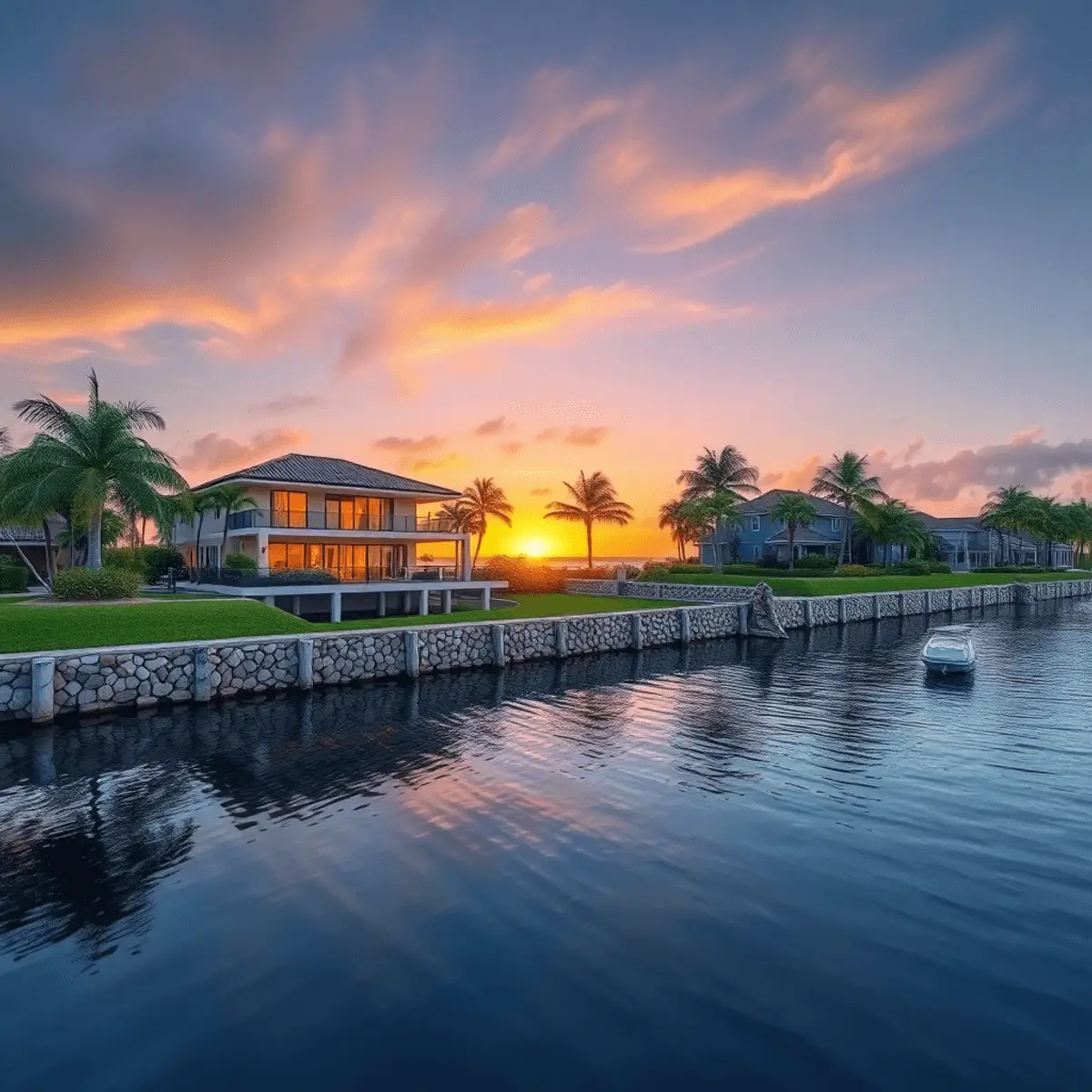
Canal and Intracoastal properties commonly fall in AE, with VE concentrated along the oceanfront where wave exposure is greatest. The exact designation is parcel-specific and must be verified rather than assumed by neighborhood.
Does an elevated home in a VE zone still feel like a luxury home?
The best ones feel more like it: elevation improves views and breezes, arrival becomes architecture, and the ground level absorbs parking and storage. VE constraints have produced some of the region’s most striking residences.
How much do flood zones affect construction cost?
Through foundation type, structural elevation, flood-resistant materials, and elevated systems. VE costs more than AE, which costs more than X, and all of it is engineerable when planned at design rather than discovered at permitting.
Where can I confirm my flood zone officially?
FEMA’s Flood Map Service Center for the mapped designation, then the local building department for the community’s adopted requirements and freeboard, which can be stricter than the federal minimum.