
High-net-worth construction oversight is mostly financial. Quality and schedule matter, but the largest recoverable value on a big private project sits in the money: whether draws match completed work, whether change orders are priced by the agreed method, whether allowances are reconciled honestly, and whether anyone is maintaining a forecast to completion. Those four checks are unglamorous and they are where the numbers move.
Key takeaways
- What does financial oversight actually examine?
High-net-worth construction oversight on a South Florida build examines four documents, every month: the schedule of values against observed progress, the change order log against the contract's pricing method, the allowance reconciliation against actual selections, and the forecast to completion against the original budget. - Why do draws need independent verification?
Draws on a South Florida luxury build need independent verification because a draw request is a claim about physical progress, and nobody without construction experience can assess it from a spreadsheet. - Where do change orders leak value?
Change orders leak value in three places on a South Florida project: work priced without reference to the contract's method, owner-requested changes bundled with corrections that should have been included, and schedule impact claimed without support. - What happens with allowances?
Allowances on a luxury build reconcile, or they quietly become overruns. Every allowance should be tracked against the actual selection, with the difference credited or charged transparently and visible in the monthly forecast.

What does financial oversight actually examine?
High-net-worth construction oversight on a South Florida build examines four documents, every month: the schedule of values against observed progress, the change order log against the contract’s pricing method, the allowance reconciliation against actual selections, and the forecast to completion against the original budget. High-net-worth construction oversight is the discipline of reading those four together rather than separately.
Budget structure is covered in how to budget a luxury home build.
Why do draws need independent verification?
Draws on a South Florida luxury build need independent verification because a draw request is a claim about physical progress, and nobody without construction experience can assess it from a spreadsheet. Verification means walking the work, comparing it to the schedule of values, checking that stored materials are actually on site and protected, and confirming lien waivers. This is the core mechanical task of high-net-worth construction oversight.
The quality parallel is in quality control, inspections, and punch lists.
Where do change orders leak value?
Change orders leak value in three places on a South Florida project: work priced without reference to the contract’s method, owner-requested changes bundled with corrections that should have been included, and schedule impact claimed without support. High-net-worth construction oversight tests each change against the contract rather than against the plausibility of the explanation.
Escalation is examined in protecting your build budget.
What happens with allowances?
Allowances on a luxury build reconcile, or they quietly become overruns. Every allowance should be tracked against the actual selection, with the difference credited or charged transparently and visible in the monthly forecast. Allowances set low at contract are the most common single reason a budget drifts, which makes them a priority in high-net-worth construction oversight.
Soft costs behave similarly, as described in soft costs in luxury home construction.
| Check | Question it answers | Failure if skipped |
|---|---|---|
| Schedule of values against progress | Does the draw match what exists? | Paying ahead of the building |
| Change order log against the contract | Was this priced by the agreed method? | Negotiated rather than calculated pricing |
| Allowance reconciliation | What did the selection actually cost? | Silent budget drift |
| Forecast to completion | What will this finish at? | Learning the final number at the end |
Why does the forecast matter more than the budget?
The forecast matters more than the budget on a South Florida build because the budget describes intent and the forecast describes reality. A monthly forecast to completion, per line, showing original budget, approved changes, committed, paid, and projected final, lets an owner see the ending months before it arrives. Producing that document reliably is the most valuable habit in high-net-worth construction oversight.
National construction context is published by the US Census Bureau, and cost composition is in the luxury construction cost breakdown.
What about schedule as a financial issue?
On a South Florida luxury build, every month of extension carries general conditions, supervision, insurance, financing, and land holding cost. Schedule slippage is therefore a budget event, and treating it as a separate concern understates it. High-net-worth construction oversight tracks the schedule precisely because it is expensive, not merely because it is inconvenient.
The timeline structure is in a realistic timeline for luxury custom home construction.
Where does the value actually come from?
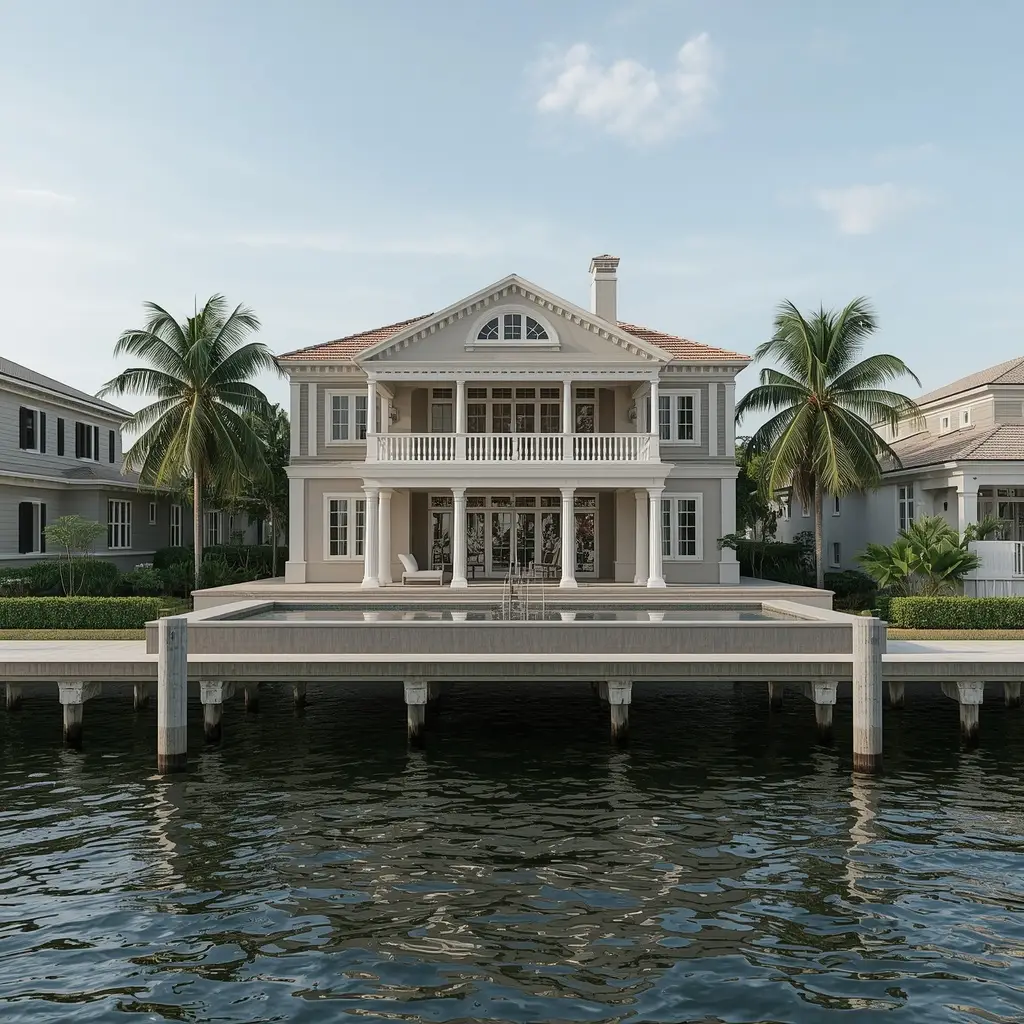
The value of construction oversight rarely comes from one dramatic discovery. It accumulates: a draw corrected, a change repriced, an allowance reconciled, a substitution refused, a delay avoided, a scope gap identified before it became a claim. High-net-worth construction oversight works by applying the same checks every month rather than by catching a single large problem.
The return is examined in whether hiring an owner’s representative is worth it.
What should the owner receive?
The owner of a South Florida luxury build should receive a monthly package: verified draw recommendation, updated forecast to completion, change order log with status, allowance reconciliation, schedule position against baseline, and a short narrative of what changed and what needs a decision. If the owner cannot see all six, the oversight is not producing evidence.
High-net-worth construction oversight rests on the builder being properly licensed, verifiable at Florida DBPR, and the full duty list is in what an owner’s representative does.
How does Kass Construction & Development perform it?
With building experience behind every number: Kass Construction & Development, a state-licensed (CGC1529472) boutique luxury builder led by Mitch Kass, a licensed general contractor and attorney, with 100+ luxury residences delivered by Mitchell Kass and the firms he has led across Broward, Palm Beach, and Miami-Dade, provides high-net-worth construction oversight including contract review and negotiation support, builder performance monitoring, and budget audits.
A custom build often runs 18 to 36 months. Contact Kass Construction & Development or call 954-607-4335.
Where does value leak on a large private project, and what does oversight recover?
High-net-worth construction oversight is aimed at a handful of places where money leaves a project without anyone deciding it should, and the table below names them with the control that closes each one.
| Where value leaks | How it happens | Oversight control |
|---|---|---|
| Draws ahead of work | Pay applications claim percentages that the site does not support | Progress verified against the schedule of values on site before approval |
| Lien exposure | Subcontractors and suppliers unpaid despite owner payments | Conditional and unconditional lien releases collected with every draw |
| Change order pricing | Markups, unit rates and quantities drift from the contract method | Each change checked for entitlement, pricing and schedule impact before work starts |
| Allowance reconciliation | Overages billed, underages not credited | Allowance ledger reconciled at each draw with invoices |
| Contingency use | Reserves spent on owner upgrades or builder errors | Contingency ledger with a documented cause for every draw |
| Schedule slippage | General conditions and financing costs accrue monthly | Baseline tracked; long-lead procurement verified; delay causes assigned |
| Scope gaps | Items nobody priced appear as extras | Drawing and specification review before contract |
| Quality rework | Defects found after cover cost multiples to fix | Inspection points before cover, photographed |
Florida’s lien law, which gives the owner the right to releases, is in Chapter 713, Florida Statutes, and contractor licensing can be verified at myfloridalicense.com. The contract structures these controls sit inside are described in construction contracts for high-end residential builds.
What is the monthly cycle of residential construction oversight?
Residential construction oversight runs on a monthly cycle tied to the draw, and the sequence below is what the owner’s representative does each month on a South Florida luxury build.
- Site verification: walk the project against the schedule of values and photograph progress at each line.
- Pay application review: compare claimed percentages to verified progress; check stored materials and retainage.
- Lien releases: collect conditional releases for the current draw and unconditional releases for the previous one from every party who served a Notice to Owner.
- Change order review: confirm entitlement, pricing by the contract method, and schedule impact; log pending changes.
- Allowance and contingency reconciliation: update both ledgers with invoices and causes.
- Forecast: update the estimate at completion, so the owner sees the final number rather than the original budget; the method is in how to budget a luxury home build.
- Schedule: compare actual to baseline, check long-lead orders and inspections, and assign causes to any slippage; the phases are in a realistic timeline for luxury custom home construction.
- Report: cost, schedule, quality and decisions required, in a fixed format, followed by owner approval of the draw; escrow variants are described in escrow and milestone payments.
Which South Florida cost pressures make high-net-worth construction oversight worth more here?
High-net-worth construction oversight recovers more in South Florida than in most markets because the regional cost drivers are large, variable and easy to misprice.
- Coastal structure and openings: pile foundations, elevated slabs and impact glazing under the Florida Building Code carry allowances that need reconciling; see the Miami-Dade cost breakdown.
- Seawall, dock and site work: priced from engineering rather than per foot, and prone to subsurface change orders.
- Permit cycles: delay converts to general conditions, which oversight tracks and assigns.
- Material price movement: buy-out timing and escalation clauses need a forecast, as in protecting your build budget from inflation and material price spikes.
- Soft costs: design, engineering, surveys, permits and insurance that sit outside the construction contract, itemized in soft costs in luxury home construction.
- Absent owners: many South Florida owners are elsewhere for most of the build, which makes independent verification the only verification; see absentee owner representation.
- Quality at cover: coastal detailing (flashing, corrosion protection, waterproofing) is invisible once finished, which is why quality control, inspections and punch lists are part of the financial picture.
Kass Construction & Development performs this oversight for owners in Broward, Palm Beach and Miami-Dade, and applies the same reporting discipline to its own construction contracts; the case for the fee is made in whether an owner’s representative is worth it and the role in what an owner’s representative does.
Frequently Asked Questions
What does high-net-worth construction oversight cover?
Primarily the money: draw verification against completed work, change order pricing against the contract method, allowance reconciliation, and a monthly forecast to completion, alongside quality and schedule.
Why verify draws independently?
Because a draw is a claim about physical progress that cannot be assessed from a spreadsheet. Verification means walking the work and checking stored materials and lien waivers.
Where do change orders lose money?
Pricing that ignores the contract method, owner changes bundled with corrections that should have been included, and unsupported schedule impact claims.
Why do allowances matter so much?
Because low allowances make an early total look attractive and become overruns later. Each one should be tracked against the actual selection and reconciled openly.
What is a forecast to completion?
A monthly per-line statement of original budget, approved changes, committed, paid, and projected final. It shows the ending months before it arrives.
Is schedule a financial issue?
Yes. General conditions, supervision, insurance, financing, and carrying costs accrue monthly, so every month of extension has a price.
Where does the value come from?
Accumulation rather than a single discovery: a draw corrected, a change repriced, an allowance reconciled, a delay avoided, month after month.