A custom home permitting timeline is not one duration. It is a set of overlapping tracks, each with its own start condition, its own review period, and its own comment cycles, and the project starts when the last of them clears. Laying the tracks out honestly is what lets an owner see where the calendar actually goes and which parts they can influence.
Key takeaways
- What does the timeline actually consist of?
A South Florida custom home permitting timeline consists of four stages: preparation, where surveys, geotechnical work, and zoning confirmation happen; documentation, where the drawing set and calculations are completed; review, where each agency examines the file and issues comments; and issuance and inspections. - Stage one: what has to exist before filing?
Before filing in South Florida you need a current survey showing boundaries, elevations, and on waterfront parcels the mean high water line; a geotechnical report; the flood determination and base flood elevation; zoning confirmation; and any homeowners association approval. - Stage two: what goes into the drawing set?
The drawing set for a Florida luxury home is architectural, structural, mechanical, electrical, plumbing, and civil drawings coordinated to a common revision, with structural calculations, energy compliance, product approval numbers, and the drainage plan. - Stage three: which reviews run in parallel?
In South Florida the parallel tracks are municipal building and zoning, county floodplain, state environmental and coastal programs, the water management district, and federal review for navigable waters, all running at once on independent calendars.
What does the timeline actually consist of?
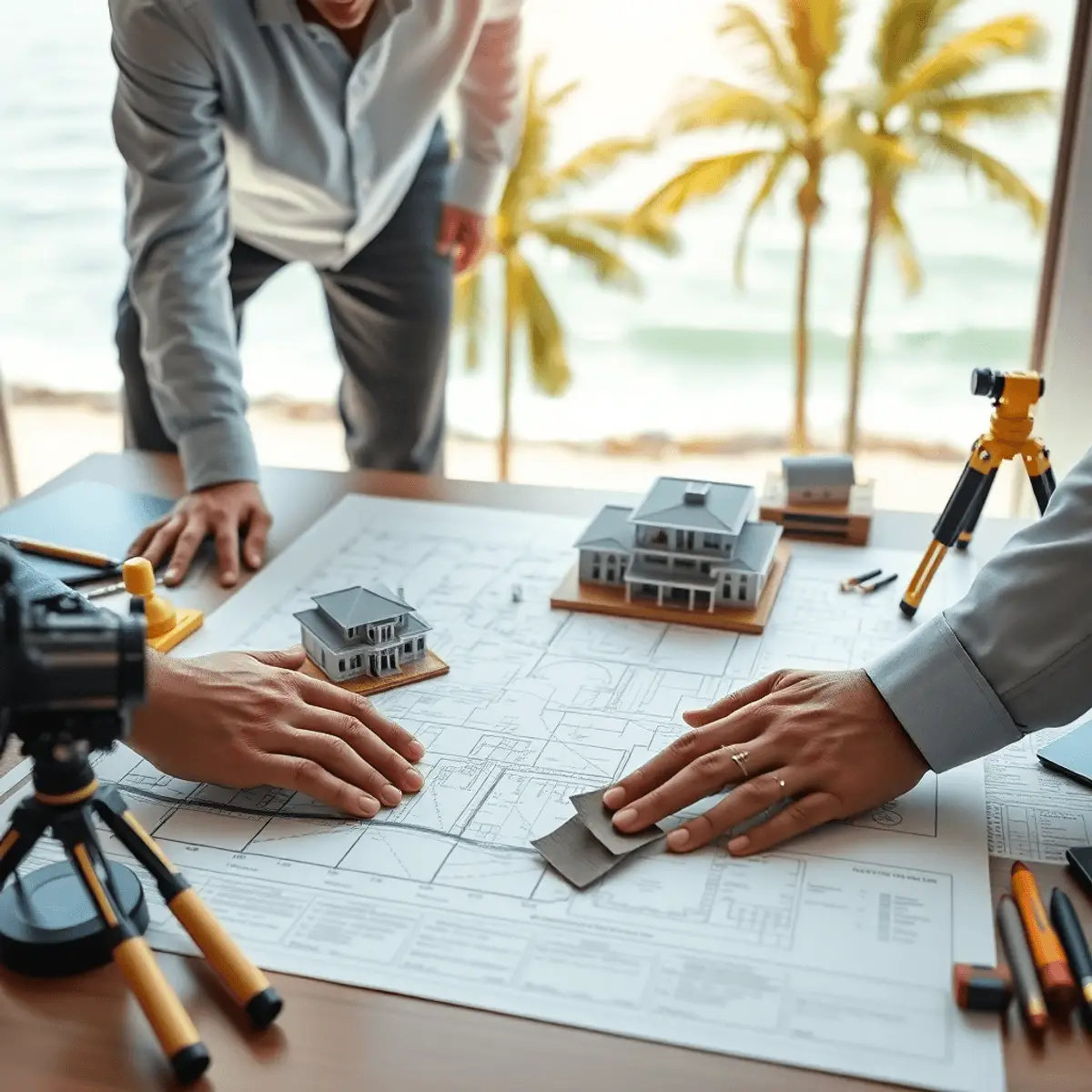
A South Florida custom home permitting timeline consists of four stages: preparation, where surveys, geotechnical work, and zoning confirmation happen; documentation, where the drawing set and calculations are completed; review, where each agency examines the file and issues comments; and issuance and inspections. A custom home permitting timeline spends most of its calendar in the first and third.
The agencies involved are listed in the South Florida luxury home permitting process.
Stage one: what has to exist before filing?
Before filing in South Florida you need a current survey showing boundaries, elevations, and on waterfront parcels the mean high water line; a geotechnical report; the flood determination and base flood elevation; zoning confirmation; and any homeowners association approval. None of this is reviewed by anyone, and all of it gates the file. A custom home permitting timeline that skips it files incomplete.
The site work is described in pre-construction planning.
Stage two: what goes into the drawing set?
The drawing set for a Florida luxury home is architectural, structural, mechanical, electrical, plumbing, and civil drawings coordinated to a common revision, with structural calculations, energy compliance, product approval numbers, and the drainage plan. This is where the eventual number of comment cycles is determined, so time invested here is subtracted from review later.
The failure modes are in common luxury home permitting mistakes.
Stage three: which reviews run in parallel?
In South Florida the parallel tracks are municipal building and zoning, county floodplain, state environmental and coastal programs, the water management district, and federal review for navigable waters, all running at once on independent calendars. The custom home permitting timeline is set by the longest of these, not by their sum, which is exactly why they must overlap.
State programs are published by Florida DEP and the South Florida Water Management District.
| Stage | What happens | What gates it |
|---|---|---|
| Preparation | Survey, geotechnical, flood determination, zoning | Access to the parcel |
| Documentation | Coordinated drawings, calculations, approvals | A settled design |
| Parallel review | Building, zoning, floodplain, state, federal | Completeness of the submittal |
| Comment cycles | Reviewer comments and team responses | Response speed |
| Issuance | Permit released, construction may begin | The slowest agency |
| Inspections | Phase inspections through construction | Trade sequencing |
| Closeout | Final inspections, certificate of occupancy, permits closed | Completing every open permit |
How do comment cycles extend the timeline?
Each comment round on a South Florida permit adds the reviewer’s period plus the design team’s response time, and the response is usually the longer half. Two avoidable cycles can add more to a custom home permitting timeline than the original review period did. This is the part of the calendar the owner’s team controls almost entirely.
The mechanics are in why permit delays happen.
Stage four: what happens at issuance, inspections, and closeout?
Permit issuance, then the inspection sequence through construction, threshold inspections where required, final inspections, certificate of occupancy, and closing every permit opened. Closeout belongs in the custom home permitting timeline because an unclosed permit becomes a problem years later at resale.
Records are searchable at Miami-Dade County.
What does waterfront add?
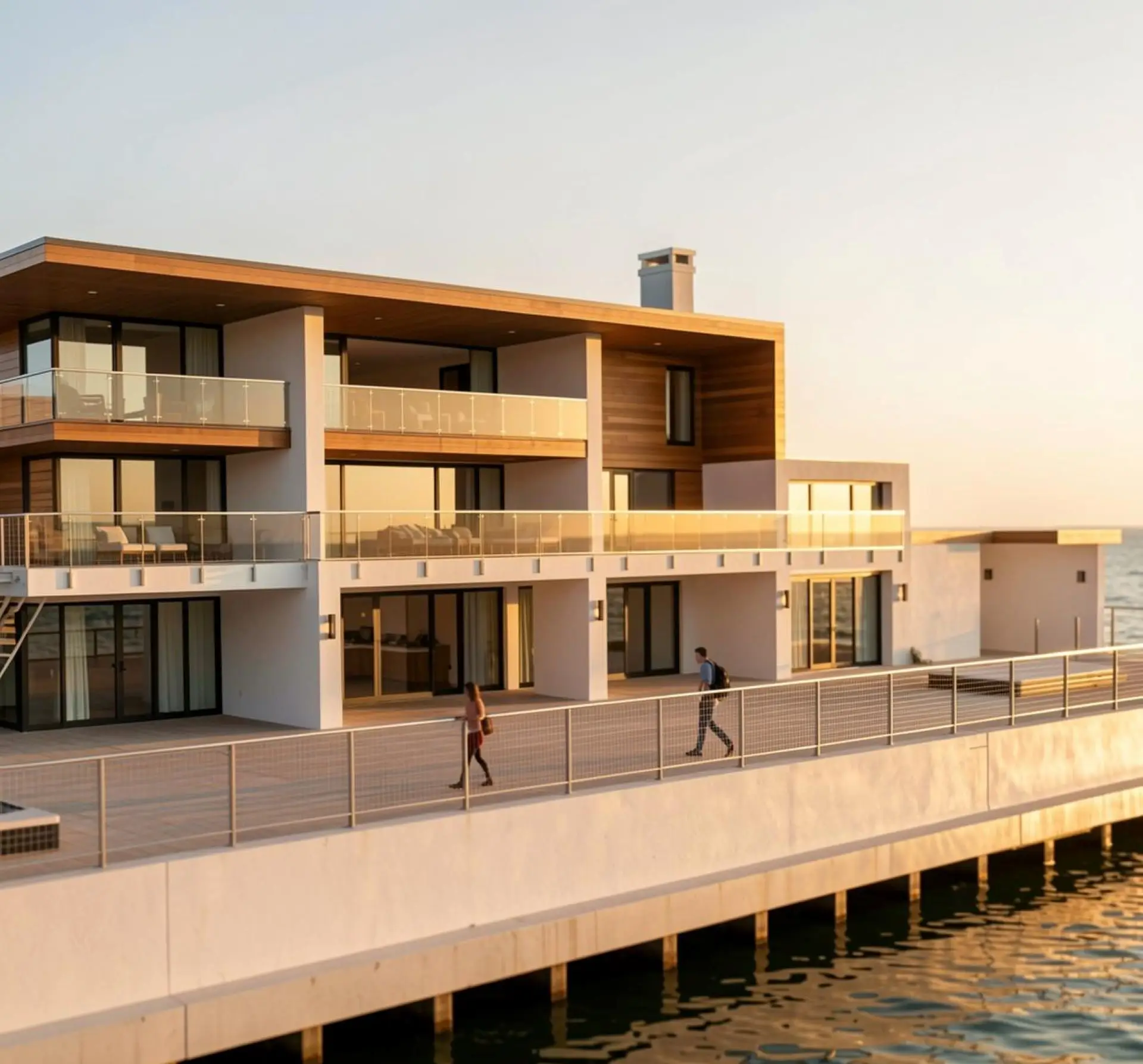
Waterfront in Broward, Palm Beach, or Miami-Dade adds its own front-loaded track: seawall assessment, shoreline authorization, dock and lift approvals, environmental review, and coastal jurisdiction on oceanfront parcels. These frequently determine the construction start, which is why a waterfront custom home permitting timeline is built backwards from them rather than forwards from design.
The detail is in expediting flood zone and coastal permits.
How does this fit the overall project?
A South Florida custom build often runs 18 to 36 months and a high-end renovation often 6 to 12 months, and permitting sits at the front of both. On waterfront parcels the approvals track routinely occupies a substantial share of the total, which is why the honest schedule shows it explicitly rather than hiding it inside mobilization.
The construction phases are in a realistic timeline for luxury custom home construction.
How does Kass Construction & Development build the schedule?
Backwards from the slowest agency: Kass Construction & Development, a state-licensed (CGC1529472) boutique luxury builder headquartered in East Fort Lauderdale and led by Mitch Kass, a licensed general contractor and attorney, with 100+ luxury residences delivered by Mitchell Kass and the firms he has led across Broward, Palm Beach, and Miami-Dade, publishes a custom home permitting timeline with the tracks separated so owners can see what governs the start.
Contact Kass Construction & Development or call 954-607-4335.
What does the custom home permitting timeline look like, track by track?
A custom home permitting timeline is a set of parallel tracks, and the table below lays them out with the condition that starts each, its typical duration and the document it produces.
| Track | Starts when | Typical duration | Produces |
|---|---|---|---|
| Survey, soils and zoning confirmation | Lot under contract | 3 to 6 weeks | Survey, geotechnical report, zoning letter or pre-application notes |
| Design and construction documents | Program and budget agreed | 6 to 9 months | Coordinated, sealed drawing set with product approvals |
| Homeowners association or design review | Schematic design | 1 to 3 months, on fixed meeting dates | Architectural approval letter |
| Environmental and seawall approvals | Survey complete; seawall design sealed | 2 to 9 months | County license, state and federal authorizations |
| Coastal Construction Control Line permit | Survey to state monuments; coastal analysis | 4 to 12 months | State CCCL permit with conditions |
| Building permit review | Complete sealed set filed | 2 to 4 months including two comment cycles | Issued building permit and approved set |
| Sub-permits | Building permit issued or in review | Weeks each, in parallel | Pool, dock, generator, fence, irrigation, low-voltage permits |
| Inspections and close-out | Construction start | Through construction; 1 to 2 months at the end | Passed inspections, elevation certificate, certificate of occupancy |
State environmental and coastal programs are described by the Florida Department of Environmental Protection, regional water rules by the South Florida Water Management District, and structural review follows the Florida Building Code. The three approvals that most often set the start date are expanded in expediting flood zone permits and coastal review.
How do the comment cycles work, and what keeps them to one?
The custom home permitting timeline is stretched or shortened mostly by comment cycles, and the sequence below shows how a cycle runs and what keeps a project to a single round.
- Intake: the department checks completeness against its checklist; an incomplete package is returned without review, which costs the whole cycle.
- Disciplinary review: structural, mechanical, electrical, plumbing, fire, zoning, floodplain and landscape reviewers each examine the set on their own schedule.
- Comment letter: all disciplines’ comments are issued together once the last reviewer finishes.
- Response: the design team revises sheets and writes a response to every comment, item by item.
- Resubmittal: the revised set and responses are filed; only the commenting disciplines re-review, but a partial response restarts the clock.
- Issuance: when every discipline approves, fees are paid and the permit and approved set are released.
- One cycle is achieved by a coordinated set, matched product approvals, a current survey, confirmed zoning and complete responses, the opposite of the errors in common luxury home permitting mistakes.
- Delay causes and their fixes are cataloged in permit delays on South Florida luxury homes.
How does the custom home permitting timeline fit into the overall project?
A custom home permitting timeline overlaps the design phase and precedes the construction phase, and seeing where it sits in the whole program explains why a luxury build runs 18 to 36 months.
- Feasibility and design occupy the first six to nine months; the survey, soils and zoning tracks run inside that period.
- Environmental, seawall and coastal applications open as soon as the survey and the shoreline engineering exist, well before the architectural set is finished.
- Building permit review begins when the sealed set is complete, typically overlapping the last weeks of design and the pricing period.
- Construction starts when the last required approval clears, which on waterfront lots is usually a state or federal authorization rather than the building permit.
- Sub-permits and revisions run through construction, and close-out requires every permit inspected and closed before the certificate of occupancy.
- The whole sequence, with construction phases, is set out in a realistic timeline for luxury custom home construction and planned in pre-construction planning.
- Where a municipality’s calendar is the constraint, the role of an expediter is discussed in permit expediting services in Florida.
Kass Construction & Development builds the permitting schedule into the project program from feasibility on every home in Broward, Palm Beach and Miami-Dade, opening the slowest track first; the reviewers and their roles are described in the South Florida luxury home permitting process.
Frequently Asked Questions
What is in a custom home permitting timeline?
Preparation, documentation, parallel agency review, and issuance with inspections and closeout. Most of the calendar sits in preparation and review rather than in filing.
What has to be done before filing?
A current survey, geotechnical report, flood determination and base flood elevation, zoning confirmation, and any homeowners association approval. None is reviewed, all of it gates the file.
Do the agency reviews run in sequence?
They should run in parallel. The timeline is set by the longest review, not the sum, so filing sequentially adds months unnecessarily.
How much do comment cycles add?
Each adds the reviewer’s period plus your team’s response time, and the response is usually longer. Two avoidable cycles can exceed the original review period.
Does waterfront lengthen the timeline?
Yes, at the front. Seawall, dock, environmental, and coastal reviews frequently determine the construction start date on waterfront parcels.
When is permitting actually finished?
At closeout, not issuance. Every permit opened must be inspected and closed, and an unclosed permit surfaces years later at resale.
How does permitting fit the overall build?
At the front of a custom build that often runs 18 to 36 months. On waterfront parcels it occupies a substantial share and should be shown explicitly in the schedule.