Waterfront luxury living in South Florida is defined by three priorities that have to work together: clear views from the rooms you actually live in, real privacy from boats and neighbors without turning the property into a fortress, and resort-style amenities that get used on a Tuesday, not just photographed. Getting all three right, on a site that adds glare, wind, salt air, seawalls, and permitting layers, is what separates the homes that feel effortless from the ones that constantly fight their owners.
Key takeaways
- How do you maximize water views without turning the home into a fishbowl?
For South Florida waterfront luxury living, orient the home around the water and give the best sightlines to the primary living spaces, not a hallway or a rarely used formal room. - How do you create privacy on the water without closing the home off?
Create privacy on the water by zoning the home rather than shielding it. - Which resort-style amenities actually get used on the waterfront?
In waterfront luxury living, the amenities that get used are the ones planned for daily usability: a pool and spa with a sun shelf where possible, a covered lounge that stays comfortable in heat and rain, an outdoor kitchen and bar that functions like a real kitchen, and a true dining area with proper lighting and circulation. - What materials and building science do South Florida waterfront conditions demand?
On the South Florida coast salt, humidity, and sun are design inputs, not afterthoughts. Exterior durability depends on impact-rated windows and doors, corrosion-resistant metals and fasteners, high-quality exterior coatings, and proper flashing, waterproofing, and drainage detailing.
Waterfront sites carry constraints that never show up on a standard lot. Sun angles create intense glare. Wind off the water can make a patio unusable without smart shelter. Salt air accelerates corrosion. Setbacks, dock rules, seawall condition, and marine permitting shape what is possible. In Fort Lauderdale and across coastal Broward, Palm Beach, and Miami-Dade, expertise matters because these details are not cosmetic; they protect comfort, longevity, and resale value. This guide covers the five priorities that make waterfront luxury living work: views, privacy, resort amenities, materials and building science, and permitting and risk.
How do you maximize water views without turning the home into a fishbowl?
For South Florida waterfront luxury living, orient the home around the water and give the best sightlines to the primary living spaces, not a hallway or a rarely used formal room. Use a layered view strategy: long panoramic views for the living and entertaining areas, framed views for the kitchen, and intimate views for the primary suite and private terraces, then control heat and glare with performance glazing, deep overhangs, motorized shades, and filtering tree canopy.
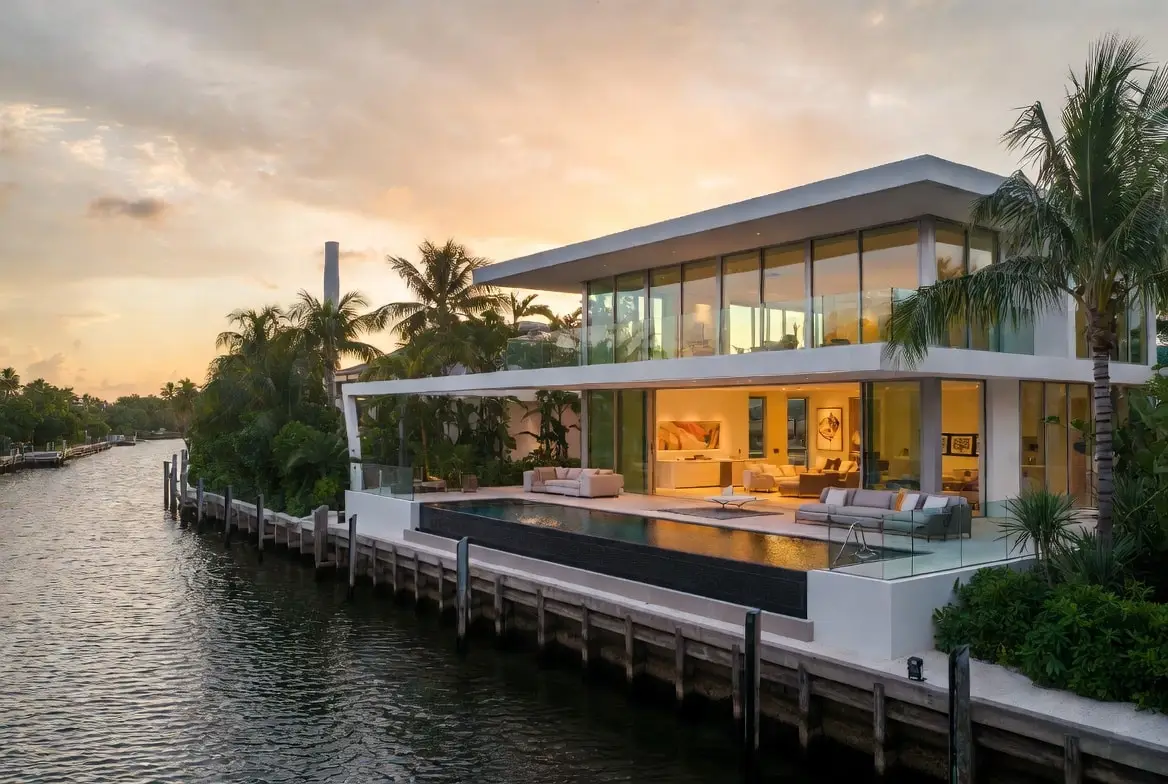
In waterfront luxury living, the architecture protects the view without sacrificing comfort. Depending on the site and flood elevation, an elevated main floor can lift sightlines above dock activity and improve privacy at the same time. Overhangs and cantilevers create shade while keeping glass walls clean and uninterrupted, and corner glazing with minimal structural interruption keeps the water feeling like part of the interior.
“More glass” is not the same as better living, though: South Florida homes need a deliberate plan for heat gain and glare, usually combining high-performance impact-rated glazing, deep overhangs and covered outdoor ceilings, motorized shades in key zones, and strategic tree canopy that filters light instead of blocking views. Night views matter too; subtle landscape, step, and dock lighting can bring the water back after sunset as long as glare into the home is controlled.
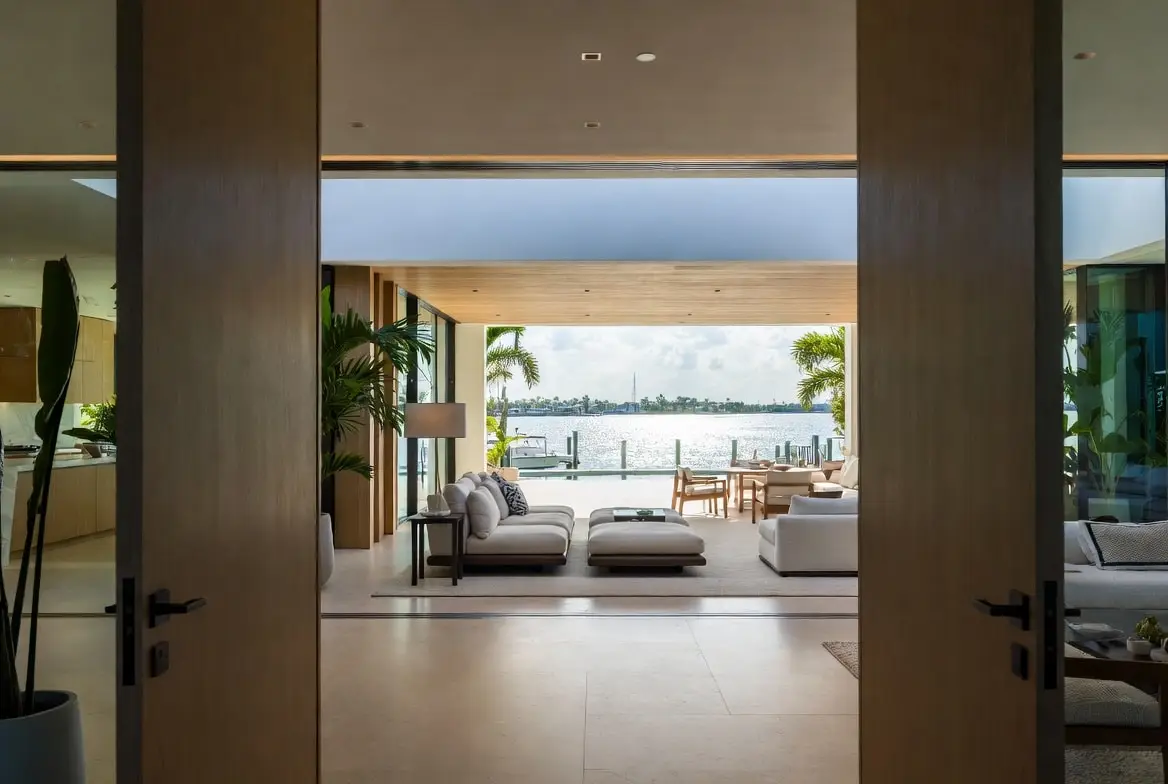
Designing the view corridors that sell the experience
For waterfront luxury living, identify the key approach moments: the entry sequence, the stair reveal in a multi-level home, and the living room axis to the pool and water. Where the site allows, a straight visual path from the front door to the water creates instant impact; then protect that corridor by keeping bulky cabinetry, oversized fireplaces, and tall art walls out of it and using low furniture profiles in view zones. One small, powerful move is kitchen island orientation: an island parallel to the water keeps the cook facing the view instead of working with their back to the best part of the property.
Outdoor architecture that makes the water feel closer
Terraces and lanais that step down toward the pool and dock create a natural progression toward the water. At the edges, glass railings or recessed planters preserve sightlines better than solid walls, and continuing the interior ceiling plane into the covered patio softens the boundary and expands the perceived width of the home. Our guide to indoor-outdoor living for Florida estates covers the transition detailing.
How do you create privacy on the water without closing the home off?
Create privacy on the water by zoning the home rather than shielding it. Keep public entertaining spaces open to the views, protect private zones such as bedrooms, offices, and family lounges, and layer privacy solutions that read as design rather than defense: landscaping that blocks angles rather than views, architectural screens that filter sightlines, setbacks and elevation changes, and switchable or shaded glass in targeted spots.
Privacy in waterfront luxury living is different from a standard lot: boats pass at eye level, neighbors’ second-story windows look across, and side-yard angles can look straight into glass walls. Sound and security belong in the same early conversation. Landscape buffering and water features mask dock and canal noise naturally, discreet cameras and lighting improve security without a gated feel, and access paths to the dock can be secure and still elegant.
Landscape privacy that still looks high-end
The most luxurious privacy is the kind you do not notice because it looks like a resort garden: palms for height and movement, understory plantings for fullness, and hedges where you need to block a direct line of sight, all in salt-tolerant, wind-resilient species so the landscape stays lush rather than stressed. Sculptural trellises, green walls, and water features screen views while improving ambiance, and the plan has to include maintenance access and irrigation so hedges stay crisp year-round. See native Florida plants in high-end landscape design.
Architectural privacy: screens, courtyards, and smart layout
If you want glass and light without exposure, the layout has to earn it. Courtyards and atriums bring daylight into the center of the home privately and reduce reliance on neighbor-facing windows. Slatted screens and brise-soleil filter views while controlling sun, frosted side glazing works on tight lots in bathrooms and stairwells, and angled windows or clerestories capture sky, brightness, and water reflections without giving away a direct sightline into the interior.
Which resort-style amenities actually get used on the waterfront?
In waterfront luxury living, the amenities that get used are the ones planned for daily usability: a pool and spa with a sun shelf where possible, a covered lounge that stays comfortable in heat and rain, an outdoor kitchen and bar that functions like a real kitchen, and a true dining area with proper lighting and circulation. Shade, lighting, storage, and durable materials decide whether a space gets used on a weekday afternoon or only during a party.
Modern waterfront luxury living also leans into wellness: a sauna, cold plunge, steam shower, or gym with garden views, depending on the home and lifestyle. For entertainment, features that work year-round win: a media wall in a covered outdoor area, a fire feature designed for wind conditions, integrated sound, and flexible seating that adapts to quiet nights and larger gatherings. Our guide to private resort homes covers pools, spas, and outdoor kitchens in depth.
The waterfront luxury living pool zone: sun, shade, and wind done right
Pool placement should balance sun exposure with interior comfort; a pool that throws constant afternoon glare into the home makes the best rooms feel harsh. Flexible shade from cabanas, pergolas, and motorized screens lets you tune the environment as weather changes, and decking should be non-slip, heat-reducing, and specified for humidity and salt. Infinity-edge pools can be stunning with long water views but should be evaluated for safety, maintenance practicality, and how they interact with the seawall and drainage.
Dock, lift, and water access: luxury that is functional
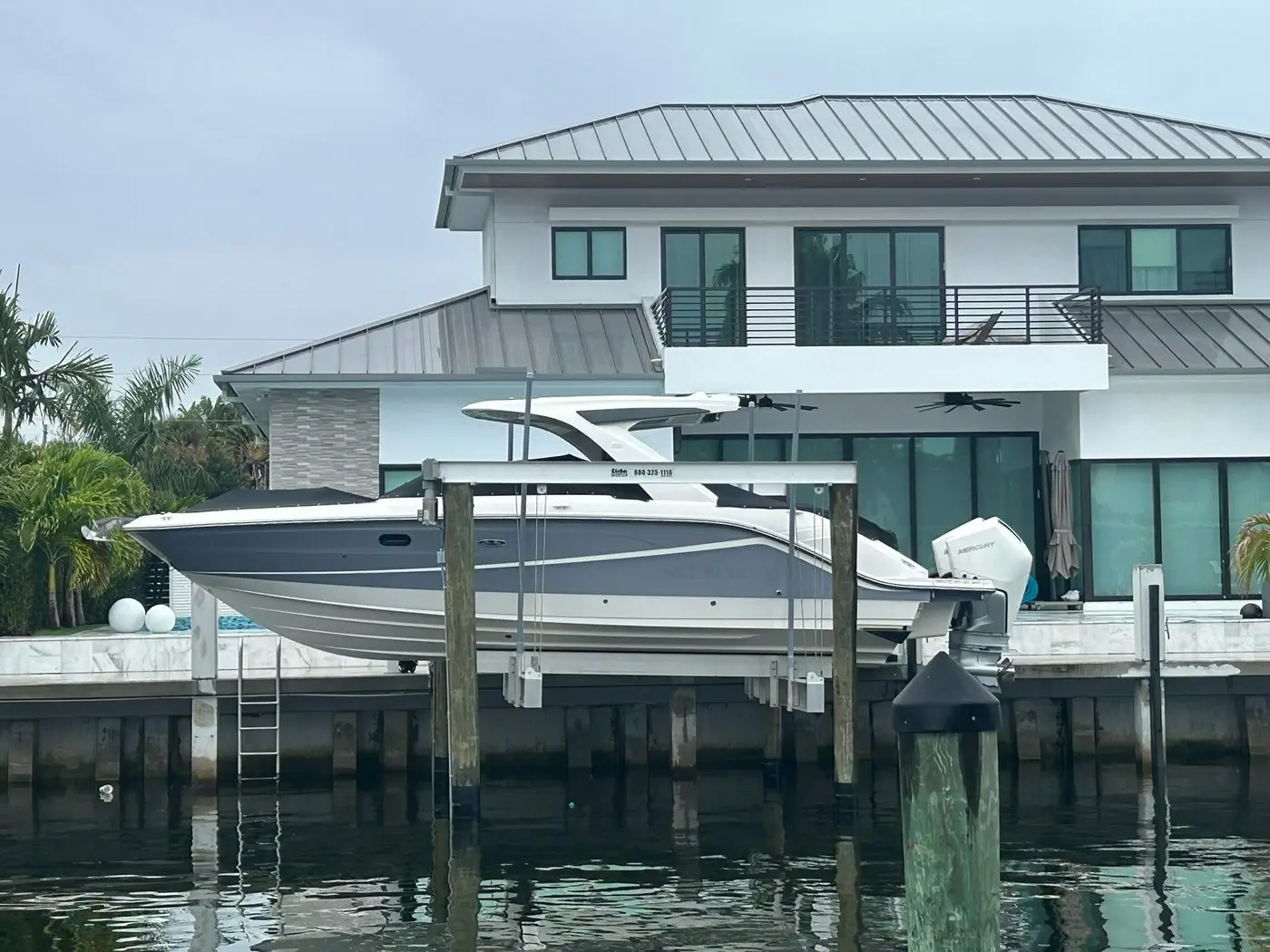
Where allowed, integrate a boat lift or floating dock plus the practical additions that keep things clean and easy: a freshwater rinse, dedicated gear storage, dock lighting that supports safety and ambiance, and marine-grade hardware specified from the start. The path from house to dock should feel natural and private with security built in. Coordinate seawall condition, drainage, and dock permitting early, because these items drive budgets and timelines when they are discovered late.
Dock and seawall work touching state submerged lands or navigable water runs through the Florida DEP submerged lands program and the U.S. Army Corps of Engineers Florida regulatory program, each on its own timeline independent of the building permit. See our guides to seawall construction and permitting and dock coordination on a custom build.
What materials and building science do South Florida waterfront conditions demand?
On the South Florida coast salt, humidity, and sun are design inputs, not afterthoughts. Exterior durability depends on impact-rated windows and doors, corrosion-resistant metals and fasteners, high-quality exterior coatings, and proper flashing, waterproofing, and drainage detailing. Inside, longevity comes from moisture-resilient assemblies and a clear HVAC dehumidification strategy.
For waterfront luxury living that means appropriate substrates behind stone and tile, careful wood acclimation, and systems designed to hold comfort without fighting the building. Efficiency and resilience matter on the water too: insulation, air sealing, smart zoning, and backup power planning improve daily comfort and reduce storm disruption. Finally, plan for maintenance. A realistic care schedule for glass, metals, pools, and landscaping protects value and keeps “waterfront wear” from becoming visible. See coastal corrosion-resistant materials and hurricane-resistant construction in South Florida.
What permitting, seawall, and risk issues protect a waterfront investment?
Waterfront projects in Broward, Palm Beach, and Miami-Dade involve more stakeholders and more rules: city, county, water management district, and marine or coastal regulators, plus neighborhood constraints. Due diligence usually means surveys and boundary verification, flood elevation and finished-floor strategy, setback and zoning limits, seawall inspection and dock permitting, utility coordination, and soil and drainage planning, all before design is locked.
In waterfront luxury living, permitting and approvals can drive the entire schedule, so build in planning time. Flood zones and base flood elevations come from the FEMA Flood Map Service Center, and our guides to flood zone requirements for waterfront construction and the South Florida permitting process explain what to expect. Risk mitigation comes from transparency and process: clear scopes, vetted trades, realistic budgets, and quality-control checkpoints throughout construction. If you will not be on site, read how owner’s representation protects high-net-worth clients.
How does Kass Construction approach waterfront luxury living in Fort Lauderdale?
Kass Construction & Development is a boutique, state-licensed luxury custom home builder based in East Fort Lauderdale, serving Broward, Palm Beach, and Miami-Dade, with architect-driven execution that protects the original design intent while managing the realities of waterfront construction.
The firm collaborates with architecture and design partners from concept through completion so engineering, permitting, and build quality stay aligned with long-term performance. It is led by Mitch Kass, a licensed Florida general contractor (license CGC1529472) and attorney, with four decades in Florida real estate, law and construction and 100+ luxury residences delivered by Mitchell Kass and the firms he has led. Some waterfront properties call for renovation, others for a teardown and new build; the right answer comes from site evaluation, budget reality, and how you plan to live in the home. See our services, projects, and waterfront home construction guide.
New build vs. renovation on a waterfront property
For waterfront luxury living, renovation can make sense when the home has a strong structure, good elevation and flood resilience, a workable layout that can be opened to the view, and manageable seawall and dock conditions. A teardown and new build is often the smarter investment when there is compromised structure or chronic moisture, poor orientation that cannot capture views, low elevation that complicates comfort and insurance, or a layout that cannot deliver privacy and indoor-outdoor flow without major compromise. Our guides to teardown vs. renovation and the feasibility study walk through the decision.
What should you plan before you design a waterfront home?
Plan five things before designing a South Florida waterfront home, in order: define the lifestyle (how often you boat, how you entertain, what privacy you need, which wellness features you will really use); map view corridors and privacy exposures; confirm site constraints early, including flood elevation, setbacks, seawall condition, dock rules, utilities, and neighborhood guidelines; build the resort core of pool zone, covered outdoor living, outdoor kitchen, and day-to-night lighting; and choose a builder team built for waterfront complexity.
Waterfront luxury living is not about maximizing square footage. It is about maximizing experience. When views, privacy, and resort-style amenities are designed as one system, the home feels calm, effortless, and valuable for the long term. A custom waterfront build often runs 18 to 36 months from design through closeout and a high-end renovation often 6 to 12 months, depending on scope, complexity, approvals, and procurement, and the marine approvals are usually what set the pace.
How do the South Florida waterfront settings compare for views, privacy and amenities?
Waterfront luxury living differs by the water a home faces, and the table below compares the main South Florida settings on the three things buyers weigh first.
| Setting | Views | Privacy | Amenities and constraints |
|---|---|---|---|
| Deepwater canal | Across the canal to neighbors’ docks; long views at the canal mouth | Moderate; planted screens and orientation matter | Private dock and lift; bridge clearance sets boat size; AE zone |
| Direct Intracoastal | Wide water and passing boats | Good from the land side; exposed to the waterway | Deepwater dockage; wake and wind exposure; heavier seawalls |
| River (New, Middle, Tarpon) | Green, winding water; downtown proximity | Good; narrower water, mature trees | Fixed bridges; historic character; renovation-heavy stock |
| Oceanfront | Open horizon | Beach is public below the mean high water line | No dockage; CCCL permit; VE zone; turtle lighting |
| Bay and lagoon | Wide, calm water; sunsets | Good; distance to the far shore | Shallow draft; seagrass and manatee rules |
| Lake (non-tidal) | Still water; golf and club settings | Best; gated communities | No tidal risk; association design review |
Shoreline and coastal rules are administered by the Florida Department of Environmental Protection, flood zones by FEMA, and manatee and turtle conditions by the Florida Fish and Wildlife Conservation Commission. Fort Lauderdale’s canal neighborhoods are compared in Fort Lauderdale waterfront homes and the ocean setting in Atlantic Ocean waterfront homes.
What is the pre-design checklist for waterfront luxury living?
Waterfront luxury living starts with a checklist completed before the architect draws, and the items below decide what the lot can support and what it will cost to protect.
- Flood zone, base flood elevation and municipal freeboard, which set the finished floor; see flood zone requirements for waterfront construction in Broward County.
- Seawall age, cap elevation and condition from an engineer’s inspection; replacement is the first budget line where it is needed, per seawall construction and permitting.
- Dock rights, bridge clearance and water depth for the boat the family owns or intends to own; see Sunrise Key waterfront homes and dock coordination.
- Orientation for views, sun and breeze, so glass faces the water without becoming a heat load.
- Privacy plan: planting, walls, glazing types and the placement of private rooms away from the waterway.
- Materials by exposure, from coastal corrosion-resistant materials, and structure per hurricane-resistant construction.
- Amenity program: pool, spa, outdoor kitchen and lounges that will actually be used, from private resort homes with pools, spas and outdoor kitchens, with the indoor-outdoor seam from indoor-outdoor living for Florida estates.
- Approvals opened in order through the South Florida luxury home permitting process, with oversight through owner’s representation for luxury homes and planting from native Florida plants in high-end landscape design.
Frequently asked questions about waterfront luxury living in South Florida
What makes waterfront luxury living in South Florida different from other homes?
The lifestyle is shaped by light, moving air, and seamless indoor-outdoor space, and the design has to deliver clear water views from the rooms you use, privacy without fortress-like barriers, and resort-style amenities that work daily, while managing glare, wind, salt-air corrosion, and marine and coastal regulation.
How can I maximize water views without losing privacy or comfort?
Use a layered view strategy: panoramas for living areas, framed views for the kitchen, intimate reflections for private suites. Protect the views with elevated main floors, overhangs, and corner glazing, and control heat and glare with performance glazing, deep overhangs, motorized shades, and filtering tree canopy.
What creates memorable view corridors in a waterfront home?
Choreographed sightlines at the entry, the stair reveal, and the living room axis to the pool and water; a straight path from front door to water where the site allows; and keeping cabinetry, fireplaces, and art walls out of the corridor. Orienting the kitchen island parallel to the water keeps the cook facing the view.
What are the privacy challenges on the water, and how are they solved?
Boats at eye level, neighbors’ second-story windows, and side-yard angles into glass walls. The solution is zoning: open public spaces to the water, protect private ones, and layer landscaping that blocks angles, architectural screens, elevation changes, and targeted shading or switchable glass so privacy reads as design.
Who approves docks and seawall work in South Florida?
More than one authority. Local building and zoning review applies, work on state submerged lands runs through the Florida DEP, and work affecting navigable water can require U.S. Army Corps of Engineers authorization. Each runs on its own timeline, so start the marine track early.
Should I renovate or rebuild a waterfront home?
Renovate when the structure is sound, elevation and flood resilience are good, the layout can open to the view, and the seawall and dock are manageable. Rebuild when structure or moisture is compromised, orientation cannot capture views, elevation complicates comfort and insurance, or the layout cannot deliver privacy and indoor-outdoor flow.
How long does a waterfront luxury project take?
A custom waterfront build often runs 18 to 36 months from design through closeout, and a high-end renovation often 6 to 12 months, depending on scope, complexity, approvals, and procurement. Marine permitting and long-lead glazing are the usual pace-setters.
What daily routines change most with waterfront luxury living?
Mornings and evenings, first. Waterfront luxury living reorganizes the day around the water, from sunrise coffee on the dock to sunset entertaining, and floor plans for waterfront luxury living put kitchens, primary suites, and gathering rooms on the water side because that is where life migrates.
Is waterfront luxury living higher maintenance than inland ownership?
Yes, and pretending otherwise costs more. Salt air, humidity, and the seawall add care items inland homes never carry, so waterfront luxury living pairs naturally with scheduled maintenance and marine inspections. Owners who budget that rhythm keep the lifestyle effortless.
How does waterfront luxury living differ between ocean, Intracoastal, and canal settings?
Energy versus intimacy. Oceanfront delivers horizon and surf, the Intracoastal delivers activity and parade, and canals deliver calm and privacy. Waterfront luxury living is really three lifestyles sharing one label, and waterfront luxury living suits buyers best when they choose the energy level deliberately.
What should first-time waterfront buyers understand before committing?
That the water is infrastructure. Waterfront luxury living depends on seawalls, docks, elevation, and insurance realities that inland ownership never teaches, so buyers new to waterfront luxury living benefit from inspections and advisors who read those systems before the offer, not after.
Does waterfront luxury living hold value through market cycles?
Frontage is finite, and the market knows it. Waterfront luxury living rests on land that cannot be manufactured, which historically cushions well-maintained waterfront properties through cycles better than comparable inland homes. Condition and elevation still separate winners within that truth.
Can waterfront luxury living work for part-time residents?
Yes, with management. Absentee owners enjoy waterfront luxury living successfully when monitoring, storm readiness, and vessel care are delegated to accountable professionals. The water does not pause between visits, so the management plan is what keeps the second home a pleasure.
How do you start planning a waterfront home in South Florida?
Kass Construction & Development builds and renovates waterfront estates across Broward, Palm Beach, and Miami-Dade Counties from East Fort Lauderdale, coordinating the house, the seawall, and the dock as one project. Get in touch or call 954-607-4335 to schedule a private consultation.
Related guides. Continue with Intracoastal Waterway homes, Atlantic Ocean waterfront homes, South Florida canal waterfront homes, and the waterfront communities series.