Coastal construction permits are the approvals most likely to be discovered late and least likely to be recoverable when they are. They sit outside the building department entirely, they answer to state and federal law rather than to the building code, and on a South Florida waterfront parcel they routinely determine when construction can begin. This is what applies, and when.
Key takeaways
- Which approvals count as coastal construction permits?
Coastal construction permits in South Florida fall into four families: authorization to occupy sovereign submerged lands, environmental resource permitting for impacts to wetlands, seagrass, and protected habitat, Coastal Construction Control Line review seaward of the state line, and federal review for structures in navigable waters. - What triggers submerged lands authorization?
In Florida, submerged lands authorization is triggered by any structure on or over the land below the mean high water line, which the state owns. - What does environmental resource review examine?
Environmental resource review in South Florida examines water quality during and after construction, impacts to seagrass, mangroves, hardbottom, and protected species, turbidity control during the work, stormwater management, and any required mitigation. - When does the Coastal Construction Control Line apply?
The Coastal Construction Control Line applies only along Florida's sandy Atlantic shoreline, to construction seaward of the mapped line, and it reaches further than owners expect: the residence, foundations, pools, decks, dune walkovers, armoring, landscaping that disturbs the dune, and exterior lighting.
Which approvals count as coastal construction permits?
Coastal construction permits in South Florida fall into four families: authorization to occupy sovereign submerged lands, environmental resource permitting for impacts to wetlands, seagrass, and protected habitat, Coastal Construction Control Line review seaward of the state line, and federal review for structures in navigable waters. Local floodplain review sits alongside them.
State programs are published by Florida DEP and the South Florida Water Management District.
What triggers submerged lands authorization?
In Florida, submerged lands authorization is triggered by any structure on or over the land below the mean high water line, which the state owns. Seawalls, docks, boat lifts, davits, and any waterward extension all qualify. Owners are frequently surprised that coastal construction permits are required for a structure attached to their own property, but the water bottom is not theirs.
Coastal construction permits therefore reach structures owners consider entirely their own, and the mechanics are in the permitting process for new seawalls.
What does environmental resource review examine?
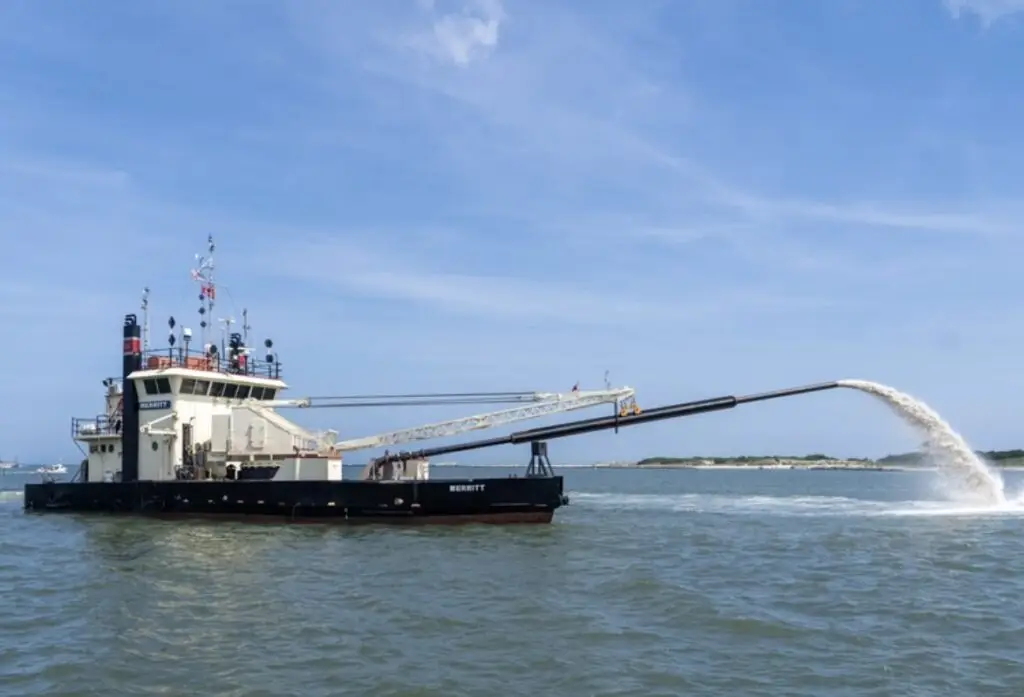
Environmental resource review in South Florida examines water quality during and after construction, impacts to seagrass, mangroves, hardbottom, and protected species, turbidity control during the work, stormwater management, and any required mitigation. Where habitat is present, this is the longest of the coastal construction permits and the one least amenable to acceleration.
Of all coastal construction permits this is the slowest; stormwater requirements are published by Florida DEP and the EPA.
When does the Coastal Construction Control Line apply?
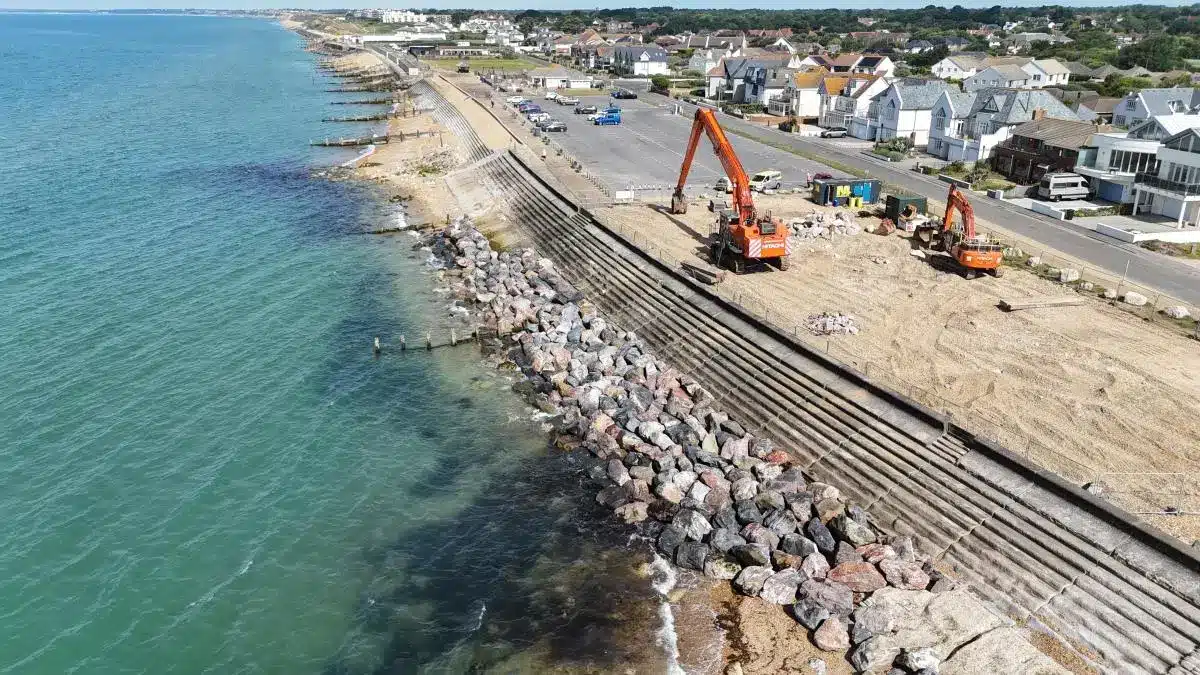
The Coastal Construction Control Line applies only along Florida’s sandy Atlantic shoreline, to construction seaward of the mapped line, and it reaches further than owners expect: the residence, foundations, pools, decks, dune walkovers, armoring, landscaping that disturbs the dune, and exterior lighting. Its position is established by survey, not by assumption.
The program is at Florida DEP, with detail in the Coastal Construction Control Line explained.
| Approval | Authority | Triggered by |
|---|---|---|
| Submerged lands authorization | Florida DEP | Any structure below the mean high water line |
| Environmental resource permit | Florida DEP and the water management district | Impacts to habitat, water quality, or stormwater |
| Coastal Construction Control Line | Florida DEP | Construction seaward of the line on the Atlantic shore |
| Federal navigable waters review | US Army Corps of Engineers | Structures in or affecting navigable waters |
What about lighting and wildlife?
On the South Florida oceanfront, lighting and wildlife protection is a permit condition, not a preference. Exterior lighting visible from the beach must be designed to protect nesting sea turtles, which affects fixture selection, mounting height, shielding, and control. It is one of the coastal construction permits conditions most often missed until final inspection.
Lighting conditions attach to coastal construction permits on the oceanfront, and the requirements are published by FWC.
What does the federal layer cover?
Structures in or affecting navigable waters of the United States, which covers most Intracoastal and canal frontage connected to navigable channels. The Army Corps reviews under its own authorities, sometimes through streamlined pathways for routine replacement, and species and habitat considerations can extend it.
Waterway rules are published by FWC.
How should these be sequenced?
Coastal construction permits in South Florida should be sequenced first, and in parallel with each other. Coastal construction permits run on calendars independent of the building department and frequently exceed it, so they are opened while architectural drawings are still developing. Filing them after the building permit is the single most expensive sequencing error available on a waterfront project.
The sequencing rule is in expediting flood zone and coastal permits.
What belongs in the application?
A Florida coastal permit application contains a signed and sealed survey showing property lines and the mean high water line, engineered drawings with sections and details, geotechnical data, a construction plan showing access, staging, and turbidity controls, environmental resource information where habitat is present, and adjacent-property tie-in details. Complete packages draw comments; incomplete ones draw delay.
Coastal construction permits reward a complete first submittal, and the standard is described in seawall construction and permitting.
How does Kass Construction & Development manage them?
As the first workstream on any waterfront project: Kass Construction & Development, a state-licensed (CGC1529472) boutique luxury builder headquartered in East Fort Lauderdale and led by Mitch Kass, a licensed general contractor and attorney, with 100+ luxury residences delivered by Mitchell Kass and the firms he has led across Broward, Palm Beach, and Miami-Dade, opens coastal construction permits before the residence design is finished.
A custom build often runs 18 to 36 months. Contact Kass Construction & Development or call 954-607-4335.
Which coastal construction permits apply to which work?
Coastal construction permits are a family of approvals triggered by specific kinds of work, and the table below matches the work a South Florida waterfront estate may involve with the approval and the issuing agency for each.
| Work | Approval | Issuing agency | Notes |
|---|---|---|---|
| Seawall repair or replacement in the same alignment | County environmental license or permit; municipal building permit | County environmental agency; municipality | General federal authorization often applies |
| New seawall waterward of the existing line, or fill in the water | Environmental resource permit; sovereign submerged land authorization; federal permit | Florida DEP or water management district; Army Corps | Longest path; may require mitigation |
| Dock, lift and pilings | County environmental permit; submerged land lease or consent where on state land; federal general permit | County; Florida DEP; Army Corps | Seagrass surveys and manatee conditions common |
| Dredging | Environmental resource permit; federal permit | Florida DEP or district; Army Corps | Spoil disposal and turbidity plans required |
| Mangrove trimming or removal | Mangrove trimming permit or exemption | Florida DEP or delegated county | Removal is tightly restricted |
| Any structure seaward of the Coastal Construction Control Line | CCCL permit | Florida DEP | Design storm analysis, siting, lighting and turtle conditions |
| Stormwater and drainage changes on larger sites | Environmental resource permit or exemption | Water management district or county | Depends on impervious area and discharge |
| Exterior lighting on the ocean | Lighting conditions within the CCCL permit; municipal ordinance | Florida DEP; municipality | Sea turtle protection |
The state programs are described by the Florida Department of Environmental Protection, district rules by the South Florida Water Management District, and species protection by the Florida Fish and Wildlife Conservation Commission; the federal wetlands framework is summarized by the EPA. The county-level seawall path is compared in the permitting process for new seawalls in Broward and Palm Beach.
What does a complete application for coastal construction permits contain?
Coastal construction permits are reviewed for completeness before they are reviewed for merit, and the package below is what the county, state and federal reviewers expect on the first submittal.
- Signed and sealed survey with the property line, the mean high water line, existing structures, adjacent structures and cap elevations in NAVD 88.
- Sealed engineering drawings of every proposed structure: seawall, cap, tie-backs, dock, pilings, lift and any dredge template, to the standards in hurricane-resistant seawall design standards.
- Site plan showing the work relative to the property line, the water and any submerged land beyond the wall.
- Benthic or seagrass survey and mangrove survey where the work area may affect them.
- Turbidity control plan and manatee protection plan, with seasonal restrictions noted.
- Proof of ownership and, for state-owned submerged land, the authorization application and any lease fee calculation.
- On the ocean, the CCCL application with the survey to state monuments and the coastal engineering analysis; see the Coastal Construction Control Line in South Florida.
- Contractor license and insurance, and the municipal building permit application for the structural work.
How are coastal construction permits sequenced with the rest of the project?
Coastal construction permits set the start date on most waterfront projects, and the sequence below is how they are run alongside design and the building permit rather than after them.
- Survey and shoreline engineering are commissioned at feasibility, before the architect fixes the plan.
- The slowest approval is filed first: the CCCL permit on the ocean, then state submerged land and federal authorizations, then the county license.
- The building permit is filed when the sealed set is complete, with the shoreline drawings included so conditions do not conflict.
- Seawall and dock work is scheduled before the house foundation where the foundation depends on the wall, as described in seawall construction and permitting.
- Seasonal windows for in-water and beach work are built into the construction schedule.
- One person owns every application with weekly status in the project report, following expediting flood zone permits and coastal review.
- Close-out includes the state and federal completion certifications and the as-built survey, not only the municipal final.
Kass Construction & Development manages coastal construction permits from feasibility on waterfront projects in Broward, Palm Beach and Miami-Dade, so the approvals that answer to state and federal law are open while the house is still on the drawing board; the wider permitting picture is in the South Florida luxury home permitting process.
Frequently Asked Questions
What are coastal construction permits?
Submerged lands authorization, environmental resource permitting, Coastal Construction Control Line review on the oceanfront, and federal review for navigable waters, alongside local floodplain review.
Why does the state control my waterfront?
Because the land below the mean high water line is sovereign submerged land owned by the state. Any structure occupying it needs authorization regardless of who owns the upland.
Which review takes longest?
Environmental resource review where seagrass, mangroves, or protected species are present. It is the least amenable to acceleration and should be opened first.
Does the coastal line apply to canal homes?
No. It applies only along the sandy Atlantic shoreline. Canal and Intracoastal properties still need submerged lands and environmental approvals.
Why is exterior lighting a permit issue?
On the oceanfront, artificial light visible from the beach disorients nesting sea turtles, so fixtures, mounting, shielding, and controls are all conditioned.
When should I file these?
File them in parallel with each other while architectural drawings are still developing. Filing after the building permit guarantees the project waits.
What makes an application complete?
A sealed survey with the mean high water line, engineered drawings, geotechnical data, a construction and turbidity control plan, environmental information, and tie-in details.