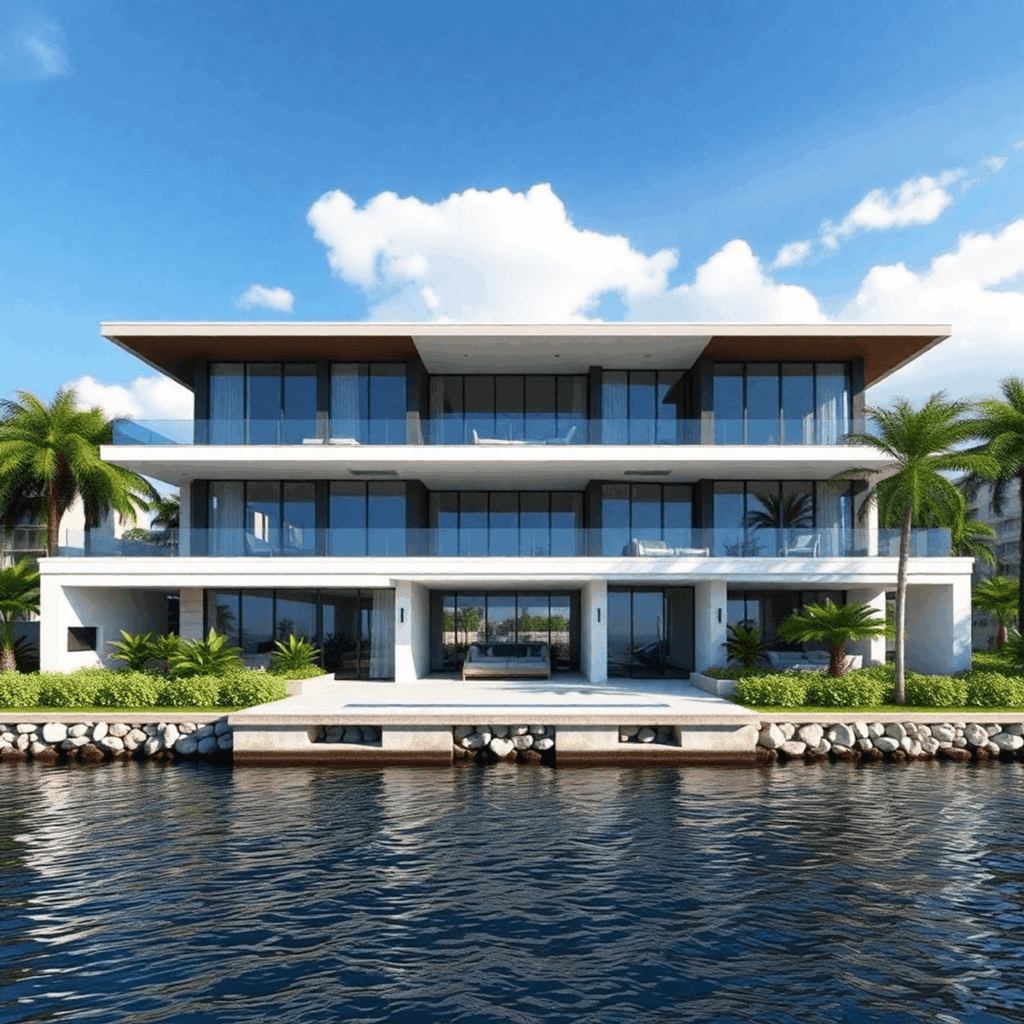
South Florida has no shortage of impressive 1990s estates, especially across Fort Lauderdale and greater Broward County. Many of these homes sit on prime lots with mature landscaping, strong neighborhoods, and waterfront access that would be difficult to replicate today.
However, the allure of these properties often leads owners to a significant dilemma: should you renovate what you have, or tear it down and build new? A well-run feasibility study can answer that question with less guesswork. It replaces assumptions with a clear view of what the lot allows, what the existing structure can realistically support, what modern codes and insurance will require, and what your ideal lifestyle program actually demands.

Why 1990s South Florida estates hit the “tear down vs. renovate” crossroads
Many luxury homes built in the 1990s were designed for a different version of South Florida living. Entertaining was more formal, indoor-outdoor transitions were less dramatic, and building standards were not shaped by the same storm, flood, and insurance realities owners face today.
Common triggers that push owners toward a major decision include:
- Outdated layouts with compartmentalized rooms and limited indoor-outdoor flow
- Low or inconsistent ceiling heights that make spaces feel dated
- Aging roofs, windows, HVAC systems, and electrical panels approaching end of life
- Water intrusion from stucco cracks, balconies, flashing failures, or old openings
- Dated elevations that no longer match neighborhood expectations
- Inefficient building envelopes that struggle with heat gain and humidity control
- Insurance pressures tied to roof age, opening protection, and wind mitigation features
Given these challenges, luxury home renovations could be a viable option. However, if the existing structure can no longer meet modern standards or personal needs, tearing down might be the best solution.
The goal of a feasibility study is simple: reduce risk before you commit. That includes risk in scope, cost, schedule, permitting, and long-term value. Instead of relying on a generic rule like “renovations always cost less,” you get a practical way to decide what creates the best outcome on your specific lot. This could involve waterfront and coastal home construction strategies or exploring luxury custom home building options that align more closely with your vision for the property.
Ultimately, whether you choose to renovate or rebuild entirely will depend on a multitude of factors including design preferences which can be informed by luxury home architecture design insights tailored to fit your unique style and requirements.
What a feasibility study looks like for a luxury home transformation
For homeowners, a feasibility study is a structured, preconstruction diligence process that evaluates the real-world path from “current house” to “future house.”
At the luxury level, it typically covers:
- Site conditions and constraints
- Existing structure and renovation limitations
- Zoning and code requirements
- Wind, flood, and insurance implications
- Preliminary budgets and schedule ranges
- Permitting pathway and likely review timelines
- Resale value and hold strategy
- Lifestyle fit, meaning how well the property can support the way you want to live
Luxury projects demand deeper diligence because budgets are higher, finishes are less forgiving, and lead times can drive the schedule as much as construction itself. On waterfront lots, you may also contend with seawalls, dock permits, flood elevations, and tighter staging access. Add HOA or neighborhood review requirements, and the “unknowns” multiply quickly.
A good feasibility study produces core deliverables you can act on:
- An existing-conditions review (site + structure + systems)
- Two options (renovation vs. new build) framed around your goals
- Preliminary budgets with clear assumptions and allowances
- A permitting and approvals roadmap
- A risk register that identifies cost and schedule threats early
This is also where an integrated team structure matters. Kass Construction & Development, a boutique, state-licensed luxury builder based in East Fort Lauderdale, typically supports feasibility work through a combination of licensed general contracting, project management, architecture and design partnerships, and owner’s representation. The value is continuity from the first evaluation through permitting and execution, with fewer handoffs and clearer accountability.
For more insights into how these processes work in detail, you might want to explore some of Kass Construction’s resources. They provide valuable information on various aspects of luxury home construction including construction permitting project management in South Florida.
Additionally, incorporating an architectural feasibility study into this process can further enhance your project’s success by providing detailed insights into the architectural aspects of your planned transformation.
Step 1: Start with the property, lot, zoning, and what you’re actually allowed to build
Before anyone debates finishes or floor plans, confirm what the lot can legally support.
Key zoning items that often change the answer:
- Setbacks that dictate how far you must stay from property lines
- Height limits that affect second-story additions and roof design
- Lot coverage or FAR (floor area ratio) that caps buildable area
- Floor area allowances and how they’re calculated for terraces, garages, and balconies
- Whether you can expand outward, upward, or both without variances
Then come the non-obvious site constraints that can surprise owners mid-project:
- Utility locations and whether they conflict with expansion plans
- Easements (drainage, utility, access) that limit building area
- Drainage patterns and low spots that complicate sitework
- Mature trees and tree protection requirements
- Septic-to-sewer transitions in certain areas
- Access for construction staging, deliveries, and crane days
On waterfront and coastal properties, feasibility often hinges on:
- Seawall condition and height relative to flood exposure
- Dock configuration and permitting requirements
- Shoreline rules and marine construction restrictions
- Flood zones and base flood elevation impacts on renovation and new build design
Add HOA, historic overlays, or neighborhood guidelines and the timeline can shift again. Some communities require architectural review for exterior changes, impose construction-hour restrictions, or have separate demolition approvals.
Why this step matters: if the lot supports the home you want, a new build may unlock value and performance that a renovation cannot. If restrictions are tight, a targeted renovation that works within the existing envelope can be the smarter, faster path.
Step 2: Assess the existing structure, bones, layout, and renovation “ceiling”
A 1990s estate can be a great renovation candidate, but only if the structure and geometry allow meaningful improvement without turning the project into a near-rebuild.
Structural realities commonly seen in 1990s South Florida luxury homes include:
- Slab foundations with grade beams that limit certain reconfigurations
- CMU walls that are durable but can reduce flexibility for openings
- Roof truss systems that may restrict ceiling changes or large spans
- Window openings and structural lintels that complicate “modernizing” elevations
Layout constraints are often the true friction point:
- Formal living and dining rooms that consume prime square footage
- Smaller kitchens relative to today’s expectations
- Limited connection to outdoor terraces and pool areas
- Narrow staircases and dated circulation patterns
- Master suites that feel separated in awkward ways rather than retreat-like
Then there is the envelope, where hidden conditions can swing renovation budgets:
- Roof remaining life and whether replacement is imminent
- Stucco cracking and recurring moisture entry points
- Flashing failures at roof transitions and penetrations
- Balcony waterproofing issues, a common source of concealed damage
- Evidence of long-term water intrusion that may involve mold remediation
Mechanical, electrical, and plumbing should be evaluated realistically:
- End-of-life HVAC systems and ductwork limitations
- Undersized electrical panels for modern loads
- Plumbing materials and fixture modernization requirements
- Generator readiness, transfer switches, and fuel source constraints
- Smart home and low-voltage infrastructure needs
The renovation “ceiling” is the point where every improvement you want begins to require structural changes, major code triggers, and full system replacement. A feasibility study identifies what can be kept with confidence and what becomes sunk cost.
Step 3: Code, wind, flood, and insurance, today’s rules can tip the scale
In South Florida, code compliance is not just a permitting checkbox. It can reshape your entire financial model.
One of the most important concepts in renovations is the “substantial improvement” threshold. If the scope and cost of your renovation crosses certain limits, especially in flood zones, you may be required to bring major aspects of the home into compliance with current standards. That can include elevating systems, updating structural connections, and meeting more stringent flood requirements as outlined in this NFIP Quick Guide.
Wind mitigation and opening protection can also push projects toward new-build-level upgrades:
- Impact-rated windows and doors
- Roof-to-wall connections and tie-down improvements
- Garage door ratings
- Secondary water barriers and underlayment requirements
Modern life-safety standards add more layers:
- Egress and emergency escape requirements
- Stair geometry and guardrail rules
- Tempered glass in specific locations
- Smoke and CO detection
- AFCI and GFCI electrical requirements
- Pool barrier compliance and door alarms where applicable
Then comes insurance, which is often the deciding factor owners underestimate. Older roofs, non-impact openings, aging electrical panels, and outdated plumbing can affect eligibility and premiums. A new build typically performs better in underwriting because it is designed from day one around wind, flood, and modern systems.
Practical takeaway: renovation can be cost-effective until compliance forces you into a scope that looks and prices like new construction, but without the same design freedom.
Step 4: Define the lifestyle program, what you want drives what’s feasible
You cannot make a confident tear-down versus renovation decision until you define the end state.
A strong program translates your vision into requirements:
- Target square footage and how it is distributed
- Bedroom and bathroom count
- Home office, gym/spa, theater, wine room, or safe room
- Staff suite or in-law suite with proper separation
- Storage expectations, including seasonal and bulk storage
Indoor-outdoor living is often the main driver in South Florida:
- Large-format sliders or zero-corner openings
- Covered terrace depth that truly shades and cools the space
- Summer kitchen design and venting requirements
- Pool program with sun shelf, spa, and fire features
- Landscape lighting and outdoor audio
Waterfront goals may include:
- Boat lift and dock configuration
- Seawall improvements
- Privacy screening and view corridor planning
Luxury performance targets are increasingly non-negotiable:
- Quiet HVAC with strong humidity control
- Whole-home generator and surge protection
- EV charging
- Smart home systems with reliable network design
- Whole-house water filtration and hot water performance
- High-end kitchen package that fits the way you cook and entertain
Program-first planning prevents regret because it forces honesty. If your must-haves require major structural changes, extensive additions, or a completely different massing, the feasibility study will show you whether renovation is realistic or whether you are trying to force a new home into an old frame.
The real comparison: renovation vs tear down on cost, timeline, and risk
At a high level, the trade-off looks like this:
Renovation can have a lower starting price, but higher uncertainty. Hidden conditions, structural surprises, and scope creep drive change orders if diligence is shallow. Matching new systems to existing framing, elevations, and ducts can also create expensive complexity.
New construction often has a higher baseline cost, but better predictability. You control the structure, systems, and layout from the beginning, and sequencing is usually cleaner. Demolition adds steps, but it can simplify everything that follows.
Timeline realities in both paths include design, permitting, long lead items, inspections, and final approvals. In luxury projects, windows and doors, cabinetry, stone, specialty lighting, and technology infrastructure can influence the schedule as much as framing and drywall.
Resale and hold value matter, too. On prime lots, many buyers pay a premium for true new construction with modern elevations, higher ceilings, and current-performance specs. Renovations can absolutely command strong value, but only when the bones, ceiling heights, and layout read as current rather than “updated, but still 1990s.”
Decision lens: choose the option that delivers your desired outcome with fewer irreversible compromises.

When renovating a 1990s estate usually makes sense
Renovation tends to win when the house has strong fundamentals and the transformation can be achieved without major re-engineering.
Typical green flags include:
- Sound structure and a roofline that can be upgraded cleanly
- A footprint you genuinely like, including ceiling heights and room proportions
- Stair placement and circulation that work with modest changes
- Great natural light and a relationship to the yard or waterfront that is already compelling
- HOA or neighborhood constraints that make teardown difficult, slow, or unpopular
Many owners succeed with a targeted transformation that focuses investment where it shows and where it improves performance:
- Impact openings and improved indoor-outdoor transitions
- Roof replacement and waterproofing details
- HVAC upgrades designed for humidity control and quiet operation
- Electrical modernization, generator readiness, and EV charging
- Exterior refresh that modernizes the elevation without forcing structural reinvention
A feasibility study helps define a renovation scope that is ambitious, but still rational.
When a teardown and new custom build is the smarter move
A teardown becomes the better business decision when the existing home fights your goals at every turn.
Common triggers include:
- A fundamentally wrong layout that would require near-total reconstruction to fix
- Chronic water intrusion and recurring envelope failures
- Structural deterioration or widespread concealed damage
- Ceiling heights, stair geometry, or massing that cannot be improved meaningfully
- Mechanical and electrical capacity that is insufficient without extensive rebuild work
- A desire for a larger or better-configured home and the lot allows it
For many owners, demolition is emotionally difficult. They see “waste.” In reality, a teardown can be the act of buying certainty: certainty in design freedom, certainty in performance, and often certainty in insurability.
If your goal is maximum long-term value, a new custom build can deliver modern architecture, stronger wind and flood performance, and a cohesive home where every system is integrated intentionally instead of adapted.
Permitting and approvals in Broward, Palm Beach, and Miami-Dade: what to expect
Permitting varies by municipality, but the high-level flow generally includes:
- Survey and existing conditions documentation
- Architectural and engineering plans
- Zoning review
- Building permit application and plan review comments
- Trade permits and coordination
- Inspections throughout construction
- Certificate of Occupancy (CO) or final approvals
Renovation versus new build differs in approvals in a few key ways. New construction often requires demolition permits, utility disconnect coordination, and more extensive plan review. Renovations can be faster on paper, but may slow down if the scope triggers additional code compliance or if the existing conditions differ from old plans.
Waterfront properties can add additional permitting layers for seawalls, docks, and marine construction work. These items may require coordination beyond the core building department.
Site logistics also matter:
- Right-of-way use for dumpsters, staging, or material deliveries
- Crane days and road restrictions
- Noise rules and construction hour enforcement
- Neighbor coordination where access is tight
An experienced local team helps reduce delays by coordinating architects and engineers, responding to plan comments efficiently, scheduling inspections in a way that keeps momentum. It’s also crucial to ensure that the property meets certain habitability standards during this process.
Budgeting the right way: preliminary numbers, contingencies, and value engineering without cheapening the home
Early budgets fail when they ignore what luxury projects actually include.
A usable preliminary budget separates:
- Hard costs (construction, trades, materials)
- Soft costs (architecture, engineering, surveys, permitting, consultants)
- Sitework (demolition, drainage, seawalls, utilities, soil conditions)
- Owner selections and allowances (kitchen, appliances, plumbing fixtures, lighting, smart home, millwork, stone)
Renovations typically require larger contingencies because older homes hide conditions behind walls and under finishes. The best way to control contingencies is not optimism. It is investigation and scope clarity, which is exactly what feasibility work is designed to create.
New builds also require thoughtful allowances, especially for long lead items such as windows and doors, cabinetry, specialty metalwork, and technology systems.
Value engineering in luxury should protect performance and craftsmanship. It should simplify complexity without reducing the home to builder-grade decisions. The most effective strategies tend to include:
- Simplifying rooflines and structural complexity
- Reducing over-custom detailing that adds labor without adding lasting value
- Making smart material substitutions that keep the same performance profile
- Aligning design ambition with what the budget can support before permitting begins
Kass Construction & Development often supports clients in an owner’s representative or project management role to keep budget transparency high, track assumptions, and create decision points before costs become irreversible.
A simple decision framework you can use before you commit
A practical way to decide is to score each path using a weighted checklist:
- Site allowance: can the lot support the home you want?
- Structural condition: can the existing bones be trusted?
- Code triggers: are you likely to cross substantial improvement thresholds?
- Program fit: can the house deliver your lifestyle without major compromise?
- Budget range: do the numbers align with your investment strategy?
- Risk tolerance: how comfortable are you with unknowns?
- Timeline: do you need speed, or is certainty more important?
- Resale or hold goals: are you optimizing for long-term ownership or market premium?
Red flags that push toward teardown:
- Low slab elevation in a flood zone
- Pervasive water damage or mold risk
- Unfixable layout and circulation
- Insufficient electrical or mechanical capacity without major rebuild
- Repeated envelope failures (roof, stucco, balcony waterproofing)
Green flags for renovation:
- Strong bones and a workable footprint
- Good elevation and ceiling heights you like
- Minimal exposure to major code trigger thresholds
- Great natural light and site orientation
- Circulation that can be improved without structural gymnastics
The most useful request you can make of your team is a two-option concept: one schematic renovation concept and one schematic new-build concept, each with preliminary budgets and schedule ranges so you can compare side by side.
The right answer is the one that reduces long-term compromise and protects value on that specific lot.
How Kass Construction & Development supports feasibility studies and execution in South Florida
Kass Construction & Development is a state-licensed, boutique luxury custom builder based in East Fort Lauderdale, serving Broward, Palm Beach, and Miami-Dade counties. The firm specializes in architect-driven custom homes, waterfront estates, and high-end renovations where precision, transparency, and risk control matter.
The integrated model brings key capabilities into one coordinated process:
- Licensed general contracting and luxury execution
- Permitting and project management
- Architecture and design partnerships aligned to high-end standards
- Owner’s representation to protect clarity in scope, budget, and decisions
- Access to real estate and attorney support to reduce transaction and contract risk
For clients, that structure typically means fewer handoffs, faster issue resolution, clearer budgeting, and better outcomes on complex waterfront and high-finish projects.
Whether you are evaluating a 1990s estate for a targeted transformation or considering a teardown for a fully custom home, the practical next step is the same: schedule an on-site evaluation to review your goals, the property’s constraints, and two feasible paths forward. This process also aligns with the South Florida luxury real estate trends, providing valuable insights into investment strategies in the region.
In these evaluations, having an owner’s representative can significantly contribute to effective and efficient construction projects by ensuring that all aspects of the project are managed effectively while keeping the client’s best interests at heart.
FAQs (Frequently Asked Questions)
Why do many 1990s South Florida estates face the decision to renovate or tear down?
Many luxury homes built in the 1990s in South Florida were designed for a different lifestyle and building standards. Common challenges include outdated layouts, low ceiling heights, aging systems like roofs and HVAC, water intrusion issues, dated elevations, inefficient building envelopes, and insurance pressures related to wind mitigation. These factors often lead owners to consider whether to renovate or completely rebuild.
What is the purpose of a feasibility study when deciding to renovate or rebuild a luxury home?
A feasibility study aims to reduce risk by providing a clear understanding of what the lot allows, what the existing structure can support, modern code and insurance requirements, and how well the property fits your lifestyle needs. It replaces assumptions with practical insights on scope, cost, schedule, permitting, and long-term value to help you make an informed decision between renovation and new construction.
What key elements does a luxury home feasibility study typically evaluate?
A comprehensive feasibility study for luxury home transformation evaluates site conditions and constraints, existing structure and renovation limitations, zoning and code requirements, wind/flood/insurance implications, preliminary budgets and schedules, permitting pathways with review timelines, resale value strategies, and lifestyle fit to ensure the property supports your desired living experience.
How does Kass Construction & Development support the feasibility study process for South Florida luxury homes?
Kass Construction & Development provides an integrated team approach combining licensed general contracting, project management, architecture and design partnerships, and owner’s representation. This continuity from initial evaluation through permitting and execution reduces handoffs and enhances accountability for luxury home renovations or new builds in East Fort Lauderdale and greater Broward County.
What are some common triggers that push owners of 1990s estates toward major renovation or rebuilding decisions?
Triggers include compartmentalized room layouts limiting indoor-outdoor flow, inconsistent ceiling heights making spaces feel dated, aging roofs/windows/HVAC nearing end of life, water intrusion from stucco cracks or flashing failures, outdated exterior elevations not matching neighborhood standards, inefficient building envelopes struggling with heat gain/humidity control, and insurance pressures related to roof age and wind mitigation features.
What deliverables can homeowners expect from a well-run feasibility study for their luxury home project?
Homeowners receive an existing-conditions review covering site and structure systems; two options framed around personal goals (renovation vs. new build); preliminary budgets with clear assumptions; a permitting roadmap outlining approvals process; and a risk register identifying potential cost or schedule threats early. These deliverables provide actionable insights to guide project planning effectively.