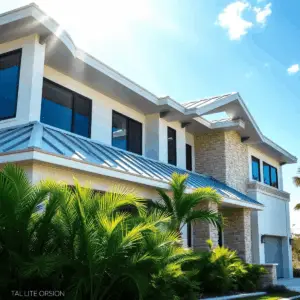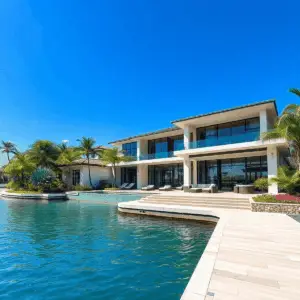
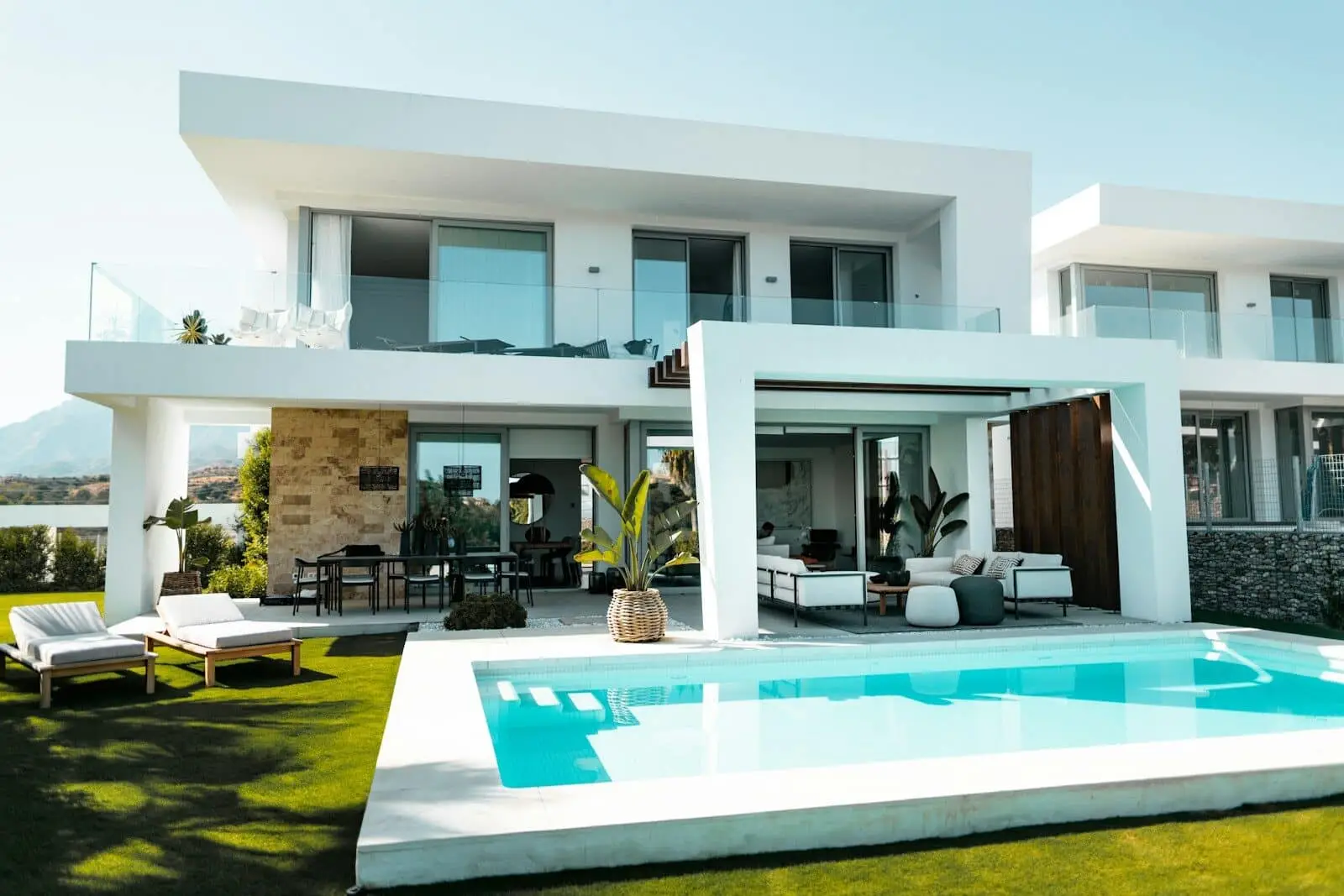
A useful luxury construction market outlook for Broward, Palm Beach, and Miami-Dade does not predict interest rates; it identifies the structural forces that hold regardless of them. Across the tri-county region those forces are consistent: buildable luxury land is effectively gone, the replacement cycle of teardowns and new estates is the market’s engine, resilience has become a pricing factor rather than a preference, and the buyers who matter pay for finished certainty. This outlook walks through each force and what it means for owners deciding whether, where, and how to build.
Key takeaways
- What frames the tri-county construction market outlook?
The construction market outlook rests on geography and stock age: the region's luxury corridors, canal and Intracoastal frontage, oceanfront pockets, estate enclaves, were built out decades ago, and much of what stands on them predates modern wind and flood standards. - How do macro conditions fit into a construction market outlook?
Macro conditions fit into a tri-county South Florida construction market outlook as timing, not thesis: rates and liquidity shift when buyers act, but the top of this market is unusually cash-driven and lifestyle-motivated, which dampens rate sensitivity. - Why are insurance and resilience reshaping the market?
Because the construction market outlook now runs through carriers pricing building quality: elevation, roof age and attachment, opening protection, and documented compliance all flow into premiums and insurability, which flow into value. - What should owners expect from costs and timelines?
The construction market outlook on costs is discipline over drama: luxury construction inputs, skilled trades, impact glazing, marine work, engineered structure, remain in demand across all three counties, so budgets reward early commitment and complete design rather than market timing.
What frames the tri-county construction market outlook?
The construction market outlook rests on geography and stock age: the region’s luxury corridors, canal and Intracoastal frontage, oceanfront pockets, estate enclaves, were built out decades ago, and much of what stands on them predates modern wind and flood standards. That combination makes replacement, not expansion, the market’s defining activity, and it is why construction demand at the top tier persists through rate cycles.
The county-level pictures behind this frame are in Fort Lauderdale luxury real estate market trends, the Boca Raton waterfront estate market analysis, and Miami-Dade custom home permitting and market trends.
How do macro conditions fit into a construction market outlook?
Macro conditions fit into a tri-county South Florida construction market outlook as timing, not thesis: rates and liquidity shift when buyers act, but the top of this market is unusually cash-driven and lifestyle-motivated, which dampens rate sensitivity. The honest read of this construction market outlook is that macro conditions move the pace of transactions while scarcity and stock age set their direction, and owners who build against the structural story rather than the headlines fare better.
How that logic translates into buy-versus-build decisions is covered in Boca Raton estate pricing and waterfront investment.
Why are insurance and resilience reshaping the market?
Because the construction market outlook now runs through carriers pricing building quality: elevation, roof age and attachment, opening protection, and documented compliance all flow into premiums and insurability, which flow into value. New construction built to and beyond current standards, verified against the Florida Building Code, carries a durable advantage that older stock cannot match without major retrofit.
FEMA’s guidance on how flood risk enters lending and insurance explains the mechanism; the design response is in hurricane resilience design and hurricane-resistant construction.
What should owners expect from costs and timelines?
The construction market outlook on costs is discipline over drama: luxury construction inputs, skilled trades, impact glazing, marine work, engineered structure, remain in demand across all three counties, so budgets reward early commitment and complete design rather than market timing. A custom build often runs 18 to 36 months and a high-end renovation 6 to 12 months, with approvals and marine scopes setting the pace on coastal parcels.
The category-level budget structure is in the luxury construction cost breakdown, and the vendor-side reality in the contractor and vendor ecosystem by county.
Where does the outlook differ by county?
In flavor, not direction: Broward’s story is canal-estate replacement centered on Fort Lauderdale; Palm Beach County pairs estate-municipality scarcity with club-community demand; Miami-Dade concentrates ultra-luxury demand under the strictest codes. All three counties in this construction market outlook reward the same strategy, control the best land you can, build to modern standards, and hold through cycles.
The regulatory differences that shape execution are mapped in building codes across Palm Beach, Broward, and Miami-Dade and the neighborhood logic in the best luxury custom home neighborhoods in Palm Beach County.
What will high-end buyers pay more for next?
The buyer side of the construction market outlook is what they already pay more for, deepened: documented resilience, turnkey completeness, wellness and automation infrastructure, resort-grade outdoor living, and dockage matched to real vessels. The premium for homes that deliver all of it without a punch list is the most reliable trend in the region, and it is a construction outcome, not a marketing one.
The feature sets are detailed in smart home technology, wellness-oriented design, and private resort homes.
How should an owner act on this construction market outlook?
The construction market outlook argues for three moves: underwrite land, fund pre-construction, and build to the strictest standard: those three moves capture the structural premium regardless of when the cycle turns. Kass Construction & Development, a state-licensed (CGC1529472) boutique luxury builder led by Mitch Kass, a licensed general contractor and attorney, with 100+ luxury residences delivered by Mitchell Kass and the firms he has led across Broward, Palm Beach, and Miami-Dade, is built for exactly that strategy.
The entry points are pre-construction planning and owner’s representation. Contact Kass Construction & Development or call 954-607-4335.
| Force | What is happening | What owners should do |
|---|---|---|
| Scarce land | Built-out luxury corridors with aging stock | Underwrite the lot, not the house on it |
| Teardown economics | Replacement beats renovation on many parcels | Compare land plus rebuild against buying finished |
| Insurance pricing | Carriers now price elevation, roof and openings | Build documented resilience, not just compliance |
| Input costs | Skilled trades, impact glazing, marine scope | Commit long-lead items in pre-construction |
| Regulatory divergence | Three counties, three review cultures | Design to the strictest standard that applies |
| Buyer expectations | Documented resilience and turnkey completeness | Keep the paperwork, it is now part of the asset |
Which structural forces shape the tri-county construction market outlook?
A construction market outlook for Broward, Palm Beach and Miami-Dade rests on forces that hold regardless of the interest-rate cycle, and the table below sets them out with their effect on what gets built and on the cost of building it.
| Force | Direction | Effect on what gets built | Effect on cost and timeline |
|---|---|---|---|
| Fixed supply of waterfront and estate lots | Unchanging | Teardown and replacement dominates; lot is a growing share of total cost | Land premium; demolition and seawall lines on most budgets |
| Aging housing stock below current flood standards | Growing | Elevation-driven rebuilds; substantial improvement rule tips renovations to rebuilds | Structure and elevation premium |
| Building code and product regime | Tightening over time | Impact glazing, tested roofing, continuous load paths as baseline | Envelope premium; product lead times |
| Insurance and resilience | Rising in importance | Elevation above requirement, backup power, documented resilience files | Higher first cost; lower carrying cost and better resale |
| Relocation and international demand | Elevated | Primary-residence programs; offices, staff, multi-generational wings | Trade and reviewer capacity stretched; longer approvals |
| Sea level and drainage planning | Long-term | Higher seawall caps, pumped drainage, elevated equipment | Site and marine premium |
| Technology and wellness expectations | Rising | Integrated automation, energy stacks, air and water quality systems | Infrastructure placed in the base contract |
The code baseline is the Florida Building Code, the flood baseline comes from FEMA, and population and migration data from the U.S. Census Bureau. The resilience force is developed in hurricane resilience design and the demand side in wealth migration to South Florida.
How does the construction market outlook differ by county?
The construction market outlook shares its forces across the three counties but expresses them differently, and the comparison below is what an owner should expect in each.
- Broward: the finger-canal neighborhoods of Fort Lauderdale drive replacement activity; seawall cap policy and flood elevation shape every waterfront rebuild; the market is tracked in Fort Lauderdale luxury real estate market trends.
- Palm Beach: island and town review boards, oceanfront CCCL permits and gated club communities set the pace; Boca Raton’s waterfront segments are analyzed in the Boca Raton waterfront estate market analysis and Boca Raton estate pricing trends; the neighborhoods in the best luxury custom home neighborhoods in Palm Beach County.
- Miami-Dade: the strictest product regime and county permitting, with waterfront islands and Coconut Grove leading replacement; see Miami-Dade custom home permitting, costs and market trends.
- All three: the code differences in building codes across Palm Beach, Broward and Miami-Dade and the trade capacity in the local contractor vendor ecosystem by county.
Which actions follow from the outlook for an owner planning a build?
A construction market outlook is useful only when it changes what an owner does, and the actions below follow from the forces above for anyone planning a luxury build in the region.
- Secure and test the lot first: flood zone, seawall condition, zoning envelope and soils decide the project before design; see pre-construction planning.
- Budget resilience as base scope rather than an upgrade, using hurricane-resistant construction and the cost structure in the Miami-Dade cost breakdown.
- Engage the builder during design and contract early for trades and long-lead products, since capacity is the constraint.
- Open the slowest approvals first, because the calendar is set by review capacity.
- Place technology and energy infrastructure in the base contract, per smart home technology for luxury custom homes, and design for the wellness and outdoor expectations in wellness-oriented design features and private resort homes with pools, spas and outdoor kitchens.
- Keep a complete resilience and construction file, because insurers and buyers now read it.
- Use independent oversight for a project of this scale, through owner’s representation for luxury homes.
Kass Construction & Development builds across Broward, Palm Beach and Miami-Dade with these forces treated as the operating environment rather than as news, and plans each project around the constraints the outlook describes.
Frequently Asked Questions
What is the most reliable trend in this construction market outlook?
Replacement: scarce, built-out luxury land under aging stock makes teardown-and-rebuild the region’s engine, and it persists through rate cycles because the land cannot be expanded and the old stock cannot meet modern standards without rebuilding.
Do interest rates change the luxury construction picture?
They change pace more than direction: the top tier is heavily cash-driven and lifestyle-motivated. Owners building for the long term are better served underwriting the lot and the structure than timing the rate cycle.
Why does resilience now show up in pricing?
Because insurers and lenders price it: elevation, opening protection, roof attachment, and documented compliance affect premiums and insurability, and buyers capitalize those differences into offers. Documented resilience has become a financial attribute, not a preference.
Is now a good time to build in South Florida?
The structural construction market outlook answer: the best lots rarely wait for perfect conditions, and construction inputs stay in demand in every cycle. Owners who secure land, fund design properly, and commit early have consistently outperformed owners who waited.
Which county has the strongest outlook?
In this construction market outlook they differ in flavor rather than strength: Broward’s canal replacement cycle, Palm Beach County’s estate scarcity, and Miami-Dade’s ultra-luxury concentration each rest on the same foundation of finite land and rising standards.
How long will a build started now take?
A custom build often runs 18 to 36 months plus front-end approvals; a high-end renovation often 6 to 12 months. Coastal parcels add marine and state review tracks that deserve the earliest start.
What single move best protects a luxury construction investment?
Buying the land right: water type, elevation, seawall, and approvals outlook decide more value than any finish decision. Underwriting the lot with construction eyes before closing is the highest-leverage step in the entire project.