Smart home technology in a luxury custom home is not a gadget list; it is infrastructure. Done well, it disappears: lighting follows the day, climate holds itself steady against South Florida humidity, security watches quietly, and one interface runs it all. Done poorly, it becomes the most expensive frustration in the house. The difference is decided during construction, in the wiring, the network, and the design decisions made before drywall, which is why smart home technology belongs in the architectural conversation from the first meeting.
Key takeaways
- What is a smart luxury home, really?
A smart luxury home in South Florida is a home whose core systems, lighting, climate, shades, security, audio, energy, run on one integrated platform with professional-grade infrastructure behind it. - Does smart home technology increase property value?
In the South Florida luxury tier, smart home technology has moved from differentiator to expectation: buyers assume integrated lighting, climate, security, and network infrastructure, and they discount homes that need retrofitting. - Which core systems belong in a luxury build?
Seven core systems belong in a South Florida luxury build, planned together: whole-home lighting control with scenes and daylight logic; climate zoning with humidity management; motorized shades coordinated with lighting; layered security and access control; distributed audio and media; energy management with backup power; and the network and wiring backbone that carries all of it. - What is different about smart home technology in South Florida?
Climate and storms shape the specification: humidity control is a first-class automation job, not an afterthought; outdoor equipment must be rated for salt air; backup power and cellular failover keep the home intelligent through outages; and hurricane season makes remote monitoring, leak detection, and camera verification genuinely valuable rather than novel.
What is a smart luxury home, really?
A smart luxury home in South Florida is a home whose core systems, lighting, climate, shades, security, audio, energy, run on one integrated platform with professional-grade infrastructure behind it. The luxury standard is unified control and quiet reliability: scenes instead of switches, automation instead of apps, and a wired backbone that keeps everything responsive years after installation.
Professional platforms in this tier (Control4, Crestron, Savant and their peers) are chosen and compared in integrating smart systems in luxury homes, with the full automation architecture in whole home automation.
Does smart home technology increase property value?
In the South Florida luxury tier, smart home technology has moved from differentiator to expectation: buyers assume integrated lighting, climate, security, and network infrastructure, and they discount homes that need retrofitting. The value shows up less as a premium line item and more as buyer confidence, faster sales, and the absence of objections.
Which specific features actually move resale is ranked in high-end smart home features, and the market context in the tri-county construction market outlook.
Which core systems belong in a luxury build?
Seven core systems belong in a South Florida luxury build, planned together: whole-home lighting control with scenes and daylight logic; climate zoning with humidity management; motorized shades coordinated with lighting; layered security and access control; distributed audio and media; energy management with backup power; and the network and wiring backbone that carries all of it. Each is good alone; the value is in their integration.
The deep dives: smart lighting and window treatments, advanced home security and surveillance, and energy management and sustainability systems.
What is different about smart home technology in South Florida?
Climate and storms shape the specification: humidity control is a first-class automation job, not an afterthought; outdoor equipment must be rated for salt air; backup power and cellular failover keep the home intelligent through outages; and hurricane season makes remote monitoring, leak detection, and camera verification genuinely valuable rather than novel.
Federal guidance on planning for outages is at Ready.gov; the building-science side of humidity lives in passive cooling and natural ventilation and the resilience strategy in hurricane resilience design.
What are the most common smart home mistakes?
The most common smart home mistakes on South Florida builds are five repeat offenders: wiring for today instead of tomorrow; mixing consumer gadgets with professional systems and expecting them to cooperate; treating the network as an afterthought; skipping the integrator until after design; and automating everything instead of the things the family actually does daily. Every one of them is cheaper to avoid than to fix.
Retrofitting around these mistakes in an existing home is its own discipline, covered in overcoming integration challenges.
What should owners expect on cost and timeline?
Smart home technology scales with ambition: the backbone, wiring, network, panels, is a modest share of a luxury budget and the highest-value spend; finished systems scale from essential lighting-climate-security packages to full estate automation. The schedule rule matters more than any number: design decisions belong in pre-construction, rough-in happens with the walls open, and commissioning deserves real time before move-in.
Where the technology budget sits among the other categories is shown in the luxury construction cost breakdown, and the planning phase in pre-construction planning.
How does Kass Construction & Development deliver smart homes?
As construction, not accessories: Kass Construction & Development, a state-licensed (CGC1529472) boutique luxury builder led by Mitch Kass, a licensed general contractor and attorney, with 100+ luxury residences delivered by Mitchell Kass and the firms he has led across Broward, Palm Beach, and Miami-Dade, brings the integrator into design, wires beyond today’s needs, and commissions systems before handover, so the technology works the day the family moves in.
A custom build often runs 18 to 36 months and a high-end renovation 6 to 12 months; technology decisions are sequenced within both in future-proofing your smart home technology investment. Contact Kass Construction & Development or call 954-607-4335.
Which smart home technology systems belong in a luxury build, and what does each require?
Smart home technology in a luxury custom home is seven systems on one platform, and each has an infrastructure requirement that must be in the walls before drywall.
| System | What it does | Infrastructure it needs |
|---|---|---|
| Lighting control | Scenes, schedules, daylight tracking, keypads instead of banks of switches | Centralized or wired keypad backbone; neutral wiring; dimmer-compatible fixtures |
| Motorized shading | Solar control, privacy, storm-day closure | Power and control to every pocket; pockets framed in |
| Climate and humidity | Zoning, humidity setpoints, pre-cooling | Variable-speed equipment; sensors per zone; dedicated dehumidification |
| Security and access | Cameras, intrusion, credentialed doors and gates, logs | Segmented network; conduit to perimeter; door prep for hardware |
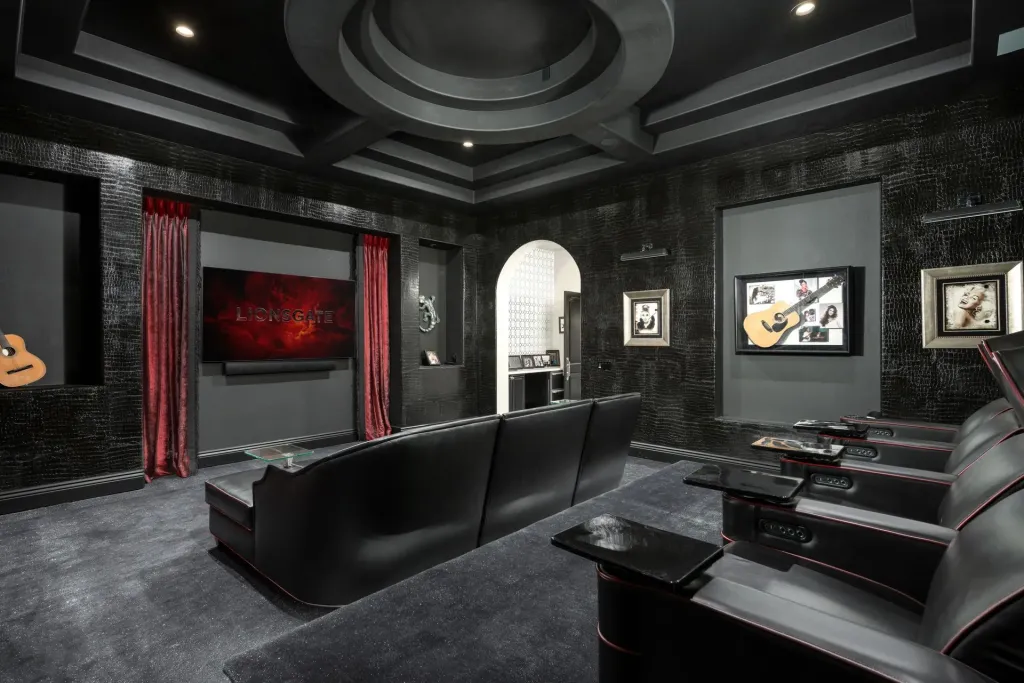
| Audio and video | Distributed audio, media rooms, outdoor zones | Structured cabling to every zone; equipment room with cooling |
| Energy and backup | Generator, battery, solar, load management, leak detection | Transfer switch, panel space, monitoring on critical circuits |
| Network | The layer everything else runs on | Wired backhaul, enterprise access points, equipment room with power and cooling |
Each system is developed in its own guide: lighting and window treatments, security and surveillance, and energy management.
How does smart home technology get built into a South Florida house, stage by stage?
- Design. The integrator joins the architect and builder to place keypads, panels, equipment rooms, and shade pockets on the drawings.
- Rough-in. Structured cabling, conduit for the unknown, low-voltage boxes, and shade power run before insulation and drywall; this is the stage that cannot be redone cheaply.
- Trim. Keypads, touch panels, speakers, cameras, and shades installed after finishes.
- Programming and commissioning. Scenes, schedules, and integrations built and tested with the owner present.
- Service. A support agreement for software updates and platform changes.
The construction sequence is coordinated with the rest of the build as described in integrating smart systems in luxury homes.
What does the South Florida climate demand of smart home technology?
- Equipment rooms need real cooling. Racks in a hot closet fail early.
- Outdoor devices need salt-rated housings. Cameras, speakers, keypads, and access readers on the coast corrode otherwise.
- Humidity is a control variable. Automation that manages setpoints protects millwork, stone, and art.
- Storm mode is a scene. Shades down, non-essential loads shed, generator status on the panel, cameras recording, before the owner leaves.
- Backup power keeps the automation alive. Sensors, pumps, and cameras are worthless without it.
Household preparedness guidance is published at Ready.gov; the resilience side of the brief is developed in hurricane resilience design and luxury sustainability.
How do you keep smart home technology from dating the house?
- Wire generously and neutrally, so any control system can run on the same backbone.
- Choose professional platforms with a deep local integrator bench.
- Keep short-cycle devices (cameras, touch panels, streaming hardware) in a refresh budget rather than in the walls.
- Segment the network so security gear is isolated and updates do not break the whole house.
- Document everything: rack layouts, IP schedules, scene definitions, and the service contact.
The longevity argument is made in full in future-proofing a smart home technology investment, and the retrofit case in smart home integration challenges in existing homes.
Frequently Asked Questions
What does smart home technology include in a luxury custom home?
Integrated lighting, climate and humidity control, motorized shades, security and access, distributed audio, energy management with backup power, and the wired network backbone, all running on one professional platform with unified control.
Is smart home technology worth it for resale?
At the luxury tier it is expected: buyers assume integration and discount homes that lack it. The strongest returns come from infrastructure, lighting, climate, security, and network quality, rather than novelty features.
When should smart home planning start in a build?
In pre-construction, alongside architecture: wiring paths, panel locations, and system choices shape framing and electrical design. Deciding after drywall converts an elegant infrastructure job into a compromise-laden retrofit.
Can consumer smart gadgets be mixed with professional systems?
Sparingly and deliberately: professional platforms can incorporate select consumer devices, but a home assembled from disconnected apps never delivers luxury-grade reliability. One integrated platform with a wired backbone is the standard that holds up.
How does South Florida’s climate affect smart home design?
Humidity management becomes an automation priority, outdoor equipment needs salt-air ratings, and storm season makes backup power, cellular failover, leak detection, and remote monitoring genuinely important rather than optional extras.
What happens to smart systems during a power outage?
A properly designed estate stays intelligent: generator or battery backup carries the network, security, and critical automation, and cellular failover keeps remote access alive. Homes without that planning go dark in exactly the moments monitoring matters most.
Who should install smart home technology in a luxury build?
A professional integrator working inside the construction team from design onward, coordinated by the builder so wiring, trades, and commissioning happen in the right sequence. The integrator relationship outlives the build through service and upgrades.
How early should smart home technology enter the design process?
Before walls close, ideally before drawings finish. Smart home technology lives on wiring, conduit, and equipment space that cost little during design and plenty after drywall, so the integrator belongs in preconstruction meetings alongside the architect rather than at the finish line.
What is the best smart home system for luxury homes?
Control4, Savant, and Crestron are leading platforms
Can smart technology be added after construction?
Yes—but it is more efficient during initial build
How much does a smart home system cost?
Typically $50K–$300K+ depending on scope