
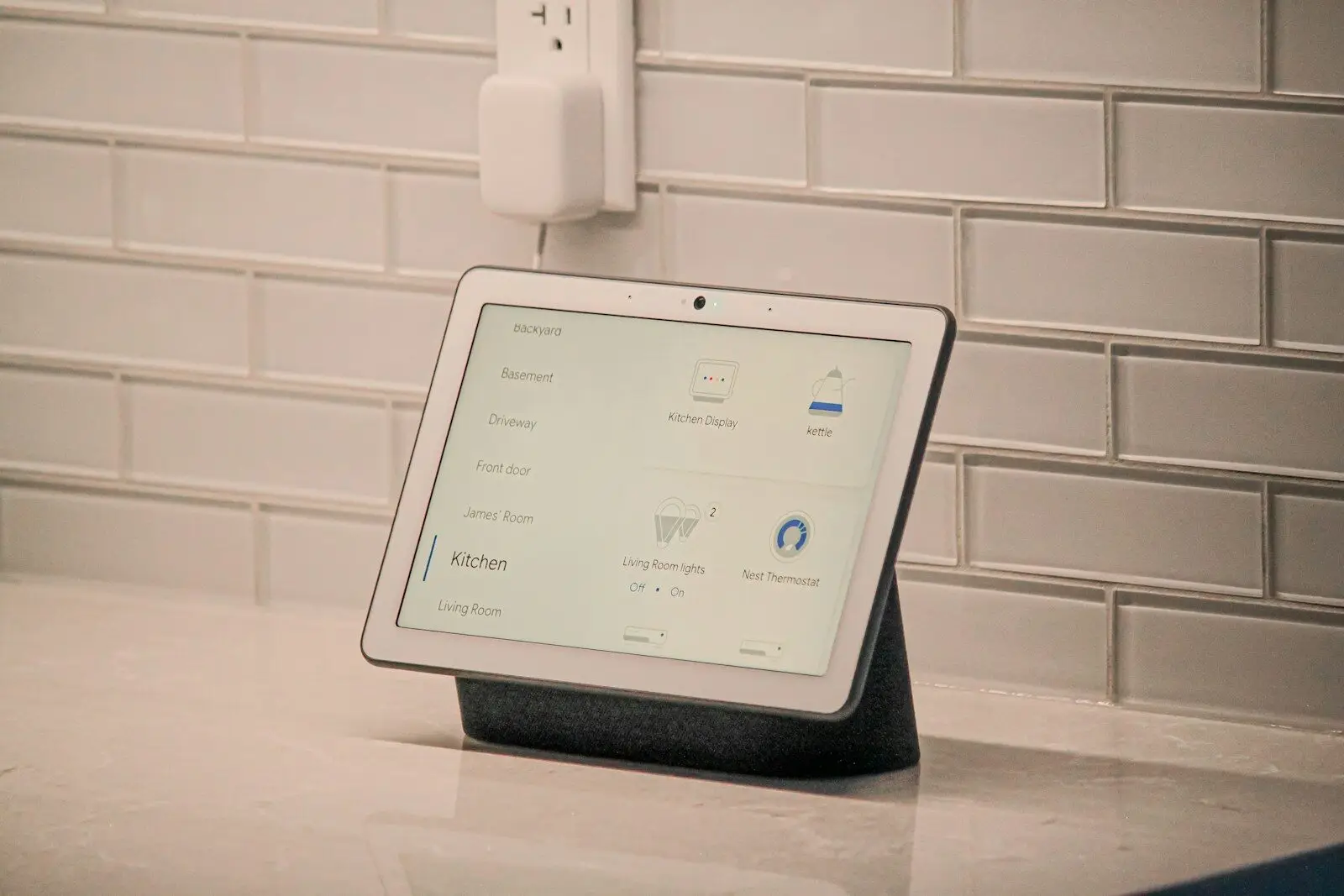
Whole home automation is what separates a house with smart devices from an estate that runs itself: one architecture in which lighting, climate, shades, security, energy, and audio act on shared logic instead of separate apps. In South Florida the case is stronger than anywhere, because automation here also manages humidity, storm readiness, and energy through the region’s long cooling season. This guide covers the backbone, the systems that earn their place, voice control done right, and the roadmap from concept to move-in.
Key takeaways
- What does whole home automation actually mean?
Whole home automation in a South Florida estate means every major system on one platform, acting on shared conditions: sunset raises exterior lighting and lowers shades on the western glass; departure arms security, adjusts climate, and shuts down zones; a storm alert runs a readiness scene. - What backbone does an automated estate require?
An automated South Florida estate requires wired infrastructure sized for decades: structured cabling to every zone, an enterprise-grade network with full-property coverage, dedicated equipment space with power and cooling, lighting circuits designed for control, and conduit for the future. - Where does whole home automation save real energy?
Automation saves real energy in a South Florida home in the systems that run constantly: climate automation that pre-cools intelligently and manages humidity setpoints; lighting that follows occupancy and daylight; shades that block solar gain before the HVAC pays for it; pool and irrigation equipment scheduled off peak; and monitoring that surfaces waste instead of hiding it in the bill. - How should voice control be designed?
Voice control in a luxury home should be designed as a convenience layer, not the foundation: voice excels at momentary requests, a scene, a temperature nudge, music, and fails as the primary interface for a whole estate.
What does whole home automation actually mean?
Whole home automation in a South Florida estate means every major system on one platform, acting on shared conditions: sunset raises exterior lighting and lowers shades on the western glass; departure arms security, adjusts climate, and shuts down zones; a storm alert runs a readiness scene. The measure of whole home automation is how rarely anyone touches a control, not how many things can be controlled.
The platform decision underneath it is covered in integrating smart systems in luxury homes, and the owner-level overview in smart home technology in luxury custom homes.
What backbone does an automated estate require?
An automated South Florida estate requires wired infrastructure sized for decades: structured cabling to every zone, an enterprise-grade network with full-property coverage, dedicated equipment space with power and cooling, lighting circuits designed for control, and conduit for the future. Wireless conveniences ride on top; the reliability that makes automation trustworthy lives in the walls.
The long-horizon wiring strategy is detailed in future-proofing your smart home technology investment.
Where does whole home automation save real energy?
Automation saves real energy in a South Florida home in the systems that run constantly: climate automation that pre-cools intelligently and manages humidity setpoints; lighting that follows occupancy and daylight; shades that block solar gain before the HVAC pays for it; pool and irrigation equipment scheduled off peak; and monitoring that surfaces waste instead of hiding it in the bill. In a South Florida cooling season those behaviors compound.
ENERGY STAR’s guidance on smart home energy practices covers the fundamentals; the estate-scale strategy, solar, batteries, generators included, is in energy management and sustainability systems.
How should voice control be designed?
Voice control in a luxury home should be designed as a convenience layer, not the foundation: voice excels at momentary requests, a scene, a temperature nudge, music, and fails as the primary interface for a whole estate. The luxury pattern is automation first, keypads and touch panels second, apps for remote access, and voice where it genuinely helps, with privacy settings configured deliberately during commissioning.
The full control-layer ranking is laid out in home automation for luxury homes.
How does automation support security and storm resilience?
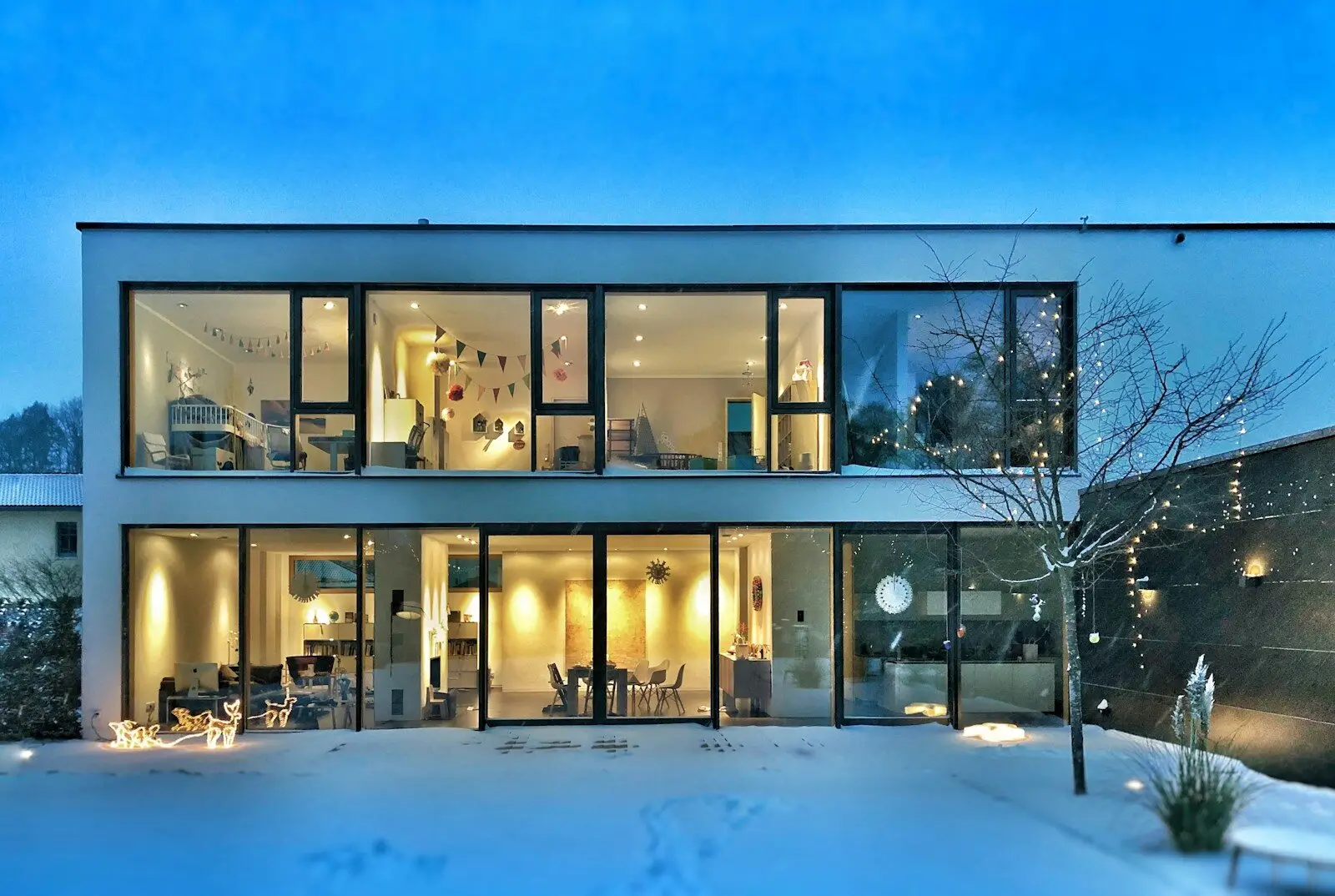
Automation supports security and storm resilience on the Florida coast by converging systems that usually live apart: cameras, access control, and intrusion detection share the automation brain, so lighting responds to events and the estate simulates occupancy when empty; backup power and cellular failover keep intelligence alive through outages; and leak detection with automatic shutoff guards the most statistically likely damage in any luxury home: water.
The security architecture is covered in advanced home security and surveillance, outage planning at Ready.gov, and the storm-readiness design frame in hurricane resilience design.
What changes between a new build and a renovation?
What changes between a South Florida new build and a renovation is access to the walls: a new build wires the full backbone with zero compromise during rough-in, while a renovation works within existing structure, prioritizing wireless-capable lighting, retrofit shading, and network upgrades where cabling cannot reach. Both succeed with the same discipline, design first, one platform, real commissioning, on different constraint budgets.
Retrofit strategy is expanded in overcoming integration challenges in existing luxury homes, and the build-versus-renovate economics in renovation versus new construction.
How does Kass Construction & Development deliver automated estates?
By building the automation with the house: Kass Construction & Development, a state-licensed (CGC1529472) boutique luxury builder led by Mitch Kass, a licensed general contractor and attorney, with 100+ luxury residences delivered by Mitchell Kass and the firms he has led across Broward, Palm Beach, and Miami-Dade, sequences whole home automation through design, rough-in, trim, and commissioning inside a custom build of often 18 to 36 months or a high-end renovation of 6 to 12 months.
The planning phase that locks it in is described in pre-construction planning. Contact Kass Construction & Development or call 954-607-4335.
Which systems does whole home automation bring together, and on what logic?
Whole home automation is defined by the systems it unifies and by the shared conditions they respond to, and a table makes the scope of a real estate-grade installation concrete.
| System | What automation controls | Shared conditions it responds to |
|---|---|---|
| Lighting | Scenes by room and time, circadian color, exterior and landscape lighting, art lighting | Time of day, occupancy, daylight, mode (home, away, entertain, night) |
| Shades and glazing | Motorised shades, drapery, exterior screens, switchable glass | Sun position, interior temperature, glare, storm mode |
| Climate | Zoned HVAC, dehumidification, ventilation, pool and spa heat | Occupancy, outdoor humidity, schedule, energy price |
| Security and access | Cameras, alarm, gates, doors, dock and boat lift | Presence, schedule, alerts |
| Energy | Generator, battery storage, solar, load shedding, EV charging | Grid status, storm warnings, tariff windows |
| Water | Leak detection, main shut-off, irrigation, pool chemistry and level | Sensors, weather forecast, occupancy |
| Audio and video | Distributed audio, theater, outdoor entertainment | Scenes and modes |
| Storm and flood | Shutters, barriers, pumps, equipment shutdown sequences | Weather feeds, water-level sensors |
The platform choice that makes this possible is discussed in integrating smart systems in luxury homes, and the flood layer in smart flood mitigation technologies.
What does the backbone of an automated South Florida estate require?
Whole home automation depends on infrastructure sized for decades, and the backbone is specified during design and installed while the walls are open.
- A dedicated equipment room above the flood level, cooled, on clean and backed-up power, with rack space for growth.
- Structured cabling to every room and device location, fiber between structures and to the dock, and conduit to every exterior point.
- Enterprise networking with wired access points, segmented networks for devices and cameras, and cellular backup for outages.
- Local control processors holding the logic, so the house works without the internet and without any vendor’s cloud.
- Hard-wired lighting control, shade motors and sensors in the principal rooms, avoiding battery devices.
- Surge protection at the service entrance and at the rack, plus battery or generator support for the network and processors.
- Documentation: as-built low-voltage drawings, device schedules and photographs of every cable path before drywall.
The construction phases in which this work lands are set out in how long it takes to build a custom luxury home.
Where does whole home automation save energy and improve resilience?
Whole home automation earns its keep in South Florida through the systems that run constantly and through the days when the grid does not.
- Climate: zoning, humidity control and occupancy-based setbacks act on the largest energy load in a South Florida home; efficiency benchmarks are published by ENERGY STAR.
- Shading: automated shades and screens track the sun and cut cooling load on glass walls, working with the passive strategies in passive cooling and natural ventilation.
- Lighting: LED scenes, daylight harvesting and vacancy sensing reduce both energy and heat gain.
- Pool and irrigation: schedules tied to weather data avoid heating and watering when they are not needed.
- Energy: generator, batteries and solar are coordinated so critical loads carry through outages, with load shedding to extend runtime; see energy management and sustainability systems.
- Storm mode: one command closes shutters, deploys barriers, secures the dock, shuts down vulnerable equipment and confirms each step, aligned with household guidance from Ready.gov and the design principles in hurricane resilience design.
How is whole home automation delivered on a new build versus a renovation?
Whole home automation is easiest on a new build and entirely possible on a renovation, and the difference lies in access to the walls and in the order of work.
- New build: the backbone goes in with the rough-ins, the integrator works from coordinated drawings, and commissioning is part of close-out; see smart home technology for luxury custom homes.
- Renovation: cable paths are surveyed first, wireless is used only where walls cannot be opened, and the equipment room is often the first space built; the trade-offs are compared in renovation vs new construction.
- Both: voice control is layered on as a convenience rather than the foundation, security is integrated as in advanced home security and surveillance, and the platform is chosen for a ten-year life; see smart home technology investment and future-proofing.
- Both: the common failures are avoidable, as listed in smart home integration challenges, and the features worth funding are ranked in high-end smart home features that add value.
Kass Construction & Development delivers automated estates across Broward, Palm Beach and Miami-Dade with the integrator at the design table from the start; the planning sequence is in pre-construction planning and the wider technology picture in home automation for luxury homes.
Frequently Asked Questions
What is whole home automation compared to smart devices?
Smart devices respond to commands; whole home automation acts on shared logic across every system, time, weather, occupancy, and events, so the estate largely runs itself. The difference is architecture: one platform and a wired backbone versus a collection of apps.
Does whole home automation really lower energy costs?
The always-on systems make it real: intelligent climate and humidity management, occupancy-based lighting, solar-gain control through shades, and off-peak scheduling compound across South Florida’s long cooling season, and monitoring keeps the savings visible.
Is voice control reliable enough to run an estate?
As a layer, yes; as the foundation, no. The pattern that holds up is automation doing the routine work, keypads and panels for deliberate control, apps for remote access, and voice for momentary convenience.
What happens to an automated home during a hurricane?
A properly designed estate gets more useful: backup power carries the network and security, cellular failover preserves remote access, cameras verify conditions, and leak detection guards against water damage while the family is away.
Can an existing luxury home get whole home automation?
Yes, within constraints: renovations prioritize wireless-capable lighting, retrofit shading, and network upgrades, reserving wired infrastructure for wherever walls open. A high-end renovation often runs 6 to 12 months, and automation scope rides on it.
How is privacy handled with voice assistants and cameras?
Deliberately, at commissioning: microphone and camera zones agreed with the owner, privacy settings configured, guest modes defined, and network security hardened. Professional integration treats privacy as a specification, not an accident.
When do automation decisions need to be made in a build?
During design: circuits, wiring, keypad locations, and equipment space commit at rough-in. Deciding early costs nothing; deciding late converts an infrastructure job into a retrofit.