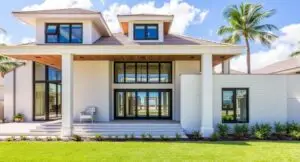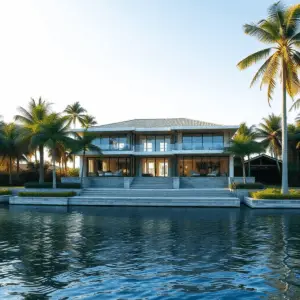
The Fort Lauderdale luxury real estate market is defined by one structural fact: the waterfront is finite. The canals, Intracoastal frontage, and beach blocks that made the city famous cannot be expanded, while the homes sitting on them age out of relevance. That tension, scarce irreplaceable lots under houses built for another era, drives nearly every trend that matters to a high-end buyer or builder today: the teardown and new-construction cycle, the premium for turnkey modern resilience, and the growing selectivity of wealthy buyers who know exactly what a finished waterfront estate should offer.
Key takeaways
- What is actually driving the Fort Lauderdale luxury real estate market?
Structure, not headlines, drives the Fort Lauderdale luxury real estate market. - Why does waterfront hold value best in Fort Lauderdale?
Waterfront holds value best in Fort Lauderdale because it is the one thing that cannot be built again. - Why are teardowns and new construction leading the luxury segment?
Teardowns lead the Fort Lauderdale luxury segment because the land outvalues the house. Much of the canal-front stock dates to the 1950s through 1980s: low elevations, aging seawalls, layouts and openings that predate modern wind and flood standards. - What are selective luxury buyers actually paying for now?
Selective Fort Lauderdale luxury real estate buyers are paying for finished certainty.
What is actually driving the Fort Lauderdale luxury real estate market?
Structure, not headlines, drives the Fort Lauderdale luxury real estate market. The drivers that persist through every rate cycle are: a fixed supply of deepwater and Intracoastal lots; an aging stock of mid-century canal homes that no longer meet modern code, insurance, or lifestyle expectations; sustained in-migration of wealth; and a widening value gap between new resilient construction and everything else. Read those forces and short-term noise matters much less.
Buyers weighing the broader region can compare this market with the tri-county picture in the luxury construction market outlook and the Boca Raton estate pricing analysis.
Why does waterfront hold value best in Fort Lauderdale?
Waterfront holds value best in Fort Lauderdale because it is the one thing that cannot be built again. Fort Lauderdale’s canal system and Intracoastal frontage offer something almost no other US city can: private dockage for serious vessels minutes from an international airport and open ocean. Deepwater lots with good bridge clearance and protected exposure sit at the top of the hierarchy, and their scarcity insulates them in soft markets.
What that lifestyle looks like day to day is covered in waterfront luxury living, and the construction side in waterfront home construction in South Florida.
Why are teardowns and new construction leading the luxury segment?
Teardowns lead the Fort Lauderdale luxury segment because the land outvalues the house. Much of the canal-front stock dates to the 1950s through 1980s: low elevations, aging seawalls, layouts and openings that predate modern wind and flood standards. For a growing share of premium lots, the highest and best use is a new estate engineered to current code, which is why teardown-and-build activity concentrates exactly where Fort Lauderdale luxury real estate is most valuable: on the water.
The engineering gap between old and new stock is real: current wind-borne debris and opening protection requirements are verified against the Florida Building Code, and buyers can see how far standards have moved in hurricane-resistant construction. Older homes in flood zones also face the substantial-improvement rule, which can turn a major renovation into a require-full-compliance event; the mechanics are explained in flood zone requirements for waterfront construction.
What are selective luxury buyers actually paying for now?
Selective Fort Lauderdale luxury real estate buyers are paying for finished certainty. The premium has shifted toward homes that are already resilient, already smart, and already beautiful: impact glazing and elevated construction, whole-home automation, resort-grade outdoor living, wellness features, and dockage ready for today’s larger vessels. Buyers discount projects; they compete for turnkey. That gap is the quiet engine of the Fort Lauderdale luxury real estate market.
The feature sets commanding attention are detailed in smart home technology for luxury custom homes, private resort homes, and wellness-oriented design features.
Should you buy an existing estate or build custom?
Buying an existing estate or building custom in Fort Lauderdale depends on what the market offers against what you want. Buying delivers speed and a known product, at a premium for turnkey quality. Building custom converts a dated house on a superb lot into exactly the estate you want, at current code, with a custom build often running 18 to 36 months. On scarce deepwater lots, building is frequently how sophisticated buyers win in Fort Lauderdale luxury real estate.
The decision framework is laid out in choosing the right luxury custom home builder and the budgeting logic in the luxury construction cost breakdown. A high-end renovation, where the bones justify it, often runs 6 to 12 months.
How do you evaluate a Fort Lauderdale lot or teardown before you commit?
Evaluate a Fort Lauderdale lot or teardown by underwriting the land, not the listing: flood zone and base flood elevation; seawall age and condition; dock rights, water depth, and bridge clearance to open water; exposure and orientation; and the permitting picture for what you intend to build. In Fort Lauderdale luxury real estate, these five factors move value more than anything inside the existing house.
Start with the property’s flood designation at the FEMA Flood Map Service Center (FEMA also explains how flood risk affects lending and insurance for real estate transactions), then work through what to know before building a waterfront home, elevated foundation design, and the permitting process. Permits in the city run through Broward County’s building authorities and Fort Lauderdale’s own development services depending on jurisdiction.
How does Kass Construction & Development fit into this market?
Kass Construction & Development is a state-licensed (CGC1529472) boutique luxury builder headquartered in East Fort Lauderdale, led by Mitch Kass, a licensed general contractor and attorney, with 100+ luxury residences delivered by Mitchell Kass and the firms he has led across Broward, Palm Beach, and Miami-Dade. The firm builds exactly the product this market rewards: new resilient waterfront estates and deep renovations of homes whose lots outclass their houses.
Anyone can verify the license through the Florida DBPR license portal. For buyers acquiring a lot or teardown, owner’s representation and pre-construction planning protect the investment from day one. Contact Kass Construction & Development or call 954-607-4335.
Which Fort Lauderdale neighborhoods define the luxury waterfront market?
Fort Lauderdale luxury real estate is a map of finger-canal neighborhoods, each with its own water, bridge, and lot profile, and the profile decides what can be built.
| Neighborhood | Water profile | What buyers and builders weigh |
|---|---|---|
| Las Olas Isles | Deepwater canals, close to the Intracoastal and inlet | Yacht access, lot orientation, seawall age on older stock |
| Harbor Beach | Deepwater, gated, near the beach | Private beach access, large lots, teardown replacement cycle |
| Rio Vista | Canals off the New River | Elevation strategy, bridge clearance, walkable to downtown |
| Coral Ridge and Coral Ridge Country Club | Canals and Intracoastal frontage | Golf and boating together; wide-water premiums |
| Bermuda Riviera, Lauderdale Isles, Citrus Isles | Canal-front lots with private docks | Renovate-or-rebuild math on mid-century houses |
| Fort Lauderdale Beach, Lauderdale-by-the-Sea, Hillsboro Beach | Oceanfront and Intracoastal | Coastal Construction Control Line review, VE-zone construction |
| Victoria Park, Colee Hammock, Tarpon River | River and canal frontage near downtown | Narrower water, historic character, renovation-heavy |
Each neighborhood has its own guide, starting with Las Olas Isles waterfront homes, Harbor Beach waterfront homes, and Fort Lauderdale waterfront homes and complex permitting.
What does the Fort Lauderdale luxury real estate replacement cycle look like in practice?
- A mid-century or 1980s house on superb water lists, usually priced on the lot rather than the structure.
- The buyer underwrites the land: flood zone and base flood elevation, seawall condition and cap height, dock rights and bridge clearance, zoning envelope, geotechnical.
- The substantial-improvement math decides the path. Once improvement costs reach 50 percent of the building’s market value, the whole structure must meet current flood rules, which usually tips the decision to a teardown.
- Marine approvals open first, because state and federal dock and seawall reviews run longer than the building permit.
- A new estate is built to today’s code: elevated living level, impact-rated envelope, pile foundation, corrosion-rated specification, often 18 to 36 months from design through closeout.
- The finished property re-enters the market as the resilient, insurable, documented product that selective buyers now pay for.
FEMA’s definition of the 50 percent rule is on fema.gov; the decision framework is in teardown vs renovation in South Florida.
What do selective buyers verify before paying a premium for Fort Lauderdale luxury real estate?
- An elevation certificate showing the living level above base flood elevation with margin.
- A documented seawall: engineer’s inspection, cap height, and permit history for any repair.
- Impact-rated openings with product approvals on file, and a wind mitigation inspection report.
- A roof with age and attachment documented.
- Closed permits for every past renovation, dock, and lift.
- Warranty and operations packages for the systems.
Each of those documents is produced during a well-run build, which is why FEMA elevation certificates and warranties and guarantees matter to resale as much as to ownership.
How should a buyer approach a Fort Lauderdale lot or teardown?
- Underwrite before you offer. The four numbers that price the land are flood zone, seawall condition, dock rights, and zoning envelope.
- Price the shoreline separately. Seawall replacement and dock permitting are their own project.
- Design the elevation in. A raised living level should be composed from the first sketch, per creative elevated design solutions.
- Carry the calendar. Marine and environmental reviews can set the start date; general conditions run the whole way.
- Pick the builder on coastal record, the test set out in custom home builders in Fort Lauderdale.
Frequently Asked Questions
Is Fort Lauderdale luxury real estate a good long-term investment?
The structural case rests on scarcity: waterfront lots are finite, wealth migration is sustained, and new resilient construction commands a durable premium over aging stock. Individual outcomes depend on the specific lot, exposure, and build quality, which is why due diligence matters more than market timing.
What is the most valuable type of property in Fort Lauderdale?
In Fort Lauderdale luxury real estate, deepwater lots with protected exposure, good bridge clearance to the ocean, and dockage for large vessels sit at the top, followed by Intracoastal and beach-block estates. Within each tier, new construction built to current wind and flood standards outperforms dated homes.
Why are so many older canal homes being torn down?
Because the land is worth more than the house. Mid-century homes sit low, behind aging seawalls, with structures that predate modern code. Rebuilding delivers current elevations, impact protection, and a layout designed for how owners actually live today.
What should I check before buying a waterfront teardown?
Flood zone and base flood elevation, seawall condition, dock rights and water depth, bridge clearance, exposure, and the permitting outlook for your intended build. Engage the builder before the purchase closes so the land is underwritten against the project.
How long does a custom waterfront build take in Fort Lauderdale?
A custom build often runs 18 to 36 months depending on scope, site conditions, and approvals; marine work such as seawall replacement and docks adds its own permitting track. A high-end renovation often runs 6 to 12 months.
Do smart home and wellness features actually affect resale?
In the luxury tier, yes: buyers increasingly treat automation, air and water quality systems, and resort-grade outdoor living as expected rather than optional, and homes offering them finished attract the selective buyers who drive top-of-market pricing.
Should I buy turnkey or build on a better lot?
Turnkey wins on speed; building wins on lot quality and specification. In a market where the best lots rarely carry the best houses, building custom is often how buyers secure both, provided the timeline fits their plans.
Are home prices going down in Fort Lauderdale?
Prices are stabilizing with some minor corrections—not a major decline
Is it better to buy or build in Fort Lauderdale?
Building often provides better long-term value in the luxury segment