Whether it is the right time to build in South Florida is a question people ask about the market and answer with their own circumstances. The market inputs, rates, material pricing, trade availability, and land supply, move on cycles nobody times reliably. The personal inputs, how long you intend to hold, whether the parcel you want exists, and whether you are ready to make decisions, are knowable today and matter more.
Key takeaways
- Is now the right time to build?
For a South Florida owner with a long holding horizon, a suitable parcel, and decisions ready to make, generally yes, because the alternative is waiting for a market call that nobody makes accurately. - What actually moves the cost of building?
Four inputs move the cost of building in South Florida: material pricing, trade availability, regulatory requirements, and land. - Does waiting for lower costs work?
Waiting for lower costs rarely works in South Florida, because the inputs move independently. Material prices can ease while trade availability tightens, or rates fall and land competition immediately absorbs the benefit. - How does the code cycle affect timing?
Florida Building Code requirements generally get more demanding, not less. Wind, flood, and energy provisions are revised on cycles, and each revision tends to add cost to future construction.
Is now the right time to build?
For a South Florida owner with a long holding horizon, a suitable parcel, and decisions ready to make, generally yes, because the alternative is waiting for a market call that nobody makes accurately. For an owner without a parcel or without a settled program, the right time to build is after those are resolved, regardless of what rates are doing.
Judging the right time to build starts with the preparation described in pre-construction planning.
What actually moves the cost of building?
Four inputs move the cost of building in South Florida: material pricing, trade availability, regulatory requirements, and land. Only the first two are cyclical. Requirements ratchet upward over time as codes are revised, and waterfront land supply is fixed, which means two of the four drivers do not reward waiting at all.
Two of the four drivers therefore never make waiting the right time to build; national context is published by the US Census Bureau; the local picture is in Miami-Dade permitting, costs, and market trends.
Does waiting for lower costs work?
Waiting for lower costs rarely works in South Florida, because the inputs move independently. Material prices can ease while trade availability tightens, or rates fall and land competition immediately absorbs the benefit. Owners who wait for a coordinated low across every input usually find that the parcel they wanted sold in the meantime, which is the cost that does not appear in any index.
Waiting for a coordinated low is not a strategy for finding the right time to build, and escalation management is covered in protecting your build budget.
How does the code cycle affect timing?
Florida Building Code requirements generally get more demanding, not less. Wind, flood, and energy provisions are revised on cycles, and each revision tends to add cost to future construction. That is a real argument that the right time to build is sooner rather than later for owners who are otherwise ready, though it is never a reason to start unprepared.
The code is published at floridabuilding.org, with practical effect in hurricane-resistant construction.
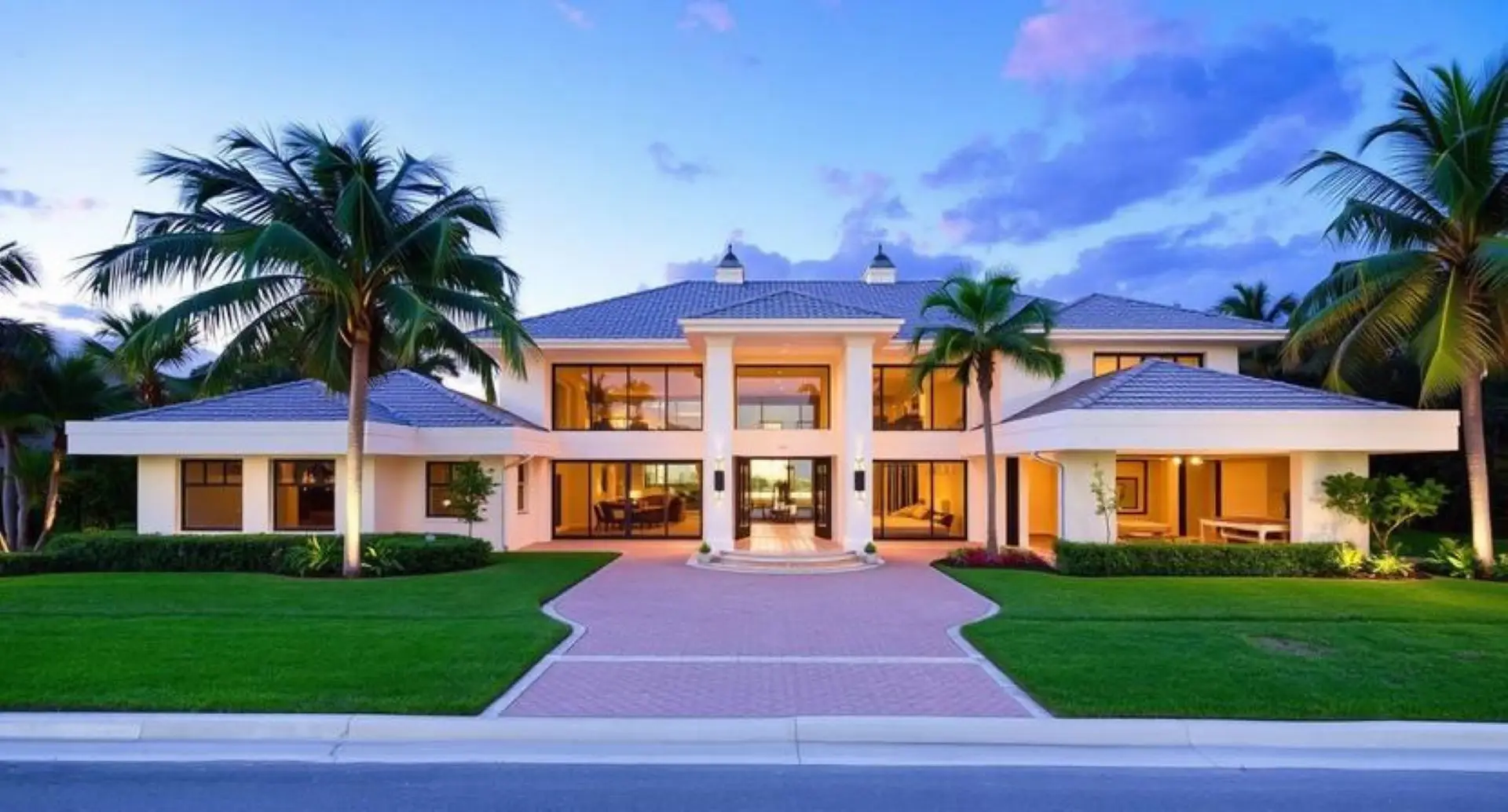
What about land supply?
Land supply is the input that does not recover. South Florida waterfront is finite and largely built out, so the scarce parcels do not become more available in a softer market, they simply change hands more quietly. For a buyer whose requirement is specific, the right time to build is usually when the right parcel appears.
For a specific requirement, the right time to build is when the parcel appears; the demand picture is in wealth migration to South Florida.
Does the season matter?
The season matters less than South Florida owners expect for a project spanning 18 to 36 months, since any long build crosses every season anyway. What season affects is the sequencing of weather-sensitive work, particularly the roof and envelope, and the practical wisdom is to have the building dried in before peak storm season rather than to delay a start.
Seasonal sequencing is discussed in the best time to start a custom luxury home build.
What personal conditions should be met first?
Five personal conditions should be met first: a parcel that supports the intended home, a written program, financing or capital arranged, a realistic tolerance for a 18 to 36 month process, and the availability to make decisions promptly. An owner meeting all five is ready; an owner missing two will have a difficult project regardless of market conditions.
An owner meeting all five has found their right time to build, and the decision framework is in the feasibility study for luxury home builds.
| Condition | Ready | Not yet |
|---|---|---|
| Parcel | Owned or identified and underwritten | Still searching, or unverified |
| Program | Written down, room by room | A general idea |
| Capital | Arranged, with contingency | Dependent on an uncertain event |
| Time tolerance | Comfortable with 18 to 36 months | Needs occupancy sooner |
| Decision availability | Can respond inside an agreed turnaround | Frequently unreachable |
What if the market moves during the build?
The South Florida market will move, in both directions, across a two-year program. The protections are contractual rather than predictive: fixed pricing where achievable, early procurement of long-lead items, escalation provisions written explicitly, and a contingency held for genuine uncertainty. Timing the market is not a strategy; structuring the contract is.
The supply-side plan is in contingency planning for supply chain issues.
How should the decision actually be made?
The decision to build in South Florida should be made by separating the two questions. Ask whether the project makes sense over your holding period, and separately whether you are prepared to run it now. If both answers are yes, market timing is a second-order concern. If either is no, no market condition fixes it.
Long-term value is discussed in strategic design decisions and long-term property value.
How does Kass Construction & Development advise on timing?
By testing readiness before discussing the market: Kass Construction & Development, a state-licensed (CGC1529472) boutique luxury builder headquartered in East Fort Lauderdale and led by Mitch Kass, a licensed general contractor and attorney, with 100+ luxury residences delivered by Mitchell Kass and the firms he has led across Broward, Palm Beach, and Miami-Dade, helps owners judge whether it is the right time to build for them specifically.
Contact Kass Construction & Development or call 954-607-4335.
Which factors decide the right time to build, and which direction is each moving?
Whether it is the right time to build in South Florida comes down to six inputs, and only two of them are cyclical.
| Input | Cyclical? | How it affects the decision |
|---|---|---|
| Material pricing | Yes | Moves with commodities and imports; can be locked by early procurement |
| Trade availability | Yes | Tight benches stretch schedules; a builder with a stable bench matters more than the cycle |
| Interest rates and financing | Yes | Affects carrying cost during a 18 to 36 month build; fixed-rate construction products reduce exposure |
| Building code | One direction | Wind, flood, and energy provisions get more demanding on each cycle; waiting rarely makes compliance cheaper |
| Land supply | One direction | Waterfront in Broward, Palm Beach, and Miami-Dade is finite and largely built out; the scarce parcel is the constraint |
| Owner readiness | Personal | Parcel, program, capital, decisions: the input the owner controls |
Market data on construction activity is published by the U.S. Census Bureau; the tri-county picture is summarized in the tri-county construction market outlook.
What is the readiness checklist for deciding the right time to build?
- A parcel that supports the intended home: flood zone, zoning envelope, seawall, and approvals path underwritten.
- A written program, room by room.
- Capital or financing arranged for the full duration, not just the deposit.
- A tolerance for a two-year calendar with ordinary friction.
- A decision-maker available every week, or a representative empowered to act.
- A builder and architect selected on documented capability.
Owners who can tick all six are ready regardless of the headline; the pre-construction discipline is described in pre-construction planning for a luxury custom home.
How do you protect a build against the market moving after you start?
- Early procurement of long-lead and volatile items: impact-rated openings, roofing, structural steel, custom millwork.
- An explicit escalation clause: fixed price, fixed price with a named index, or cost plus with caps, agreed before signature.
- Complete documents before mobilization, so the price is for a defined house.
- Contingency held separately for unknowns, and an owner reserve for upgrades.
- Schedule protection: every month saved is general conditions, financing, and holding cost not spent.
These controls are the subject of protecting your build budget against inflation and price spikes and GMP vs cost-plus vs fixed-price contracts.
When is it not the right time to build?
- When the parcel has not been underwritten and the flood or seawall position is unknown.
- When the program is still changing; an unresolved brief becomes change orders.
- When the capital plan only covers the contract price and not soft costs, contingency, and carrying cost.
- When the holding horizon is short; a custom home is a long-hold asset.
- When the calendar has to fit a hard date that a 18 to 36 month build cannot promise.
The seasonal and procurement details behind the start date are covered in the best time to start a custom luxury home build, and the cost of a slipped calendar in how long it takes to build a custom luxury home.
Frequently Asked Questions
Is now the right time to build in South Florida?
For an owner with a suitable parcel, a settled program, and a long holding horizon, generally yes. The right time to build depends more on readiness than on any market call.
Should I wait for costs to fall?
Waiting rarely works, because material pricing, trade availability, regulation, and land move independently, and two of those four do not reward delay at all.
Do building codes get more expensive over time?
Generally yes. Wind, flood, and energy requirements are revised upward on cycles, which tends to add cost to future construction rather than reduce it.
Does the time of year matter?
Less than expected on a 18 to 36 month build, which crosses every season. What matters is sequencing weather-sensitive work so the building is dried in before peak storm season.
What if prices move during my build?
They will. Protection comes from fixed pricing where achievable, early procurement of long-lead items, explicit escalation provisions, and a real contingency.
Am I ready to build?
If you have a suitable parcel, a written program, capital arranged, tolerance for a long process, and availability to decide promptly, yes. Missing two of those is a harder project than any market.
What is the cost of waiting?
Usually the parcel. Scarce waterfront does not become more available in a softer market, and that cost appears in no published index.
Are construction costs going down?
They are stabilizing but remain elevated
How long does it take to build a luxury home?
A luxury custom home typically takes 18 to 36 months from design through closeout, depending on the size and scope of the project and permit approvals.