The risks of overseas custom home building are not exotic. They are the ordinary risks of any construction project with one variable removed: the owner’s ability to walk the site. Remove that, and every weak point in a contract, a specification, or a reporting habit gets larger. The projects that go badly are almost never sabotaged; they simply had nothing in place to catch a problem in the window when catching it was still cheap.
Key takeaways
- What is the single largest risk?
The single largest risk for an overseas owner building in South Florida is an incomplete specification. In overseas custom home building, every gap in the documents becomes a question asked across a time gap, answered under schedule pressure, and priced after the fact. - How does financial risk actually present?
Financial risk on a remote Florida build presents three ways: draws requested ahead of completed work, allowances set low so the budget looks attractive and rises later, and change orders priced without a contractual method. - What protects the owner contractually?
The owner is protected contractually by draws tied to verifiable milestones rather than calendar dates, lien waivers collected from subcontractors at every draw, a written change-order procedure with a pricing formula, allowances stated with reconciliation rules, retainage held to completion, and defined notice provisions. - How is quality verified without being present?
Quality on a South Florida build is verified without being present through three independent streams: the county inspection record, which the builder does not control; the owner's architect performing site observation on the owner's behalf; and dated photographic documentation at defined stages, particularly before anything is covered.
What is the single largest risk?
The single largest risk for an overseas owner building in South Florida is an incomplete specification. In overseas custom home building, every gap in the documents becomes a question asked across a time gap, answered under schedule pressure, and priced after the fact. A complete specification is the cheapest risk control available and the one most often traded away to start sooner.
Overseas custom home building rewards documents finished before mobilizing, the subject of pre-construction planning.
How does financial risk actually present?
Financial risk on a remote Florida build presents three ways: draws requested ahead of completed work, allowances set low so the budget looks attractive and rises later, and change orders priced without a contractual method. Overseas custom home building magnifies all three, because the owner cannot see what is finished and is relying entirely on documents.
Budget structure is set out in the luxury construction cost breakdown.
What protects the owner contractually?
The owner is protected contractually by draws tied to verifiable milestones rather than calendar dates, lien waivers collected from subcontractors at every draw, a written change-order procedure with a pricing formula, allowances stated with reconciliation rules, retainage held to completion, and defined notice provisions. These are standard terms, and their absence is the warning sign.
These terms are the owner’s real protection in overseas custom home building; Florida licensing and consumer resources are published by DBPR and The Florida Bar.
How is quality verified without being present?
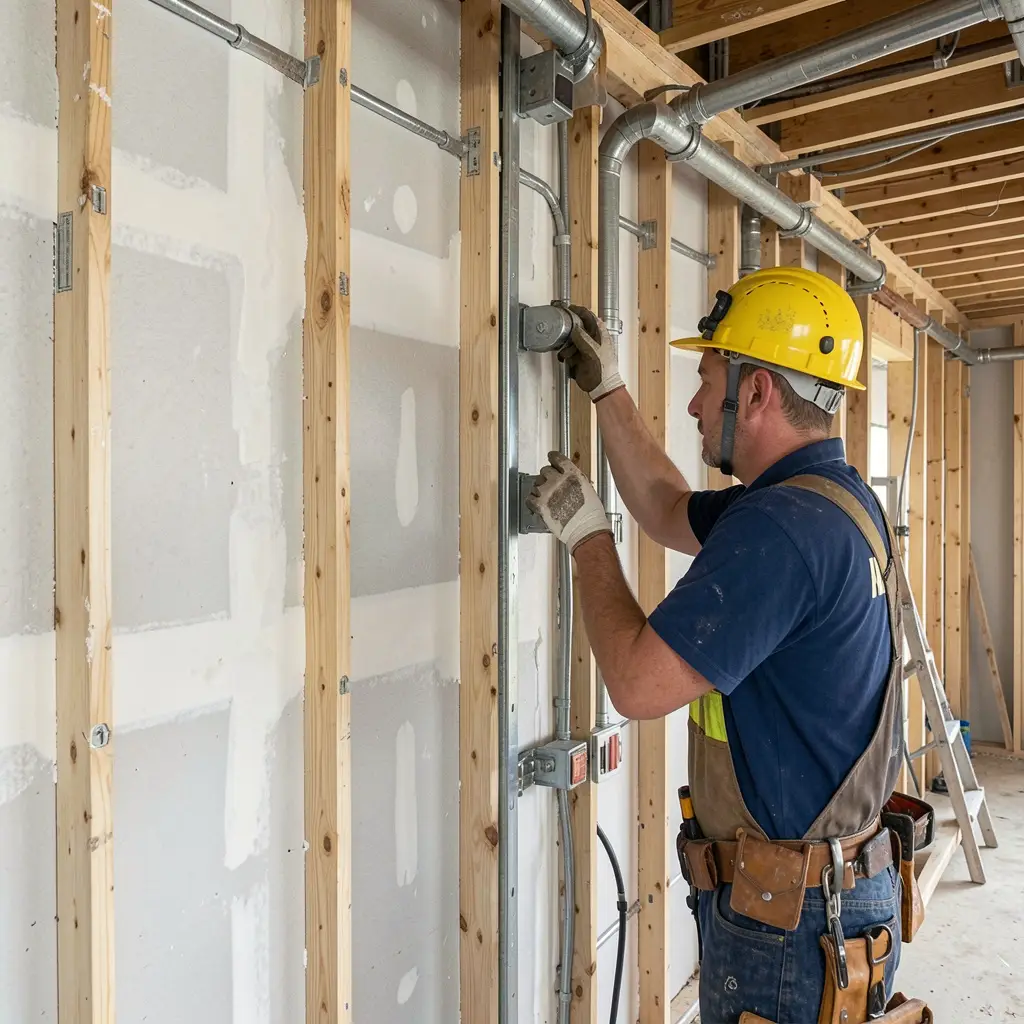
Quality on a South Florida build is verified without being present through three independent streams: the county inspection record, which the builder does not control; the owner’s architect performing site observation on the owner’s behalf; and dated photographic documentation at defined stages, particularly before anything is covered. In overseas custom home building, pre-drywall documentation is the highest-value record produced.
Inspection records are public through Broward County and Palm Beach County.
What schedule risks are specific to distance?
The schedule risks specific to distance are decision latency above all, then shipping and customs on imported materials, then the owner’s own travel assumptions. A specified stone from Europe that arrives eight weeks late stops a trade regardless of how well the site is run, which is why import lead times belong in the schedule from day one rather than in a hopeful email.
Overseas custom home building schedules also inherit approvals float, described in the South Florida luxury home permitting process.
Which regulatory risks catch overseas owners?
The regulatory risks that catch overseas owners in South Florida are buying a parcel that will not support the intended home, and underestimating the approvals stack on waterfront property. Flood elevation, seawall condition, coastal jurisdiction, and environmental review all constrain the design, and they are far easier to confirm before purchase than to discover after the architect has drawn.
Regulatory surprises are the most expensive kind in overseas custom home building, and the waterfront constraints are in what to know before building a waterfront home and the Coastal Construction Control Line explained.
| Exposure | Early warning sign | Control |
|---|---|---|
| Scope | Frequent clarification questions | Complete specification before mobilizing |
| Payment | Draws outpacing visible progress | Milestone draws with lien waivers |
| Quality | Photographs that repeat or avoid areas | Architect observation and county inspections |
| Schedule | Import dates described vaguely | Lead times built into the program |
| Builder | Reluctance to schedule a live walkthrough | License, permit history, and references verified |
How is builder risk assessed from abroad?
By verification rather than impression: confirm the state license is active and in the right classification, pull permit history for the projects claimed, request completed addresses and call the references, confirm insurance directly with the carrier, and read the contract with a Florida attorney. All of this is possible from anywhere, and skipping it is the costliest shortcut in overseas custom home building.
Licenses are searchable at Florida DBPR.
What early warning signs matter?
Five early warning signs matter on a remote build: reports that arrive late or thin; photographs that repeat or avoid specific areas; draw requests that outpace visible progress; change orders described verbally before appearing in writing; and any reluctance to schedule a live walkthrough. Each is recoverable when caught in the first month and expensive when caught in the ninth.
The reporting standard is described in building as an absentee international owner.
What does a well-controlled remote project look like?
A well-controlled remote South Florida project looks like complete documents before mobilization, milestone-based draws with lien waivers, weekly written reporting with dated photography, independent architect observation, a numbered decision log, a named local decision-maker with a value threshold, and import lead times built into the schedule. Overseas custom home building with those seven in place behaves like any other well-run project.
A custom build often runs 18 to 36 months and a high-end renovation 6 to 12 months.
How does Kass Construction & Development manage this?
By making the controls contractual: Kass Construction & Development, a state-licensed (CGC1529472) boutique luxury builder led by Mitch Kass, a licensed general contractor and attorney, with 100+ luxury residences delivered by Mitchell Kass and the firms he has led across Broward, Palm Beach, and Miami-Dade, writes reporting, draw verification, and change procedure into the agreement so overseas custom home building runs on documents rather than trust alone.
Contact Kass Construction & Development or call 954-607-4335.
Which risks change most when the owner is overseas?
Overseas custom home building carries the same risk categories as any South Florida project, but distance changes how each one is detected and how quickly it can be corrected.
| Risk category | How it looks from abroad | Control that closes the gap |
|---|---|---|
| Scope and specification | Owner cannot see what was assumed until it is built | Room-by-room specification and finish schedule signed before pricing |
| Financial | Draws requested faster than progress can be checked | Milestone draws verified by an independent representative, lien releases with every payment |
| Quality | Defects hidden behind finishes before anyone looks | Photographed inspection points at each stage, third-party inspections at structure and envelope |
| Schedule | Decisions wait on time zones and travel | Decision calendar agreed in advance, a named local proxy for minor approvals |
| Regulatory | Permit comments and inspections go unanswered | Builder owns the permit file; weekly permit status in the report |
| Builder | Reputation cannot be checked in person | License, insurance, references and litigation history verified before signing |
| Funding and banking | International transfers delayed by compliance | Accounts and source-of-funds documentation set up before the first draw |
Each row has its own guide: the specification stage in pre-construction planning, funding in banking, financing and wire transfer practices, and the management model in building as an absentee international owner.
How is a South Florida builder verified from another country?
Builder risk in overseas custom home building is controlled by public records that can be checked from anywhere, before any deposit is paid.
- Confirm the state contractor license and its status at myfloridalicense.com; Kass Construction & Development holds license CGC1529472.
- Confirm the business entity, its officers and its filing history at sunbiz.org, the Florida Division of Corporations.
- Request current certificates of general liability, builder’s risk and workers’ compensation insurance, issued directly by the insurer.
- Ask for three completed projects of similar scale in Broward, Palm Beach or Miami-Dade, with owner contacts, and speak to at least two.
- Check county court records for construction litigation and lien filings involving the entity.
- Ask how the builder reports to remote owners and request a sample weekly report from a live project.
The contract that follows verification should contain the protections described in construction contracts for high-end residential builds and builder default protection strategies.
What should the reporting package contain each week?
Overseas custom home building works when the weekly report replaces the site walk, which means the report has to be structured rather than narrative.
- Progress photographs from fixed positions so week-to-week change is visible, plus close-ups of every inspection point before it is covered.
- Schedule status: planned versus actual for the current phase, long-lead items ordered and confirmed, and the next four weeks of milestones.
- Cost status: approved change orders, pending changes, contingency balance and the next draw forecast.
- Permit and inspection log: inspections passed, failed, and scheduled, and any open review comments.
- Decisions required: each with a due date, the options, and the schedule cost of a late answer.
- Quality issues found and their correction, with photographs of the fix.
The tools that carry this package are compared in virtual project management tools for absentee owners; the value of an independent reviewer is in what an owner’s representative does.
Which South Florida rules should an overseas owner understand before buying land?
Regulatory risk in overseas custom home building starts with the parcel, and three South Florida rules decide what a parcel can support.
- Flood zone and design flood elevation, shown on the FEMA Flood Map Service Center, which set the finished floor height and the foundation type; see FEMA elevation certificates.
- The Coastal Construction Control Line on oceanfront lots, a state permit process explained in the CCCL guide.
- Wind design under the Florida Building Code, with the high-velocity hurricane zone in Broward and Miami-Dade requiring specific product approvals.
- Seawall condition and dock rights on canal lots, which drive cost and permitting; see seawall construction and permitting.
- Ownership structure and tax treatment, which are separate from construction but should be settled first; see setting up an LLC for foreign buyers.
The wider permitting picture is in the South Florida luxury home permitting process.
Frequently Asked Questions
What is the biggest risk in overseas custom home building?
An incomplete specification. Every gap becomes a question answered under pressure and priced afterwards, which is how remote budgets and schedules quietly erode.
How do I stop draws outpacing progress?
Tie every draw to a verifiable milestone rather than a date, require lien waivers from subcontractors at each draw, and hold retainage until completion.
Can my architect inspect on my behalf?
Yes, and it is standard practice. Owner-side site observation is independent of the builder and produces written records you can read from anywhere.
What if imported materials are delayed?
Build the lead times into the schedule at the outset and agree substitution rules in the contract. Import delays are predictable; unagreed substitutions are what cause disputes.
How do I verify insurance?
Request a certificate and confirm it directly with the carrier rather than accepting a forwarded document. It takes one call and closes a real exposure.
Should I use an owner’s representative?
On a remote luxury project, frequently yes. A named local representative with written authority removes the decision latency that costs remote builds the most time.
What should I document before drywall?
Everything about to be covered: framing, connectors, rough plumbing and electrical, waterproofing, and insulation, photographed and dated. It is the record you cannot recreate later.