Flood insurance requirements land differently on elevated luxury homes than on ordinary ones. The federal program that sets the baseline was not built for high-value residences, so most estates end up in a layered arrangement of federal and private coverage, priced on documentation the construction itself produces. Owners who understand that connection, build high, document precisely, insure deliberately, spend far less over the life of the home than owners who treat insurance as a closing-week errand.
Key takeaways
- When are flood insurance requirements mandatory?
Flood insurance requirements bite whenever a federally backed mortgage encumbers a property in a mapped high-risk zone, AE or VE, coverage is required as a condition of lending. - How do flood insurance requirements respond to elevation?
Fundamentally, because flood insurance requirements are priced off height: rating reflects how the lowest floor sits relative to base flood elevation, so every foot built above the minimum improves the risk picture permanently. - What documentation do flood insurance requirements demand?
Flood insurance in South Florida demands the FEMA Elevation Certificate above all: the surveyed record of the building's elevations relative to base flood elevation. - Where does the federal program stop for luxury homes?
The federal program stops for South Florida luxury homes at its coverage limits: the National Flood Insurance Program caps building and contents coverage at levels far below the replacement cost of a luxury estate, so high-value homes typically layer private excess flood coverage above the federal policy, or use private flood insurance outright.
When are flood insurance requirements mandatory?
Flood insurance requirements bite whenever a federally backed mortgage encumbers a property in a mapped high-risk zone, AE or VE, coverage is required as a condition of lending. Outside those zones it is optional, and in cash purchases no lender compels it, which is exactly where uninsured losses concentrate. The requirement follows the loan and the map, not the value of the house.
The public program and its rating basics are published at FloodSmart, and the zone framework in AE, VE and X flood zones.
How do flood insurance requirements respond to elevation?
Fundamentally, because flood insurance requirements are priced off height: rating reflects how the lowest floor sits relative to base flood elevation, so every foot built above the minimum improves the risk picture permanently. Elevation is the rare insurance lever that is decided once, during construction, and then pays for the life of the building, which is why freeboard is a financial decision as much as a code one.
The construction side is covered in elevated foundation and coastal home design, with the VE specifics in base flood elevation requirements versus luxury lifestyle.
What documentation do flood insurance requirements demand?
Flood insurance in South Florida demands the FEMA Elevation Certificate above all: the surveyed record of the building’s elevations relative to base flood elevation. Alongside it, foundation and flood-opening details, evidence of flood-damage-resistant materials below the flood line, machinery and equipment elevation, and, in VE zones, the engineer or architect certification. The construction file becomes the underwriting file.
What the certificate contains and when to order it is detailed in FEMA elevation certificates.
Where does the federal program stop for luxury homes?
The federal program stops for South Florida luxury homes at its coverage limits: the National Flood Insurance Program caps building and contents coverage at levels far below the replacement cost of a luxury estate, so high-value homes typically layer private excess flood coverage above the federal policy, or use private flood insurance outright. The federal policy satisfies the lender’s flood insurance requirements; the private layer protects the asset.
Program terms are published through FloodSmart’s cost guidance; the market context is in how flood zones impact home insurance premiums.
Which build decisions materially improve insurability?
Six decisions move flood insurance requirements in your favor: building above the required elevation; compliant flood openings or breakaway enclosures executed and documented properly; mechanical, electrical, and plumbing systems elevated above the design flood elevation; flood-damage-resistant materials below the flood line; site drainage engineered to move water off the property; and impact-rated openings and roof attachment that address the wind side of the same policy conversation.
FEMA’s flood-damage-resistant materials bulletin defines what qualifies below the line; the wind side is in hurricane-resistant construction.
What is different about waterfront estates?
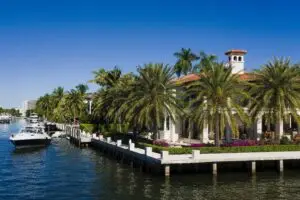
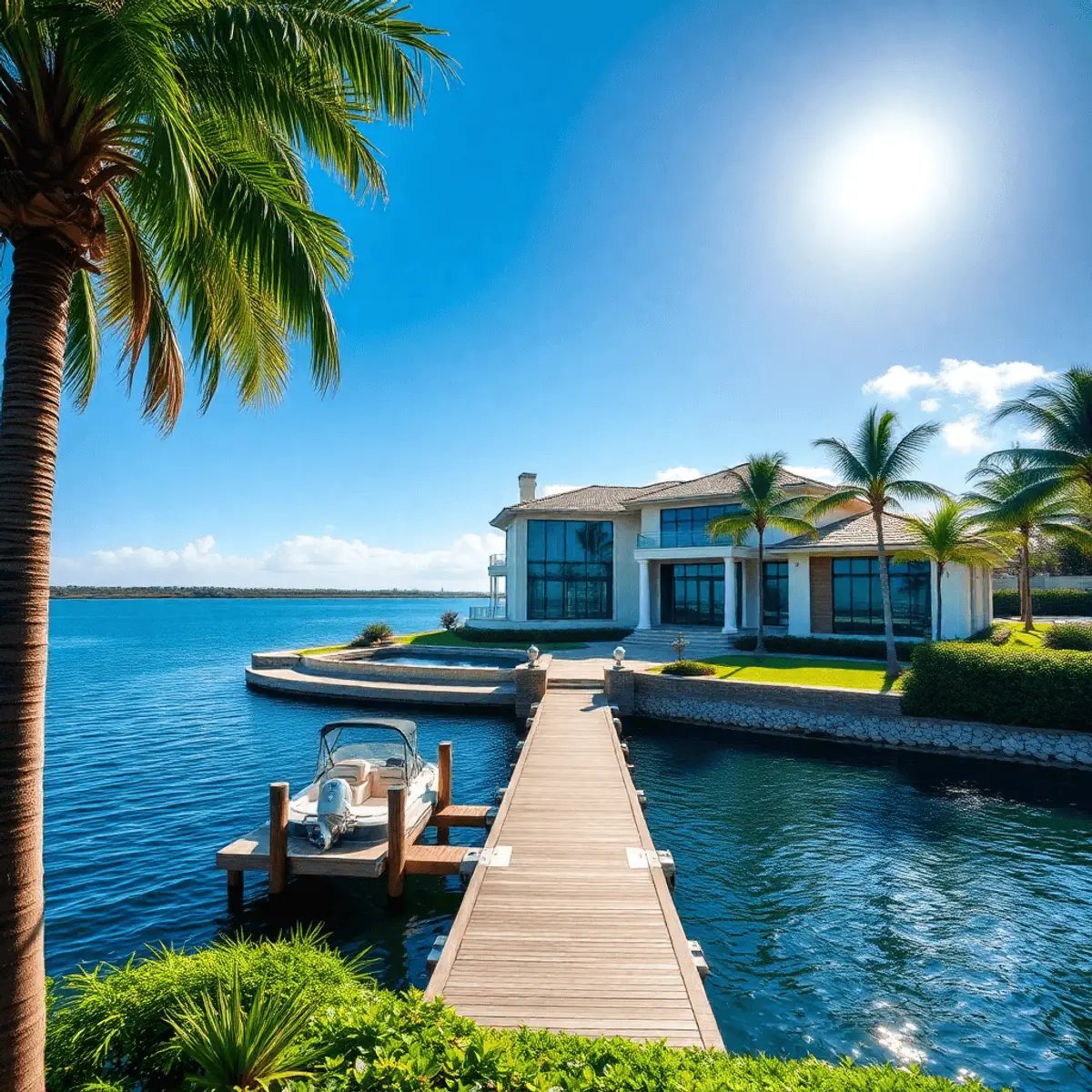
Flood insurance requirements meet a longer exposure inventory: seawalls, docks, lifts, pool equipment, landscape, and outdoor kitchens all sit at or near grade, and most are not covered the way owners assume. Waterfront insurance planning therefore covers the property, not just the house, and the construction choices that protect those elements are made during the marine scope, not afterward.
The marine scope is covered in waterfront home construction in South Florida.
How do renovations and elevations affect coverage?
They can transform how flood insurance requirements apply. Elevating an existing home, or retrofitting compliant openings and elevated systems, changes the rating basis, but only if the work is permitted, inspected, and documented with a new Elevation Certificate. Renovations that cross the substantial-improvement threshold must bring the whole home into current compliance, which is expensive and, for insurance, valuable.
The retrofit paths are detailed in retrofitting existing homes for flood zone regulations.
How does Kass Construction & Development build for insurability?
By treating flood insurance requirements as a design input: Kass Construction & Development, a state-licensed (CGC1529472) boutique luxury builder led by Mitch Kass, a licensed general contractor and attorney, with 100+ luxury residences delivered by Mitchell Kass and the firms he has led across Broward, Palm Beach, and Miami-Dade, sets elevation deliberately above the minimum where the site allows, documents every flood-critical detail, and delivers the certificate and construction record the underwriting will ask for.
A custom build often runs 18 to 36 months and a high-end renovation 6 to 12 months. Contact Kass Construction & Development or call 954-607-4335.
| Situation | Federal requirement | What owners usually miss |
|---|---|---|
| Federally backed mortgage, AE or VE | Coverage mandatory as a condition of lending | NFIP limits sit far below luxury replacement cost |
| Federally backed mortgage, X zone | Not federally required | A meaningful share of losses happen outside mapped high-risk zones |
| Cash purchase, any zone | No lender requirement at all | This is exactly where uninsured flood losses cluster |
| Seawalls, docks and lifts | Outside the building policy | They need specific planning with the insurance advisor |
| Pool equipment and outdoor kitchens | At or near grade, generally not covered | Construction quality is what limits the loss |
| Retrofit or elevation of an existing home | Can change the rating basis | Only when permitted, inspected, and recorded on a new Elevation Certificate |
How do federal and private flood policies fit together on a luxury home?
Flood insurance requirements for an elevated luxury home are usually met with a layered program, because the federal program caps building coverage well below the value of most South Florida estates.
| Layer | What it covers | What to know |
|---|---|---|
| National Flood Insurance Program (NFIP) policy | Building coverage up to the federal residential limit and separate contents coverage | Satisfies a lender’s mandatory purchase rule; rated under Risk Rating 2.0 on the property’s own characteristics |
| Private primary flood policy | An alternative to NFIP, often with higher limits and broader terms | Lender must accept it; pricing depends on elevation and construction data |
| Excess flood policy | Building value above the primary limit, plus additional living expense and higher contents limits | Underwriters ask for the elevation certificate, foundation type and mitigation details |
| Homeowners and windstorm policies | Wind, fire and other perils; flood is excluded | Wind-mitigation credits depend on the same construction documentation |
The federal program is explained at FloodSmart.gov and coverage rules at FEMA’s flood insurance pages. The construction decisions that drive every layer are described in elevated foundation and coastal home design.
Which documents do underwriters ask for on an elevated estate?
Flood insurance requirements turn into a document request at binding, and a builder who assembles the file during construction saves the owner months at closing.
- The finished-construction elevation certificate, showing the lowest floor, the lowest horizontal structural member in a V zone, machinery elevations and flood openings; see FEMA elevation certificates.
- The flood zone determination and map panel from the FEMA Flood Map Service Center.
- Foundation type and engineer’s V-zone certification where applicable; see V-zone construction requirements.
- Photographs of all sides of the building and of the enclosure below the elevated floor.
- Flood opening details and breakaway wall certifications.
- Replacement cost estimate for the building and a contents schedule for high-value items.
- Wind-mitigation inspection form and product approvals for openings and roofing under the Florida Building Code.
Which construction choices lower the flood premium over the life of the home?
Flood insurance requirements are satisfied by compliance, but the premium responds to choices that go beyond compliance, and most of them are cheapest during construction.
- Elevating the lowest floor above the design flood elevation, because each additional foot improves the rating; the elevation stack is explained in base flood elevation requirements and luxury living in VE zones.
- Keeping the space below the elevated floor free of finished living area, with compliant flood openings or breakaway walls.
- Elevating all machinery and equipment: air handlers, condensers, water heaters, electrical panels, generators and pool equipment.
- Using flood-damage-resistant materials below the flood level, listed in coastal corrosion-resistant materials.
- Building the wind envelope to the same standard, because windstorm and flood underwriters read the same file; see hurricane-resistant construction.
- Recording everything, because an undocumented feature earns no credit.
The zone letter sets the starting point for all of this, as set out in AE, VE and X flood zones in Broward County and how flood zones affect insurance premiums.
How do flood insurance requirements affect renovations and existing homes?
Flood insurance requirements follow the building’s compliance status, so a renovation that crosses the substantial improvement line changes the policy as well as the permit.
- Work valued at 50 percent or more of the building’s market value triggers full compliance with current elevation rules, as explained on FEMA’s substantial improvement page; the compliant home is then rated on its new elevation.
- Below the threshold, retrofits such as elevated equipment, flood openings and flood-resistant finishes can improve the rating without a full elevation; see retrofitting homes for flood zone regulations.
- A new elevation certificate after any retrofit is what carries the improvement to the insurer.
- Buyers of an existing waterfront home should request the seller’s elevation certificate and policy history before contract; the waterfront checklist is in waterfront home construction in South Florida.
- Federal policies carry a waiting period before coverage starts, so a policy is bound well before closing or occupancy.
Kass Construction & Development builds the insurance file alongside the permit file on every Broward, Palm Beach and Miami-Dade project, so the owner’s broker receives complete documentation at handover.
Frequently Asked Questions
Are flood insurance requirements mandatory for every waterfront home?
Only where a federally backed mortgage encumbers a property in a mapped high-risk zone. Cash buyers and X-zone owners face no requirement, which is precisely where uninsured flood losses cluster in South Florida.
Does the federal program cover a luxury home fully?
No. NFIP building and contents limits sit far below luxury replacement cost, so estates typically layer private excess flood coverage above the federal policy or use private flood insurance designed for high-value homes.
How much does elevation actually reduce premiums?
Rating turns on the lowest floor’s height relative to base flood elevation, so additional freeboard improves the picture measurably and permanently. The exact effect depends on zone, coverage, and carrier, which is why the Elevation Certificate matters.
What is an Elevation Certificate used for?
It documents surveyed building elevations relative to base flood elevation and is the primary evidence insurers use to rate the policy. It is produced during construction and should be retained and transferred at sale.
Are seawalls, docks, and pools covered by flood insurance?
Generally not in the way owners expect. These exposures need specific planning with the insurance advisor, and their construction quality, engineered seawalls, protected equipment, is what limits the loss in the first place.
Can retrofitting lower flood insurance on an existing home?
Yes, when the work is permitted, inspected, and documented: elevating the home or its systems, adding compliant openings, and recording new elevations can change the rating basis. Undocumented work changes nothing.
When should insurance planning start on a new build?
During design, alongside the elevation strategy, because flood insurance requirements and floodplain compliance turn on the same decisions. The decisions that satisfy the floodplain ordinance are the same ones that price the policy, and coordinating them early is worth more than any negotiation at closing.