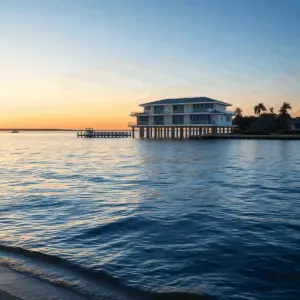
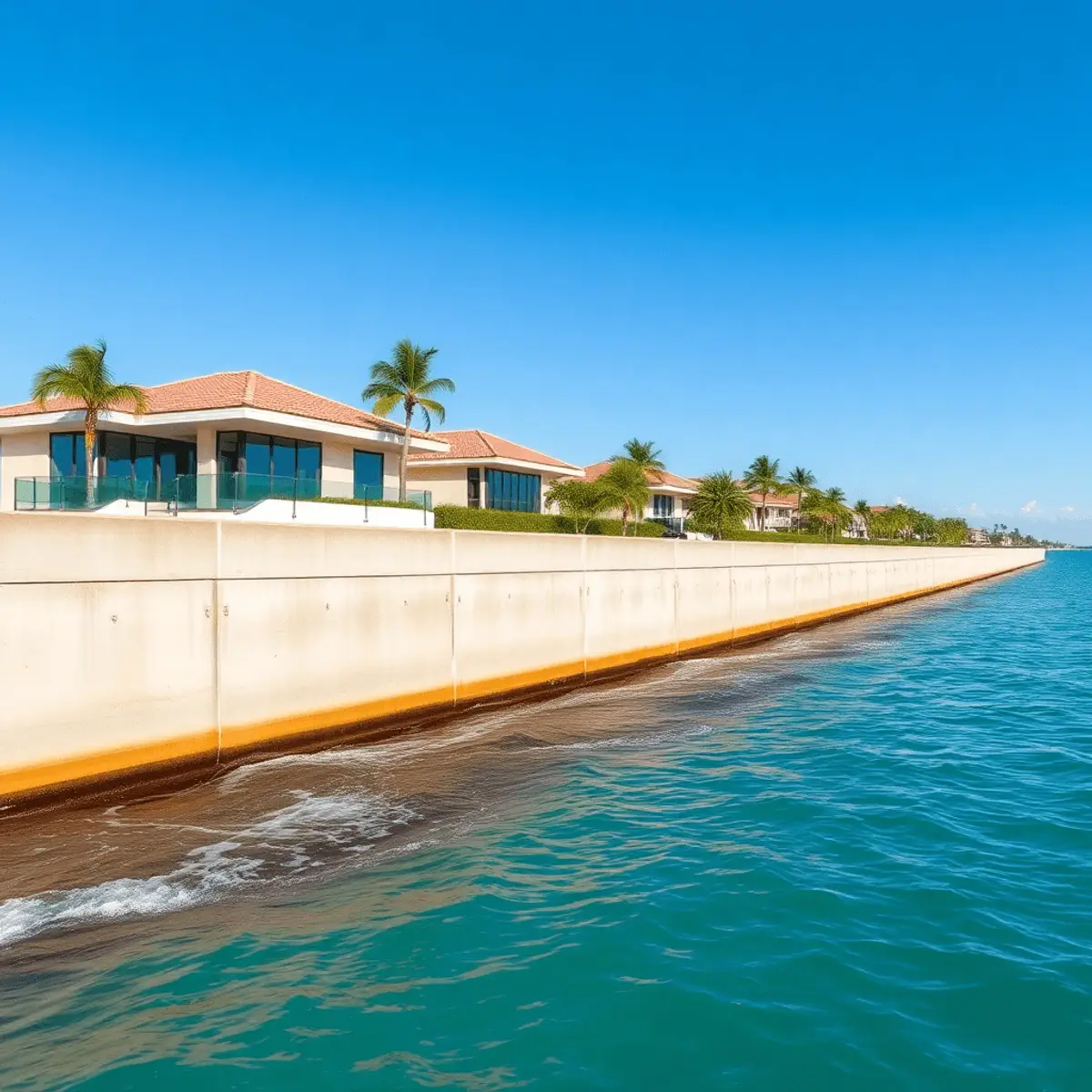
Seawall construction permitting in South Florida is a longer road than the wall itself. The engineering is well understood; seawall construction permitting is where projects stall, because a shoreline structure touches sovereign submerged lands, environmental resources, navigable waters, and local building code all at once. This guide covers wall types, the site evaluation that precedes design, the approvals stack, the construction sequence, and the realistic timeline from first survey to finished cap.
Key takeaways
- Why do seawalls matter so much here?
Because in South Florida the seawall is the property line doing structural work. It retains the upland soil the house sits on, resists tidal and storm loading, and controls erosion at the water's edge. - Which seawall types are used in Broward, Palm Beach, and Miami-Dade?
Three seawall families dominate Broward, Palm Beach, and Miami-Dade: reinforced concrete panel walls with tie-backs and a poured cap, the regional standard for luxury properties; vinyl or composite sheet-pile systems, lighter and corrosion-immune but with their own structural limits; and repair or refacing systems that place a new wall in front of, or a new cap on, an existing structure. - What does site evaluation have to establish?
Five inputs before any drawing and before seawall construction permitting opens: the existing wall's condition, age, and tie-back system; soil and geotechnical data behind and beneath it; water depths, tidal range, and exposure; the upland improvements the wall must protect; and the property's regulatory position, including submerged-lands boundaries and any oceanfront jurisdiction. - Which engineering essentials prevent expensive failures?
The engineering essentials for a South Florida seawall are embedment depth set by geotechnical analysis rather than convention; tie-back rods and deadmen sized for real soil loads and protected against corrosion; a cap detailed to shed water and tie the system together; drainage and weep systems relieving hydrostatic pressure behind the wall; and returns and corners engineered, because that is where walls most often fail first.
Why do seawalls matter so much here?
Because in South Florida the seawall is the property line doing structural work. It retains the upland soil the house sits on, resists tidal and storm loading, and controls erosion at the water’s edge. When a wall fails, it does not fail politely: soil migrates, hardscape settles, and the damage reaches inland far past the shoreline itself.
The wider waterfront picture is in waterfront home construction in South Florida.
Which seawall types are used in Broward, Palm Beach, and Miami-Dade?
Three seawall families dominate Broward, Palm Beach, and Miami-Dade: reinforced concrete panel walls with tie-backs and a poured cap, the regional standard for luxury properties; vinyl or composite sheet-pile systems, lighter and corrosion-immune but with their own structural limits; and repair or refacing systems that place a new wall in front of, or a new cap on, an existing structure. Site conditions and the wall’s remaining life decide among them.
The design standards each must meet are detailed in hurricane-resistant seawall design standards.
What does site evaluation have to establish?
Five inputs before any drawing and before seawall construction permitting opens: the existing wall’s condition, age, and tie-back system; soil and geotechnical data behind and beneath it; water depths, tidal range, and exposure; the upland improvements the wall must protect; and the property’s regulatory position, including submerged-lands boundaries and any oceanfront jurisdiction. Design that skips these is redrawn during review.
Those findings shape both the design and the seawall construction permitting file, and the inspection logic is expanded in seawall maintenance, repair, and replacement costs.
Which engineering essentials prevent expensive failures?
The engineering essentials for a South Florida seawall are embedment depth set by geotechnical analysis rather than convention; tie-back rods and deadmen sized for real soil loads and protected against corrosion; a cap detailed to shed water and tie the system together; drainage and weep systems relieving hydrostatic pressure behind the wall; and returns and corners engineered, because that is where walls most often fail first.
These details are what reviewers examine during seawall construction permitting, and corrosion protection of the embedded steel is covered in coastal corrosion-resistant materials.
What approvals does seawall construction permitting require?
Typically four: the local building permit with engineered drawings; county and municipal shoreline or marine review; state authorization through the Florida DEP for work on or over sovereign submerged lands and environmental resources, coordinated with the water management district; and federal review by the Army Corps where the work reaches navigable waters. Oceanfront parcels add coastal-line jurisdiction.
State programs are published by Florida DEP, district review by the South Florida Water Management District, and the full sequence in the permitting process for new seawalls.
What belongs in the application package?
A Florida seawall application package holds a survey showing property and submerged-lands boundaries; signed and sealed engineering drawings with sections and details; geotechnical data; a site plan showing access, staging, and turbidity controls; environmental resource information where seagrass or protected habitat is present; and adjacent-property tie-in details. Complete packages move seawall construction permitting forward; incomplete ones draw delays.
Waterway and wildlife rules come from FWC.
What does construction actually involve?
Seawall construction in South Florida involves six stages: mobilization and turbidity control; removal or preparation of the existing wall; driving or setting panels or sheets to design embedment; installing tie-backs and deadmen; placing and curing the cap; then backfill, compaction, drainage, and restoration of the upland. Barge access, tides, and weather govern the pace more than crew size does.
Every stage runs under conditions set during seawall construction permitting, and how this coordinates with a house under construction is covered in engineering challenges for Intracoastal and oceanfront homes.
How long does it take, and what drives cost?
Seawall construction permitting dominates the calendar; construction is usually the shorter half. Cost is driven by wall length and height, embedment depth, soil conditions, access, whether the existing wall is removed or refaced, environmental constraints, and restoration of what sits above. A custom build overall often runs 18 to 36 months, and the seawall track is opened at the very front of it.
The cost detail is in seawall construction costs and ROI.
How does Kass Construction & Development handle seawalls?
As the first scope, not the last: Kass Construction & Development, a state-licensed (CGC1529472) boutique luxury builder led by Mitch Kass, a licensed general contractor and attorney, with 100+ luxury residences delivered by Mitchell Kass and the firms he has led across Broward, Palm Beach, and Miami-Dade, opens marine engineering and seawall construction permitting ahead of the residence so the shoreline is resolved before the house depends on it.
Contact Kass Construction & Development or call 954-607-4335.
Which agencies are involved in seawall construction permitting, and what does each decide?
Seawall construction permitting in South Florida can involve up to five reviewers on one wall, and the table below sets out who they are, when they apply and what they look at.
| Reviewer | When it applies | What it decides |
|---|---|---|
| Municipal building department | Every seawall | Structural design under the Florida Building Code, cap elevation, inspections |
| County environmental agency (Broward, Palm Beach, Miami-Dade) | Work at or below the mean high water line, mangroves, dredging, most docks | Environmental resource permits, mangrove trimming, turbidity controls, seagrass surveys |
| Florida Department of Environmental Protection | State-owned submerged lands, oceanfront walls seaward of the CCCL, some environmental resource permits | Sovereign submerged land authorization, coastal construction control line permits |
| South Florida Water Management District | Larger environmental resource permits and drainage impacts | Water quality and stormwater conditions |
| U.S. Army Corps of Engineers | Work in navigable waters and wetlands, including fill and many docks | Federal authorization, often under a general permit |
| Florida Fish and Wildlife Conservation Commission | Manatee protection areas, listed species | Construction conditions and seasonal restrictions |
State rules are published by the Florida Department of Environmental Protection and federal rules by the U.S. Army Corps of Engineers Jacksonville District regulatory program; manatee protection guidance is at the Florida Fish and Wildlife Conservation Commission. The county-level path is compared in the permitting process for new seawalls in Broward and Palm Beach.
What is the step-by-step sequence for seawall construction permitting?
Seawall construction permitting follows a sequence in which each document depends on the one before it, and starting in the right order saves months.
- Survey: a signed and sealed survey showing the property line, the mean high water line, the existing wall, the cap elevation in NAVD 88 and any submerged land beyond the wall.
- Condition assessment: an engineer inspects the existing wall, tie-backs, cap and adjacent seawalls, and records the failure mode if any; the warning signs are listed in the seawall maintenance cost guide.
- Geotechnical work: borings behind the wall establish soil, groundwater and scour conditions for the design.
- Engineering: a sealed design for the new or repaired wall, tie-back system, cap and drainage, to the standards in hurricane-resistant seawall design standards, with the cap set to the county’s minimum elevation or higher.
- Environmental application: county and, where required, state and federal applications with the survey, drawings, turbidity and species protection plans, and any seagrass or mangrove surveys.
- Building permit: filed with the municipality once environmental approvals are in hand or in parallel where the municipality allows.
- Construction: inspections at pile or panel installation, tie-back and cap reinforcement, and final; turbidity curtains and manatee observers where conditions require them.
- Close-out: final inspection, as-built survey, and any state or federal completion certification.
What drives the schedule and cost of seawall construction permitting and the wall itself?
Seawall construction permitting sets the calendar and the wall design sets the budget, and the drivers of both are known before the first application is filed.
- Schedule: county environmental review runs weeks to months; state submerged land and federal authorizations can add several months; seasonal manatee or turtle restrictions can constrain in-water work.
- Cost: wall length and height, panel and pile type, tie-back design, cap size and elevation, access for barges or land-based equipment, and dock and lift replacement; the economics are in seawall construction costs and ROI.
- Materials: concrete, vinyl, composite or steel sheet pile, and marine-grade reinforcing and hardware from coastal corrosion-resistant materials.
- Elevation policy: Broward County and its municipalities have adopted minimum cap elevations in NAVD 88 that rise over time, so the design elevation is confirmed with the county at the outset; the long-term context is in sea-level rise in waterfront infrastructure design.
- Coordination with the house: seawall, dock, pool and foundation are engineered together, as described in engineering challenges on Intracoastal and oceanfront sites and waterfront home construction in South Florida.
Kass Construction & Development manages seawall construction permitting alongside the building permit on waterfront projects across Broward, Palm Beach and Miami-Dade, opening the slowest review first so the wall is ready when the house needs it.
Frequently Asked Questions
What does seawall construction permitting require?
Typically a local building permit with engineered drawings, municipal or county shoreline review, state authorization for work on sovereign submerged lands coordinated with environmental resource permitting, and federal review where navigable waters are involved.
How long does seawall construction permitting take?
Longer than the construction. Timelines depend on agency queues, environmental conditions at the site, and the completeness of the first submittal, which is the one variable an owner controls.
Can I repair rather than replace?
Often, where the structure is sound and the deficiency is localized: cap replacement, tie-back restoration, crack and spall repair, and refacing all extend life. An engineer’s assessment decides whether repair is genuine or deferral.
What is a tie-back and why does it matter?
A rod connecting the wall to a buried anchor or deadman inland, resisting the soil pressure trying to push the wall outward. Corroded or undersized tie-backs are among the most common causes of seawall failure.
Do neighboring walls affect my project?
Yes. Elevation differences, tie-in details at property lines, and the condition of adjacent structures all influence design and are frequently the subject of review comments. They are addressed at design, not on site.
Should the seawall be built before the house?
Almost always. Access is better, equipment reaches the shoreline freely, and the upland restoration coordinates with site work. Building the house first makes the seawall harder, slower, and more expensive.
Who should design and build it?
A marine or coastal engineer for the design, a contractor with a verifiable local seawall portfolio for the construction, and a builder who has run seawall construction permitting before, coordinated by the builder so the shoreline and the residence share one schedule.