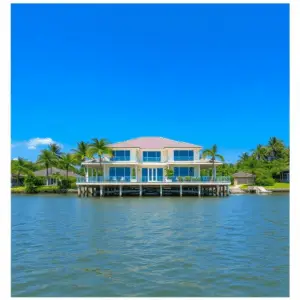
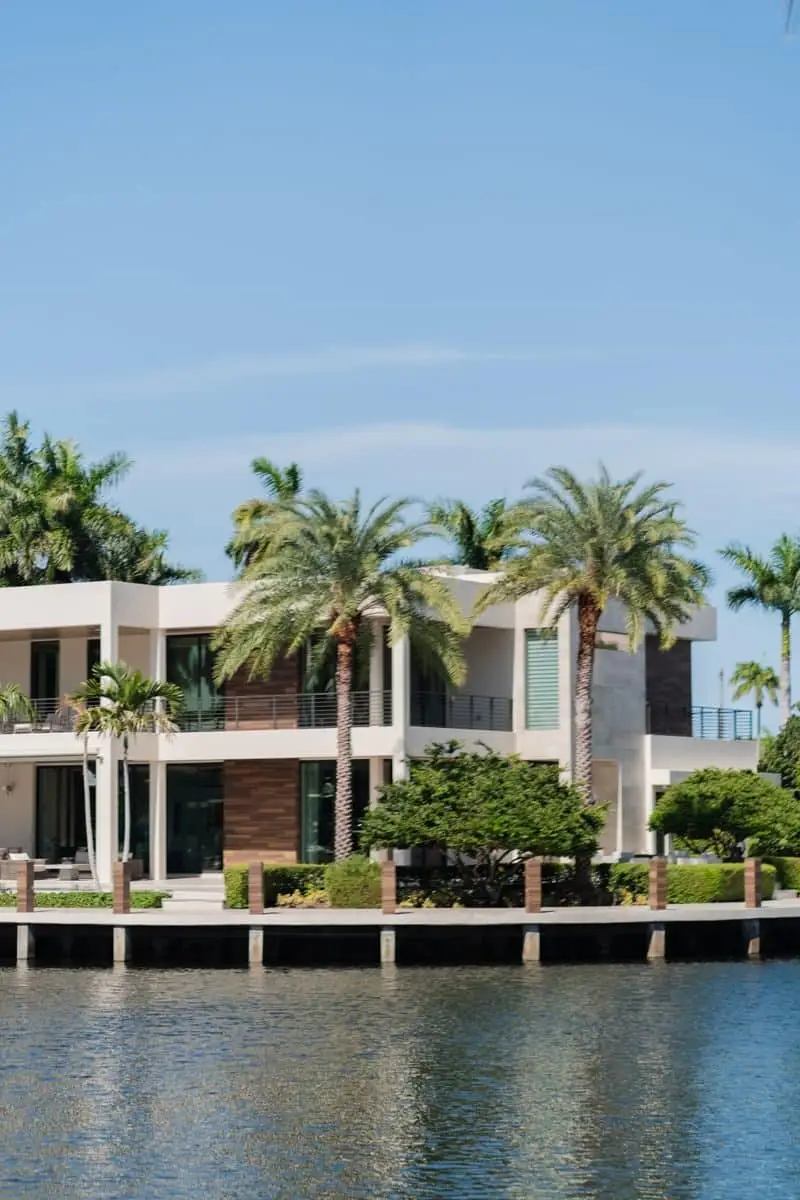
The waterfront construction trends visible across Boca Raton, higher finished floors, rebuilt seawalls, bigger dock programs, marine-grade material palettes, all trace back to the same source: regulation and physics pushing in the same direction. Owners planning canal, Intracoastal, or oceanfront work here face a layered approvals stack and a set of design expectations that have risen sharply. This guide covers what is actually being built, and the flood, coastal, and waterway rules that shape every one of those choices.
Key takeaways
- Which waterfront construction trends define Boca Raton right now?
Six waterfront construction trends, all durable: elevated foundations and higher finished-floor elevations; engineered seawalls with new caps and tie-backs; dock and lift programs sized for larger vessels; salt-proven material palettes that still read as luxury; outdoor living that is engineered rather than decorated; and whole-home energy, comfort, and resilience systems planned as one package. - Why do elevated foundations lead the waterfront construction trends?
Because the waterfront construction trends follow flood rules and buyer logic converging: base flood elevations set the regulatory floor, insurers reward height above it, and modern design has learned to make elevation beautiful, arrival stairs as architecture, water views improved by the extra feet, and service spaces tucked below. - What does the Boca Raton approvals stack look like?
Waterfront construction trends have not simplified approvals, which run as four layers in parallel: the city's building and zoning review for the home itself; Palm Beach County's framework where county systems apply; state agencies, the DEP for work seaward of the Coastal Construction Control Line and for submerged lands, the FWC for waterway rules; and federal reviewers for structures in navigable waters. - How do seawalls and docks shape a Boca Raton project?
Seawalls and docks are the gatekeepers of a Boca Raton waterfront project: seawall condition decides whether marine work precedes the house, and dock plans must reconcile vessel size, water depth, neighbor sight lines, and environmental constraints before any reviewer signs off.
Which waterfront construction trends define Boca Raton right now?
Six waterfront construction trends, all durable: elevated foundations and higher finished-floor elevations; engineered seawalls with new caps and tie-backs; dock and lift programs sized for larger vessels; salt-proven material palettes that still read as luxury; outdoor living that is engineered rather than decorated; and whole-home energy, comfort, and resilience systems planned as one package.
The elevation strategy is detailed in elevated foundation design, materials in coastal corrosion-resistant materials, and the systems package in hurricane resilience design.
Why do elevated foundations lead the waterfront construction trends?
Because the waterfront construction trends follow flood rules and buyer logic converging: base flood elevations set the regulatory floor, insurers reward height above it, and modern design has learned to make elevation beautiful, arrival stairs as architecture, water views improved by the extra feet, and service spaces tucked below. On teardown lots, new homes are built to modern elevations by default.
Every parcel’s starting point is its flood designation at the FEMA Flood Map Service Center; how those designations translate into design requirements is explained in flood zone requirements.
What does the Boca Raton approvals stack look like?
Waterfront construction trends have not simplified approvals, which run as four layers in parallel: the city’s building and zoning review for the home itself; Palm Beach County’s framework where county systems apply; state agencies, the DEP for work seaward of the Coastal Construction Control Line and for submerged lands, the FWC for waterway rules; and federal reviewers for structures in navigable waters. Experienced teams open the slowest track first.
The CCCL program is run by the Florida Department of Environmental Protection, waterway rules by the FWC, and the county baseline through Palm Beach County Planning, Zoning and Building. Sequencing strategy is covered in the permitting process.
How do seawalls and docks shape a Boca Raton project?
Seawalls and docks are the gatekeepers of a Boca Raton waterfront project: seawall condition decides whether marine work precedes the house, and dock plans must reconcile vessel size, water depth, neighbor sight lines, and environmental constraints before any reviewer signs off. Among waterfront construction trends, the clearest is proactive replacement, owners rebuilding walls and docks to current standards during the main project rather than deferring the region’s most disruptive retrofit.
The engineering and sequencing logic is expanded in waterfront home construction in South Florida and what to know before building a waterfront home.
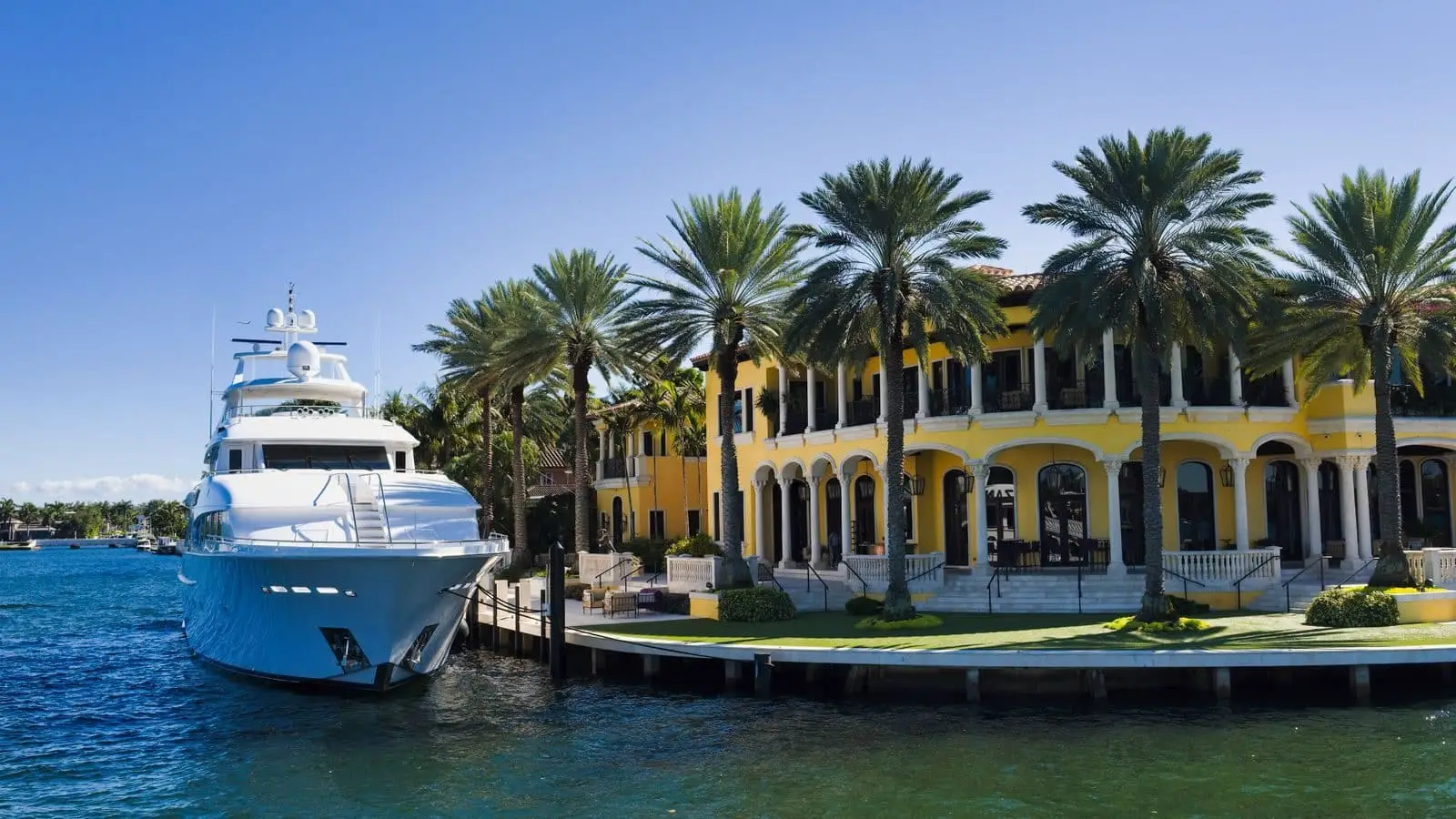
How do flood zones and the CCCL change what can be built?
Underneath the waterfront construction trends, flood zones set elevations, foundation types, and what may exist below the flood line; the substantial-improvement rule pulls major renovations of older homes into full compliance; and on oceanfront parcels, the Coastal Construction Control Line adds a state review of anything built seaward of the line, from structures to lighting. None of these are obstacles to great design; they are its constraints, best absorbed at concept stage.
FEMA’s flood-resistant materials requirements, the rules governing what those lower levels are made of, are collected in Technical Bulletin 2.
What do timeline and budget look like for Boca waterfront work?
Waterfront construction trends have not changed who sets the pace, and that is the marine and approvals tracks: a custom waterfront build often runs 18 to 36 months, with seawall or dock permitting frequently the critical path, and a high-end renovation often runs 6 to 12 months where flood rules allow it to stay a renovation. Budgets carry the waterfront premium: marine engineering, elevated structure, impact glazing at scale, and corrosion-rated everything.
Budget mechanics are laid out in the luxury construction cost breakdown, and the buy-versus-build decision in the Boca Raton estate pricing analysis.
How does Kass Construction & Development build on the Boca waterfront?
By reading the waterfront construction trends and putting the marine scope first: Kass Construction & Development, a state-licensed (CGC1529472) boutique luxury builder led by Mitch Kass, a licensed general contractor and attorney, with 100+ luxury residences delivered by Mitchell Kass and the firms he has led across Broward, Palm Beach, and Miami-Dade, sequences seawall, dock, and approvals work at the front of every waterfront project so the house is never waiting on the water.
The front-end discipline is described in pre-construction planning, with owner’s representation for owners who want independent oversight across the approvals stack. Contact Kass Construction & Development or call 954-607-4335.
| Trend | What is driving it | What it changes on site |
|---|---|---|
| Higher elevation | Flood rules set the floor, insurers reward height | Foundation type and the whole arrival design |
| Seawall first | Wall work is cheapest before the estate exists | Marine scope leads the schedule, not follows it |
| Corrosion-rated specification | Salt air punishes the wrong metals and finishes | Narrower material palette, longer lead times |
| Impact glazing throughout | Code plus buyer expectation, not just code | Structural openings sized around tested systems |
| Parallel approvals | City, county, DEP and FWC all review separately | Slowest track opens first or the program slips |
| Renovation caution | The substantial-improvement threshold | Crossing it forces full flood compliance |
Which waterfront construction trends in Boca Raton trace to which regulation?
The waterfront construction trends visible in Boca Raton each have a regulatory source, and the table below pairs the trend with the rule behind it and what it means for a new project on a canal, Intracoastal or oceanfront lot.
| Trend | Regulatory source | What it means for a Boca Raton project |
|---|---|---|
| Higher finished floors and elevated living levels | FEMA base flood elevation plus the city’s freeboard; V-zone rules on the ocean | Pile or stem-wall foundations; ground level for parking and outdoor rooms; designed arrival sequences |
| Seawalls rebuilt higher | Municipal minimum cap elevations and long-term water level planning | Seawall replacement priced into the lot; cap designed to be raised later |
| Larger dock and lift programs | County environmental permits, state submerged land rules, federal general permits | Dock scope designed with the seawall; bridge clearance to the Boca Inlet checked before design |
| Marine-grade material palettes | Florida Building Code corrosion and flood-resistant material provisions | Stainless, coated aluminum, masonry and stone below the flood level |
| Impact glazing as walls | Product approval requirements and wind design | Approved sliding-wall systems with structural transfers; shaded façades |
| Elevated equipment and backup power | Flood provisions for machinery; generator and fuel rules | Equipment platforms, generator pads and battery rooms above the flood level |
| Dune-first oceanfront siting | State Coastal Construction Control Line program | House set landward of the erosion projection; armoring restricted; turtle lighting |
| Native, salt-tolerant landscape | Water management district and municipal landscape rules | Rain gardens, permeable surfaces, drainage engineered to a higher receiving water |
Flood zones for any Boca Raton lot are at the FEMA Flood Map Service Center, the state coastal program at the Florida Department of Environmental Protection, and manatee and turtle conditions at the Florida Fish and Wildlife Conservation Commission. The elevation trend is developed in elevated foundation and coastal home design and the pricing effect in Boca Raton estate pricing trends.
What is the Boca Raton approvals stack, in the order it should be opened?
Waterfront construction trends in Boca Raton run through an approvals stack that has a best order, and the sequence below is the one that brings the start date forward on the city’s waterfront.
- Survey to the reviewers’ standard: boundary, topography in NAVD 88, mean high water line, seawall cap elevation and, on the ocean, the control line.
- Flood zone, base flood elevation and the city’s freeboard confirmed, and zoning verified with the city’s development services.
- Coastal, geotechnical and marine engineers engaged at feasibility, as in the waterfront home construction guide.
- Oceanfront lots: the state CCCL application filed first, since it is the longest review.
- Seawall and dock: county environmental review, state submerged land authorization where the work is on state land, and the federal general permit, filed in parallel, per the permitting process for new seawalls in Broward and Palm Beach.
- Association or design review approval where the lot is in a governed community.
- City building permit filed complete, with the shoreline drawings included, under the process in the South Florida luxury home permitting process.
- Sub-permits for pool, dock, generator, fence and low-voltage opened as their scopes are fixed.
What do timeline and budget look like for Boca Raton waterfront work?
Waterfront construction trends in Boca Raton add a marine scope, a structural premium and a longer approvals track to a luxury build, and the effect on the calendar and the budget is consistent across the city’s waterfront.
- Timeline: 18 to 36 months from design to occupancy on canal and Intracoastal lots, longer on the ocean with a CCCL permit; the phases are in how long it takes to build a custom luxury home.
- Marine scope: seawall, dock and lift priced from engineering and built first where the foundation depends on the wall; see seawall construction costs and ROI.
- Structure: piles, elevated slabs and a finished ground level, with the components in the Miami-Dade cost breakdown adjusted for Palm Beach County’s code provisions.
- Envelope: impact glazing and corrosion-resistant specification under the Florida Building Code, from coastal corrosion-resistant materials.
- Resilience: backup power, elevated equipment and storm-mode automation as base scope, per hurricane resilience design.
- Contingency: sized for subsurface and shoreline surprises, and reported monthly through owner’s representation for luxury homes.
- The teardown-versus-renovation decision on older canal houses, governed by the substantial improvement rule, is worked through in waterfront home construction in South Florida and settled in pre-construction planning.
Kass Construction & Development builds on the Boca Raton waterfront with the approvals stack opened in this order and the marine scope engineered with the house, so the trends above arrive as design rather than as surprises.
Frequently Asked Questions
What is the biggest of the current waterfront construction trends in Boca Raton?
Elevation leads the waterfront construction trends: new homes built well above base flood elevation, with the height integrated into the architecture. It satisfies flood rules, improves insurability, and has become a visible marker of current-generation construction.
Do I need state approval to rebuild my seawall or dock?
Marine structures typically involve state review, DEP for submerged lands and environmental resources, FWC rules on the waterway, alongside city and county permits, and federal review can apply in navigable waters. The exact mix depends on the structure and location.
What is the Coastal Construction Control Line?
A state jurisdiction line along the beach: construction seaward of it requires a Florida DEP permit with its own engineering, elevation, and lighting standards. It applies to oceanfront parcels, not canal or Intracoastal properties.
Can I renovate an older waterfront home without triggering full flood compliance?
Only below the substantial-improvement threshold: renovations valued above it require bringing the home into full compliance with current flood standards. On older, low-elevation stock this rule often decides renovation versus rebuild.
Why do waterfront projects start with the seawall?
Because wall work is cheapest and cleanest before the estate exists behind it, and because a failing wall undermines everything built above. Proactive replacement during the main project is now the standard sophisticated sequence.
How long do Boca Raton waterfront approvals take?
Honest answer: it varies by track, and the marine reviews are usually slowest. The schedule is protected by opening the slowest track first and submitting complete, coordinated packages; a custom build overall often runs 18 to 36 months.
Are these waterfront construction trends specific to Boca Raton?
The drivers behind these waterfront construction trends, flood rules, insurance, salt, buyer expectations, span all of coastal South Florida, but Boca Raton’s combination of built-out canals, high land values, and active teardown cycle concentrates them visibly here.