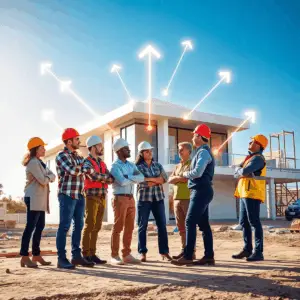
Every luxury build in South Florida runs on a contractor vendor ecosystem: the general contractor, the engineers and architects, the specialty trades, the suppliers, and the inspectors and expediters who move work through each county’s system. That ecosystem is organized by county, Broward, Palm Beach, and Miami-Dade each have their own trade pools, review cultures, and logistics, and understanding how it fits together is how owners read proposals intelligently, judge builders fairly, and avoid the schedule failures that come from thin benches.
Key takeaways
- What does the contractor vendor ecosystem actually include?
The contractor vendor ecosystem has five layers: the licensed general contractor who owns the schedule and the risk; the design side, architects and the structural, mechanical, and civil engineers; the specialty trades, marine contractors, pool builders, roofers, glazing installers, AV integrators, landscape teams; the supply chain for windows, stone, millwork, and equipment; and the compliance layer of inspectors, expediters, and testing labs. - How does the Broward County contractor vendor ecosystem work?
Waterfront-centric and municipally administered: Fort Lauderdale's canal estates dominate demand, so the county's bench runs deep in marine contractors, seawall and dock engineers, and HVHZ glazing crews, while permitting personality varies city by city. - What is different about the Palm Beach County ecosystem?
The Palm Beach contractor vendor ecosystem runs on design-review fluency: from the Town of Palm Beach to Gulf Stream, the county's estate municipalities demand teams that can win architectural commissions, not just permits, so the strongest vendors here pair coastal engineering with presentation-grade design documentation. - How does the Miami-Dade contractor vendor ecosystem differ?
Miami-Dade differs in documentation depth: the county's High-Velocity Hurricane Zone standards and product approval regime filter the vendor pool hard, and the trades that thrive are the ones whose submittals, Notices of Acceptance, and inspection records are already clean.
What does the contractor vendor ecosystem actually include?
The contractor vendor ecosystem has five layers: the licensed general contractor who owns the schedule and the risk; the design side, architects and the structural, mechanical, and civil engineers; the specialty trades, marine contractors, pool builders, roofers, glazing installers, AV integrators, landscape teams; the supply chain for windows, stone, millwork, and equipment; and the compliance layer of inspectors, expediters, and testing labs.
Every layer’s license is a public record, verifiable through the Florida DBPR license portal; how the general contractor and design side work together is covered in how builders and architects collaborate.
How does the Broward County contractor vendor ecosystem work?
Waterfront-centric and municipally administered: Fort Lauderdale’s canal estates dominate demand, so the county’s bench runs deep in marine contractors, seawall and dock engineers, and HVHZ glazing crews, while permitting personality varies city by city. Builders here are judged by their waterfront portfolios and their standing with each municipality’s review desk.
The county’s permitting authorities sit under Broward County’s building division; the market those trades serve is profiled in Fort Lauderdale luxury real estate market trends and the rules in flood zone requirements.
What is different about the Palm Beach County ecosystem?
The Palm Beach contractor vendor ecosystem runs on design-review fluency: from the Town of Palm Beach to Gulf Stream, the county’s estate municipalities demand teams that can win architectural commissions, not just permits, so the strongest vendors here pair coastal engineering with presentation-grade design documentation. Club-community work adds HOA logistics, and oceanfront work adds CCCL experience to the required skill set.
The county framework runs through Palm Beach County Planning, Zoning and Building; the community-by-community picture is in the best luxury custom home neighborhoods and working with HOAs and architectural review boards.
How does the Miami-Dade contractor vendor ecosystem differ?
Miami-Dade differs in documentation depth: the county’s High-Velocity Hurricane Zone standards and product approval regime filter the vendor pool hard, and the trades that thrive are the ones whose submittals, Notices of Acceptance, and inspection records are already clean. Demand is intense, logistics are urban, and the premium for crews with county-proven track records is real.
The owner-level picture is in Miami-Dade custom home permitting, with the cost structure in the luxury construction cost breakdown.
Which county-to-county differences change budget and timeline?
Four differences move budget and timeline across each contractor vendor ecosystem: product specification, where HVHZ counties narrow the approved catalog; review culture, from Miami-Dade documentation to Palm Beach aesthetics; trade availability, since the best crews book ahead in every county; and logistics, urban staging in Miami-Dade versus gated-community rules in Palm Beach versus barge access on Broward’s canals. A budget that ignores these is a guess.
How the codes themselves diverge is mapped in building codes across Palm Beach, Broward, and Miami-Dade.
How should owners judge a contractor vendor ecosystem bench?
Through the general contractor, deliberately: verify the license and insurance of every firm that matters; ask which trades are long-term relationships versus new bids; look for county-specific track records, the marine contractor’s Broward seawalls, the glazing crew’s Miami-Dade approvals; and weight reliability over lowest price, because in a luxury build the cheapest bid is usually the most expensive decision.
The selection framework is expanded in choosing the right luxury custom home builder, and owners who want independent oversight of the bench use owner’s representation.
Where does Kass Construction & Development fit in this ecosystem?
As a boutique hub inside that contractor vendor ecosystem, with a deep bench: Kass Construction & Development, state-licensed (CGC1529472) and led by Mitch Kass, a licensed general contractor and attorney, has built trade and supplier relationships across 100+ luxury residences across Broward, Palm Beach, and Miami-Dade, which is what lets a custom build run its often 18 to 36 month course without waiting on strangers.
The bench is engaged from pre-construction planning onward, when lead times and trade availability still shape the schedule. Contact Kass Construction & Development or call 954-607-4335.
| County | What the ecosystem is built around | What that means for your bench |
|---|---|---|
| Broward | Canal estates and waterfront demand | Deep marine and seawall specialists |
| Palm Beach | Estate municipalities and design review | Teams fluent in commission submittals |
| Miami-Dade | HVHZ standards and product approvals | Documentation depth filters the field |
| All three | Long-lead materials and trade availability | Glazing, millwork and stone committed in pre-construction |
| Verification | License and insurance are public record | Check every firm through the state DBPR portal |
Who is in the contractor vendor ecosystem, and how does each county’s version differ?
The contractor vendor ecosystem behind a South Florida luxury home has the same members in every county, and the table below lists them with the way each county’s version tends to differ.
| Member | Role | Broward | Palm Beach | Miami-Dade |
|---|---|---|---|---|
| General contractor | Builds, sequences, holds subcontracts | Deep waterfront bench in Fort Lauderdale | Estate and island specialists; review-board experience | HVHZ and product-control fluency essential |
| Architects and engineers | Design, sealed drawings, coastal and marine engineering | Canal and Intracoastal experience | Design-review presentation skills; CCCL experience on the ocean | NOA-driven detailing; county submittal norms |
| Marine contractors | Seawalls, docks, lifts, dredging | Largest bench; barge access on the canal system | Intracoastal and inlet work; turtle-season scheduling | Bay and island work; county Class I permits |
| Specialty trades | Glazing, roofing, stone, millwork, pool, integration | Regional firms serve all three counties | Same, with island logistics | Same, with product verification on site |
| Suppliers | Impact glazing, structural steel, stone, roofing, fixtures | Regional distribution; lead times set by the product | Same | NOA-listed products required |
| Reviewers and inspectors | Municipal and county building, environmental, floodplain | Municipal departments plus county environmental license | Municipal departments plus county environmental review | County systems plus municipalities; product control |
| Expediters and consultants | Permit coordination, review-board submissions | Useful in high-volume municipalities | Useful for review boards and CCCL | Useful for county product control and DERM |
| Owner’s representative | Independent oversight for the owner | Same role across all three counties | ||
Every licensed member can be verified at myfloridalicense.com, and engineers at the Florida Board of Professional Engineers; county services are described at discover.pbc.gov for Palm Beach. The code and permitting differences that shape each county’s ecosystem are in building codes across Palm Beach, Broward and Miami-Dade.
How should an owner judge a builder’s bench within the contractor vendor ecosystem?
The contractor vendor ecosystem is only as strong as the bench a builder can actually call, and the checks below tell an owner whether that bench is real before the contract is signed.
- Ask for the named subcontractors the builder intends to use for structure, glazing, roofing, marine work, pool and integration, and how many projects each has completed with the builder.
- Verify each subcontractor’s license and insurance, not only the general contractor’s.
- Ask which suppliers hold the builder’s accounts for impact glazing, stone and roofing, and what lead times they are quoting now.
- Ask which municipalities the builder has permitted in during the past two years and for intake-to-issuance timelines; see Miami-Dade custom home permitting, costs and market trends for what the toughest county expects.
- Ask how the builder handles review boards, using the standard in HOAs and architectural review boards in South Florida.
- Visit a live site and a completed home in the same county and water type as the planned project.
- Ask how the builder works with an independent owner’s representative, per owner’s representation for luxury homes.
- Run the wider selection process in how to choose the right luxury custom home builder.
Which county-to-county differences in the ecosystem change budget and timeline?
The contractor vendor ecosystem produces different budgets and timelines in each county for reasons an owner can plan around, and the list below is what changes when a project moves from one county to another.
- Product regime: Miami-Dade’s Notice of Acceptance requirements and product verification extend lead times and narrow supplier choice; specifying to that standard everywhere simplifies procurement.
- Marine capacity: Broward’s canal system supports a large marine bench and barge logistics; island and inlet work in Palm Beach carries seasonal constraints.
- Review calendars: Palm Beach’s town review boards meet on fixed dates; Miami-Dade’s county systems have their own rhythm; municipal departments in all three vary in volume, as cataloged in flood zone requirements for waterfront construction in Broward County for one county’s rules.
- Labor and trade availability: demand concentrates where the market is strongest, tracked in Fort Lauderdale luxury real estate market trends and the best luxury custom home neighborhoods in Palm Beach County.
- Cost components: the county’s premium sits in structure, envelope and site work, itemized in the Miami-Dade cost breakdown.
- Coordination: the builder’s role in bringing the ecosystem together during design is described in how builders and architects collaborate and fixed in pre-construction planning.
Kass Construction & Development holds a working bench across Broward, Palm Beach and Miami-Dade under license CGC1529472, with subcontractors, suppliers and consultants chosen for the county and the water type of each project.
Frequently Asked Questions
What is a contractor vendor ecosystem?
The contractor vendor ecosystem is the full network a build depends on: the general contractor, design and engineering firms, specialty trades, material suppliers, and the inspectors and expediters who move approvals. Its quality and depth, more than any single firm, decide schedule and outcome.
Why does the ecosystem differ by county?
Because each county contractor vendor ecosystem answers to different demand, codes, and review cultures: Broward’s canal estates breed marine specialists, Palm Beach’s estate municipalities reward design-review fluency, and Miami-Dade’s HVHZ regime filters for documentation discipline. Crews strongest in one county are not automatically strong in another.
How do I verify the firms on my project?
Licenses and insurance through the state’s DBPR portal, plus county-specific track record: completed projects, reviewer relationships, and references from builds like yours. Every legitimate firm expects the question.
Does the general contractor’s bench really matter?
The contractor vendor ecosystem is most of what you are hiring: long-term trade relationships mean priority scheduling, accountable quality, and honest pricing, while a bench assembled from new low bids means a schedule at the mercy of strangers.
What makes marine contractors a special case?
Seawalls and docks carry their own engineering, permits, and equipment, and in Broward and coastal Palm Beach they frequently set the project’s critical path. A proven marine team, engaged early, is one of the highest-leverage hires on any waterfront build.
How far ahead should vendors be booked?
The best trades and long-lead materials, glazing, millwork, stone, are committed during pre-construction, not during construction. Lead-time management is a budget tool: substitutions made under schedule pressure are where quality and money leak.
Is the cheapest bid ever the right choice in this market?
Rarely at the luxury tier: bids meaningfully below the field usually signal scope gaps, thin insurance, or a crew stretched too thin. Comparing complete scopes from proven firms protects both the budget and the 18 to 36 month schedule.