Strategic design decisions are the ones that still matter in fifteen years. Most choices in a custom home are reversible: paint, fixtures, furniture, even kitchens. A small number are not, and those are the ones that determine what the property is worth, what it costs to insure and operate, and whether a future buyer sees a well-built house or a list of things to fix.
Key takeaways
- Which decisions are actually irreversible?
Six strategic design decisions are actually irreversible on a South Florida home: siting and orientation on the parcel, finished floor elevation, structural system, the building envelope, floor plan geometry and ceiling heights, and the location of major services. - Why does elevation matter most of all?
Elevation matters most in South Florida because it is permanent, it drives insurance for the life of the building, and it cannot be added afterwards without lifting the house. - How does orientation affect long-term cost?
Orientation affects long-term cost through comfort and energy for the building's whole life. Glazing exposure, shading, prevailing breeze, and how living spaces relate to the water determine cooling load and how the house actually feels. - What should the envelope decision optimize for?
The envelope decision on the Florida coast should optimize for durability first, then performance. Roof system, impact-rated openings, wall assembly, waterproofing, and corrosion protection are the elements a future buyer will ask about and an insurer will price.
Which decisions are actually irreversible?
Six strategic design decisions are actually irreversible on a South Florida home: siting and orientation on the parcel, finished floor elevation, structural system, the building envelope, floor plan geometry and ceiling heights, and the location of major services. Everything else can be changed later at a cost. These strategic design decisions cannot, which is why they deserve disproportionate attention early.
Strategic design decisions are made here, in the phase described in pre-construction planning.
Why does elevation matter most of all?
Elevation matters most in South Florida because it is permanent, it drives insurance for the life of the building, and it cannot be added afterwards without lifting the house. Building with genuine freeboard above the required base flood elevation costs modestly at design and protects value every year thereafter. Of all strategic design decisions, this is the one with the clearest long-term return.
The requirements are in base flood elevation requirements.
How does orientation affect long-term cost?
Orientation affects long-term cost through comfort and energy for the building’s whole life. Glazing exposure, shading, prevailing breeze, and how living spaces relate to the water determine cooling load and how the house actually feels. Orientation is free to decide and impossible to change, which makes it the highest-leverage decision on the drawing board.
Orientation is the cheapest of all strategic design decisions; climate-responsive approaches are covered in modern coastal architecture trends.
What should the envelope decision optimize for?
The envelope decision on the Florida coast should optimize for durability first, then performance. Roof system, impact-rated openings, wall assembly, waterproofing, and corrosion protection are the elements a future buyer will ask about and an insurer will price. Strategic design decisions that economize here save once and cost repeatedly, which is the opposite of what an owner is trying to achieve.
The standard is set out in hurricane-resistant construction, with efficiency programs at ENERGY STAR.
How much does plan efficiency matter?
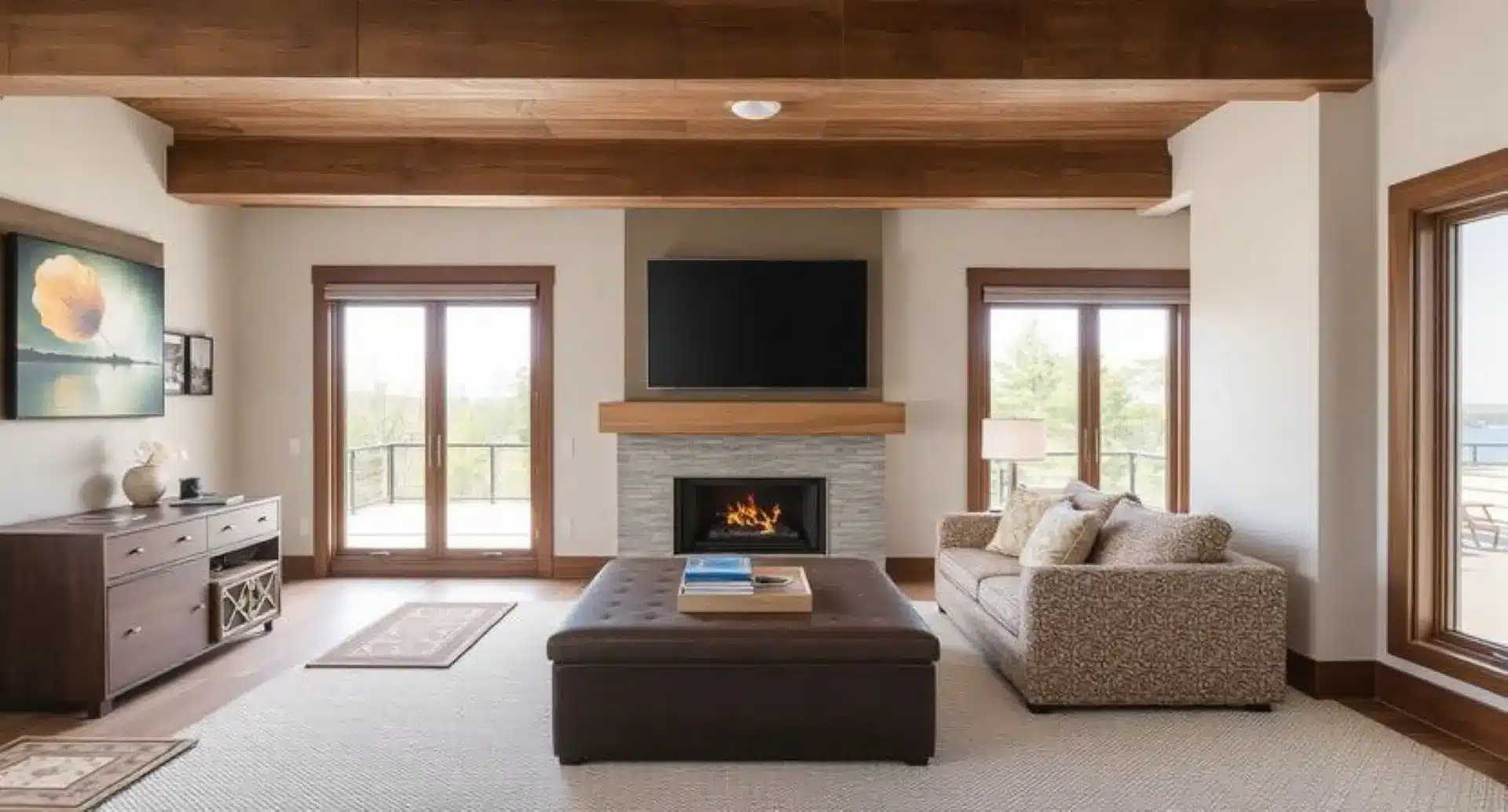
Plan efficiency matters considerably, and in both directions. A plan that delivers the intended living experience in less area costs less to build, less to cool, and less to maintain, without feeling smaller. Circulation, ceiling height, and sightlines create the sense of space that square footage is usually asked to provide.
Plan efficiency is among the most underrated strategic design decisions, and why area is a poor proxy is explained in cost per square foot for luxury homes.
| Decision | Why it cannot be undone | What it controls for decades |
|---|---|---|
| Siting and orientation | Fixed by the foundation | Cooling load, light, and how the house feels |
| Finished floor elevation | Requires lifting the house to change | Flood exposure and insurance cost |
| Structural system | Everything else is built on it | Spans, openings, and future flexibility |
| Building envelope | Replacement means opening the house | Durability, insurance, and running cost |
| Plan geometry and ceiling heights | Structural and dimensional | Perceived space and resale appeal |
| Location of major services | Buried in structure and walls | Cost of every future systems upgrade |
Which choices date fastest?
The choices that date fastest are highly specific finishes, single-purpose rooms designed around a current enthusiasm, and technology embedded in a way that cannot be updated. Strategic design decisions favor spaces that can change use, and infrastructure, conduit, capacity, access, that allows systems to be replaced without opening walls.
Strategic design decisions favor adaptability over specificity, and systems planning is covered in premium sustainable materials.
What adds value that buyers actually pay for?
South Florida buyers increasingly pay for documented resilience and low operating cost. Elevation with margin, a documented seawall, impact protection, backup power, efficient systems, and a complete closed permit history are what sophisticated South Florida buyers now examine early. These are strategic design decisions that show up directly in what the property fetches.
The shoreline documentation case is in seawall maintenance, repair, and replacement costs.
How should long-term water levels influence design?
Long-term water levels should influence South Florida design by building in margin rather than to the minimum. Higher finished floor elevation, seawall cap height set forward, drainage designed for a higher receiving water, and mechanical equipment placed above the flood line are all inexpensive at design and costly as retrofits. This is where a fifteen-year view pays most clearly.
The planning response is in sea level rise and waterfront design, with trends at NOAA.
How should an owner weigh these against budget?
An owner should weigh these against budget by protecting the irreversible six and flexing everything else. If the budget is tight, reduce area, simplify structure, and defer finishes, but never economize on elevation, envelope, waterproofing, or concealed work. Strategic design decisions made this way produce a house that can be improved later rather than one that must be repaired.
Budget structure is in how to budget a luxury home build.
How does Kass Construction & Development approach this?
By separating the permanent from the changeable: Kass Construction & Development, a state-licensed (CGC1529472) boutique luxury builder headquartered in East Fort Lauderdale and led by Mitch Kass, a licensed general contractor and attorney, with 100+ luxury residences delivered by Mitchell Kass and the firms he has led across Broward, Palm Beach, and Miami-Dade, makes strategic design decisions explicit early so the budget flexes where it safely can.
A custom build often runs 18 to 36 months. Contact Kass Construction & Development or call 954-607-4335.
For the vocabulary behind those choices, our modern vs contemporary architecture guide settles the distinction that shapes most current designs.
Which strategic design decisions are irreversible, and what do they control over the life of the home?
Strategic design decisions are the ones that cannot be changed after the slab is poured, and the table below lists them with what each controls in cost, insurance and resale over a fifteen-year hold on a South Florida property.
| Decision | Made when | Controls over the life of the home |
|---|---|---|
| Finished floor elevation | Site plan and foundation design | Flood insurance rating, compliance with future map changes, resale scrutiny, resilience to surge |
| Foundation type | Structural design | Performance in flood and wind, ground-level use, ability to raise later |
| Orientation and massing | Schematic design | Cooling load, glare, daylight, outdoor room comfort, view capture |
| Structural system and load path | Structural design | Wind performance, insurability, span and opening freedom |
| Envelope: glazing, roof, insulation | Design development | Energy cost, comfort, storm performance, maintenance |
| Plan efficiency and circulation | Schematic design | Cost per usable square foot, livability, adaptability to later needs |
| Ceiling heights and structure for future openings | Structural design | Ability to reconfigure interiors without structural work |
| Infrastructure: conduit, equipment room, service size | Design development | Technology and energy upgrades over decades |
| Seawall cap and site drainage | Site engineering | Yard and pool longevity, resilience to rising water |
| Elevator shaft and single-level living option | Schematic design | Aging in place; resale to a wider market |
Long-term water level data is published by NOAA Tides and Currents and efficiency benchmarks by ENERGY STAR; the elevation decision is expanded in base flood elevation requirements and luxury living in VE zones and the water-level context in sea-level rise in waterfront infrastructure design.
How should the irreversible decisions be made, in order?
Strategic design decisions are best made in a fixed order, because each one constrains the next, and the sequence below is how a South Florida luxury home is designed for long-term value.
- Elevation first: set the finished floor above the design flood elevation with an owner’s margin, then design the arrival and ground level as architecture.
- Foundation and structure next: choose the system for the zone and soils, with the load path and spans that give the plan freedom, per hurricane-resistant construction.
- Orientation and massing: place the principal rooms for the water and the breeze, and the outdoor rooms in afternoon shade.
- Envelope: impact glazing sized and shaded for the exposure, a roof system chosen for heat and wind, and insulation and air sealing specified once, using premium sustainable materials for the South Florida climate.
- Plan efficiency: circulation, ceiling heights and structural provisions for future openings, so the interior can change without the structure.
- Infrastructure: service size, equipment room above the flood level, conduit to every future device location.
- Site: seawall cap above the minimum with a raise allowance, pumped drainage where the outfall will sit low, and landscape that survives salt and storms; see the seawall maintenance cost guide.
- Only then the reversible layer: finishes, fixtures and furniture, chosen for taste rather than for value.
How should an owner weigh strategic design decisions against the budget?
Strategic design decisions compete for the same budget as finishes, and the weighing below protects the value that buyers, insurers and future owners actually pay for.
- Spend on the irreversible layer first; a foot of extra elevation or a stronger envelope cannot be bought later, while a kitchen can.
- Measure cost per usable square foot rather than per gross square foot, so plan efficiency is rewarded; the figures are in cost per square foot for luxury homes.
- Treat operating cost as part of the budget: envelope and orientation decisions pay back monthly for the life of the home.
- Avoid the choices that date fastest: trend-driven exterior styling, fixed technology in the walls, and single-purpose rooms; the durable directions are in modern coastal architecture trends and modern vs contemporary architecture.
- Keep a documented resilience file, because the value of these decisions is realized only if a buyer or insurer can see them.
- Fix the whole set of decisions in pre-construction planning, and build the budget around them using how to budget a luxury home build.
Kass Construction & Development designs for the irreversible layer first on every project in Broward, Palm Beach and Miami-Dade, so the property is worth more in fifteen years for reasons a future buyer can verify.
Frequently Asked Questions
Which design decisions cannot be changed later?
Siting and orientation, finished floor elevation, structural system, building envelope, plan geometry and ceiling heights, and the location of major services. Everything else is reversible at a cost.
Why is elevation the most important?
It is permanent, it drives insurance for the life of the building, and it cannot be added without lifting the house. Freeboard above the minimum is inexpensive at design and pays annually.
Does orientation really matter?
Yes. Glazing exposure, shading, breeze, and the relationship to the water set cooling load and daily comfort for the building’s whole life, and orientation is free to decide on paper.
What do buyers pay extra for?
Documented resilience and low operating cost: elevation with margin, a documented seawall, impact protection, backup power, efficient systems, and a closed permit history.
What dates fastest?
Highly specific finishes, single-purpose rooms built around a current enthusiasm, and technology embedded so it cannot be updated without opening walls.
Is a bigger house a better investment?
Not automatically. A more efficient plan can deliver the same experience for less capital and lower running cost, and area alone is a poor proxy for value.
Where should I economize if I must?
Area, structural complexity, and finishes, which can be revisited. Never elevation, envelope, waterproofing, drainage, or concealed work.