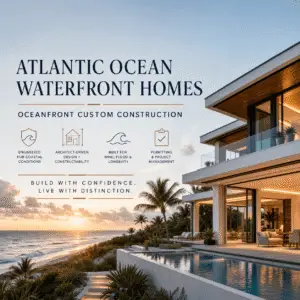
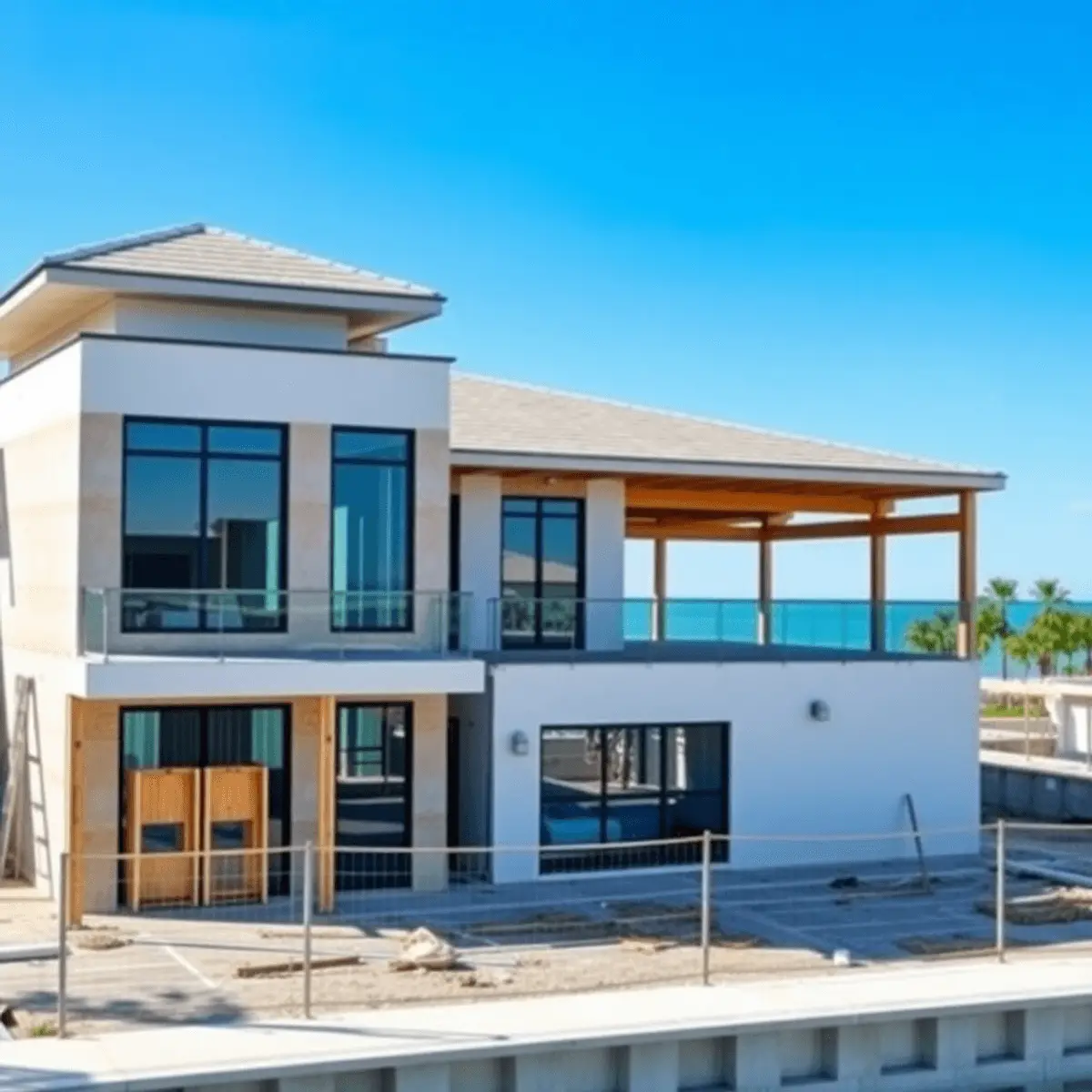
If you are searching for custom home builders Fort Lauderdale Florida, “custom” here means an architect-driven home designed for your specific lot, your lifestyle, and Fort Lauderdale’s coastal building rules: hurricane wind loads, flood elevation, drainage, salt-air durability, and, on the water, seawalls and docks. This guide covers what custom really means, why Fort Lauderdale is a special place to build, the five-phase process and realistic timeline, what drives cost, how to vet a builder, and how to start without expensive mistakes.
Key takeaways
- What does "custom home" mean in Fort Lauderdale, and what does it not mean?
A true custom home is designed by an architect specifically for your lot, accounting for setbacks, elevation, drainage, utilities, sun orientation, views, privacy, and how you live day to day, and engineered to Fort Lauderdale's wind, flood, and coastal requirements. - Why is Fort Lauderdale a special place to build a luxury custom home?
Fort Lauderdale is not a wide-open suburb. Lots can be small, land is expensive, and the best sites are often older homes ready to be replaced, canal-front parcels, or tight infill lots where careful planning matters. - What is the custom home building process in Fort Lauderdale, step by step?
Most successful luxury homes in Fort Lauderdale follow five phases: discovery and goals, site and feasibility, permitting and approvals, construction, and closeout. - What is a realistic timeline for building a custom home in Fort Lauderdale?
A luxury custom build by custom home builders Fort Lauderdale trusts often runs 18 to 36 months from design through completion, and a high-end renovation often runs 6 to 12 months.
This guide is for three kinds of homeowners and buyers: you already own land and want a builder to take you from idea to finished home; you want to buy land and need help deciding whether it is suitable before you commit; or you have an older home and plan to tear it down for a new build or do a high-end renovation. Choosing among custom home builders Fort Lauderdale offers and following the right process leads to a home designed around you, higher long-term value, fewer surprises, and a smoother build, because one team handles the details instead of you managing every handoff.
Our companion guides on how to choose a luxury custom home builder in South Florida and what “custom home builder near me” really means go deeper on selection.
What does “custom home” mean in Fort Lauderdale, and what does it not mean?
A true custom home is designed by an architect specifically for your lot, accounting for setbacks, elevation, drainage, utilities, sun orientation, views, privacy, and how you live day to day, and engineered to Fort Lauderdale’s wind, flood, and coastal requirements. A semi-custom home starts from a base plan with limited changes; a spec home is designed and finished by the builder for speed. Only the first is built around you, and it is what the best custom home builders Fort Lauderdale offers specialize in.
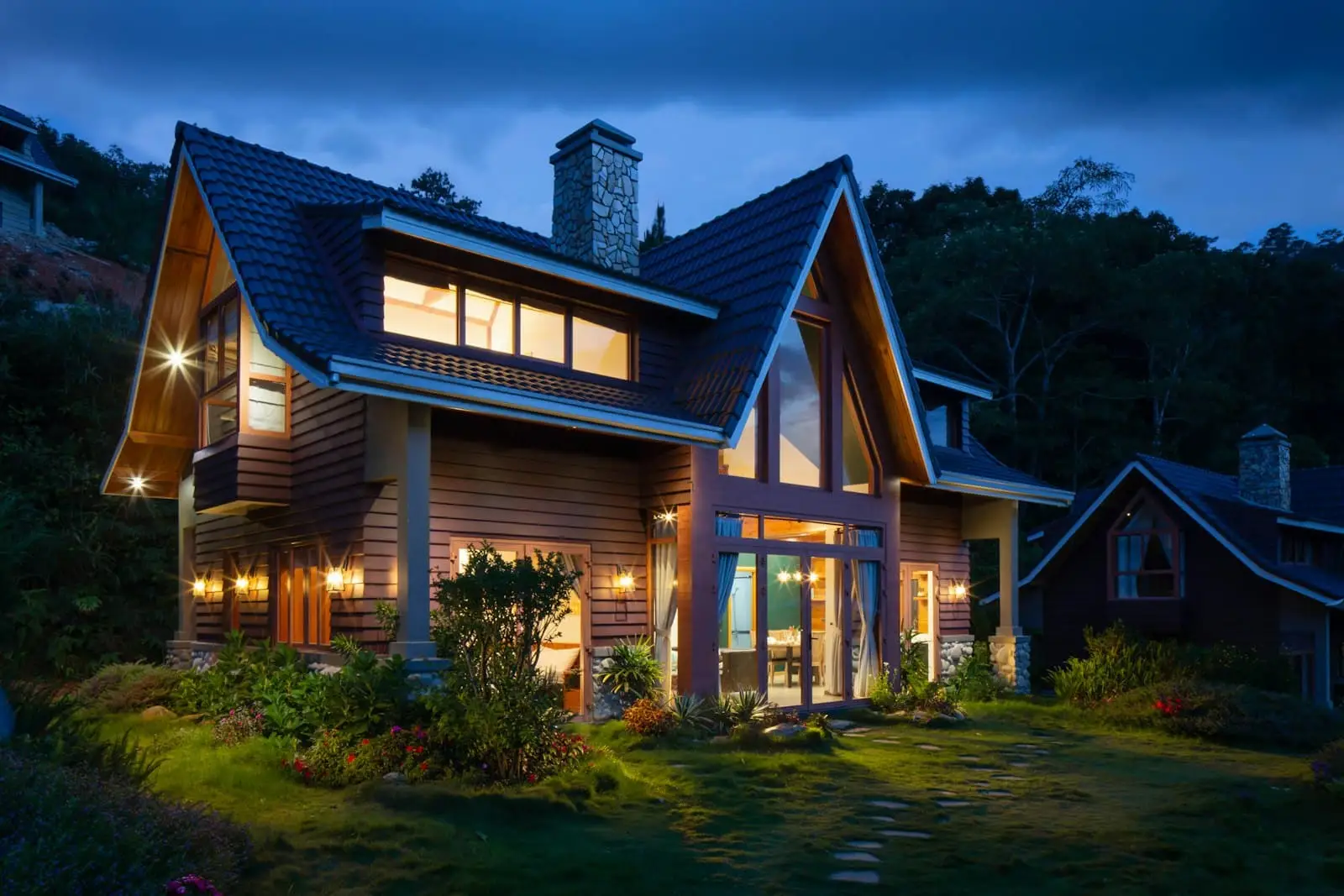
- Custom: designed from scratch to fit your lot and needs. The most design freedom, and the most planning. Best when you have a unique or waterfront lot, care about layout and natural light, want high-end finishes, or need a truly individual home.
- Semi-custom: starts with a base plan that can be changed somewhat. Faster to begin, less flexible, and sometimes awkward on tight or irregular lots.
- Spec build: the builder picks the design and finishes. Fastest option, no personalization.
Building in Fort Lauderdale adds challenges to all three: coastal exposure and corrosion, flood zones requiring elevation planning, wind standards that require impact-rated windows and doors under the Florida Building Code, strict plan review and inspections, and HOA or neighborhood rules in some areas. Our guides to flood zone requirements in Broward County and hurricane-resistant construction explain what those requirements mean for the design.
Why is Fort Lauderdale a special place to build a luxury custom home?
Fort Lauderdale is not a wide-open suburb. Lots can be small, land is expensive, and the best sites are often older homes ready to be replaced, canal-front parcels, or tight infill lots where careful planning matters. Building near the coast is demanding, so a luxury home here has to be built to last: corrosion-resistant materials and fasteners, hurricane-rated windows and doors, wind-engineered roofs, waterproofing that holds up in heavy rain, smart drainage, and exterior assemblies that handle heat, humidity, and salt air.
If you are building on the water, you may also need seawalls, docks, setbacks, and marine contractors. Even when those are not part of the home permit, they affect timing and site work; dock and seawall work over state waters runs through the Florida DEP submerged lands program. The best custom home builders Fort Lauderdale has to offer put heavy emphasis on pre-planning: more work up front so you avoid costly delays later.
Our city guide to Fort Lauderdale waterfront homes and complex permitting and neighborhood guides for Las Olas Isles, Las Olas, Idlewyld, Victoria Park, Tarpon River, Stranahan River, and Imperial Point show how those constraints differ street by street. See also coastal corrosion-resistant materials.
What is the custom home building process in Fort Lauderdale, step by step?
Most successful luxury homes in Fort Lauderdale follow five phases: discovery and goals, site and feasibility, permitting and approvals, construction, and closeout. The difference between custom home builders Fort Lauderdale homeowners recommend and the rest is how carefully each phase is handled, especially feasibility and permitting, where most delays are either prevented or created.
1) Discovery and goals
Size, must-have features, style, timeline, and non-negotiables. A good builder asks about daily life: how you entertain, storage, working from home, aging in place, boating, pets, privacy, and noise.
2) Site and feasibility
Before design goes too far you need facts: survey, utilities, zoning and setbacks, flood elevation, soil conditions, and the real cost of preparing the site. This is also when you agree on a budget, before spending months on design. Our feasibility study guide and pre-construction planning process cover this phase.
3) Permitting and approvals
The builder works with the architect and engineers to submit plans, answer comments, make revisions, and keep the paperwork organized. In Fort Lauderdale, a builder who knows the review process well can save weeks; see navigating South Florida’s permitting process and why permit delays happen.
4) Construction
A clear schedule, tracked progress, coordinated trades, quality checks at key stages, and careful change management are what make the build smooth instead of stressful.
5) Closeout
Punch list, certificate of occupancy, warranties, and support after move-in. Luxury homes should finish cleanly, with documents ready and a builder who stays available; see quality control, inspections, and punch lists and warranties and guarantees.
What is a realistic timeline for building a custom home in Fort Lauderdale?
A luxury custom build by custom home builders Fort Lauderdale trusts often runs 18 to 36 months from design through completion, and a high-end renovation often runs 6 to 12 months. The phases run in sequence: pre-construction (design, engineering, permitting, financing), site preparation and foundation, framing and dry-in, mechanical, electrical, and plumbing rough-ins, interior finishes, exterior work and landscaping, and final inspections and closing. Waterfront lots, complex designs, and busy permit cycles push toward the longer end.
Several factors move the timeline: permit review cycles, the summer rainy season and hurricane season, material availability (especially long-lead luxury items such as windows, doors, stone, and millwork), and skilled-labor availability. Our guides to how long it takes to build a custom luxury home, a realistic timeline for luxury custom construction, and contingency planning for supply chain issues explain how each is managed.
What drives cost with custom home builders Fort Lauderdale homeowners hire?
Location (waterfront and prime neighborhoods carry higher land costs), design complexity, material selections, amenities such as pools, outdoor kitchens, and smart-home systems, and the builder’s depth of experience all move the number. Local cost pressures include demolition, site preparation, and utility work, elevation and flood compliance, waterfront access and protection, skilled trades and detailed finish work, and material lead times.
For actual figures, read what it costs to build a luxury custom home in Fort Lauderdale, cost per square foot for luxury homes, and soft costs in luxury home construction. Contract structure matters too: our guide to construction contracts for high-end residential work compares fixed-price and cost-plus approaches.
Allowances and why they matter
Allowances are budget placeholders for items you have not chosen yet: appliances, plumbing fixtures, tile, lighting, cabinets. They are useful, but they must match your taste. An allowance set too low makes the estimate look good at first and causes budget problems later. Practical budgeting rules: fund the structure and envelope first (roofing, waterproofing, windows and doors, drainage), make key selections earlier than you think you need to, carry a contingency sized to the project’s complexity, and get every change in writing with its schedule impact; see cost overruns in luxury construction.

How do you check the custom home builders Fort Lauderdale offers?
A Fort Lauderdale luxury build is not the time for gut feeling; use a simple checklist. Verify the Florida license under the exact name signing your contract, general liability and workers’ compensation insurance, a portfolio of projects like yours (waterfront if you are on the water, complex renovations if you are renovating), recent local references, a contract that spells out scope, assumptions, timeline, selections schedule, and warranty terms, and a current jobsite you can visit.
Licensing and insurance
Confirm the license through the DBPR license verification portal, confirm insurance certificates, and ask about permit history and whether the builder self-performs supervision. Kass Construction & Development is licensed as CGC1529472.
Portfolio proof and references
Look for projects like yours, not just attractive photos. Talk to recent clients about communication, cleanliness, schedule discipline, fairness on changes, and how the builder held up under pressure. Our client stories show what those conversations should surface.
Contracts, transparency, and jobsite quality
The contract should outline scope, assumptions, a realistic timeline, a selections schedule, and plain-language warranty terms. Then ask to visit a current jobsite: posted information, cleanliness, protection of finished work, and active supervision tell you a great deal.
Waterfront estates and high-end renovations: what experience really matters?
Waterfront homes and luxury remodels are not just bigger projects; they carry specific risks: moisture management and material transitions, structural changes that must integrate with existing construction, mechanical, electrical, and plumbing upgrades sized for modern loads, and logistics when you are living in the home during the work. Precise framing, clean drywall and trim lines, consistent reveals, well-planned lighting, and disciplined punch-list management separate true luxury from merely expensive work.
For waterfront projects, close coordination with marine contractors, seawall specialists, surveyors, and engineers matters as much as interior finishes; see seawall construction and permitting and waterfront home construction in South Florida. For renovations, our whole-home luxury renovation guide and teardown vs. renovation cover the decision.
How should builders work with architects and designers?
The best custom homes in Fort Lauderdale start with an architect leading the design and a builder who respects that vision while keeping it buildable, on schedule, and on budget. During design the builder should provide cost estimates that update as plans develop, efficiency suggestions that do not lower quality, material options that keep the look while improving performance or lead time, and a schedule that matches procurement and inspections realistically.
Clear roles prevent problems: the architect owns design, drawings, and oversight; the builder owns means, methods, management, and execution; an optional owner’s representative protects the owner’s interests and coordinates the parties. Agree early on decision deadlines, the RFI process, submittals, and finish schedules; see how builders and architects collaborate. That partnership is what separates the best custom home builders Fort Lauderdale has from the rest.
Production builders vs. custom home builders Fort Lauderdale: what is the difference?
Production builders build many homes at once from set plans and materials: more cost-effective and faster, often in planned communities, but with limited customization, less uniqueness, and a more transactional process. Custom home builders build one home at a time around the client: personalized design, a home that reflects your style, and hands-on guidance, in exchange for higher cost, a longer build, and more decisions.
The right choice depends on your budget, how much personalization you want, and how quickly you need to be in. If you are leaning custom, the hub guides on luxury custom home building in South Florida and waterfront and coastal home construction collect the deeper articles.
Are custom home builders also new home builders in Fort Lauderdale?
Yes: custom home builders Fort Lauderdale homeowners hire, including Kass Construction & Development, are also new home builders, because every custom home is a new build on a cleared or vacant lot. In Fort Lauderdale the terms overlap: a custom home builder is a new home builder whose houses are designed for one owner and one lot rather than repeated from a catalog plan. Kass Construction builds new homes from the ground up, from pre-construction planning through permitting, construction, and final walkthrough.
The label matters less than the questions you ask. A buyer comparing new home builders in Fort Lauderdale should ask who owns the design, how the building timeline will be managed (ground-up custom builds often run 18 to 36 months), and how decisions and changes are documented along the way. For lots near the water, the flood zone requirements shape the design before the first drawing is finished.
What is it like to build with a full-service team, from land to final walkthrough?
A full-service team in Fort Lauderdale is not a bonus; it prevents delays and unexpected costs because fewer handoffs mean fewer mistakes. It typically covers land purchase help (feasibility and risk review before you buy or finalize designs), owner’s representation (schedules, budgets, and decisions managed transparently), preconstruction planning (scope, timeline, procurement, and early trade input), construction (quality, clear updates, and close coordination with your architect and designer), and closeout with warranties and maintenance guidance.
Kass Construction & Development, one of the custom home builders Fort Lauderdale homeowners turn to for architect-driven work, is a boutique, state-licensed (CGC1529472) luxury builder based in East Fort Lauderdale, led by Mitch Kass, a licensed general contractor and attorney, with four decades in Florida real estate, law and construction and 100+ luxury residences delivered by Mitchell Kass and the firms he has led across Broward, Palm Beach, and Miami-Dade. Its architect-driven custom homes, waterfront estates, and high-end renovations are managed under one roof, which is the practical meaning of full service. The Kass difference post walks through the seven-step process, and what an owner’s representative does explains the advocacy role.
How do you get started and avoid costly mistakes in the first 30 days?
The first month of a Fort Lauderdale custom home sets the pace for everything after it. Be clear about must-haves, budget range, and preferred neighborhoods or lot features; gather the survey, title details if buying land, HOA rules, and a folder of what you like; have an initial conversation with the builder about license, comparable experience, process, communication, and permitting; ask for a written preconstruction plan; and choose the architect and design team together, early.
This approach avoids the classic problems: buying the wrong lot, designing beyond the budget, underestimating permit time (especially heading into hurricane season), and last-minute selections that cost more. When you are ready, contact Kass Construction & Development or call 954-607-4335 to talk through your lot, your goals, and a realistic plan with custom home builders Fort Lauderdale homeowners have trusted.
How do Fort Lauderdale’s neighborhoods differ for a custom home builder?
Custom home builders Fort Lauderdale owners hire work across neighborhoods that differ in water, lot type and rules, and the table below compares the areas where most luxury custom homes are built.
| Neighborhood | Water and lots | Typical project | What the builder must handle |
|---|---|---|---|
| Las Olas Isles | Deepwater finger canals near the Intracoastal | Teardown and rebuild of mid-century houses | Seawall replacement, dock and lift, AE-zone elevation |
| Harbor Beach | Gated, deepwater, near the inlet and beach | Large estates; renovations of newer homes | Association review, seawall, elevation, privacy |
| Rio Vista and Tarpon River | Canals off the New River near downtown | Rebuilds and major renovations | Bridge clearance, elevation strategy, walkable-lot logistics |
| Victoria Park and Colee Hammock | River and canal frontage; historic character | High-end renovations; sensitive infill | Historic context, narrow lots, substantial-improvement rule |
| Coral Ridge and Coral Ridge Country Club | Canals and Intracoastal frontage; golf | Rebuilds; waterfront estates | Wide-water exposure, seawall cap elevation |
| Idlewyld, Lauderdale Isles, Citrus Isles | Canal-front lots with private docks | Renovate-or-rebuild decisions | Feasibility, elevation, seawall condition |
| Fort Lauderdale Beach and the barrier island | Oceanfront and Intracoastal | Oceanfront estates | CCCL permit, VE-zone foundation, turtle lighting |
Every builder must hold a state license, verifiable at myfloridalicense.com; coastal permits are administered by the Florida Department of Environmental Protection and the code is the Florida Building Code. Neighborhood guides include Las Olas Isles, Las Olas, Idlewyld, Victoria Park and Tarpon River.
What should the first thirty days with custom home builders in Fort Lauderdale produce?
New home builders Fort Lauderdale owners engage should produce a defined set of outputs in the first thirty days, and the list below is what to expect before any design money is committed.
- A feasibility summary for the lot: flood zone and freeboard, seawall condition and cap elevation, zoning envelope, any historic or association review, from flood zone requirements for waterfront construction in Broward County.
- A tear-down-or-renovate recommendation where a house exists, with the substantial-improvement calculation.
- A program and budget range by category, including soft costs and contingency.
- A permitting map: which reviews apply, in what order, with realistic durations, per Fort Lauderdale waterfront homes and complex permitting.
- A recommended pricing model and a sample contract with exhibits.
- A proposed architect shortlist and the builder’s role during design.
- The resilience standard the home will be built to, per hurricane-resistant construction.
- A realistic timeline of 18 to 36 months from design to occupancy, and the reporting format the owner will receive; the selection method is in how to choose the right luxury custom home builder and custom home builder near me.
Frequently Asked Questions
What makes a home a true custom build in Fort Lauderdale, Florida?
A true custom home is designed and engineered specifically for your land, lifestyle, and the city’s coastal rules: setbacks, elevation, drainage, utilities, sun orientation, views, privacy, and daily needs, while meeting wind, flood, and coastal safety standards.
How is a custom home different from semi-custom or spec homes here?
Custom homes offer full design freedom tailored to your lot and goals. Semi-custom homes start from a base plan with limited changes. Spec homes are pre-designed with set finishes for speed and allow no personalization. All three must handle Fort Lauderdale’s flood zones, wind standards, impact-rated openings, and any HOA rules.
Why is Fort Lauderdale unique for luxury custom homes?
Small lots, high land values, and canal-front or teardown sites demand careful planning. Coastal homes need corrosion-resistant materials, impact-rated windows and doors, wind-engineered roofs, waterproofing, good drainage, and exteriors that handle heat, humidity, and salt air.
What extra factors apply to waterfront homes in Fort Lauderdale?
Seawalls, docks, setbacks, and marine contractors add time and complexity even when they are outside the main home permit. Experienced custom home builders Fort Lauderdale relies on plan those elements during feasibility so they do not surprise the schedule.
How do I pick the right builder for a luxury or waterfront home?
Among custom home builders Fort Lauderdale offers, choose one with comparable local projects, verify license and insurance, check references and jobsite quality, confirm they know coastal building rules, and look for a consultative process with a clear build plan, realistic timelines, and honest discussion of trade-offs and risks.
How long does a custom home take to build in Fort Lauderdale?
Custom home builders Fort Lauderdale homeowners hire typically quote 18 to 36 months from design through completion, depending on lot, waterfront conditions, design complexity, permitting cycles, and material lead times. A high-end renovation often runs 6 to 12 months.
What should I know about warranty coverage?
Warranties vary by builder, so ask what is covered before signing. New homes typically carry a structural warranty for major components over several years plus shorter coverage for workmanship and materials. Understand the limits, exclusions, and claim process, and get it in writing.