Luxury home design trends in South Florida have shifted from showpiece square footage to lifestyle-driven design: indoor-outdoor living as the organizing principle, biophilic design, warm minimalism and modern tropical architecture, natural materials, semi-open floor plans, wellness spaces, integrated smart home technology, multi-generational layouts, and rich natural palettes. This guide breaks down the nine trends shaping high-end custom homes in Fort Lauderdale, Boca Raton, and coastal Florida, what is going out, and how to design for 2030 rather than just this year.
Key takeaways
- What is the big shift behind current luxury home design trends?
The South Florida market has moved from showpiece homes to lifestyle-driven design. Luxury is no longer measured by ornamentation or unused space; it is measured by functionality, wellness, personalization, and seamless living. - Trend 1: Why is indoor-outdoor living the core design principle?
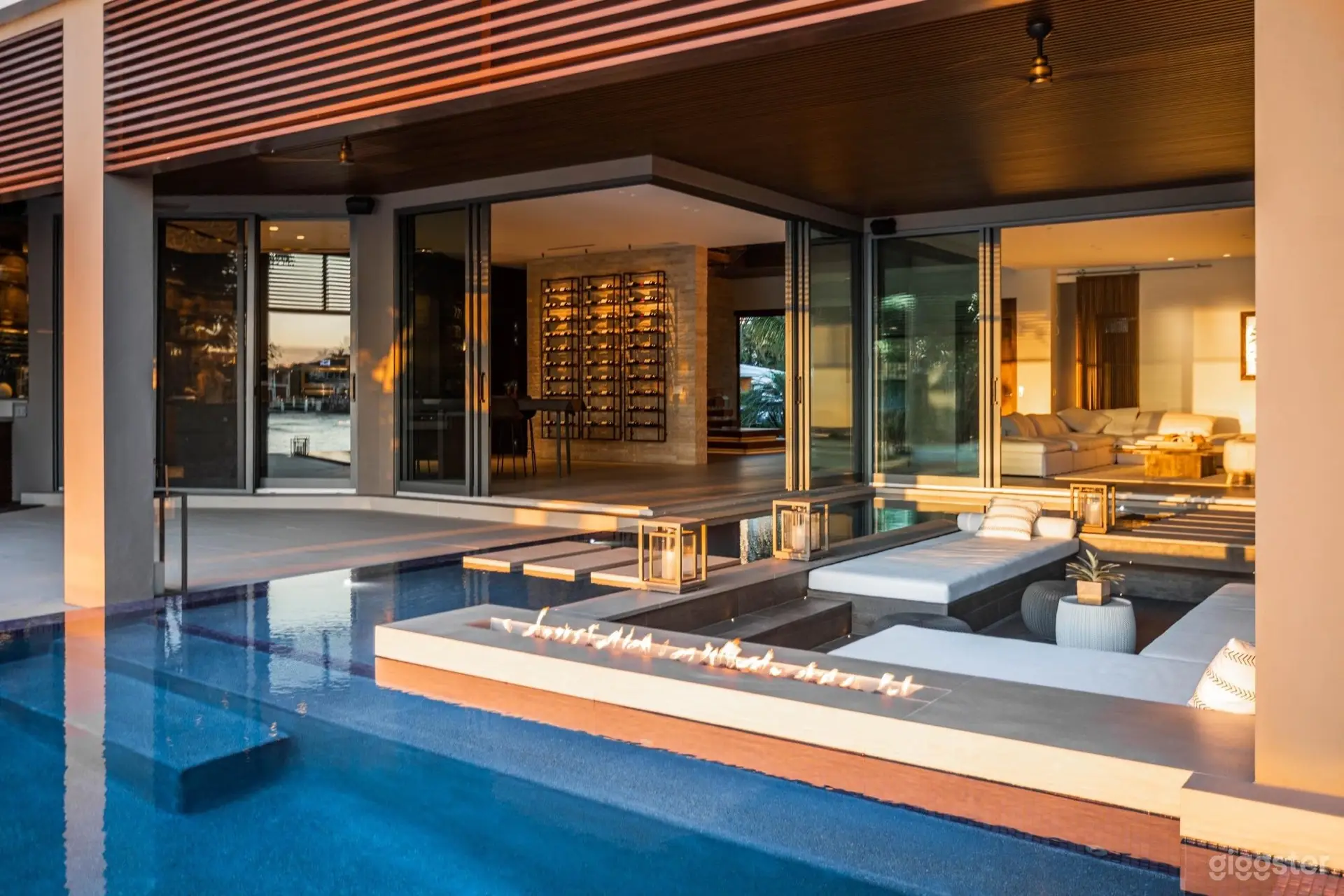
South Florida design is defined by climate, so the strongest of the luxury home design trends is treating inside and outside as one continuous environment: fully retractable glass walls, outdoor kitchens and living areas, and covered terraces and pool decks that blur the boundary between the two. - Trend 2: What does biophilic design and natural integration look like?
Biophilic design connects people to nature through living walls and indoor greenery, natural stone and wood, courtyards and planted transitions, and floor plans that maximize natural light. - Trend 3: What is warm minimalism and modern tropical architecture?
In South Florida, minimalism is evolving away from cold, stark design toward warm, layered, coastal elegance: clean lines paired with organic textures, soft neutral palettes, and curved architectural elements.
Luxury is no longer defined by excessive ornamentation or oversized rooms that never get used. For high-net-worth homeowners, buyers, and investors, understanding the current luxury home design trends is critical to maximizing property value, future-proofing design decisions, and creating homes that stand out in a competitive market. Kass Construction & Development incorporates these evolving trends into new custom homes and renovations across Broward, Palm Beach, and Miami-Dade; if you are starting a project, our guides to choosing the right luxury custom home builder and pre-construction planning are the practical companions to this one.
What is the big shift behind current luxury home design trends?
The South Florida market has moved from showpiece homes to lifestyle-driven design. Luxury is no longer measured by ornamentation or unused space; it is measured by functionality, wellness, personalization, and seamless living. The new standard is intentional, experience-driven design, where the layout, the materials, and the systems all serve the way the owner lives day to day.
That shift changes how projects are planned. Instead of starting with a facade and filling in rooms, the best South Florida homes now start with the owner’s routines (hosting, working from home, training, multi-generational visits) and let the architecture follow. Our post on the South Florida luxury lifestyle homeowners want maps those routines in detail.
Trend 1: Why is indoor-outdoor living the core design principle?
South Florida design is defined by climate, so the strongest of the luxury home design trends is treating inside and outside as one continuous environment: fully retractable glass walls, outdoor kitchens and living areas, and covered terraces and pool decks that blur the boundary between the two.
The details are what make it work here: impact-rated sliding systems, flush thresholds, shade engineered for real sun angles, and drainage that keeps storms outside. Our guides to indoor-outdoor living for Florida estates and open-concept reconfiguration cover the design and retrofit sides respectively.
Trend 2: What does biophilic design and natural integration look like?
Biophilic design connects people to nature through living walls and indoor greenery, natural stone and wood, courtyards and planted transitions, and floor plans that maximize natural light. Biophilic design has moved from novelty to core expectation in the luxury market.
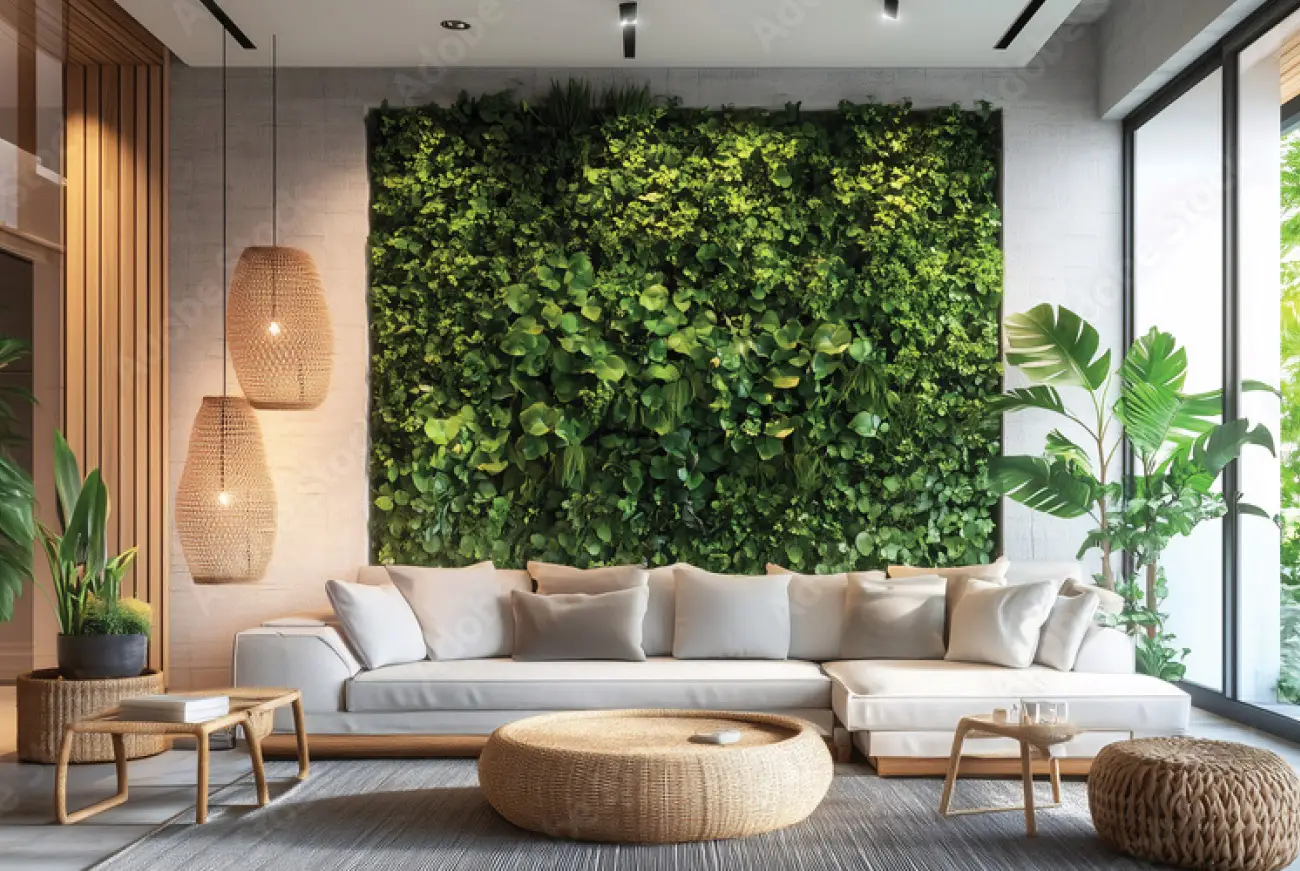
Done well, it is also practical: native and climate-adapted planting reduces irrigation and maintenance, and daylight-driven layouts reduce lighting loads. Our deep dives into biophilic design for luxury coastal homes and native Florida plants in high-end landscape design show how it is executed in a salt-air climate.
Trend 3: What is warm minimalism and modern tropical architecture?
In South Florida, minimalism is evolving away from cold, stark design toward warm, layered, coastal elegance: clean lines paired with organic textures, soft neutral palettes, and curved architectural elements. The hybrid, often called modern tropical, blends modern architecture with tropical coastal living and has become the signature look of new South Florida estates.
It suits the climate as much as the eye: deep overhangs, breezeways, and shaded terraces come straight from tropical building tradition and cut heat gain. See modern coastal architecture trends for the full vocabulary, and modern vs. transitional luxury architecture if you are deciding between directions.
Trend 4: Which natural materials and textures are buyers choosing?
South Florida luxury buyers are shifting toward authentic, tactile materials over artificial finishes: quartzite and marble, limewash and micro-cement, and warm wood cabinetry. Texture is replacing flat, sterile surfaces to create depth and richness that photographs well and lives even better.
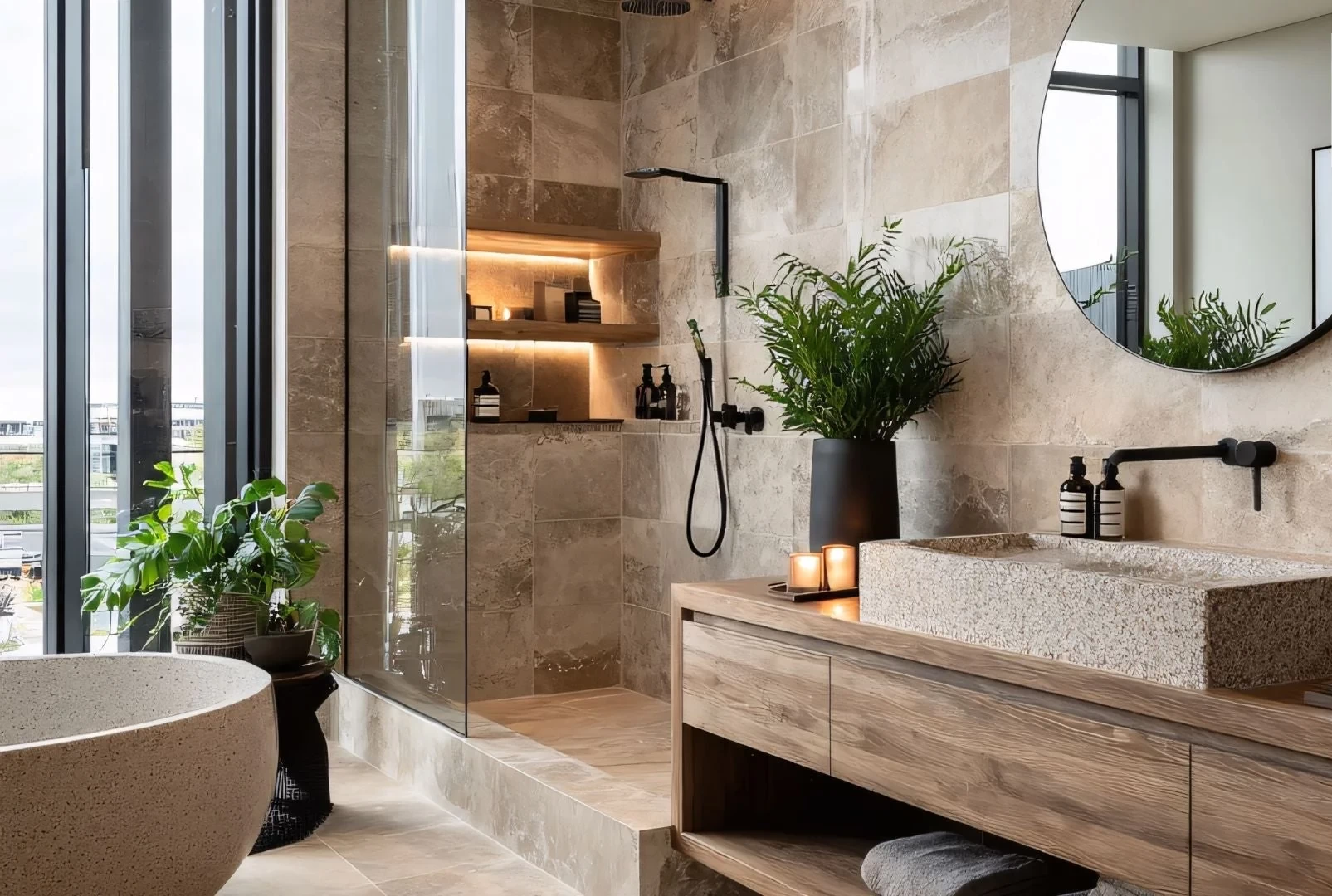
In coastal South Florida, material selection is also an engineering decision: salt air, UV, and humidity punish the wrong choices. Our guides to premium sustainable materials for the South Florida climate and coastal corrosion-resistant materials pair the aesthetics with the durability data.
Trend 5: Why are semi-open floor plans replacing fully open ones?
In South Florida luxury homes the era of the fully open floor plan is evolving into structured openness: semi-open layouts, defined functional zones, and multi-purpose rooms. Homes are now designed around how people actually live, with acoustic and visual separation where it matters (offices, media, guest wings) and connection where it counts (kitchen, living, terrace).
This is one of the luxury home design trends with the biggest renovation implications, because converting an older compartmentalized plan (or taming an over-opened one) involves structure, mechanicals, and sightlines. See open-concept reconfiguration and our whole-home luxury renovation guide.
Trend 6: How is wellness-centered design changing luxury homes?
South Florida luxury homes are becoming wellness environments: spa bathrooms with steam, sauna, and cold plunge, home gyms and yoga studios, and air, water, and light optimization. Wellness is no longer optional; it is a core design driver that shapes mechanical systems, glazing, acoustics, and the floor plan itself.
Our posts on wellness-oriented design features for coastal estates and longevity-focused home design break the trend into the six systems that actually deliver it: air, water, light, quiet, thermal comfort, and movement.
Trend 7: Is smart home integration now standard?
Yes: in South Florida luxury homes, technology is fully integrated into design rather than added afterward: lighting automation, climate control, security, and motorized shades are baseline expectations in luxury construction, planned during design so the controls, wiring, and equipment rooms disappear into the architecture.
The differentiator now is quality of integration, not quantity of gadgets. See smart home technology in luxury custom homes, smart lighting and window treatments, and future-proofing your smart home investment.
Trend 8: Why are multi-generational and lifestyle-focused layouts rising?
South Florida luxury homes are adapting to multi-generational living, remote work, and flexible lifestyles: guest suites with real privacy, secondary living areas, and dedicated home offices. The underlying principle is long-term adaptability, so rooms can change roles as the family does.
Our guide to multi-generational luxury home layouts shows six plans that keep everyone close without sacrificing privacy, and legacy homes for high-net-worth families explains why adaptability protects value across decades.
Trend 9: What color palettes define the new South Florida luxury?
South Florida palettes are shifting toward earth tones, greens and coastal hues, and warm neutrals. These colors create calm, sophisticated interiors that connect to the landscape outside the glass, and they age far better than high-contrast statement schemes.
Color is the least expensive of the luxury home design trends to adopt and the easiest to get wrong at scale: the discipline is a restrained base palette with texture doing the work, and stronger color reserved for art and furnishings that can change.
What is going out in luxury design?
Going out of South Florida luxury design, fading fast: cold all-white minimalism, fully open plans with no acoustic refuge, ornate Mediterranean pastiche, flash-over-function features, and finish-first renovations that ignore the building’s systems. Buyers increasingly read those as dated or as deferred maintenance in disguise.
The common thread is that short-term styling loses to long-term livability. When a design decision only photographs well, it is probably on this list.
How do you design for 2030, not just 2026?
Designing a South Florida home for 2030 means choosing timeless architecture over fads, durable materials over trendy finishes, and layouts that can adapt to changing lifestyles. In South Florida, add resilience: impact-rated openings under the Florida Building Code, elevation and drainage planned for the lot, and mechanical systems sized for heat and humidity. Homes designed this way hold value while trend-chasing homes cycle out.
Product approvals for windows, doors, and roofing are verified against the Florida Building Code during permitting, and sustainability frameworks such as LEED give useful benchmarks even when certification is not the goal. Our posts on strategic design decisions for long-term property value and hurricane resilience design connect the trend conversation to the value conversation.
What do South Florida luxury buyers actually want?
South Florida luxury buyers want homes that live seamlessly indoors and out, feel connected to nature, use warm authentic materials, offer both openness and refuge, support wellness and work, run on invisible technology, adapt across generations, and are engineered for the coast. That is the checklist behind every one of the luxury home design trends above.
Kass Construction & Development, a state-licensed (CGC1529472) boutique builder in East Fort Lauderdale led by Mitch Kass, a licensed general contractor and attorney, has delivered more than 100 luxury residences delivered by Mitchell Kass and the firms he has led across Broward, Palm Beach, and Miami-Dade, and builds these trends into architect-driven custom homes and high-end renovations. A custom build often runs 18 to 36 months and a high-end renovation often runs 6 to 12 months, so the best time to translate trends into plans is early: contact Kass Construction & Development or call 954-607-4335, and see the Kass difference for how the process stays stress-free.
How do the nine luxury home design trends translate into construction decisions?
Luxury home design trends only matter when they change what gets drawn and built, and the table below turns each of the nine shifts into the construction decisions it drives on a South Florida home.
| Trend | Construction decisions it drives | Coastal consideration |
|---|---|---|
| 1. Indoor-outdoor living as the organizing principle | Large-span impact sliding walls, covered loggias, continuous flooring, outdoor kitchens | Structural transfers, drainage at thresholds, wind-rated pergolas |
| 2. Biophilic design | Courtyards, planted walls, daylight from above, natural materials inside | Salt-tolerant planting, humidity control around interior planting |
| 3. Warm minimalism and modern tropical architecture | Textured stucco, wood-look ceilings, deep overhangs, restrained palettes | UV-stable finishes; marine-grade metals |
| 4. Natural materials and textures | Limestone, quartzite, ipe, thermally modified wood, honed finishes | Specification by exposure; sealing schedules |
| 5. Semi-open floor plans | Sliding partitions, pocket doors, acoustic separation, sculleries and prep kitchens | Zoned mechanical and dehumidification |
| 6. Wellness-centered design | Air filtration and fresh-air systems, water treatment, circadian lighting, spa and fitness rooms | Equipment placement away from bedrooms; ventilation for steam and plunge |
| 7. Smart home integration as standard | Equipment room, structured cabling, lighting control, automated shades, backup power | Equipment above the flood level; surge protection |
| 8. Multi-generational and lifestyle layouts | Guest suites with private entries, elevators, offices, staff quarters | Separate mechanical zones; acoustic assemblies |
| 9. New color palettes | Warm neutrals, sand and sea tones, natural wood, black accents | Exterior colors chosen for fade resistance and heat |
Structural and product requirements follow the Florida Building Code, and sustainable building standards are published by the U.S. Green Building Council. The materials in rows three and four are specified from premium sustainable materials for the South Florida climate, and the technology in row seven from smart home technology investment and future-proofing.
How should an owner apply luxury home design trends without dating the home?
Luxury home design trends are applied durably by putting the lasting ideas into the structure and the passing ones into the finishes, and the sequence below is how that is done on a South Florida custom home.
- Fix the irreversible layer first: elevation, orientation, structure, envelope and infrastructure, following strategic design decisions for long-term property value.
- Build indoor-outdoor living and semi-open planning into the structure, since they need spans, transfers and acoustic separation that cannot be added later; see indoor-outdoor living for Florida estates.
- Design the wellness and technology infrastructure into the walls: air, water, cabling, equipment room, per wellness-oriented design features and smart home technology for luxury custom homes.
- Choose the architectural language for the site and the long term, using modern coastal architecture trends and modern vs transitional luxury architecture.
- Keep color, fixtures, furniture and decorative lighting as the reversible layer where the current palette can live.
- Test every trend against the coast: salt, sun, wind and water decide what lasts, as set out in hurricane resilience design.
- Fix the whole set in pre-construction planning with the builder at the design table, and choose that builder using how to choose the right luxury custom home builder.
Kass Construction & Development builds these trends into the structure on projects across Broward, Palm Beach and Miami-Dade, so the home reads as current in 2030 for reasons that are built in rather than decorated on.
Frequently Asked Questions
What are the biggest luxury home design trends in South Florida right now?
Indoor-outdoor living, biophilic design, warm minimalism and modern tropical architecture, natural materials and texture, semi-open floor plans, wellness-centered spaces, integrated smart home technology, multi-generational layouts, and rich natural color palettes.
What has replaced the fully open floor plan?
Structured openness: semi-open layouts with defined zones and multi-purpose rooms. The kitchen, living, and terrace stay connected, while offices, media rooms, and guest wings get acoustic and visual separation so the house works for real life, not just parties.
Is biophilic design worth it in a coastal home?
Yes. Living walls, courtyards, natural stone and wood, and daylight-driven layouts measurably improve how a home feels, and climate-adapted planting reduces irrigation and upkeep. In salt air the execution matters: species selection, moisture control, and finishes must be chosen for the coast.
Do luxury home design trends affect resale value?
Strongly. Homes built around timeless architecture, durable materials, adaptable layouts, and coastal resilience hold value, while trend-chasing finishes and flash-over-function features date quickly. Buyers now also expect wellness features and integrated technology as baseline.
How do hurricanes shape design trends here?
Resilience is built into the aesthetic: impact-rated glass walls that still open the home to the outdoors, wind-engineered roofs behind clean modern lines, elevation and drainage integrated into the landscape design, and backup power planned invisibly. Style and code compliance are designed together.
Which trends translate best to a renovation instead of a new build?
Material and palette updates, wellness bathrooms, smart lighting and shades, and semi-open reconfiguration of older compartmentalized plans. Structural moves such as retractable glass walls and new outdoor rooms are bigger lifts; a feasibility review tells you which are practical. A high-end renovation often runs 6 to 12 months.
How long does it take to build a custom home with these features?
A luxury custom build in South Florida often runs 18 to 36 months from design through completion, depending on lot, permitting, waterfront conditions, and the complexity of glazing, outdoor rooms, and systems. Early coordination of architecture, engineering, and construction keeps the timeline predictable.
Which luxury home design trends have real staying power in South Florida?
The ones rooted in climate. Indoor-outdoor connection, resilient materials, elevated construction, and shaded outdoor rooms keep appearing among luxury home design trends because they answer this region’s permanent conditions rather than a season’s mood board.
How should owners filter luxury home design trends when planning a build?
Separate architecture from decoration. Structural moves pulled from luxury home design trends are expensive to reverse, so they deserve the durability test, while finishes and furnishings can chase the moment safely. Trend-proof the bones, have fun with the surfaces.
Are darker palettes among current luxury home design trends workable in strong sun?
Yes, with material honesty. South Florida light is unforgiving, so darker luxury home design trends succeed here through UV-stable finishes, deep overhangs, and glazing that manages glare. The look survives when the specification respects the sun behind it.
Do luxury home design trends affect resale timing?
They affect photography more than fundamentals. Homes styled to current luxury home design trends show beautifully at listing, but buyers underwrite location, water, structure, and systems. Luxury home design trends open the door. Fundamentals close the sale.
Where do luxury home design trends come from in this market?
From how owners actually live here. Wellness spaces, work-from-home suites, and hurricane-rated openness all entered luxury home design trends as responses to real South Florida routines, which is why imported trends that ignore the climate rarely last a cycle.
Are open floor plans still popular in 2026?
Yes—but evolving into semi-open, functional layouts
What style is trending in South Florida luxury homes?
Modern tropical and warm minimalist design