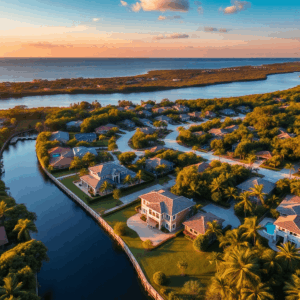
Advanced home security surveillance for high-net-worth properties is not about more gadgets — it is about a layered strategy designed into the property from the start. High-net-worth homes are built to be beautiful, comfortable, and private, but those same qualities can also make them attractive targets that are harder to secure with standard alarm-and-camera packages. The goal is to deter early, slow down threats, protect privacy, and make response predictable — with advanced home security and surveillance that blends architecture, construction, and technology into one cohesive system.
This guide walks through a modern, layered approach that blends architecture, construction details from luxury custom home building in South Florida, and technology so security is designed into the property instead of bolted on later. The goal is simple: deter early, slow down threats, protect privacy, and make response predictable.
Why Standard Systems Fail — and What Advanced Home Security Surveillance Does Instead
A typical suburban security setup assumes a simple footprint: a few doors, a couple of ground-floor windows, one driveway, and limited service activity.
High-net-worth properties are different in ways that matter:
- More access points: guest houses, pool baths, terraces, service doors, garages, docks, gates, and long side yards.
- Higher-value targets: jewelry, watches, art, wine collections, safes, luxury vehicles, and boats.
- Greater privacy risk: camera feeds, Wi‑Fi, smart-home controls, and staff devices can expose household routines.
Most security failures at luxury homes fall into three categories:
- Intrusion and theft: forced entry, targeted burglary, vehicle theft, dock access, and “smash and grab” attempts.
- Personal safety: home invasion risk, especially when criminals believe valuables are present or occupants are away.
- Information and privacy: compromised cameras, weak networks, smart-home exposure, and inadvertent surveillance of neighbors.
The fix is not “more gadgets.” It is a layered strategy that starts at the property line – an essential aspect of any luxury custom home building project – strengthens the building envelope with robust construction details from Kass Construction, controls access with permissions, designs surveillance for evidence collection purposes while ensuring hardening power and network resilience.
South Florida realities (especially waterfront)
In South Florida, security planning also needs to account for:
- Waterfront exposure: docks and seawall access points add an entire second perimeter.
- Hurricane-driven outages: systems must keep recording and alerting when the grid is down.
- Short-term guests and contractors: more temporary access and more keys, codes, and devices to manage.
- Higher service traffic: landscapers, pool techs, housekeepers, deliveries, and vendors increase day-to-day complexity.
Start with a real threat model: what you’re protecting and from whom
Threat modeling sounds technical, but it is simply a structured way to decide what matters before you buy systems. This threat modeling process involves identifying:
- Assets: what you cannot afford to lose or expose.
- Threats: who might target those assets and how.
- Weak points: the easiest paths in, and the most likely “quiet failures.”
Common high-net-worth assets to consider
- Safes and safe rooms
- Watches, jewelry, handbags, and collectibles
- Art, sculptures, and high-value décor
- Wine rooms and cigar humidors
- Garages with luxury vehicles and key storage
- Docks, boats, and marine equipment
- Data and network assets (Wi‑Fi, smart home, cameras, NAS storage)
Typical threat vectors in luxury neighborhoods
- Targeted burglary: criminals doing reconnaissance, watching patterns, or following service routines.
- Opportunistic crime: open gates, unsecured side doors, or poorly lit areas.
- Insider and contractor access: copied keys, shared codes, unsecured job sites, and “friendly” social access.
- Social engineering: pretending to be a vendor, delivery driver, or new staff member. This highlights the importance of understanding AI’s role in social engineering, as it can significantly alter the landscape of such threats.
- Privacy intrusion: drones, long-lens cameras, or compromised camera feeds.
The unique challenges of luxury home renovations in this region further complicate security planning. Additionally, understanding the current luxury real estate trends can provide valuable insights for homeowners looking to enhance their property’s security while also increasing its value.
How lifestyle changes the model
A high-net-worth household often has variables that standard systems do not handle well:
- Household staff and rotating vendors
- Frequent travel and multiple residences
- Events and entertaining
- Teenage drivers and visitors
- House managers coordinating access and maintenance
Practical deliverable: Create a one-page “security brief” for your architect, builder, and integrator:
- Asset list (what’s critical)
- Access map (every door, gate, dock entry, garage entry)
- Privacy priorities (where cameras cannot look, who can view footage, retention goals)
Layer 1 — Perimeter hardening that still looks architectural
The principle is to deter and detect early, ideally at the property line, not at the bedroom door.
Gates and entries
For luxury properties, the best gate solutions balance aesthetics with real-world resistance:
- Discreet crash-rated or anti-ram solutions where appropriate (especially for prominent drive entries).
- Smart intercom and video door station with clear face capture, night performance, and package interaction.
- Visitor verification workflows: guest pre-authorization, one-time entry permissions, and staff-only entry routing.
Fencing and walls
The goal is not to create a fortress look. It is to reduce easy entry and define controlled pathways.
Consider:
- Materials and height that align with design intent
- Climb resistance and anti-lift gate hardware
- Landscaping that supports security (avoid “ladder” plantings near walls)
- Lighting that eliminates hiding places while preserving ambiance
Waterfront specifics
Waterfront estates need a second security plan:
- Dock gates and controlled access at the gangway
- Seawall access points identified and monitored
- Marine-grade hardware to prevent corrosion failures
- Motion zones tuned for waterline movement and reflections
Construction coordination note
Perimeter security is easiest during site work:
- Conduits and low-voltage pathways to gates, dock areas, and perimeter camera points
- Proper camera sightlines planned before landscaping and hardscape are finalized
Layer 2 — A fortified building envelope (doors, glass, garage, roofline)
The goal here is “delay time.” Even adding a few minutes can be the difference between a failed attempt and a loss.
Doors: stronger without looking commercial
- Solid-core doors are a start, but reinforcement and anchoring matter more.
- Multi-point locking where appropriate
- Hinge-side protection and quality strike plates
- Correct frame anchoring into structure, not just trim and light framing
Glass: impact-rated and delay-focused
In South Florida, impact-rated glazing is common, but not all impact products perform the same against forced entry.
- Security film has limitations when frames and anchoring are weak.
- Laminated glass and properly engineered frames can increase forced-entry resistance.
- Define a forced-entry delay goal and align window schedules to it.
Garage vulnerabilities
Garages are frequently the weak link because they combine vehicles, tools, and quieter access.
- Harden side doors and ensure quality locks
- Smart openers with audit logs and alerts
- Secure the interior door from garage to house with proper rating and locking
- Place cameras to cover vehicle bays, entry doors, and the driveway approach
Roofline and second-story access
Balconies, terraces, and upper-level doors are often overlooked:
- Discreet contact sensors on terrace doors
- Lighting coverage that avoids glare and blind spots
- Thoughtful placement to avoid easy climbing routes
Practical guidance: Aim to add meaningful delay time while maintaining luxury finishes and clean lines. Most of this is invisible when it is specified early.
Layer 3 — Smart access control that reduces keys, copies, and surprises
Luxury security should move from “locks” to permissions.
Instead of asking, “Who has a key?” you ask:
- Who can access which doors?
- On what schedule?
- With what method?
- With what audit trail?
Best-fit methods for luxury homes
- Mobile credentials (secure, revocable)
- Encrypted keypads
- Biometrics where appropriate and privacy-approved
- A mechanical override strategy that is controlled and documented
Zoning access for real life
Separate permissions for:
- Staff and service entries
- Pool equipment and mechanical areas
- Dock access
- Wine room and valuables storage
- Garage and vehicle key storage
Temporary access for vendors and guests
- Time-bounded codes
- One-time PINs
- Automatic revocation
- Alerts on first use (so you know when access begins)
During construction: control trades without losing the site
Renovations and builds create high-risk windows. A professional approach includes:
- Site access logs for trades
- Secured storage for finishes and appliances
- Clear rules for temporary credentials and code rotation
Layer 4 — Advanced surveillance that’s private, reliable, and court-defensible
Cameras are not just about “recording.” For high-net-worth properties, cameras should produce identification-quality footage and be defensible if you ever need to share it with law enforcement or insurers.
Design coverage by approach, not by rooms
Prioritize:
- Primary and secondary entries
- Long driveways and vehicle approaches
- Side yards and narrow passages
- Docks and seawall access points
- Garage bays and driveway-to-garage transitions
- Interior common areas only where appropriate and privacy-conscious
Privacy-by-design
A luxury surveillance plan should be designed to protect privacy, not erode it:
- Avoid neighbor windows and sensitive sightlines
- Use privacy masking zones where needed
- Follow signage and legal requirements
- Enforce strict user roles (who can view live, who can export clips)
Storage and resilience
- NVR versus cloud hybrid depends on bandwidth, retention needs, and risk tolerance.
- Use encrypted storage where possible.
- Set retention periods intentionally (not accidentally).
- Plan bandwidth so high-resolution streams do not choke the network.
Cybersecurity basics that matter
- Change default credentials immediately
- Use VLAN segmentation for security devices
- Secure remote viewing with strong authentication and controlled user accounts
Layer 5 — Intrusion detection that’s engineered, not just installed
A high-end alarm system should be engineered for the property and the lifestyle, not templated from a checklist.
Sensors that matter
- Door and window contacts (including less obvious service doors)
- Glass-break sensors in the right rooms
- Vibration sensors for high-risk panes and specialty glass
- Beam sensors for certain perimeter lines and narrow passages
Motion detection done right
Large open plans, tall ceilings, and indoor-outdoor living can create false alarms if motion is not specified correctly.
- Dual-tech sensors where appropriate
- Pet and curtain considerations
- Placement planned around airflow, ceiling fans, and reflective surfaces
Alarm response planning
- Verified alarms (video verification can reduce false dispatch issues)
- Silent duress options
- Layered siren strategy (internal and external, tuned to the property)
Safe room concepts (optional, but relevant)
For some households, a discreet safe room is part of personal safety planning:
- Location selection that supports retreat without exposure
- Door specification appropriate to the goal
- Communications, ventilation, and power considerations
Monitoring: professional versus private security
Define escalation protocols in writing:
- Who gets notified first?
- When is private security dispatched?
- When is law enforcement involved?
- Who has authority to grant access during an incident?
Layer 6 — Life safety + security convergence (power, fire, storms)
Luxury security must remain functional during outages, storms, and intentional tampering.
Power redundancy
- Whole-home generators for continuity
- UPS support for network, NVR, PoE switches, and intercoms
- Segmented critical circuits so security stays up even if other loads are shed
In addition to these strategies, it’s crucial to consider life safety measures such as fire safety protocols and disaster preparedness plans. These elements should be integrated into your overall security strategy to ensure comprehensive protection against various threats. For instance, having a well-defined disaster response plan can significantly enhance your household’s resilience during emergencies.
Network redundancy
- Dual WAN options (often fiber plus 5G)
- Failover configuration tested, not assumed
- Local recording that continues when internet drops
Fire and water sensors
- Monitored smoke and heat detection
- Leak detection near mechanical rooms, laundry, and wine storage
- Automatic shutoff valves to reduce catastrophic water loss
Hurricane considerations
- Impact systems and secure shutter controls
- Post-storm re-entry procedures
- Camera verification after storms to confirm perimeter integrity before normal routines resume
Layer 7 — Smart-home integration without creating a bigger attack surface
A common mistake is connecting everything to one flat network with shared passwords and consumer-grade router settings.
Best practice is to treat security like critical infrastructure.
Network segmentation and managed control
- Separate networks for security, guest, and IoT devices
- Strong Wi‑Fi encryption and credential hygiene
- Managed routers and switches with logging and update policies
Integrations that add real value
- Lighting scenes that create an occupied look
- Geo-fencing that arms or disarms based on arrival patterns (with safeguards)
- Alarm-triggered lighting that eliminates hiding spots
- Motorized shades coordinated with away modes
Control hierarchy
Define who can:
- Arm and disarm
- View cameras
- Export recordings
- Create and revoke access credentials
This is especially important with household staff and rotating devices.
Vendor strategy
Choose systems that support open standards and professional-grade installation so the home does not end up with brittle DIY stacks that fail when one app changes.
Designing security into the build: what to decide during architecture and construction
Security is cleaner and more cost-effective when planned early because you can hide infrastructure and coordinate details across trades.
Key decisions during design and construction:
- Dedicated low-voltage pathways and conduit runs
- Secure equipment room with ventilation, rack space, and controlled access
- Camera sightlines planned with roof overhangs, soffits, and glare control
- Landscaping plans that account for growth, lighting, and future occlusion
- Door and window schedules aligned with security specifications
- Garage and service door standards that do not get “value engineered” into weak points
- Jobsite security protocols: staged deliveries, locked storage, controlled credentials

How Kass Construction & Development supports security-first luxury builds in South Florida
Kass Construction & Development is a state-licensed luxury home builder based in East Fort Lauderdale, serving Broward, Palm Beach, and Miami-Dade. The firm specializes in architect-driven custom homes, waterfront estates, and high-end renovations.
Security-first execution is not only about selecting the right devices. It is about coordinating the full scope across architecture, structure, doors and glazing, low-voltage, landscape, power, and permitting. This integrated approach ensures that every aspect of the build contributes to the overall security of the property.
The advantage of integrated execution
Kass supports a more reliable outcome by coordinating:
- Architects and design partners
- Permitting and project management
- Trades whose work directly impacts security (doors, glass, framing, electrical, low-voltage rough-in, landscaping)
- Security and AV integrators so infrastructure is planned, not patched
Moreover, Kass’s expertise extends to waterfront and coastal home construction in South Florida. This specialization further enhances their ability to deliver secure luxury homes tailored to the unique needs of their clients.
Owner’s representation: clarity and risk reduction
When security touches multiple trades, the risks are schedule delays, scope gaps, and inconsistent specifications. An owner’s-rep mindset helps maintain:
- Transparency on decisions and trade-offs
- Risk mitigation on jobsite exposure
- Schedule control and coordinated inspections
Waterfront estate experience
Waterfront properties require additional detail work that impacts long-term reliability:
- Corrosion-resistant hardware selection
- Dock and seawall access planning
- Protected conduit routing and marine-grade mounting details
Suggested collaboration flow
A practical process for luxury projects:
- Early security workshop
- Drawings and specification alignment
- Rough-in and prewire during framing and site work
- Commissioning, testing, and documented handover
Commissioning, testing, and handover: the step most homeowners skip
Commissioning is the process of verifying that every element works as designed before move-in.
It includes:
- Confirming every camera angle, focus, and night performance
- Verifying every sensor, zone, and alert
- Testing access rules, schedules, and audit logs
- Confirming backup power behavior and internet failover
- Ensuring mobile alerts are accurate and actionable
A punch-list approach homeowners can demand
- Night tests for facial capture at entries
- Driveway capture verification (including license plate capture if specified)
- Alarm zone naming that matches the home map
- Response timing checks for monitoring and notifications
Documentation to request at handover
- As-built drawings and updated device locations
- Device inventory list and warranty information
- Admin credential vaulting plan (who holds master access and how it is protected)
- Maintenance schedule and service contacts
Training matters
Security should not depend on one person knowing how it works.
- Family and staff onboarding
- Incident playbooks (what to do, who to call, when to shelter)
- Travel mode procedures
Privacy and retention settings review
Confirm:
- Who can view what
- How long footage is retained
- How clips can be shared securely if needed
Maintenance and upgrades: keeping systems discreet and dependable for years
Luxury security degrades without upkeep. Not dramatically at first, then all at once: dead batteries, outdated firmware, dirty lenses, landscaping blocking views, and codes that were never revoked.
Quarterly and annual checks
- Clean and verify camera views
- Firmware updates and patching
- Credential audits (remove old staff and vendors)
- Test UPS batteries and generator-backed circuits
- Confirm remote access and failover behavior
Lifestyle-driven updates
Adjust the system as life changes:
- New staff or new vendors
- Teen drivers and new vehicle access
- Updated LPR lists (if used)
- Renovations, new outdoor structures, or landscaping changes
Vendor management
To avoid “orphaned” systems with no support:
- Use service contracts where appropriate
- Define response SLAs
- Ensure documentation is complete so ownership stays with the homeowner, not an installer’s app login
Practical next step
If you are building or renovating a luxury home in South Florida, schedule a security planning conversation during the design and scoping phase, not after finishes are selected. The earlier the coordination starts, the cleaner the result, and the more discreet and dependable the system will be.
FAQs (Frequently Asked Questions)
Why do standard security systems often fail at high-net-worth homes?
Standard security systems typically assume a simple home layout with limited access points and service activity. High-net-worth homes, however, have multiple access points such as guest houses, pool baths, terraces, service doors, garages, docks, gates, and long side yards. They also contain higher-value targets like jewelry, art, luxury vehicles, and more complex privacy risks involving smart-home devices. These factors make standard systems insufficient for comprehensive protection.
What is the recommended approach to securing luxury custom homes in South Florida?
A modern layered security strategy is recommended that integrates architectural design, robust construction details from luxury custom home building experts like Kass Construction, and advanced technology. This approach designs security into the property from the start rather than adding it later, aiming to deter intrusions early, slow down threats, protect privacy, and ensure predictable response.
How does South Florida’s environment affect security planning for waterfront luxury properties?
South Florida’s unique realities include waterfront exposure with docks and seawall access creating a second perimeter to secure. Additionally, hurricane-driven power outages require security systems capable of continuous recording and alerting during grid failures. The region also has higher service traffic and frequent short-term guests or contractors requiring careful management of access keys and codes.
What are common threat vectors targeting high-net-worth homes?
Typical threats include targeted burglary through reconnaissance or following service routines; opportunistic crimes exploiting open gates or poorly lit areas; insider threats from copied keys or unsecured job sites; social engineering tactics impersonating vendors or staff; and privacy intrusions via drones or compromised camera feeds. Understanding AI’s role in social engineering is increasingly important in this context.
How should homeowners create an effective security plan tailored to their lifestyle?
Homeowners should develop a one-page ‘security brief’ for architects, builders, and integrators that outlines critical assets (like safes, art collections), detailed access maps of all entry points (doors, gates, docks), and privacy priorities specifying camera restrictions and footage handling. This plan should account for household staff, rotating vendors, frequent travel between residences, events hosting, teenage drivers, and house managers coordinating maintenance.
What does perimeter hardening involve in luxury home security?
Perimeter hardening focuses on deterring and detecting threats early at the property line rather than inside the home. This includes designing gates and entry points that blend aesthetically with architecture while providing robust security controls to manage access effectively. The goal is to create a visible deterrent that slows down potential intruders before they reach sensitive areas of the property.