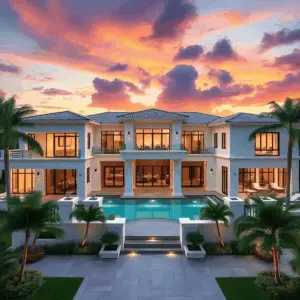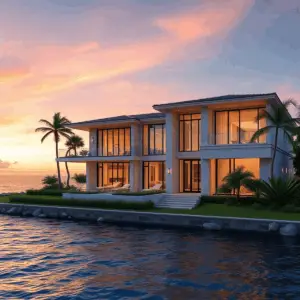
Sunrise Intracoastal waterfront homes combine high-end architecture with coastal engineering requirements: salt-air corrosion, flood-zone constraints, canal-edge soils, and seawall or boat-lift interfaces. Renovations succeed here when design decisions are made alongside structural, marine, and permitting realities from day one, not after finishes are selected. This guide covers what makes these homes different, what a true luxury renovation should include, how to evaluate a seawall and decide between repair and replacement, permitting, coastal durability, flood and insurance planning, the right sequencing, budget drivers, and how to choose a builder.
Key takeaways
- Where is Sunrise Intracoastal, and why are Sunrise Intracoastal waterfront homes a different kind of renovation project?
"Sunrise Intracoastal" refers to the East Fort Lauderdale waterfront neighborhoods near Sunrise Boulevard and along the Intracoastal Waterway, a mix of legacy mid-century homes, renovated modern residences, and ground-up luxury redevelopments. - What does "luxury renovation" mean for Sunrise Intracoastal waterfront homes, and what should it include?
A true luxury renovation on the Intracoastal is a whole-property upgrade: architecture, structure, MEP systems, envelope, and outdoor waterfront elements planned together to improve livability, durability, and long-term value. - How do you evaluate an existing seawall before renovating Sunrise Intracoastal waterfront homes?
Before renovating Sunrise Intracoastal waterfront homes, assess the seawall's structural condition and remaining life. Leaning caps, voids behind the wall, soil washout, cracking, or chronic pooling often point to needed repair or replacement, and seawall decisions should happen before major landscape, pool, or dock upgrades. - Repair or replace: how do you choose the right seawall strategy for an Intracoastal property?
On the Fort Lauderdale Intracoastal, choose repair when the wall is structurally sound and issues are localized (minor cracking, cap repairs, small voids, limited drainage failures).
Where is Sunrise Intracoastal, and why are Sunrise Intracoastal waterfront homes a different kind of renovation project?
“Sunrise Intracoastal” refers to the East Fort Lauderdale waterfront neighborhoods near Sunrise Boulevard and along the Intracoastal Waterway, a mix of legacy mid-century homes, renovated modern residences, and ground-up luxury redevelopments. Renovating here is different because water exposure, wind loads, insurance scrutiny, stricter review, and tight logistics all shape the work.
Why these homes are unique: constant water exposure (humidity, salt spray, wind-driven rain, faster material wear); higher wind loads, so openings, roof assemblies, and attachments matter more; insurance scrutiny, where documentation and permit history influence underwriting; stricter review, since waterfront work often triggers additional municipal and sometimes environmental reviews; tight logistics (limited staging, narrow side yards, seawall edges, sensitive neighbors); and access constraints, where deliveries, crane picks, and equipment routes need planning, sometimes from the water. Neighboring guides for Coral Ridge and Fort Lauderdale Beach cover the same stretch of water.
Where projects go wrong: the most common mistake is treating the job like a standard interior remodel. Ignoring seawall age, yard drainage, finished floor elevations, or dock conditions until midstream creates rework, change orders, and permit delays. Who this is for: homeowners planning a luxury remodel, buyers purchasing a waterfront property to upgrade, and owners evaluating seawall repair or replacement before investing in interiors, pools, and landscaping. Our waterfront and coastal construction insights collect the fundamentals.
What does “luxury renovation” mean for Sunrise Intracoastal waterfront homes, and what should it include?
A true luxury renovation on the Intracoastal is a whole-property upgrade: architecture, structure, MEP systems, envelope, and outdoor waterfront elements planned together to improve livability, durability, and long-term value. It is not just finishes; it is performance in a coastal environment.
Clarify the scope for Sunrise Intracoastal waterfront homes: a full-home remodel (kitchen, baths, floors, lighting, systems, and a cohesive design overhaul); reconfigure plus addition (relocating kitchens, expanding living areas, adding suites, raising ceilings, reworking circulation); or cosmetic updates (paint, surface finishes, fixture refreshes), which are fine for short-term plans but often incomplete on the waterfront. Key systems that define luxury here: hurricane-rated openings with verified product approvals; modern HVAC with dehumidification to protect finishes and indoor air quality; smart-home infrastructure (lighting scenes, shades, security, access control, reliable network); acoustic and thermal performance (better insulation, quieter interiors, improved glazing, a tighter envelope); and resilient materials that tolerate humidity, salt exposure, and frequent cleaning.
Outdoor lifestyle features: a resort-style pool and spa; summer kitchen and dining; cabana bath and outdoor shower; seamless indoor-outdoor transitions with large-format openings; and dock and boat-lift integration that matches the architecture. The value lens: waterfront buyers pay a premium for homes that feel turnkey and low-maintenance; durable upgrades, clean permits, storm-rated assemblies, and well-executed waterfront infrastructure support resale appeal and reduce ongoing headaches. Our luxury renovation insights and architecture and design insights go deeper.
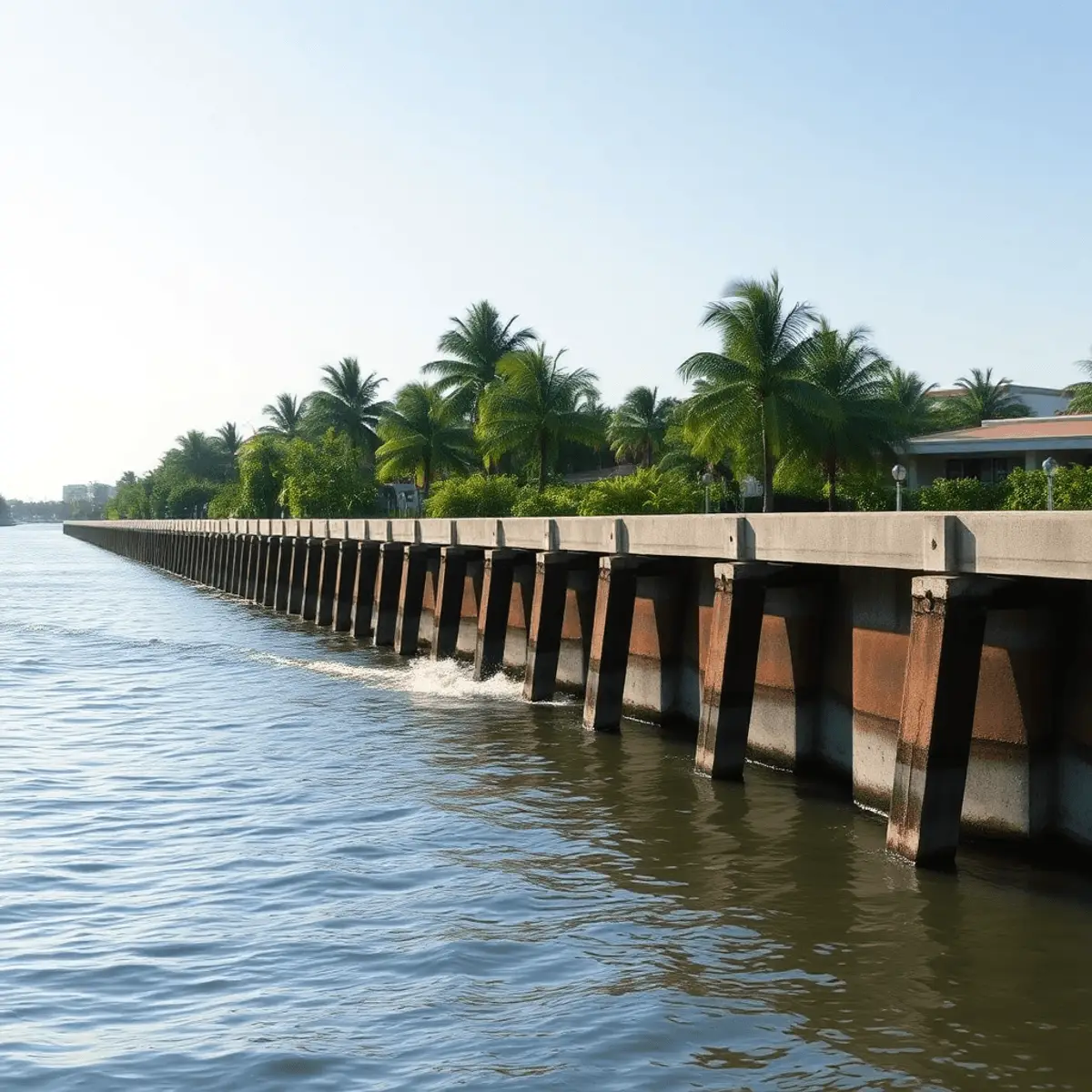
How do you evaluate an existing seawall before renovating Sunrise Intracoastal waterfront homes?
Before renovating Sunrise Intracoastal waterfront homes, assess the seawall’s structural condition and remaining life. Leaning caps, voids behind the wall, soil washout, cracking, or chronic pooling often point to needed repair or replacement, and seawall decisions should happen before major landscape, pool, or dock upgrades.
What a seawall does: retains soil and supports yard grade; protects landscape, patios, and potentially nearby foundations; influences drainage patterns across the lot; and serves as the edge condition for docks, pilings, and boat-lift systems.
Common warning signs on Sunrise Intracoastal waterfront homes: a cap that looks tilted, separated, or settled; cracks through the cap or wall face; voids behind the wall (soft spots, sinkholes, sudden depressions); soil washout after heavy rain or king tides; standing water in the yard near the seawall line; and rust staining or exposed steel in older concrete. Our seawall maintenance and cost guide covers inspection and cost expectations, and the US Army Corps of Engineers seawall design manual is the reference behind the engineering.
Site factors that change scope: seawall height and cap elevation relative to grade and water levels; tieback condition, often invisible until evaluated; drainage strategy and discharge points; alignment and interface with adjacent properties; and existing dock condition and pile locations. Why timing matters: install new pavers, pool decking, or landscape walls before addressing a failing seawall and you risk tearing out new work to access tiebacks, rebuild grade, or stage equipment. Best practice: start with a condition assessment, develop a budget range, and map a permitting path before finalizing the renovation design and exterior program.
Repair or replace: how do you choose the right seawall strategy for an Intracoastal property?
On the Fort Lauderdale Intracoastal, choose repair when the wall is structurally sound and issues are localized (minor cracking, cap repairs, small voids, limited drainage failures). Choose replacement when the wall is failing, under-engineered for current conditions, or near end of life, especially if you are investing in a major renovation that depends on long-term shoreline stability.
When repair is reasonable for Sunrise Intracoastal waterfront homes: cap replacement or re-pour in sections; concrete restoration and protective coatings in limited areas; localized tieback fixes; grouting voids and stabilizing isolated washouts; and adding or correcting drainage details behind the wall. When replacement is the smarter long-term move: noticeable leaning, widespread cracking, or recurring voids; evidence of tieback failure or significant loss of soil mass; a seawall height that no longer fits the site’s drainage and flood realities; and a planned backyard transformation with a new pool, terraces, or major hardscape.
Ownership horizon matters: for a long-term waterfront estate, replacement often aligns better with the investment; for a short-term refresh before selling, a targeted repair may be appropriate, but only if it is structurally defensible and properly documented. The cost risk to avoid: patching a wall close to failure is a false economy if it forces you to redo new pool decks, landscaping, or dock connections later. Coordination with dock and pool: the seawall line often dictates grades, drainage, and how pool decks, planter walls, and dock transitions are built. See our guide to seawall construction and permitting.
What permitting and approvals should you expect for Sunrise Intracoastal waterfront homes?
Waterfront renovation and seawall work on Sunrise Intracoastal waterfront homes typically require layered approvals: local building permits plus marine or environmental reviews depending on scope. Expect longer timelines than non-waterfront remodels; the smoothest projects start with a permitting roadmap that aligns architecture, engineering, surveys, and contractor logistics early.
Who may be involved: the City of Fort Lauderdale building department as the primary reviewer, with additional county, state, or federal touchpoints depending on impacts to waterways, docks, piles, or environmental considerations. Documents commonly needed for Sunrise Intracoastal waterfront homes: a current boundary survey and site plan; elevation documentation and an elevation certificate if applicable; structural engineering for walls, openings, or major reconfiguration; a drainage plan and grading strategy; product approvals for impact openings and roofing; and marine or waterfront drawings when docks, lifts, or seawall work are included.
Timeline expectations: pre-design diligence (existing conditions, surveys, initial constraints); design and engineering development; permit submission and review cycles, often with revisions; and construction sequencing with inspections and closeout. How Kass helps: integrated project management and a risk-mitigation mindset, coordinating professionals, keeping decisions permit-friendly, and planning means and methods early so the job is buildable, not just beautiful on paper. Our permitting and project management insights and guide to expediting seawall and flood-zone permits go further.
Which materials and assemblies hold up on the Intracoastal?
Coastal durability on the Intracoastal comes from selecting assemblies, not just materials, that resist corrosion, wind-driven rain, and humidity: robust waterproofing, corrosion-resistant fasteners, hurricane-rated openings, proper ventilation and dehumidification, and exterior finishes designed for salt exposure.
Exterior priorities for Sunrise Intracoastal waterfront homes: roof system integrity with verified attachments and underlayment choices; a thoughtful soffit and venting strategy to manage heat and moisture; impact-rated windows and doors with correct flashing and sealing; and water management at transitions (balconies, thresholds, stucco terminations, roof-to-wall details). Our hurricane-resistant construction guide and corrosion-resistant materials guide cover the specifics. Interior resilience: humidity control matched to the home’s volume and glazing; mold-resistant detailing in assemblies and wet areas; and moisture-tolerant finishes at lower levels and near exterior doors.
Hardscape and landscape: drainage away from the structure and vulnerable yard edges; salt-tolerant plantings and irrigation that does not over-saturate soils; and pavers or stone with joints designed for movement and drainage. Luxury that lasts: the goal is fewer maintenance cycles without sacrificing the high-end aesthetic; coastal durability is what keeps a renovation feeling new five years later.
How do flood zones, elevation, and insurance shape renovations of Sunrise Intracoastal waterfront homes?
Many Intracoastal homes sit in or near flood-designated areas, which affects elevation requirements, allowable improvements, and insurance outcomes. Smart planning verifies flood data early, designs critical systems above risk levels where possible, and documents upgrades to support underwriting and long-term resilience.
What to check early: the parcel’s flood map designation at the FEMA Flood Map Service Center (our explainer on AE, VE, and X flood zones translates it); base flood elevation considerations; existing finished floor elevations and vulnerable entry points; and drainage patterns and low spots on the lot. Insurance tie-ins: documentation for hurricane-rated openings and roof systems; updated electrical, plumbing, and HVAC; a clear permit history and compliant closeouts; and evidence of risk-reducing upgrades that underwriters recognize.
When to bring in specialists: elevation certificates when needed; structural engineering for reconfiguration, openings, and load paths; and HVAC and energy design for humidity control and comfort. On the Intracoastal, resilience upgrades are part of luxury: they protect the lifestyle and the investment.
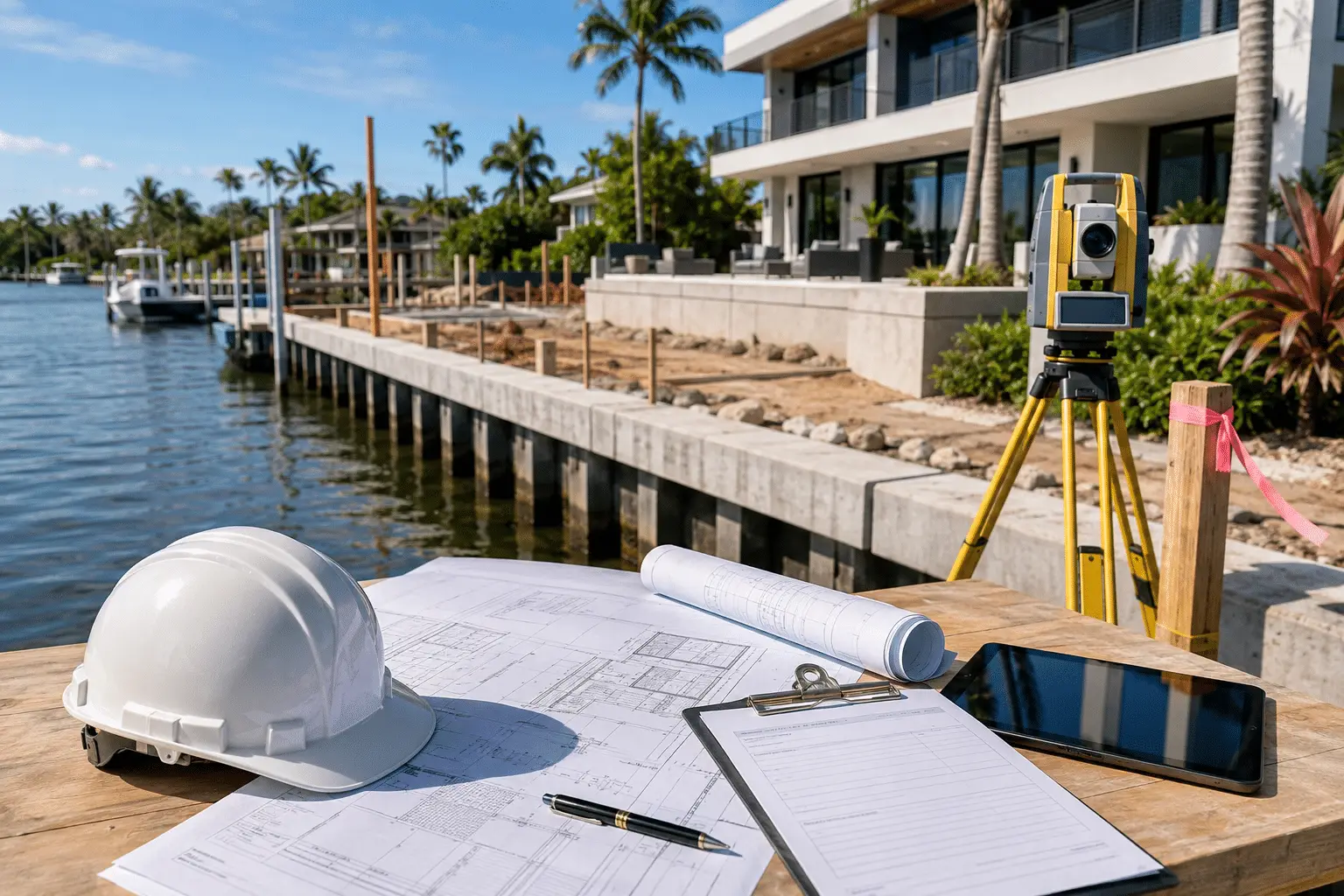
How should you sequence a Sunrise Intracoastal renovation with seawall, dock, pool, and interiors?
The safest sequence for a Sunrise Intracoastal renovation is diligence and surveys, then seawall and dock decisions, then site and drainage planning, then exterior envelope and hurricane upgrades, then major structural and interior remodel, and finally hardscape and landscape. Doing seawall work first prevents rework, protects new investments, and keeps access open for heavy equipment. A high-end waterfront renovation often runs 6 to 12 months, depending on scope, complexity, approvals, and procurement.
Preconstruction diligence for Sunrise Intracoastal waterfront homes: surveys, utilities verification, and existing-conditions documentation; an access and staging plan that respects neighbor constraints and right-of-way realities; and waterfront logistics planning for materials, equipment, and protection measures. Make the water-edge decisions early: seawall strategy (repair or replace); dock, lift, and pile scope; and drainage concept and yard grade targets. Our feasibility study guide shows how those decisions are tested before design money is spent.
Building performance upgrades: roofing and waterproofing; impact openings and envelope detailing; and a moisture-control strategy before high-end interiors go in. Interior renovation: layouts and structural reconfiguration; kitchens, baths, millwork, and lighting; and smart systems and AV infrastructure. Final exterior finishes: pavers, landscaping, outdoor kitchen, exterior lighting; then punch list, inspection closeouts, and documentation handoff. If the diligence phase reveals that the structure or elevation cannot support the plan, our teardown vs. renovation guide covers the alternative.
What drives cost and timeline for luxury renovations plus seawall work on the Intracoastal?
Costs and timelines on Sunrise Intracoastal waterfront homes vary widely because scope is not just interior finishes. Seawall condition, permitting complexity, structural changes, hurricane-rated upgrades, and site logistics can all shift the range. The best way to control cost is early diligence and a phased plan tied to real engineering inputs.
Primary cost drivers for Sunrise Intracoastal waterfront homes: seawall replacement versus repair, and tieback requirements; dock, pile work, and lift integration; structural reconfiguration and additions; impact openings and roofing upgrades; MEP modernization, including HVAC dehumidification; pool, hardscape, drainage, and outdoor living scope; and waterfront access and staging complexity. Timeline framing: preconstruction (design, engineering, selections, permit review cycles) and construction (demolition through finishes, with inspections and long-lead coordination).
Cost-control tactics: prioritize performance items first (seawall, envelope, drainage, critical systems); value-engineer assemblies, not aesthetics, so the look stays high-end while performance improves; and lock specifications early to reduce change orders and long-lead delays.
How do you choose the right builder for Sunrise Intracoastal waterfront homes, and how does Kass work?
Choose a Fort Lauderdale waterfront builder who can prove coastal experience, understands seawall and dock coordination, and runs a disciplined permitting and documentation process, with a clear plan for corrosion control, hurricane-rated systems, flood-zone constraints, sequencing, and a transparent budget and change-order framework. Kass Construction & Development is a boutique, state-licensed luxury builder based in East Fort Lauderdale, serving Broward, Palm Beach, and Miami-Dade, with an integrated, risk-managed approach.
Waterfront experience proof: examples of similar Intracoastal or canal-front projects; how they coordinate seawall, dock, and marine trades; and how they protect adjacent properties and manage staging. Permitting competence: who owns submittals and consultant coordination, how review cycles and revisions are managed, and how inspections and closeout documentation are tracked. Construction realities: access plans for dumpsters, deliveries, and heavy equipment; neighbor impacts (noise, working hours, cleanliness); and a protection plan for seawall edges, patios, and existing structures. Confirm licensing through the Florida DBPR portal; our Fort Lauderdale builders guide has a fuller checklist.
Red flags: vague allowances that hide real costs; no seawall strategy before pool or hardscape commitments; unrealistic timelines for waterfront approvals; and limited knowledge of coastal assemblies and corrosion control. What Kass does differently: owner’s representation, general contracting, and construction management under one roof, with principal Mitchell P. Kass being both a licensed Florida general contractor (CGC1529472) and an attorney; architect-driven execution with strong design partnerships; an owner’s-rep mindset of clarity, accountability, and proactive coordination; and risk mitigation through scope clarity, documentation discipline, change-management systems that reduce surprise costs, schedule realism based on permitting, long-lead items, and waterfront logistics, and quality control aligned to coastal detailing. Explore our services, projects, and about page.
How to start: a waterfront-specific due-diligence phase that confirms property goals, assesses seawall condition, verifies flood and elevation constraints, and builds a permitting roadmap before final design decisions. Use a 5W1H kickoff (why: goals, lifestyle priorities, investment horizon; where: site conditions, access constraints, waterfront interfaces; what: scope for interiors, envelope, seawall, dock, pool, drainage; who: architect, engineers, marine professionals, builder; when: a realistic timeline based on permits, long-lead items, and sequencing; how: a phased plan with decision gates and budget checkpoints). Decision gates that keep the project clean: seawall strategy confirmed, site drainage and envelope plan aligned, interior program and selections finalized, and outdoor living scope coordinated with marine and structural work. Contact us to structure the process.
| Order | Work | Why this position in the sequence |
|---|---|---|
| First | Survey, seawall inspection, and permit strategy | Shoreline approvals take the longest to obtain |
| Second | Seawall repair or replacement | Heavy equipment needs access before landscaping |
| Third | Structural and envelope work on the house | Weather protection before any interior spend |
| Fourth | Systems and rough-ins | Inspected before anything is concealed |
| Fifth | Interior finishes and joinery | Only once the building is dry and stable |
| Last | Dock, deck, pool surround, and landscaping | Protects finished work from construction traffic |
How do seawall repair options compare for an Intracoastal property?
Seawall repair in Fort Lauderdale ranges from a cap patch to a new wall, and the table below compares the options on an Intracoastal lot, where wake, wide-water exposure and cap-elevation rules raise the stakes.
| Option | What it fixes | Life expectancy | Permit level | Intracoastal note |
|---|---|---|---|---|
| Cap patching and sealing | Surface cracks, minor rust staining | Short; a maintenance item | Minor or none | Buys time on a sound wall only |
| Joint and void repair | Fill loss through joints and under the toe | Medium | Minor | Wake action reopens joints without filtered weeps |
| New tie-backs and deadmen | Wall movement from failed anchors | Long, if panels are sound | Building permit; engineer’s design | Common on older Intracoastal walls |
| Cap raise | Overtopping at king tides; cap below the current minimum | Long | Building permit; county review | Required on replacement; optional on repair |
| New wall in front of the old | Failed panels where the old wall can stay as backfill | Decades | County license, state where waterward of the line, federal general permit | Alignment cannot move waterward without authorization |
| Full replacement | Rotated or corroded panels, failed everything | Decades | Same as above | Timed before the house renovation |
Flood elevation and zone come from the FEMA Flood Map Service Center and the renovation threshold from FEMA’s substantial improvement page; marine contractors are verified at myfloridalicense.com. The economics are in the seawall maintenance cost guide and the design standard in hurricane-resistant seawall design standards.
What is the renovation sequence for Sunrise Intracoastal waterfront homes?
Intracoastal luxury renovations run in an order that puts the wall first and the flood rules at the center, and the steps below are that sequence on Sunrise Intracoastal.
- Walkthrough and structural assessment; building value and renovation estimate compared against the 50 percent threshold.
- Seawall inspection at low tide; option chosen from the table and priced from the engineer’s design, per seawall construction and permitting.
- Scope and design fixed with architect and builder, per luxury home architecture and design in South Florida.
- Shoreline permits filed first; city permit with product approvals.
- Marine work, then envelope hardening with coastal corrosion-resistant materials, then interiors, following luxury home renovations and remodeling and waterfront and coastal home construction.
- Elevated equipment and flood-resistant ground floor where the work allows; new elevation certificate at completion.
- Handover file; the neighboring markets are in Coral Ridge waterfront homes and Fort Lauderdale Beach waterfront homes.
Frequently asked questions about Sunrise Intracoastal waterfront homes
What makes Sunrise Intracoastal waterfront homes different renovation projects?
Constant water exposure and salt-air corrosion, higher wind loads, flood-zone constraints, insurance scrutiny, stricter municipal and sometimes environmental review, and tight logistics with limited staging and access. Successful renovations integrate design with structural, marine, and permitting realities from the start rather than after finishes are chosen.
Where is the Sunrise Intracoastal area?
The East Fort Lauderdale waterfront neighborhoods near Sunrise Boulevard and along the Intracoastal Waterway. The housing stock is a mix of legacy mid-century homes, renovated modern residences, and ground-up luxury redevelopments, which is why seawall condition and elevation vary so much lot to lot.
What should a true luxury renovation on the Intracoastal include?
A whole-property upgrade: architecture, structure, MEP systems, envelope, and outdoor waterfront elements planned together. Key systems are hurricane-rated openings, HVAC with dehumidification, smart-home infrastructure, acoustic and thermal performance, resilient materials, and outdoor features such as a pool and spa, summer kitchen, cabana bath, and dock and lift integration.
Why should the seawall be assessed before renovating?
The seawall retains soil, supports yard grade, protects landscape and patios, drives drainage patterns, and is the edge condition for docks and lifts. Leaning caps, cracking, voids, washout, or chronic pooling signal repair or replacement, and doing that work first prevents tearing out new pools, decks, and landscaping later.
Should I repair or replace my seawall?
Repair when the wall is structurally sound and issues are localized (cap sections, small voids, isolated tieback fixes, drainage details). Replace when it is leaning, widely cracked, losing soil, under-engineered for today’s water levels, or when a major backyard transformation depends on long-term shoreline stability.
What permits does a waterfront renovation with seawall work need?
Local building permits through the City of Fort Lauderdale plus marine or environmental reviews depending on scope, with additional county, state, or federal touchpoints for docks, piles, or waterway impacts. Expect a survey, elevation documentation, structural engineering, a drainage plan, product approvals, and marine drawings where applicable.
How long does a renovation of Sunrise Intracoastal waterfront homes take?
Timelines depend on scope, complexity, approvals, and procurement; a high-end waterfront renovation often runs 6 to 12 months. Seawall replacement, dock and lift work, permit review cycles, and long-lead items such as impact openings and custom millwork drive the schedule most.
How does Kass Construction & Development approach Sunrise Intracoastal waterfront homes?
As a state-licensed boutique luxury builder in East Fort Lauderdale combining owner’s representation, general contracting, and construction management under one roof, Kass runs a builder-led preconstruction plan that aligns architecture, engineering, seawall and dock decisions, permitting, and budget, then executes with coastal detailing across Broward, Palm Beach, and Miami-Dade.
Sunrise Intracoastal waterfront homes reward owners who settle the water edge first, then build the envelope, interiors, and outdoor living on top of it. If you are planning a Sunrise Intracoastal renovation or evaluating seawall work before upgrading the home, contact Kass Construction & Development to structure the process, reduce risk, and execute with the precision waterfront properties demand.