Choosing between modern and transitional luxury architecture is one of the most strategic decisions in a South Florida custom home: it shapes design identity, construction cost and complexity, resale appeal, and how the home lives in a coastal climate. Modern architecture delivers clean lines, minimalism, and expansive glass; transitional luxury architecture blends traditional warmth with modern simplicity for timeless, broadly appealing homes. This guide compares the two across five dimensions, adds the South Florida factors (hurricanes, waterfront, neighborhoods), and explains the modern transitional hybrid now dominating the market.
Key takeaways
- What is modern luxury architecture?
Modern luxury architecture in South Florida emphasizes clean lines, minimalism, large expanses of glass, and flat or low-slope roofs. - What is transitional luxury architecture?
Transitional luxury architecture blends traditional and modern design: balanced proportions, pitched roofs, softer lines and warmer materials, and classic elements finished with modern detailing. - Modern vs. transitional: what are the five key differences?
Modern and transitional luxury architecture in South Florida diverge on: - What South Florida factors should drive the choice?
Climate and code shape both styles here: every window and door must meet the wind-load and impact requirements of the Florida Building Code, flat modern roofs need meticulous drainage and waterproofing, pitched transitional roofs need wind-rated assemblies, and salt air punishes the wrong materials in both.
What is modern luxury architecture?
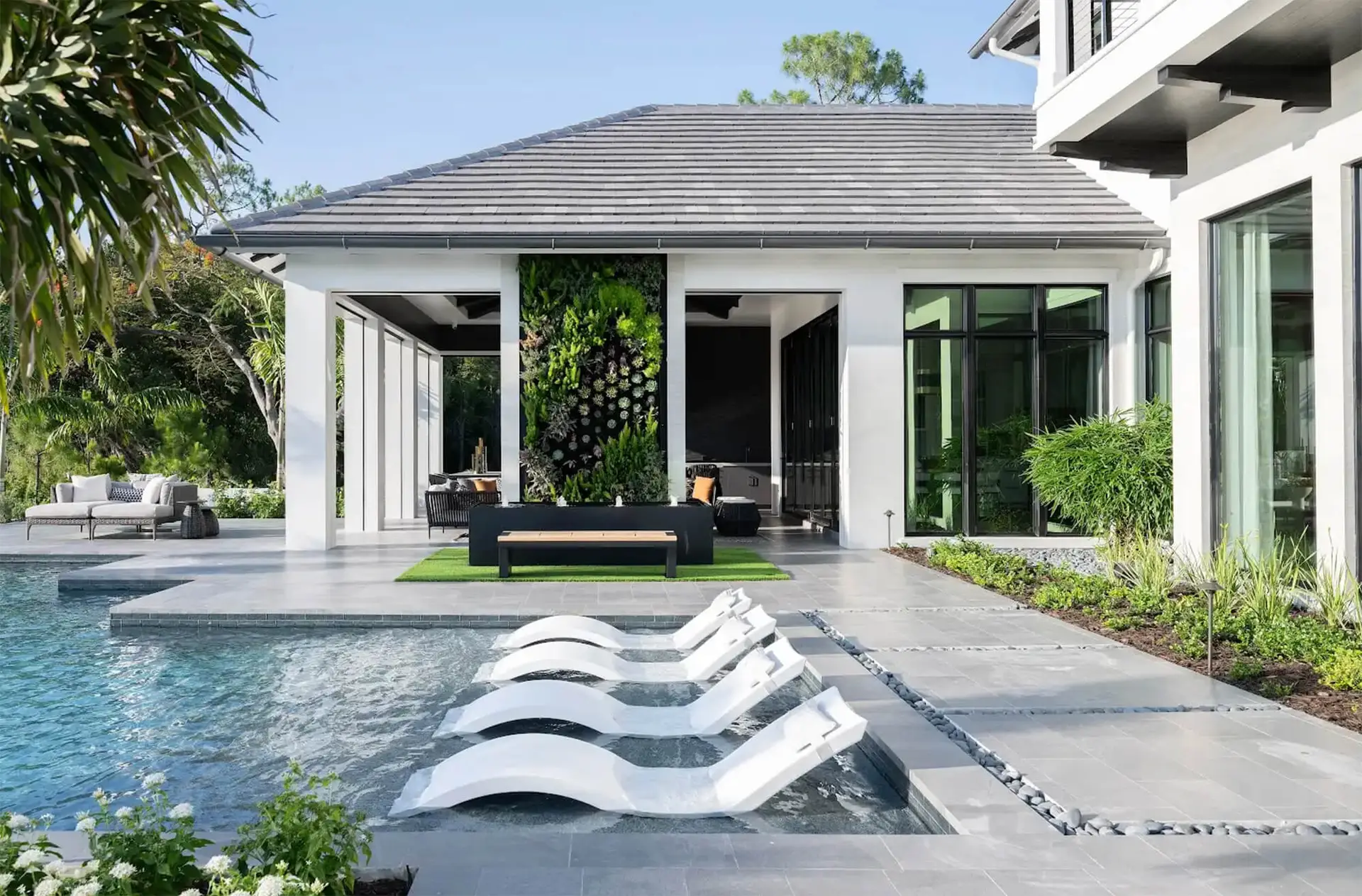
Modern luxury architecture in South Florida emphasizes clean lines, minimalism, large expanses of glass, and flat or low-slope roofs. Its key characteristics are open floor plans, seamless indoor-outdoor integration, minimal ornamentation, and materials such as glass, steel, and concrete. Modern homes prioritize simplicity, openness, and visual impact.
In South Florida the style pairs naturally with the climate: floor-to-ceiling impact glazing frames water views, deep flat-roof overhangs shade terraces, and the indoor-outdoor connection modern design celebrates is usable twelve months a year. Our guide to modern coastal architecture trends covers the current vocabulary in detail.
What is transitional luxury architecture?
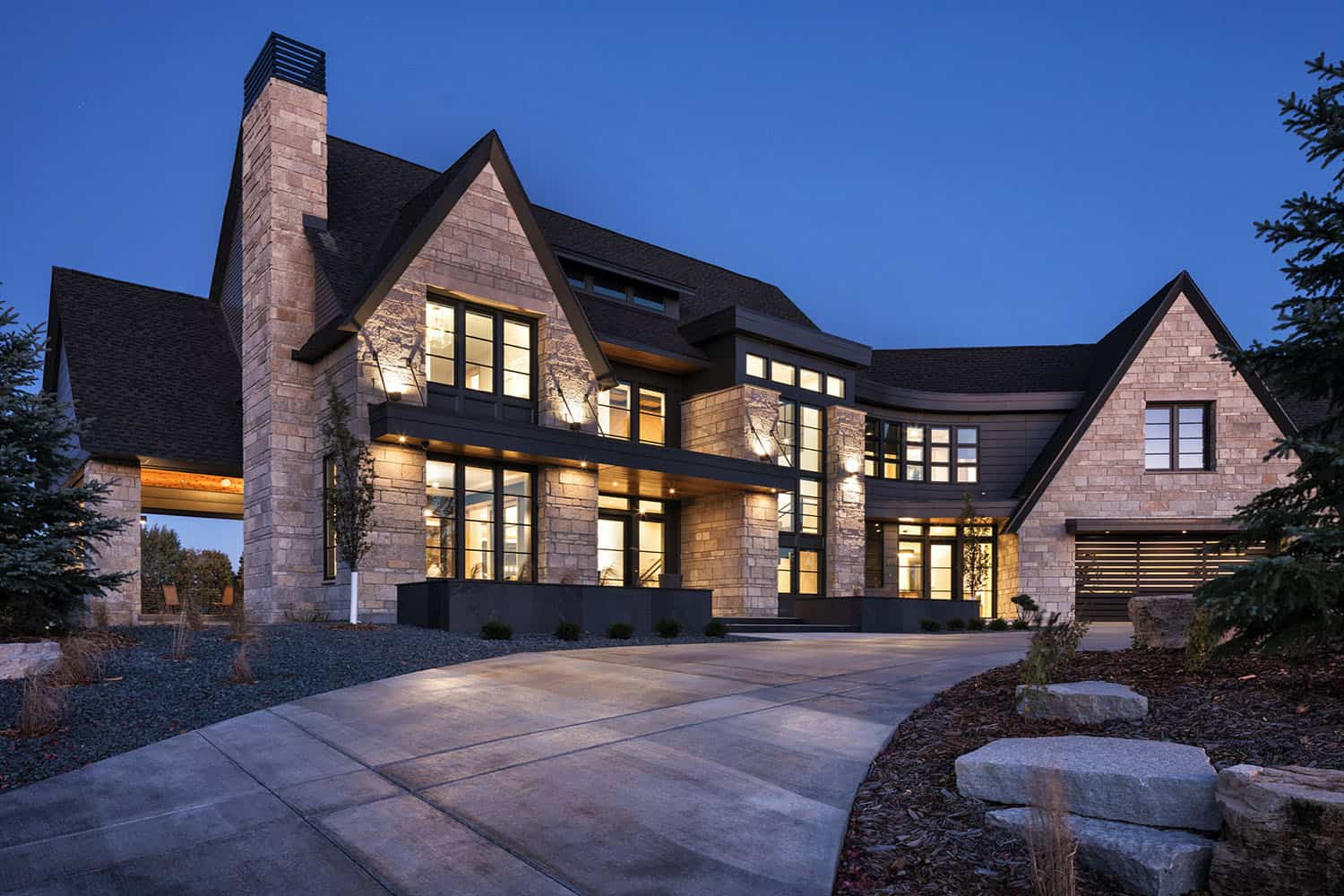
Transitional luxury architecture blends traditional and modern design: balanced proportions, pitched roofs, softer lines and warmer materials, and classic elements finished with modern detailing. Transitional homes feel timeless, comfortable, and broadly appealing, which is why they anchor so much of the high-end market.
The style suits owners who want warmth and familiarity without ornament: stone and wood over steel and concrete, gable rooflines over parapets, and rooms that feel composed rather than staged. For how the blend is executed without losing character, see blending modern and traditional architecture without losing charm.
Modern vs. transitional: what are the five key differences?
Modern and transitional luxury architecture in South Florida diverge on:
- Design aesthetic: minimalist and sharp versus blended and soft.
- Market appeal: design-forward buyers versus the broadest luxury audience.
- Indoor-outdoor integration: both do it, modern makes it the thesis.
- Construction complexity and cost: modern’s long spans, flat roofs, and oversized glazing demand more engineering.
- Longevity: transitional reads timeless by default, while modern depends on disciplined detailing to avoid dating.
1. Design aesthetic
Modern is minimalist with sharp lines and glass, steel, and concrete; transitional is a blend, with softer lines and warmer materials such as wood and stone. Neither is “more luxurious”; they express luxury differently.
2. Market appeal
Transitional luxury architecture appeals to the widest pool of high-end buyers, which supports resale in most neighborhoods. Modern appeals intensely to a narrower, design-focused segment, and in the right waterfront locations that intensity commands a premium.
3. Indoor-outdoor integration
Both styles embrace South Florida’s defining feature. Modern makes the disappearing wall the centerpiece; transitional achieves the same connection through generous French and sliding doors, covered loggias, and courtyard plans. See indoor-outdoor living for Florida estates.
4. Construction complexity and cost
Modern’s long structural spans, flat roof assemblies, oversized impact glazing, and minimal-reveal detailing require more engineering and more precise execution; small tolerances show. Transitional construction is more forgiving, though high-end finish work is demanding in both. Our guides to what it costs to build in Fort Lauderdale and cost per square foot for luxury homes quantify the difference drivers.
5. Longevity and timelessness
Transitional’s balanced proportions age gracefully almost automatically. Modern holds up when the design is disciplined (restrained palette, honest materials, careful proportions) and dates quickly when it chases fads. Our post on strategic design decisions for long-term property value covers which choices protect value in either style.
What South Florida factors should drive the choice?
Climate and code shape both styles here: every window and door must meet the wind-load and impact requirements of the Florida Building Code, flat modern roofs need meticulous drainage and waterproofing, pitched transitional roofs need wind-rated assemblies, and salt air punishes the wrong materials in both. On the waterfront, orientation, glazing area, and outdoor rooms matter more than style labels.
Product approvals for glazing, doors, and roofing are verified against the Florida Building Code during permitting, so the style conversation and the engineering conversation have to happen together. For the coastal specifics, see hurricane-resistant construction, coastal corrosion-resistant materials, and waterfront home construction in South Florida. On waterfront lots, both styles are designed around the water: view corridors, dock access, and privacy from the waterway, covered in waterfront luxury living.
Which style is the better investment?
Transitional luxury architecture generally offers broader resale appeal and steadier demand across neighborhoods; modern delivers stronger visual impact and premium pricing with design-focused buyers, especially on high-profile waterfront lots. The honest answer is that execution quality and location decide value more than the style label does.
A well-built transitional home in a modern-dominated enclave can underperform, and vice versa: neighborhood context matters. So does build quality that buyers can feel a decade later. Our client stories show how both paths play out from vision to legacy, and is now the right time to build covers market timing.
Which style should you choose for a South Florida luxury home?
In South Florida, choose modern if you want visual impact, maximum glass and openness, and you are building for your own design sensibility, ideally with an architect and builder experienced in modern detailing. Choose transitional if you want warmth, timelessness, and the broadest long-term appeal. If you are torn, the modern transitional hybrid exists precisely for you.
Whichever direction you choose, the architect-builder relationship decides whether the style is executed cleanly; see how builders and architects collaborate and how to choose the right luxury custom home builder.
What is the modern transitional hybrid?
The modern transitional hybrid in South Florida blends modern simplicity with transitional warmth: clean-lined massing with pitched or mixed rooflines, large impact glazing set in warmer materials, minimal ornament with tactile texture, and open-but-zoned floor plans. It has become the dominant direction in new South Florida luxury construction because it captures modern’s light and openness while keeping transitional’s broad appeal.
The hybrid also aligns with the wider shift in taste toward warm minimalism and modern tropical design, covered in luxury home design trends in South Florida.
What are the common mistakes to avoid?
The common mistakes with transitional luxury architecture in South Florida are the repeat offenders: choosing a style for photographs rather than for how you live; ignoring neighborhood context; underestimating modern’s engineering and tolerance demands; picking materials that fight the coast; treating indoor-outdoor spaces as afterthoughts; and skipping preconstruction, where style, budget, and buildability get reconciled.
Every one of those is avoidable with early planning. Our pre-construction planning guide shows where the style decision meets budget and schedule, and cost overruns in luxury construction shows what happens when it does not.
How does Kass Construction & Development build both styles?
Kass Construction & Development, a state-licensed (CGC1529472) boutique builder in East Fort Lauderdale led by Mitch Kass, a licensed general contractor and attorney, has delivered more than 100 luxury residences delivered by Mitchell Kass and the firms he has led across Broward, Palm Beach, and Miami-Dade, executing modern, transitional, and modern transitional homes from architect-driven design through closeout.
The firm’s role is to protect the chosen style’s intent while engineering it for the coast: glazing packages, roof assemblies, material selections, and detailing that survive wind, water, and salt air. A custom build often runs 18 to 36 months and a high-end renovation often runs 6 to 12 months, so the style decision belongs at the very start: contact Kass Construction & Development or call 954-607-4335, and see the Kass difference for how the process runs.
How do modern and transitional luxury architecture compare on the factors that decide a South Florida build?
Modern and transitional luxury architecture differ on more than appearance, and the table below compares them on the factors that shape cost, performance and resale on a South Florida lot.
| Factor | Modern | Transitional |
|---|---|---|
| Massing and roof | Flat or low-slope roofs, cantilevers, cubic volumes | Pitched roofs, gables and hips, layered volumes |
| Glazing | Floor-to-ceiling walls of impact glass; large sliders | Punched openings with divided lights; French doors and sliders |
| Structural demands | Long spans, transfers and cantilevers; steel or post-tensioned concrete | Conventional spans; masonry and trusses |
| Waterproofing risk | Higher: flat roofs, parapets, planters, large thresholds | Lower: pitched roofs and overhangs shed water |
| Heat gain and shading | Requires exterior screens, deep overhangs and solar-control glass to work in the climate | Overhangs and porches shade naturally |
| Materials | Stucco, stone, metal, glass; precise joints | Stucco, stone, wood accents, tile or metal roofs |
| Cost | Higher structural and glazing cost per square foot | Moderate; finishes drive the spread |
| Review boards | Scrutinized in traditional communities | Widely accepted |
| Resale | Strong on the waterfront and in modern-leaning cities | Broadest buyer pool across the region |
Both styles are built to the same Florida Building Code wind and flood provisions; the structural implications are in hurricane-resistant construction and the cost side in cost per square foot for luxury homes.
How should an owner choose between modern and transitional luxury architecture on a specific lot?
Transitional luxury architecture or modern is chosen well by working through the lot and the owner’s horizon in order, and the sequence below is how the decision is made on a South Florida project.
- Read the setting: water type, exposure, neighboring architecture and any review board or historic district, using waterfront home construction in South Florida and waterfront luxury living in South Florida.
- Decide how the home should perform in heat, glare and storms, since modern glazing needs shading strategies and transitional forms shade themselves.
- Test the structure and budget: modern spans and cantilevers cost more, transitional roofs cost less to waterproof, as set out in what it costs to build a luxury custom home in Fort Lauderdale and luxury construction cost overruns.
- Consider the horizon: a long hold rewards durable forms and materials; a shorter one rewards the broadest buyer pool, per strategic design decisions for long-term property value.
- Consider the hybrid: modern transitional blends clean lines with pitched roofs, overhangs and warmer materials, as discussed in blending modern and traditional architecture.
- Specify materials for the coast whichever style is chosen, from coastal corrosion-resistant materials.
- Bring the builder into design so the style is priced and detailed before documents are finished, per how builders and architects collaborate, and select the builder with how to choose the right luxury custom home builder.
Kass Construction & Development builds both styles and the hybrid across Broward, Palm Beach and Miami-Dade, with the coastal performance of each detailed in modern coastal architecture trends and the wider directions in luxury home design trends in South Florida.
Frequently Asked Questions
What is the main difference between modern and transitional luxury architecture?
Modern emphasizes minimalism, sharp lines, flat roofs, and expansive glass in materials like steel and concrete. Transitional blends traditional forms (pitched roofs, balanced proportions, warm materials) with modern finishes and simplicity, producing a timeless, broadly appealing look.
Which style is more expensive to build?
Usually modern, because long structural spans, flat roof assemblies, oversized impact glazing, and minimal-reveal detailing demand more engineering and tighter tolerances. Transitional construction is more forgiving, though luxury finish work is exacting in both styles.
Which has better resale value in South Florida?
Transitional luxury architecture appeals to the broadest pool of buyers, which supports steadier resale. Modern commands premiums with design-focused buyers, especially on prominent waterfront lots. Location, neighborhood context, and build quality ultimately matter more than the style label.
Does hurricane code favor one style?
No. Both must meet the Florida Building Code’s wind-load and impact requirements. Modern needs meticulous flat-roof drainage and waterproofing and heavy engineered glazing; transitional needs wind-rated pitched-roof assemblies. Either style performs when engineered and detailed correctly.
What is modern transitional, and why is it so popular?
It is the hybrid of the two: clean-lined massing and large glazing paired with warmer materials, mixed rooflines, and tactile texture. It dominates new South Florida luxury construction because it combines modern light and openness with transitional warmth and resale breadth.
Can an existing transitional home be renovated toward a modern look, or vice versa?
Often, yes. Glazing and door upgrades, material and palette changes, and selective massing edits can move a home meaningfully in either direction. Structure, roof geometry, and budget set the limits; a feasibility review tells you what is practical. A high-end renovation often runs 6 to 12 months.
How do I decide which style fits me?
Start with how you live and what you want to feel when you walk in: drama, light, and edge point modern; warmth, familiarity, and composure point transitional. Then test the choice against neighborhood context, budget, and resale horizon with your architect and builder during preconstruction.
Are modern homes more expensive to build?
Often yes, due to engineering and materials
What is the most popular luxury home style in South Florida?
Transitional and modern-transitional hybrids