Modern vs contemporary architecture is the most argued distinction in residential design, and the answer is simple: modern is a historical movement from the early and mid 20th century, while contemporary means the design of right now. Modern is a fixed vocabulary; contemporary is a moving target that currently borrows a great deal from it, which is exactly why the two get confused.
Key takeaways
- What does modern architecture actually mean?
Modern architecture, as South Florida buyers use the term, is the movement that rejected ornament in favor of function, born in the early 20th century and carried through the mid-century decades. - What does contemporary architecture actually mean?
Contemporary architecture is not a style; it is a timestamp, whatever South Florida architects are designing now. - How do you tell modern vs contemporary architecture in practice?
To settle modern vs contemporary architecture for any specific house, ask what the design is loyal to. A modern home obeys the movement's rules even where they cost convenience: the flat roof stays flat, the ornament stays absent, the palette stays disciplined. - What does the modern vs contemporary choice mean for a South Florida build?
For a South Florida build in either direction, the engineering conversation must run alongside the style conversation.
What does modern architecture actually mean?
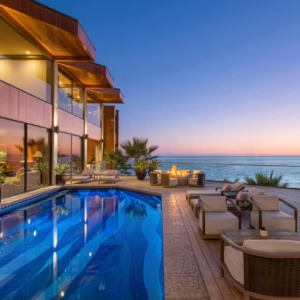
Modern architecture, as South Florida buyers use the term, is the movement that rejected ornament in favor of function, born in the early 20th century and carried through the mid-century decades. Its signatures are consistent: flat or low-slung rooflines, strong horizontal lines, open floor plans, walls of glass, honest structural expression, and restraint in materials and decoration. Mid-century modern is the branch most people recognize, and its vocabulary has aged into a classic. Understanding it is half of the modern vs contemporary architecture puzzle.
What does contemporary architecture actually mean?
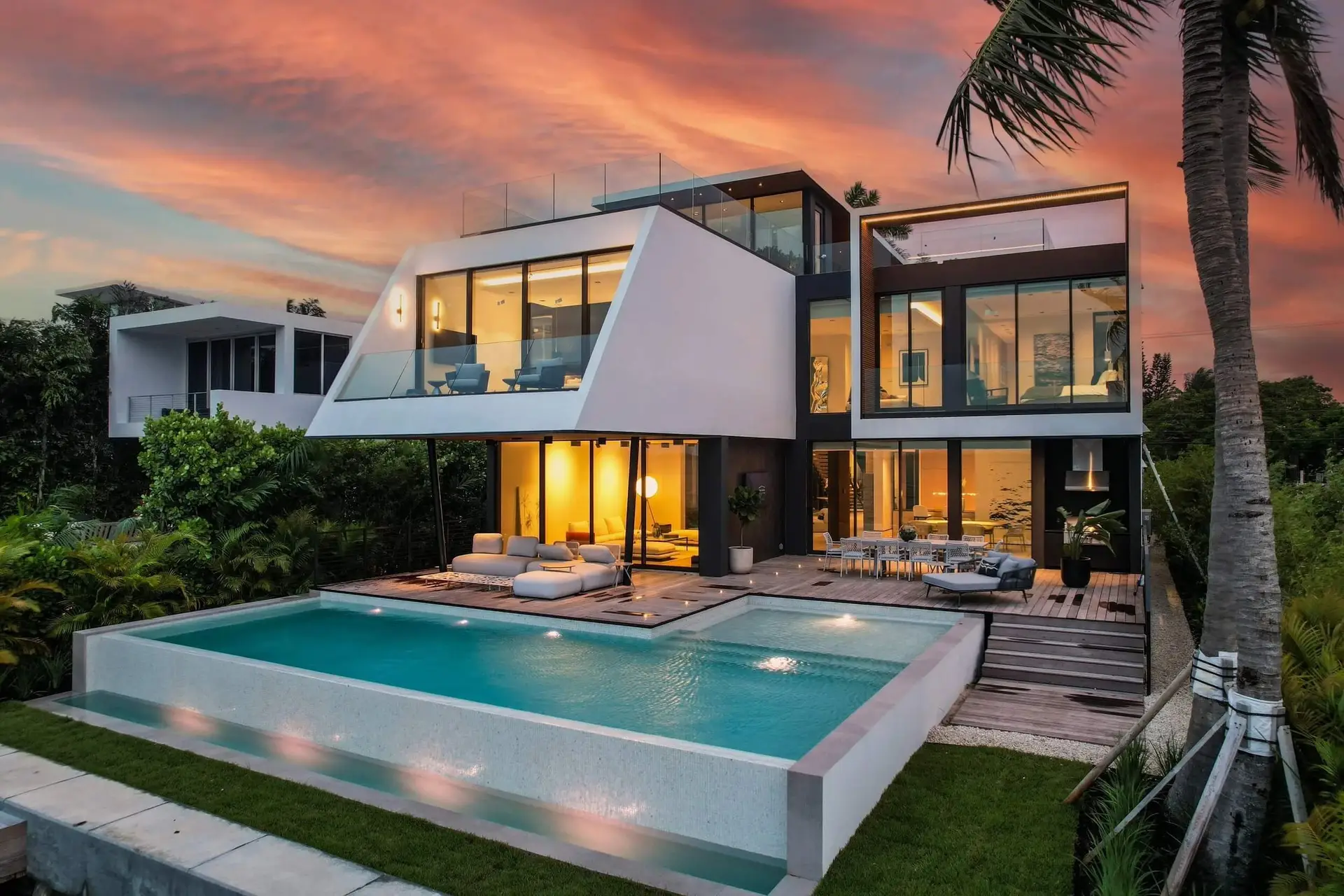
Contemporary architecture is not a style; it is a timestamp, whatever South Florida architects are designing now. It describes what architects are doing now, and right now that means mixed materials and textures, varied massing, enormous attention to indoor-outdoor living, integrated smart systems, and sustainability worked into the fabric rather than bolted on. Because current practice leans heavily on modernist DNA, most contemporary luxury homes read as modern at first glance. That overlap is the whole heart of the modern vs contemporary architecture confusion.
Our tour of modern coastal architecture trends shows where that contemporary current is flowing in South Florida specifically.
How do you tell modern vs contemporary architecture in practice?
To settle modern vs contemporary architecture for any specific house, ask what the design is loyal to. A modern home obeys the movement’s rules even where they cost convenience: the flat roof stays flat, the ornament stays absent, the palette stays disciplined. A contemporary home is loyal to the present owner: it will warm the modern box with texture, curve a wall, add a deep covered terrace for the climate, or mix in coastal and transitional notes where living quality wins. Neither loyalty is wrong; they are different briefs.
There is also a third term buyers meet constantly, and we gave it its own guide: modern vs transitional luxury architecture, where traditional warmth and modern restraint meet in the middle.
What does the modern vs contemporary choice mean for a South Florida build?
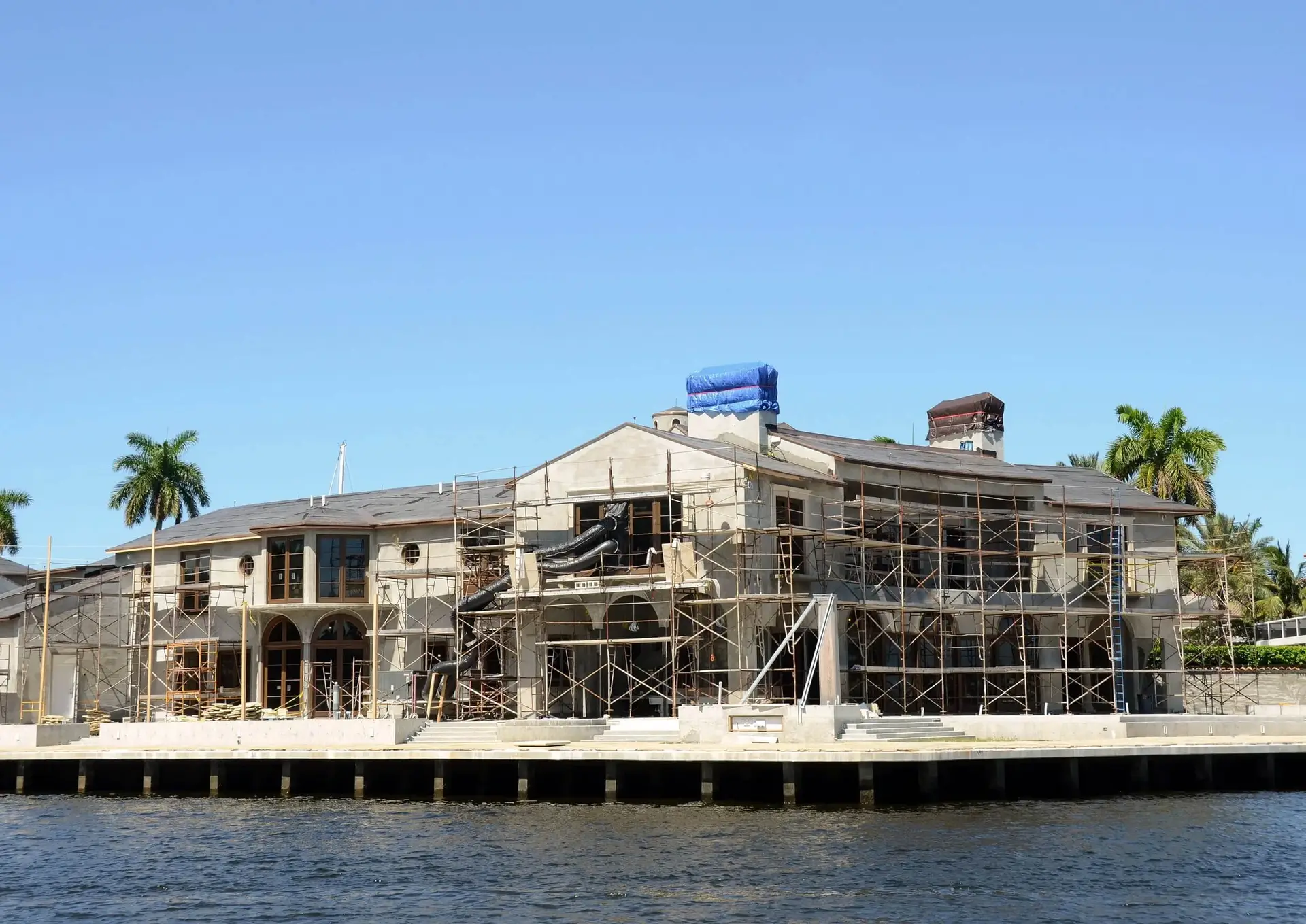
For a South Florida build in either direction, the engineering conversation must run alongside the style conversation. Walls of glass are the shared signature of modern and contemporary design here, and every square foot of them must be impact-rated and engineered per Florida Building Code chapter 24. Flat and low-slope roofs demand disciplined drainage and detailing. Glare and heat on all that glass make lighting and shading control part of the architecture rather than an accessory. And coastal air asks for the material choices in our corrosion-resistant materials guide.
Neighborhood context matters too: some communities review massing and materials closely, a process covered in our architectural review boards guide. A contemporary design’s flexibility is often an advantage in front of a review board; a strict modern design may need its case argued well. Boards weigh the modern vs contemporary architecture question their own way: what will this massing look like beside its neighbors in twenty years.
Which should you build?
Build contemporary if you want the current best of everything and the freedom to adapt; build modern if the movement’s discipline is the point. In resale conversations the contemporary vs modern architecture question usually resolves toward flexibility, a theme our guide to strategic design decisions and long-term value treats with numbers rather than taste. If your instinct runs the other way entirely, toward porches and shutters or gingerbread trim, our Key West style homes and Victorian homes Florida guides cover those directions with the same honesty.
Kass Construction and Development builds architect-designed custom homes across Broward, Palm Beach, and Miami-Dade counties, including the glass-forward waterfront estates where modern vs contemporary architecture stops being theory and becomes a glazing schedule. Call 954-607-4335 or use the contact page to talk through your direction.
Modern vs contemporary architecture side by side
Modern vs contemporary architecture is easiest to settle feature by feature, because the two agree on glass and disagree on almost everything else.
| Feature | Modern (1920s to 1970s vocabulary) | Contemporary (design of now) |
|---|---|---|
| Roof | Flat or very low slope, often with a thin cantilevered plane | Flat, shed, butterfly, or mixed; parapets and green roofs common |
| Form | Rectilinear boxes, horizontal emphasis, strict proportion | Curves, angles, and stacked or shifted volumes are allowed |
| Materials | Steel, concrete, glass, and white stucco; honest and limited | Wide palette: stone, wood, metal panel, glass, mixed on one facade |
| Color | White, neutral, primary accents | Warm neutrals, natural tones, black and bronze metals |
| Windows | Ribbon and floor-to-ceiling glass in regular grids | Oversized openings, corner glass, pocketing walls, irregular composition |
| Plan | Open plan as a principle | Open plan as a default, with structured zones for privacy and acoustics |
| Sustainability | Not part of the vocabulary | Central: shading, orientation, envelope performance, solar |
| Ornament | None; the structure is the ornament | Minimal, but texture and craft are welcome |
How did modern become contemporary? A short timeline
- 1919 to 1933: The Bauhaus school in Germany defines the language: function first, industrial materials, no ornament.
- 1932: The Museum of Modern Art’s International Style exhibition names the movement for an American audience.
- 1945 to 1970: Mid-century modern spreads through American housing; Florida contributes the Sarasota School of Architecture and Miami’s MiMo (Miami Modern) resort style.
- 1970s to 1980s: Postmodernism reacts against the box with color, symbolism, and historical references.
- 1990s to today: Contemporary design absorbs modern’s glass and openness, adds sustainability, warm materials, and site-specific form, and keeps evolving.
That history is why contemporary vs modern architecture is confusing on a listing sheet: a 2026 house with a flat roof and white stucco is contemporary architecture quoting modern architecture, not a modern house. The documentation of the American movement is well kept by USModernist, a nonprofit archive.
What do modern and contemporary each demand from a South Florida build?
The look you choose changes the structure, the envelope, and the permit set, not just the finishes.
- Flat roofs need positive drainage, tapered insulation, high-performance membranes, and parapet detailing that survives 170-mph-class wind design in the high-velocity hurricane zone; a leaking flat roof is the most common complaint on both styles.
- Large glass means impact-rated systems with product approvals, structural framing for tall openings, and solar-control glazing or deep overhangs so the house is not a greenhouse in August.
- Cantilevers and stacked volumes add structural steel or post-tensioned concrete and engineering time.
- Elevated living levels in flood zones suit both styles; contemporary design tends to celebrate the height, modern design tends to hide it behind a horizontal line.
- Materials on the coast have to be specified for salt air whichever look you choose: marine-grade metals, sealed stone, and coatings rated for exposure, per our corrosion-resistant materials guide.
The design and permitting consequences of large openings and flat roofs are covered in why luxury home permits get delayed, and the region’s wind requirements are set by the Florida Building Code.
Which South Florida buyers choose which?
In our experience the modern vs contemporary architecture decision tracks how the owner intends to live and resell.
- Modern attracts owners with a design conviction who accept a stricter vocabulary and a narrower resale audience in exchange for a house that photographs like a manifesto.
- Contemporary attracts owners who want the openness and glass of modern architecture vs contemporary architecture’s flexibility: warmer materials, wellness features, and resilience detailing that a broad luxury buyer pool recognizes.
- Transitional remains the safest resale position in most South Florida luxury neighborhoods, the case made in modern vs transitional luxury architecture.
Current direction across all three is tracked in luxury home design trends in South Florida and sustainable luxury home design.
Frequently Asked Questions
What is the difference between modern and contemporary architecture?
Modern refers to a specific historical movement of the early and mid 20th century: clean planes, minimal ornament, function first. Contemporary means the architecture of right now, whatever forms it currently takes. Modern is fixed in time; contemporary keeps moving.
Why do the two terms get confused?
Because today’s contemporary design borrows heavily from modernism, so many contemporary homes look modern. Real estate listings use the words interchangeably, which blurs a distinction architects still make.
What does a modern style home look like?
Flat or low-slung rooflines, strong horizontal lines, open plans, large glass areas, restrained materials, and little to no ornament. Mid-century modern is the most familiar branch of the family.
What makes a home contemporary instead?
It reflects current practice: mixed materials and textures, varied massing, indoor-outdoor living, sustainability and smart systems, and freedom to borrow from modern, coastal, or transitional vocabularies as the design calls for.
Which works better for South Florida waterfront lots?
Both build beautifully here. Large glass wants impact-rated engineering, flat roofs want disciplined drainage detailing, and coastal exposure wants corrosion-aware material choices. The style conversation and the engineering conversation should happen together.
Does Kass Construction build modern and contemporary homes?
Yes. Kass Construction builds architect-designed custom homes across Broward, Palm Beach, and Miami-Dade, including glass-forward modern and contemporary waterfront estates.
Why does the modern vs contemporary architecture distinction matter when briefing an architect?
Because the words steer the drawings. In the modern vs contemporary architecture conversation, modern names a fixed historical language of flat planes and minimal ornament, while contemporary means current practice, which borrows freely. Saying which you mean saves a round of concept revisions.