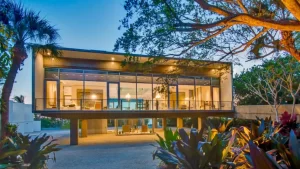
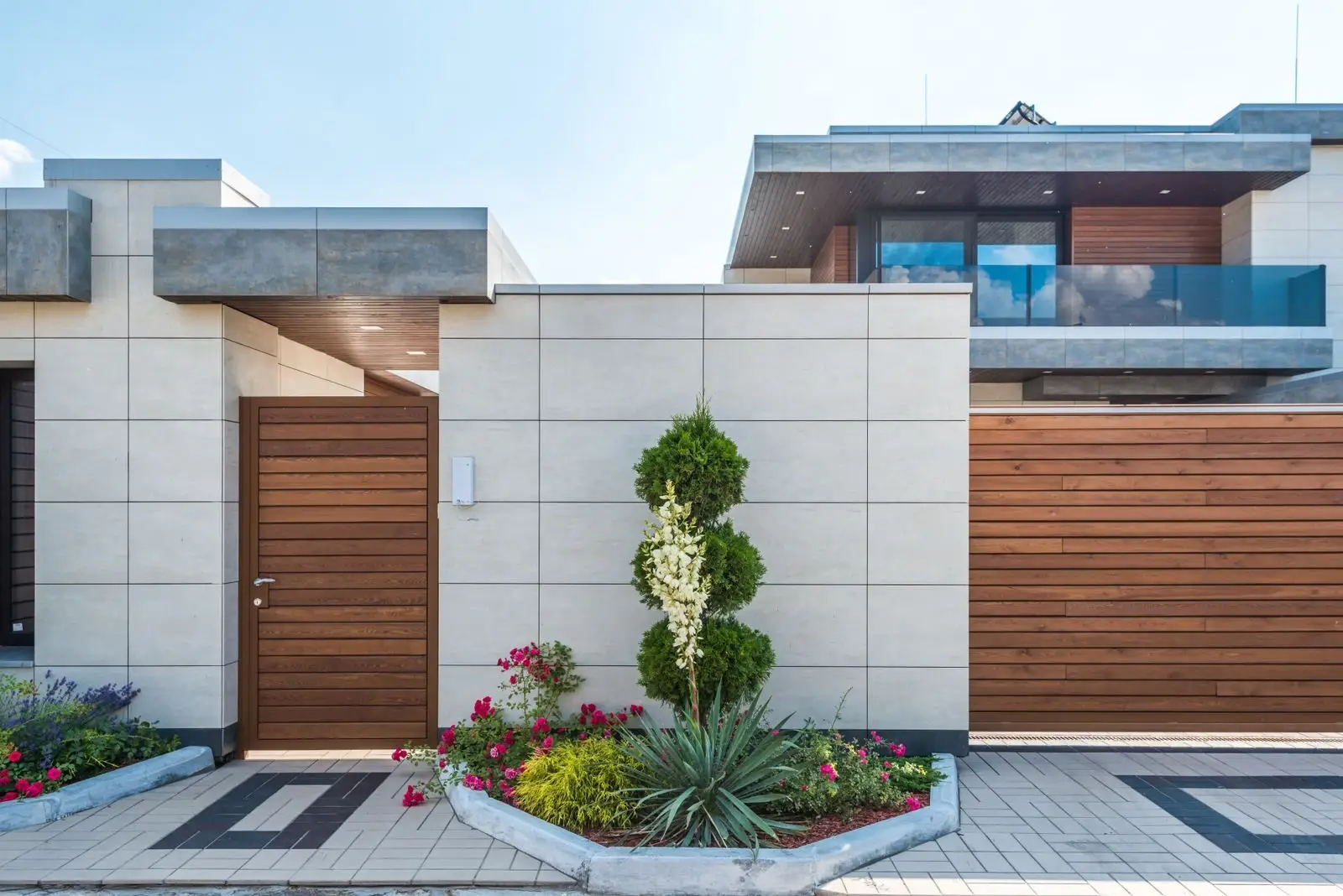
South Florida has a way of humbling premium materials: a finish that looks flawless in a showroom can fade, warp, corrode, stain, or delaminate after a few seasons of sun, salt air, humidity, and wind-driven rain. In Broward, Palm Beach, and Miami-Dade, premium sustainable materials are the ones that perform for decades, because the greenest choice is the one you do not rip out in five years. This guide covers the selection checklist, then the luxury-grade options by system: roofing, cladding, windows and doors, outdoor surfaces, interiors, countertops, and the structure behind the walls.
Key takeaways
- What does the South Florida climate do to premium sustainable materials?
Name the enemies before choosing premium sustainable materials: UV that breaks down coatings and embrittles plastics; heat cycling that stresses joints and sealants; heavy and wind-driven rain that exploits small flashing errors; humidity that fuels swelling, mold, and retention; salt spray that corrodes metals, hardware, and connectors; termites that punish unprotected wood; and hurricanes that test impact, uplift, and water intrusion at once. - Which premium sustainable materials work for roofing?
Three roofing families earn their place among premium sustainable materials: standing seam metal (aluminum or coated steel) for clean lines, cool-roof reflectivity, tested wind performance, and recyclability; premium concrete or clay tile, storm-proven when properly attached, with quality underlayment doing the invisible work; and high-performance membranes (TPO or PVC) for modern low-slope sections and roof decks, where drains, scuppers, overflow, and termination detailing decide everything. - Which premium sustainable materials keep walls and cladding crisp?
Cladding demands moisture-managed premium sustainable materials: stucco done as an assembly (drainage plane, control joints, proper cure and coatings) rather than a coating; fiber cement and composite claddings rated for humidity and UV; masonry and precast elements that shrug off sun and salt; and rainscreen detailing on modern facades so water that gets behind the skin can drain and dry. - What should windows and doors be made of here?
Openings are where premium sustainable materials must be impact-rated, energy-smart, and corrosion-resistant: aluminum systems with marine-grade finishes (or thermally improved frames), low-SHGC insulated glazing tuned by orientation, stainless or coated hardware, and sill and flashing details that survive wind-driven rain.
What does the South Florida climate do to premium sustainable materials?
Name the enemies before choosing premium sustainable materials: UV that breaks down coatings and embrittles plastics; heat cycling that stresses joints and sealants; heavy and wind-driven rain that exploits small flashing errors; humidity that fuels swelling, mold, and retention; salt spray that corrodes metals, hardware, and connectors; termites that punish unprotected wood; and hurricanes that test impact, uplift, and water intrusion at once.
The premium sustainable materials checklist follows directly: moisture resistance and drying potential, corrosion resistance (especially near the Intracoastal and oceanfront), UV stability, dimensional stability, impact resistance, mold and termite resistance, slip resistance outdoors, and low-VOC finishes for indoor air. For the sustainability lens, look for Environmental Product Declarations and Health Product Declarations where available, FSC or PEFC certification on wood, recycled content in metals and surfaces, low-tox adhesives and coatings, and repairability. And remember the practical rule: it is rarely about a single product; it is about the assembly, verified against the Florida Building Code, coastal exposure requirements, and manufacturer installation details. A premium material installed in a non-premium way is still a liability.
Which premium sustainable materials work for roofing?
Three roofing families earn their place among premium sustainable materials: standing seam metal (aluminum or coated steel) for clean lines, cool-roof reflectivity, tested wind performance, and recyclability; premium concrete or clay tile, storm-proven when properly attached, with quality underlayment doing the invisible work; and high-performance membranes (TPO or PVC) for modern low-slope sections and roof decks, where drains, scuppers, overflow, and termination detailing decide everything.
Coastal details are the difference: marine-grade fasteners, edge metal, hips, ridges, and penetrations are where salt air finds weak points. FEMA’s Home Builder’s Guide to Coastal Construction (P-499) collects the tested attachment and flashing practices. The wind engineering context is in hurricane-resistant construction.
Which premium sustainable materials keep walls and cladding crisp?
Cladding demands moisture-managed premium sustainable materials: stucco done as an assembly (drainage plane, control joints, proper cure and coatings) rather than a coating; fiber cement and composite claddings rated for humidity and UV; masonry and precast elements that shrug off sun and salt; and rainscreen detailing on modern facades so water that gets behind the skin can drain and dry. The WBDG moisture management guide is the reference discipline: every wall needs a drainage and drying story.
Pair the cladding with corrosion-rated flashings, weeps, and sealant joints designed for movement. The corrosion side of the specification is detailed in coastal corrosion-resistant materials.
What should windows and doors be made of here?
Openings are where premium sustainable materials must be impact-rated, energy-smart, and corrosion-resistant: aluminum systems with marine-grade finishes (or thermally improved frames), low-SHGC insulated glazing tuned by orientation, stainless or coated hardware, and sill and flashing details that survive wind-driven rain. Glazing is both the biggest comfort variable and the biggest storm variable, which is why the window schedule is engineered, not shopped.
The performance logic is covered in passive cooling and natural ventilation, and every opening is verified against the Florida Building Code’s wind-borne debris requirements during permitting.
Which premium sustainable materials work for decking, docks, and outdoor surfaces?
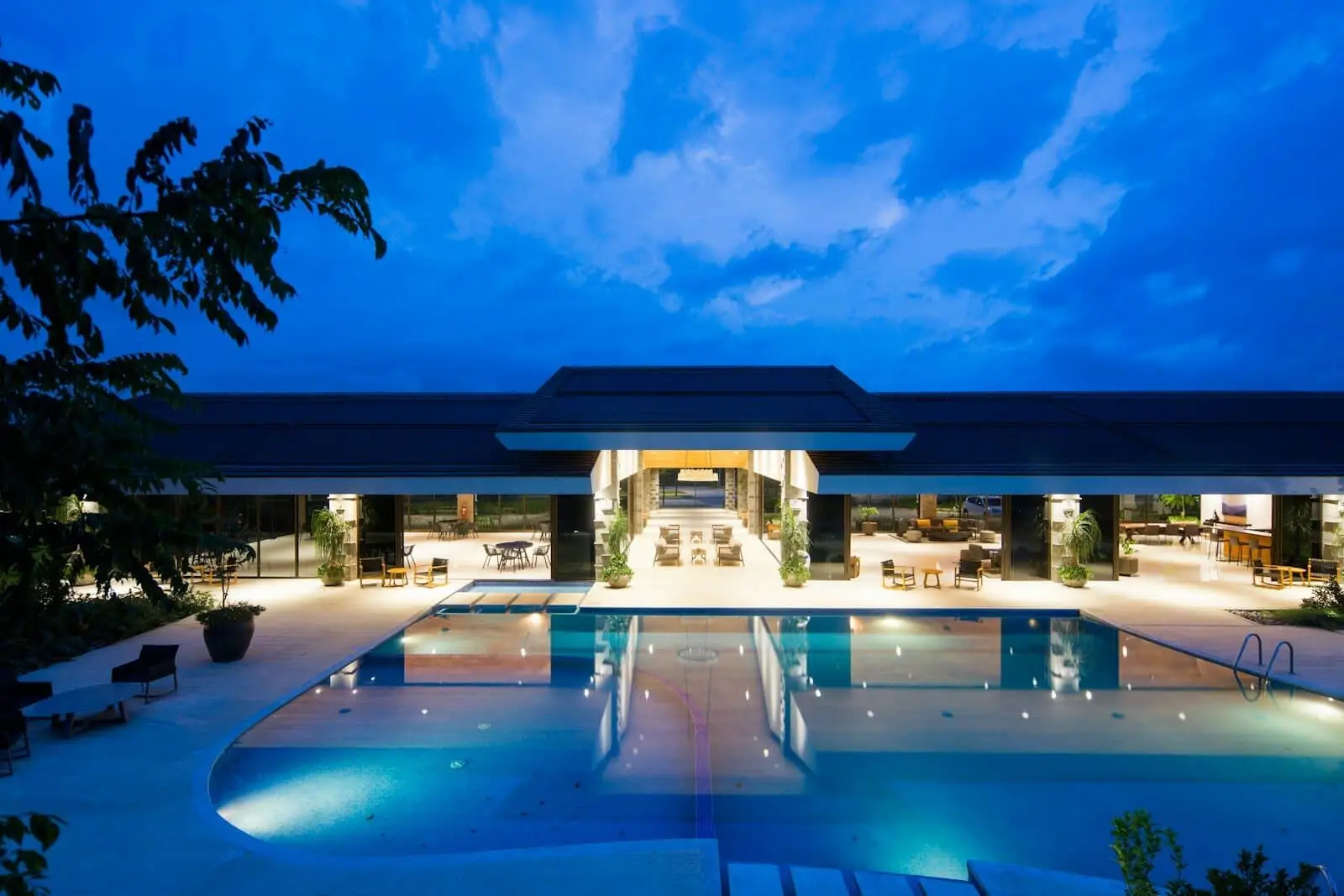
Outdoor premium sustainable materials are built for salt air, sun, and bare feet: premium composite and PVC decking that resists rot and splinters; naturally durable or thermally modified woods detailed for drainage and refinishing; porcelain pavers and textured stone with real slip resistance at pools; and marine-grade railings, fasteners, and lighting, because outdoor hardware fails first. Docks and waterside structures add their own rules: hardware, connectors, and coatings specified for immersion-zone exposure.
The outdoor program these surfaces serve is covered in private resort homes and indoor-outdoor living for Florida estates.
Which premium sustainable materials belong in the interior?
For a South Florida interior: engineered hardwoods and large-format porcelain stable through humidity swings; lime and mineral plasters that breathe and add depth; moisture-rated millwork substrates that resist warping; and low-VOC paints, adhesives, sealants, and cabinetry finishes, which matter more in tight, high-performance homes. Luxury interiors are less forgiving of moisture, so the interior spec and the mechanical dehumidification strategy are designed together.
The health payoff is quantified in wellness-oriented design features and longevity-focused home design.
Which premium sustainable materials work for countertops and surfaces?
For countertops and surfaces in the South Florida climate: quartzite and granite for natural depth with durability; porcelain slabs for UV stability in outdoor kitchens (many quartz products are not rated for exterior sun); sintered surfaces for heat and scratch resistance; and recycled-content or regionally sourced options where the design allows. Match the surface to the exposure: an interior showpiece and an outdoor bar top face different enemies.
Outdoor kitchen surface selection ties back to the hospitality-zone planning in indoor-outdoor living trends.
Which behind-the-walls upgrades improve resilience and sustainability?
The unglamorous premium sustainable materials are the winners: corrosion-resistant structural connectors and fasteners; treated or naturally durable framing where wood is used; continuous insulation and air sealing that cut cooling loads; high-quality flashing membranes at every opening and transition; and mechanical systems (right-sized HVAC, dedicated dehumidification, sealed insulated ductwork) that protect everything else. These choices decide whether the visible finishes stay premium.
The systems side is covered in sustainable luxury home design in Florida and energy management and sustainability systems.
How does Kass Construction & Development help owners choose premium sustainable materials?
Kass Construction & Development, a state-licensed (CGC1529472) boutique luxury builder in East Fort Lauderdale led by Mitch Kass, a licensed general contractor and attorney, with 100+ luxury residences delivered by Mitchell Kass and the firms he has led across Broward, Palm Beach, and Miami-Dade, runs material selection as part of preconstruction: exposure mapping for the lot, assembly-level specifications rather than product wish lists, samples approved in real light, lead times managed against the schedule, and installation details enforced through mockups and inspections.
Early selection prevents the classic failure, a dream material swapped late for something that cannot take the coast. The process is described in pre-construction planning and how builders and architects collaborate. A custom build often runs 18 to 36 months and a high-end renovation 6 to 12 months; material decisions belong at the front of both. Contact Kass Construction & Development or call 954-607-4335.
| Assembly | What earns its place | The coastal reason |
|---|---|---|
| Roof | Standing seam metal, premium tile, tested attachment | Wind uplift plus cool-roof reflectivity |
| Cladding | Stucco as a drained assembly, not a coating | Moisture has to leave, not be trapped |
| Openings | Aluminum systems with marine-grade finishes | Impact rating and corrosion resistance together |
| Decking | Premium composite and PVC | Resists rot, splinters and the maintenance cycle |
| Interior floors | Engineered hardwood, large-format porcelain | Stable through humidity swings |
| Countertops | Quartzite, granite, porcelain slab | Many quartz products are not UV-rated outdoors |
| Fasteners and flashing | Corrosion-resistant connectors at every transition | The failure point nobody sees until it fails |
How do premium sustainable materials compare by building element?
Premium sustainable materials in South Florida are judged on decades of exposure, and the table below compares the leading options for each element on durability, maintenance and coastal fit.
| Element | Premium sustainable materials that perform | What to avoid near the coast | Maintenance |
|---|---|---|---|
| Roofing | Standing-seam aluminum or coated steel, concrete or clay tile, with Florida product approvals | Untreated steel fasteners, low-grade asphalt shingles | Annual inspection, fastener check after storms |
| Exterior walls | Reinforced concrete and masonry with high-performance stucco, natural stone, fiber cement, thermally modified wood accents | Unsealed softwoods, standard steel studs at exterior | Repaint or reseal on a schedule |
| Windows and doors | Impact-rated aluminum or thermally broken aluminum with marine finishes, laminated low-e glass | Uncoated aluminum, non-impact units | Rinse tracks and hardware; seal check |
| Decking and docks | Ipe or similar dense hardwood, high-grade composite, aluminum framing, stainless fasteners | Pressure-treated softwood decking at the waterline, galvanised fasteners | Oil or leave to silver; fastener inspection |
| Railings and metalwork | 316 stainless, marine-grade aluminum with powder coat, glass panels | 304 stainless in splash zones, mild steel | Fresh-water rinse |
| Interior floors | Porcelain, natural stone, engineered wood with stable cores | Solid wide-plank softwood in humid rooms | Seal stone; humidity control |
| Countertops | Quartzite, granite, sintered stone, porcelain slabs | Untreated marble in kitchens, low-density stones outdoors | Seal natural stone |
| Behind the walls | Closed-cell insulation, stainless or coated connectors, PEX or copper with proper isolation, flood-resistant assemblies below the flood level | Paper-faced products below the flood level | None if specified correctly |
Product approvals for openings and roofing are required under the Florida Building Code; FEMA’s guidance on flood-damage-resistant materials is referenced in its floodplain management glossary. Metals and fasteners are covered in detail in coastal corrosion-resistant materials.
How should an owner evaluate a material before it goes into a South Florida home?
Premium sustainable materials earn their place through a short evaluation that a builder can run on any proposed product, and the questions below are the ones that predict how it will look in ten years.
- Does it carry a Florida product approval or Miami-Dade Notice of Acceptance where the code requires one, and does the approval match the installation detail?
- How does it behave in salt air, standing water and UV, and are there local installations more than ten years old to inspect?
- What are the fastener, flashing and sealant requirements, and are those specified in the same marine grade as the material itself?
- What maintenance does it need, how often, and is the owner willing to do it?
- Is it flood-damage-resistant if it sits below the flood level of the home; see flood zone requirements for waterfront construction in Broward County.
- Does it contribute to comfort and efficiency, supporting the strategies in passive cooling and natural ventilation and energy management and sustainability systems?
- What is its embodied carbon and recyclability, and does a longer service life offset a higher initial impact?
- Can the installer show a track record with this specific material on coastal projects in Broward, Palm Beach or Miami-Dade?
Kass Construction & Development runs this evaluation on every specification during pre-construction planning, and the results feed the storm strategy in hurricane-resistant construction and the sustainable baseline in sustainable luxury home design in Florida.
Frequently Asked Questions
What makes a material premium and sustainable in South Florida?
Premium sustainable materials earn the label through decades of performance in this specific climate: moisture and corrosion resistance, UV and dimensional stability, impact resistance, mold and termite resistance, and healthy low-VOC finishes. Longevity is the sustainability: what you never replace creates no waste.
What is the best roofing choice for a coastal luxury home?
Standing seam metal for modern lines, cool-roof reflectivity, and tested wind performance; premium tile for Mediterranean and transitional character; and high-performance membranes on low-slope sections. In every case the underlayment, attachment, and edge detailing matter more than the visible surface.
Are composite decks better than wood near the ocean?
Premium composite and PVC decking resists rot, splinters, and maintenance cycles, which suits salt air. Naturally durable or thermally modified woods still work beautifully when detailed for drainage and refinishing. Either way, the railings, fasteners, and lighting must be marine-grade, because hardware fails first.
Do quartz countertops work in outdoor kitchens?
Usually not: many quartz products are not UV-rated and can discolor outdoors. Porcelain slabs, sintered surfaces, and suitable natural stone handle sun, heat, and staining better. Match every surface to its exposure.
What are EPDs and FSC certification, and should I care?
Environmental Product Declarations disclose a product’s lifecycle impacts; FSC and PEFC certify responsibly managed wood sources. For owners who care about performance and responsibility, they are useful filters, alongside recycled content, low-tox chemistry, and repairability.
Which invisible premium sustainable materials matter most?
Corrosion-resistant connectors and fasteners, flashing membranes at every transition, continuous insulation and air sealing, and right-sized mechanical systems with dedicated dehumidification. They protect every visible finish in the house.
When should premium sustainable materials be selected in the project?
During preconstruction, not during construction. Early selection locks lead times, verifies code approvals and coastal exposure ratings, and prevents late substitutions that compromise the look. It is one of the highest-leverage scheduling decisions in a luxury build.