
Lauderdale-by-the-Sea waterfront homes sit in a small coastal market shaped by flooding, where salt air, wind, tides, and tight lots add both complexity and risk. That is why a luxury renovation here needs coastal engineering, a deliberate permit plan, and disciplined building, not nicer finishes laid over an older house.
Key takeaways
- What makes Lauderdale-by-the-Sea waterfront homes different, and why do renovations cost more?
Lauderdale-by-the-Sea combines barrier-island exposure with a small, walkable, closely built environment. You are near the beach, dining, and A1A, and many properties back to canals or sit near the Intracoastal. - Who are Lauderdale-by-the-Sea waterfront homes renovations for, and how do owners engage a builder?
Lauderdale-by-the-Sea waterfront renovations suit second-home owners renovating from out of state, investors upgrading for resale in a luxury coastal submarket, and primary residents modernizing older waterfront inventory. - What does luxury renovation actually mean on Lauderdale-by-the-Sea waterfront homes?
A real luxury waterfront renovation in Lauderdale-by-the-Sea upgrades aesthetics and performance at the same time. The objective is better structural resilience, waterproofing, mechanical systems, and indoor-outdoor livability, not premium finishes installed over unresolved problems. - What should you settle on Lauderdale-by-the-Sea waterfront homes before design starts?
Six decisions, made before drawings begin on a Lauderdale-by-the-Sea waterfront home, prevent most budget shocks: who decides, what must change, when you need it, where the site constrains you, why you are renovating, and how you will manage construction risk.
What makes Lauderdale-by-the-Sea waterfront homes different, and why do renovations cost more?
Lauderdale-by-the-Sea is a barrier-island town that is small, walkable, and closely built. You are near the beach, restaurants, and A1A, and many homes back onto canals or sit near the Intracoastal. That raises expectations for the finished home while leaving less room, and less margin for error, to build it.
What owners of Lauderdale-by-the-Sea waterfront homes tend to want most: indoor-outdoor living that feels like a resort, not just pleasant, privacy that doesn’t block light and views, impact-rated openings and a tougher envelope for storms, and outdoor kitchens, covered terraces, and a pool that fits the house better. Those are lifestyle goals, but on the water each one touches structure, waterproofing, or drainage before it gets to finishes.
The limits that really drive cost and schedule on Lauderdale-by-the-Sea waterfront homes: little room to stage or store on narrow lots, neighbors close by who notice noise, parking and deliveries for trades and materials, tight access for dumpsters, cranes, and large pieces, and town or association review times that affect the start date. None of that shows up on a finish schedule, and all of it shows up in the price. Our waterfront and coastal construction insights cover the basics, and the Fort Lauderdale, Pompano Beach, and Hillsboro Beach guides look at nearby markets.
Who are Lauderdale-by-the-Sea waterfront homes renovations for, and how do owners engage a builder?
Lauderdale-by-the-Sea waterfront renovations suit second-home owners renovating from out of state, investors upgrading to sell in a luxury coastal market, and full-time residents updating older waterfront homes. All three need steady, predictable management, not improvising.
The clients we see again and again on Lauderdale-by-the-Sea waterfront homes: out-of-state owners who need reliable on-site oversight and reports, busy executives who want fewer surprises and faster decisions, families growing or reworking a dated layout, and buyers who picked an older waterfront home because of what a renovation can add. Why boutique oversight matters: a builder with fewer projects at once usually gives closer supervision, clearer accountability, tighter scheduling and trade coordination, faster fixes when coastal conditions complicate the work, and fewer things lost between handoffs.
Three ways owners typically engage. A renovation only, with the builder as general contractor. A renovation plus work with your current architect and designer. Or full owner’s representation from purchase through completion. The right choice depends on how complex the property is and how much coordination you want to handle yourself. Our luxury renovation insights and whole-home renovation guide cover the work itself.
What does luxury renovation actually mean on Lauderdale-by-the-Sea waterfront homes?
A real luxury waterfront renovation in Lauderdale-by-the-Sea improves the look and the performance at the same time. The aim is a stronger structure, better waterproofing and mechanical systems, and easier indoor-outdoor living, not premium finishes installed over problems nobody fixed.
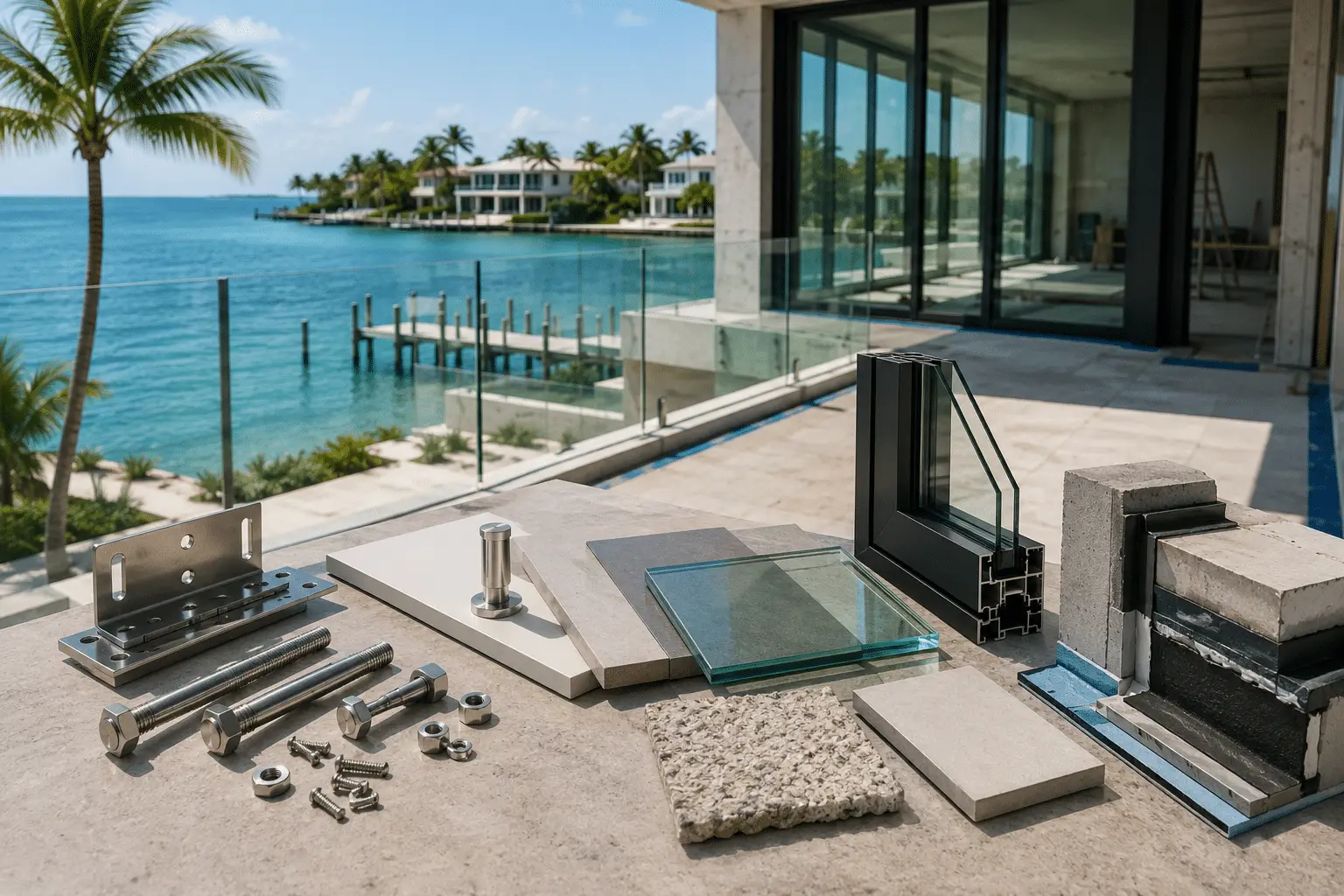
The order that protects the investment on Lauderdale-by-the-Sea waterfront homes: the building envelope first, meaning the roof, impact windows and doors, and waterproofing details. Then water control, through drainage, site grading, and a plan for slab moisture. Then structural tie-ins, including wind-load connections and any framing fixes. Then mechanical capacity, covering electrical service, HVAC zoning, and plumbing upgrades. Interiors come last: layout, millwork, lighting, materials, and smart-home systems. Reversing that order is the most common and most expensive mistake in coastal remodeling, because finishes installed before the envelope is solved get torn out when the envelope is finally fixed. See our hurricane-resistant construction guide and corrosion-resistant materials guide.
What should you settle on Lauderdale-by-the-Sea waterfront homes before design starts?
Six decisions made before drawings start on a Lauderdale-by-the-Sea waterfront home prevent most budget shocks: who decides, what must change, when you need it, where the site limits you, why you are renovating, and how you will manage construction risk. Getting clear now is cheaper than getting clear later.
Decision rules and scope for Lauderdale-by-the-Sea waterfront homes. Before design starts, settle who approves selections and change orders, how long sign-off takes on key decisions, how often you want updates (weekly is typical), and who can make calls on site when you are traveling. Then sort must-haves, such as layout changes, impact openings, and envelope upgrades, from wants, such as material upgrades, specialty lighting, and custom millwork, and from later phases you can put off without causing rework. A clean scope is the best protection against cost creep.
Timeline, logistics, and motive. Build your schedule around ordering: lead times for impact glass and specialty doors, cabinetry and stone templating, generator and electrical gear, and the order of inspections. Site logistics deserve the same planning: staging and protected storage, street access for deliveries and waste hauling, protecting neighbors and keeping to working hours, and the order of exterior work near the water. Finally, be honest about why you are doing it. A lifestyle renovation puts usability, shade, privacy, and comfort first. A resale renovation puts first what buyers notice and what passes inspection cleanly. An insurance-driven renovation puts the roof, openings, electrical, and water control first. Then set budget rules: allowances versus fixed selections, a contingency target, and when you’ll open up walls to look.
What triggers permits and reviews on Lauderdale-by-the-Sea waterfront homes?
Most Broward County waterfront renovations trigger several layers of review at once: local building permits plus flood-zone, structural, and wind-load rules. Here, the permit plan and accurate drawings matter as much as the build.
What commonly needs a permit on Lauderdale-by-the-Sea waterfront homes: impact windows and doors, roof replacement, structural changes and wall removals, moving plumbing, electrical, or HVAC, pools and major hardscape, and docks or seawalls when the work reaches the water. Hurricane rules to sort out early: wind-borne debris provisions, Florida product approvals for openings and roofing, fastening schedules and installation details, and how the roof ties to the walls. Confirm the parcel’s flood zone at the FEMA Flood Map Service Center, and read our explainers on AE, VE, and X flood zones and Broward County flood zone requirements.
Two layers that come with a barrier-island town. Oceanfront lots can fall under Florida’s coastal construction control line program, which adds a state review on top of local approvals, and work on the shoreline or underwater land falls under the Florida DEP submerged lands program. Find out early whether either applies to your lot, because both affect the schedule, not just the paperwork. What actually delays review: incomplete submittals that force another review, missing product approvals and engineering notes, and a site that isn’t ready for inspection. Our permitting and project management insights, why permits get delayed, and CCCL guide go deeper.
What hidden conditions hide in older Lauderdale-by-the-Sea waterfront homes?
The biggest risks in older Lauderdale-by-the-Sea homes are hidden conditions, places where water gets in, corrosion, and long-lead assemblies. You cut all four by investigating early, choosing coastal-grade materials, and locking decisions before demolition, not during it.
What older Lauderdale-by-the-Sea waterfront homes often reveal: cast iron plumbing near the end of its life, slab moisture and poor past waterproofing, termite damage, rot, or framing that needs fixing, old electrical panels and undersized service, and earlier unpermitted work that must be corrected to pass inspection. Owners least expect that last one and resent it most, because it turns someone else’s shortcut into your budget line. The long-lead items that quietly derail schedules: impact glass packages and custom doors, generators and transfer switches, specialty stone and large-format materials, and custom cabinetry with built-in appliance panels.
Budget control that stays honest means allowances only where they truly fit, fixed selections locked before demolition wherever possible, opening up walls early when the risk is high, and a contingency sized to the age and exposure of the house, not a token percentage. Our guides to cost overruns, contract structures, and cost per square foot cover the mechanics, and modernizing an older waterfront estate covers the work.
What is owner’s representation on Lauderdale-by-the-Sea waterfront homes?
Owner’s representation is professional oversight that protects the owner by managing budgets, schedules, contracts, and quality across architects, designers, contractors, and vendors. It is most valuable on complex waterfront renovations and for owners who live out of state or are short on time.
What an owner’s rep does on Lauderdale-by-the-Sea waterfront homes: matches the scope to the budget before plans are final, levels bids so you compare like with like, supports contracts and paperwork, including change-order controls, runs milestone inspections and quality reports, and sends weekly updates with photo logs and a decision log. How it differs from a general contractor: the general contractor builds the work, while the owner’s representative speaks for you across the whole team and keeps the design, the construction, and the budget lined up. The two roles work together; one doesn’t replace the other. Compare them in our guides to owner’s rep versus general contractor and owner’s rep versus in-house builder teams.
When it earns its fee on Lauderdale-by-the-Sea waterfront homes: when you run the project from out of state, when the scope is technically complex, or when you want control without being on site every day. Bringing a rep in early matters more than most owners expect, because most of the money is committed during design and pre-construction. See what an owner’s representative is, what they do day to day, when to bring one in, whether it is worth the ROI, how to choose one, absentee owner representation, quality control and punch lists, remote monitoring, and case studies.
Renovate or redevelop: how do you choose on Lauderdale-by-the-Sea waterfront homes?
Renovating in Lauderdale-by-the-Sea makes sense when the structure is sound, the elevation works, and your goals don’t require fighting the existing envelope and the code. Rebuilding wins when a low elevation, structural limits, or stacked-up code gaps mean you would be paying to work around the building instead of improving it.
Why cost comparisons are hard without real inputs. Comparing renovation with rebuilding on guesses gives you a number that won’t survive the actual house. The comparison only becomes reliable after a survey, a review of existing conditions, an elevation check, and enough opening up to see what is behind the walls. That is what a feasibility study is for, and it costs less than finding out after demolition. What owners feel most is the timeline difference, and it is real: renovation is usually faster and can sometimes be phased, while rebuilding takes longer but removes the compromises for good. Our teardown versus renovation guide, feasibility study guide, and financial and timeline comparison lay out the analysis.
How long do Lauderdale-by-the-Sea waterfront homes renovations take?
A high-end Lauderdale-by-the-Sea waterfront renovation often takes 6 to 12 months depending on scope, approvals, and ordering, and a full custom waterfront build often takes 18 to 36 months from design through closeout. Permit cycles and long-lead glass usually set the pace.
The budget drivers we see again and again on Lauderdale-by-the-Sea waterfront homes: envelope work, including the roof, impact openings, and waterproofing, structural fixes found during investigation, mechanical, electrical, and plumbing upgrades, the interior finish level and custom millwork, outdoor living and the pool, and the extra cost that narrow lots with little staging room add to every trade. How to keep control: price with real allowances, lock long-lead selections before permits where you can, hold a contingency matched to the house’s age, and require written pricing and schedule impact on every change. See our realistic construction timeline and what it costs to build.
How does Kass run renovations on Lauderdale-by-the-Sea waterfront homes?
Kass Construction & Development is a boutique, state-licensed luxury builder based in East Fort Lauderdale, serving Broward, Palm Beach, and Miami-Dade. The process runs from discovery, to feasibility and pre-construction, to plans and a permit plan, to logistics and ordering, to building and quality control, and then closeout.
What each phase of a Lauderdale-by-the-Sea waterfront home project is for. Discovery sets the goals, the decision rules, and the real reason behind the project. Feasibility and pre-construction match the scope to the budget before drawings are final. Plans, selections, and the permit plan get the paperwork right, so reviews stay short. Logistics and ordering solve staging, access, and long-lead items before they become site problems. Building and quality control bring steady supervision to the envelope, waterproofing, and rated systems. Closeout delivers the finished punch list, paperwork, and warranties.
The structure behind it. Owner’s representation, general contracting, and construction management sit under one roof, and principal Mitchell P. Kass is both a licensed Florida general contractor (CGC1529472) and an attorney. That matters when decisions affect value, compliance, and how easily the home sells later.
What to look for in any partner, including us: licensing and insurance you can verify, proof of a process instead of marketing talk, real coastal renovation experience, and smooth work with your architect and designer. Red flags: vague allowances, no permit plan beyond a promise to handle it, and thin paperwork. Verify any license through the Florida DBPR portal, and use our builders guide and contract red flags as checklists. To start, bring the property address, a survey if you have one, photos of problem areas and the waterfront edge, your must-have list, a target finish date, and a budget range you’re comfortable with. Explore our services, projects, and about page, then contact us.
| Constraint | What it means in practice | How to plan for it |
|---|---|---|
| Narrow lots and access | Limited room for equipment and deliveries | Agree a logistics plan before mobilization |
| Neighbor proximity | Noise, dust, and working-hour limits | Build the restrictions into the schedule |
| Coastal exposure | Salt air, wind, and storm protection | Specify corrosion-resistant materials from the start |
| Flood requirements | Finished floor and improvement thresholds | Test the numbers before the design is fixed |
| Small-municipality review | Fewer staff and set review cycles | Submit complete, because resubmittals cost weeks |
| Storm season | Weather risk during open-envelope work | Sequence dry-in ahead of the season |
Which renovation scopes trigger which reviews on Lauderdale-by-the-Sea waterfront homes?
Most Lauderdale-by-the-Sea waterfront homes were built between the 1950s and the 1980s, so the review a renovation draws depends less on the budget than on which part of the house the work touches.
| Renovation scope | Reviews normally triggered | Design consequence |
|---|---|---|
| Kitchen, baths and finishes only | Building permit; substantial improvement value tracked | Usually stays under the 50 percent threshold if the home has not been improved recently |
| New roof, windows and doors | Building permit with product approvals for the High-Velocity Hurricane Zone | Impact-rated openings and a roof-to-wall connection upgrade may be required by the code |
| Addition or second story | Building, zoning, floodplain review; possible CCCL review on oceanfront lots | Often pushes the project over 50 percent, forcing the whole structure to meet current flood elevation |
| Seawall, dock or lift | County environmental review, plus state and federal sign-off for work below mean high water | Cap elevation and tie-backs set before the site plan; lead time of months |
| Structural repair of spalled concrete | Building permit with an engineer’s letter | May reveal chloride damage that changes the renovate-or-rebuild decision |
The 50 percent rule is a federal flood-zone requirement explained by FEMA, and the wind and impact standards come from the Florida Building Code. Our guides to retrofitting homes under flood zone regulations, modernizing a 1990s waterfront estate, and seawall construction and permitting go deeper on each row.
What is the right order for a luxury renovation of Lauderdale-by-the-Sea waterfront homes?
Renovations of Lauderdale-by-the-Sea waterfront homes go wrong when finishes are picked before anyone understands the structure and the flood math, so the order matters:
- Order an elevation certificate and a current appraisal of the structure, since both feed the substantial improvement calculation; see FEMA elevation certificates.
- Commission a structural and building-envelope assessment, including concrete testing on the seawall and any exposed columns, to find hidden conditions before design starts.
- Define the scope in writing and price it against the 50 percent threshold, then decide whether to stay under it, exceed it deliberately, or redevelop, using a feasibility study for tear-down versus renovate.
- Select the contract form (fixed price, cost-plus, or GMP) that matches how settled the scope is; compare them in GMP vs cost-plus vs fixed-price contracts.
- Submit the seawall or dock application first if one is needed, because its review runs longest.
- Release impact windows, doors, roofing and any custom millwork as soon as the building permit is issued.
- Sequence demolition to expose structure early, so any concrete repair is priced while the design can still respond.
- Close out with final inspections, warranties and an updated elevation certificate for the insurance file, following the checklist in quality control, inspections and punch lists.
Corrosion-resistant choices for the envelope are covered in coastal corrosion-resistant materials, and owners who can’t be on site will find the reporting model in absentee owner representation. Similar projects in nearby towns are covered in Pompano Beach waterfront homes and Hollywood Florida waterfront homes.
Frequently asked questions about Lauderdale-by-the-Sea waterfront homes
What makes waterfront renovations here more complex and costly?
Salt air, wind load, tidal water, and tight site conditions raise construction complexity and risk, so the work requires coastal-specific engineering, a deliberate permitting strategy, and disciplined execution. Narrow lots with limited staging and close neighbors add a logistics premium that inland projects do not carry.
Why does location within the town matter when planning a remodel?
Barrier-island exposure, proximity to the beach and A1A, and whether a property backs to a canal or sits near the Intracoastal all change the constraints. Those factors drive envelope requirements, privacy and view planning, outdoor living design, and which approvals your specific parcel will trigger.
What logistics affect cost on Lauderdale-by-the-Sea waterfront homes?
Limited staging and storage on narrow lots, close neighbor proximity with noise sensitivity, parking and delivery logistics for trades and materials, tight access for dumpsters, cranes, and large assemblies, and municipal or association review timelines that affect when work can actually start.
What should a luxury waterfront renovation prioritize first?
Building envelope first, meaning roof, impact windows and doors, and waterproofing. Then water management through drainage, grading, and slab moisture strategy. Then structural tie-ins, then mechanical capacity, and interiors last. Reversing that order means removing finishes later to fix what sits behind them.
What hidden conditions are common in older waterfront homes?
Cast iron plumbing near end of life, slab moisture and improper prior waterproofing, termite damage or rot requiring framing correction, outdated electrical panels and undersized service, and prior unpermitted work that must be corrected before inspections will pass.
What does an owner’s representative do that a general contractor does not?
The general contractor is responsible for building the work. The owner’s representative provides independent advocacy across the whole team: aligning scope to budget before plans finalize, leveling bids, controlling change orders, running milestone inspections, and reporting weekly with photo logs and decision tracking.
How long does a Lauderdale-by-the-Sea waterfront renovation take?
A high-end waterfront renovation often runs 6 to 12 months depending on scope, approvals, and procurement, and a full custom build often runs 18 to 36 months. Permitting cycles and long-lead items such as impact glass and custom doors are usually what set the pace.
Should I renovate or redevelop?
Renovate when the structure is sound, elevations are workable, and your goals do not require fighting the existing envelope. Redevelop when low elevation, structural limitations, or accumulated code gaps mean you would be paying to work around the building. Feasibility analysis settles it better than assumptions.
On Lauderdale-by-the-Sea waterfront homes, the envelope and the schedule decide the outcome long before the finishes do. If you are planning a luxury renovation, weighing renovation against redevelopment, or want owner’s representation on a project already underway, contact Kass Construction & Development to work through feasibility, permitting, and a realistic plan.
The same standards apply whichever South Florida home builder you shortlist; insist on the documentation.
How does the town’s scale affect Lauderdale-by-the-Sea waterfront projects?
Small town, close review. The Lauderdale-by-the-Sea waterfront sits in a compact municipality where projects are visible and review is personal, so complete submittals and neighborly communication move approvals along. The reward is a low-rise character that larger cities lost long ago.