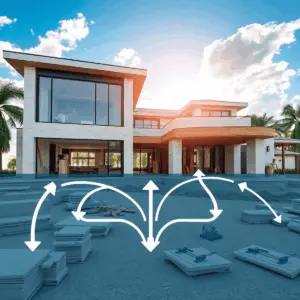

Lauderdale-by-the-Sea waterfront homes sit in a coastal, flood-influenced micro-market where salt air, wind load, tidal water, and tight site conditions raise both complexity and risk. That is why luxury renovation here requires coastal-specific engineering, a deliberate permitting strategy, and disciplined execution rather than upgraded finishes applied over an older house.
Key takeaways
- What makes Lauderdale-by-the-Sea waterfront homes different, and why do renovations cost more?
Lauderdale-by-the-Sea combines barrier-island exposure with a small, walkable, closely built environment. You are near the beach, dining, and A1A, and many properties back to canals or sit near the Intracoastal. - Who are Lauderdale-by-the-Sea waterfront homes renovations for, and how do owners engage a builder?
Lauderdale-by-the-Sea waterfront renovations suit second-home owners renovating from out of state, investors upgrading for resale in a luxury coastal submarket, and primary residents modernizing older waterfront inventory. - What does luxury renovation actually mean on Lauderdale-by-the-Sea waterfront homes?
A real luxury waterfront renovation in Lauderdale-by-the-Sea upgrades aesthetics and performance at the same time. The objective is better structural resilience, waterproofing, mechanical systems, and indoor-outdoor livability, not premium finishes installed over unresolved problems. - What should you settle on Lauderdale-by-the-Sea waterfront homes before design starts?
Six decisions, made before drawings begin on a Lauderdale-by-the-Sea waterfront home, prevent most budget shocks: who decides, what must change, when you need it, where the site constrains you, why you are renovating, and how you will manage construction risk.
What makes Lauderdale-by-the-Sea waterfront homes different, and why do renovations cost more?
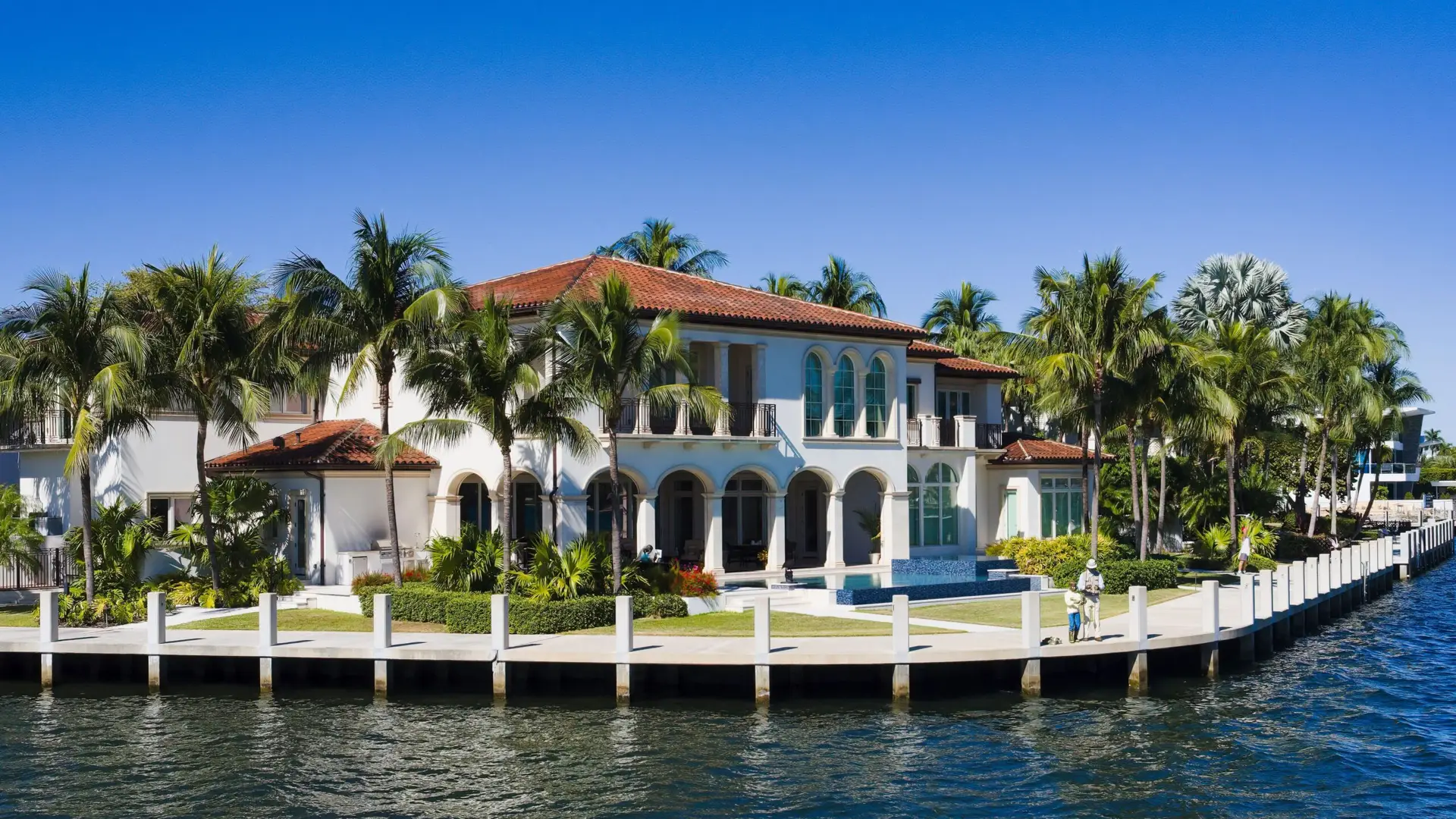
Lauderdale-by-the-Sea combines barrier-island exposure with a small, walkable, closely built environment. You are near the beach, dining, and A1A, and many properties back to canals or sit near the Intracoastal. That context raises expectations for the finished home while shrinking the space and tolerance available to build it.
What owners of Lauderdale-by-the-Sea waterfront homes tend to prioritize: indoor-outdoor living that reads as resort-level rather than merely pleasant; privacy upgrades that do not close off light and views; impact-rated openings and envelope improvements for storm resilience; and outdoor kitchens, covered terraces, and better pool integration. Those are lifestyle goals, but on the water each one lands on structure, waterproofing, or drainage before it lands on finish selection.
The constraints that actually drive cost and schedule on Lauderdale-by-the-Sea waterfront homes: limited staging and storage on narrow lots; close neighbor proximity with real noise sensitivity; parking and delivery logistics for trades and materials; tight access for dumpsters, cranes, and large assemblies; and municipal or association review timelines that affect start dates. None of that appears on a finish schedule, and all of it appears in the price. Our waterfront and coastal construction insights cover the fundamentals, and the Fort Lauderdale, Pompano Beach, and Hillsboro Beach guides analyze neighboring markets.
Who are Lauderdale-by-the-Sea waterfront homes renovations for, and how do owners engage a builder?
Lauderdale-by-the-Sea waterfront renovations suit second-home owners renovating from out of state, investors upgrading for resale in a luxury coastal submarket, and primary residents modernizing older waterfront inventory. What those three share is a need for predictable management rather than improvisation.
The client profiles that recur on Lauderdale-by-the-Sea waterfront homes: out-of-state owners who need reliable on-site oversight and reporting; busy executives who want fewer surprises and faster decisions; families expanding or reconfiguring a dated layout; and buyers who acquired an older waterfront home specifically for its renovation upside. Why boutique oversight matters: a builder carrying fewer projects at once generally delivers tighter supervision, clearer accountability, more precise scheduling and trade coordination, faster issue resolution when coastal conditions complicate the work, and less handoff drift between people.
Three ways owners typically engage. Renovation only, with the builder executing as general contractor. Renovation plus collaboration with your existing architect and designer. Or full owner’s representation running from acquisition through completion. The right choice depends on how complex the property is and how much of the coordination load you want to carry yourself. Our luxury renovation insights and whole-home renovation guide cover the work itself.
What does luxury renovation actually mean on Lauderdale-by-the-Sea waterfront homes?
A real luxury waterfront renovation in Lauderdale-by-the-Sea upgrades aesthetics and performance at the same time. The objective is better structural resilience, waterproofing, mechanical systems, and indoor-outdoor livability, not premium finishes installed over unresolved problems.
The order that protects the investment on Lauderdale-by-the-Sea waterfront homes: building envelope first, meaning roof, impact windows and doors, and waterproofing details; then water management through drainage, site grading, and a slab moisture strategy; then structural tie-ins including wind-load connections and any framing corrections; then mechanical capacity covering electrical service, HVAC zoning, and plumbing modernization; and interiors last, meaning layout, millwork, lighting, materials, and smart-home systems. Reversing that order is the most common and most expensive mistake in coastal remodeling, because finishes installed before the envelope is solved get removed when the envelope is finally addressed. See our hurricane-resistant construction guide and corrosion-resistant materials guide.
What should you settle on Lauderdale-by-the-Sea waterfront homes before design starts?
Six decisions, made before drawings begin on a Lauderdale-by-the-Sea waterfront home, prevent most budget shocks: who decides, what must change, when you need it, where the site constrains you, why you are renovating, and how you will manage construction risk. Clarity here is cheaper than clarity later.
Decision rules and scope for Lauderdale-by-the-Sea waterfront homes. Before design starts, settle who approves selections and change orders, what the sign-off timeline is for critical decisions, how often you want updates (weekly is typical), and who is authorized to make on-site calls when you are traveling. Then separate must-haves such as layout changes, impact openings, and envelope upgrades from wants such as material upgrades, specialty lighting, and custom millwork, and from future phases you can defer without creating rework. A clean scope is the single best protection against cost creep.
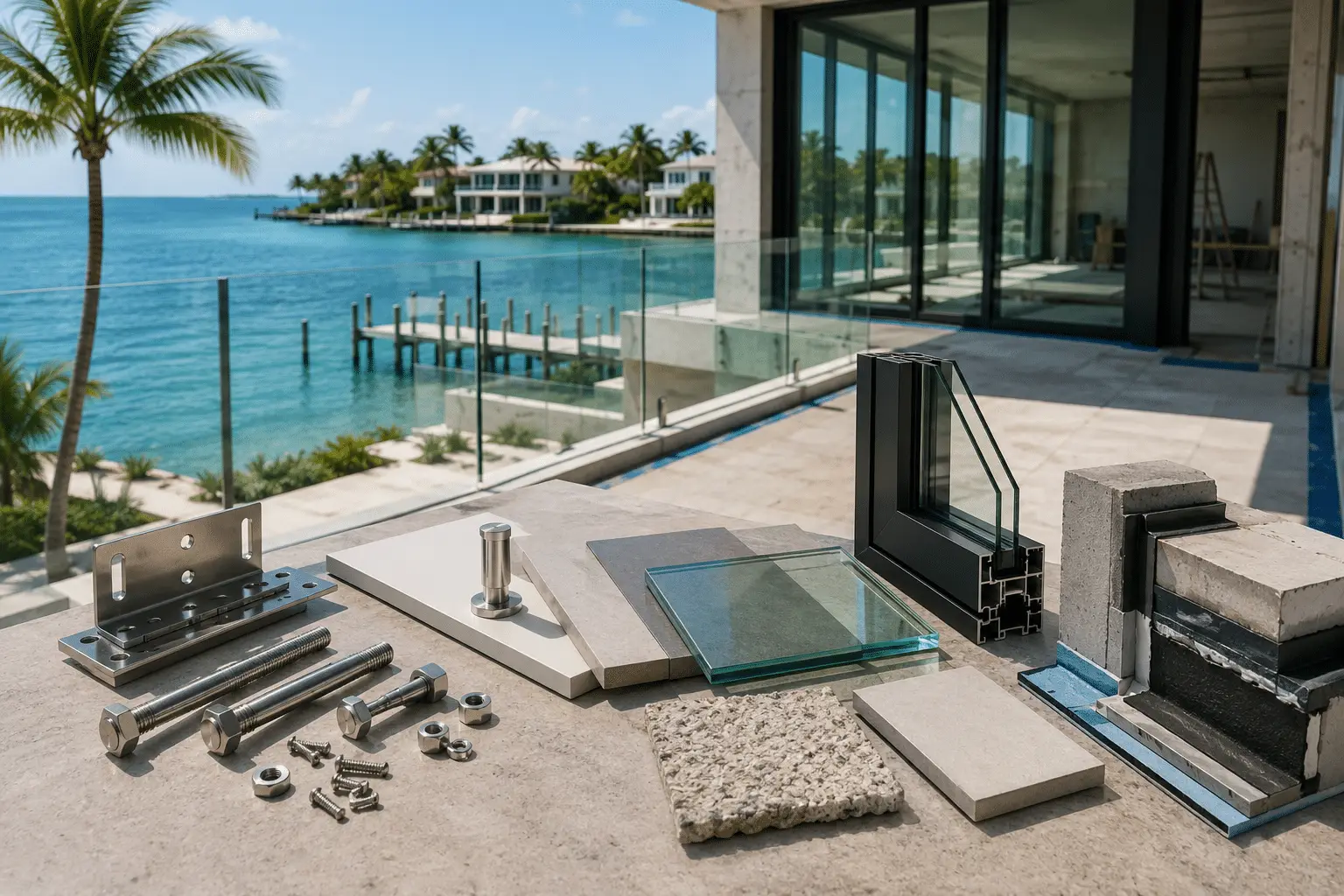
Timeline, logistics, and motive. Your schedule should be built around procurement, including impact glass and specialty door lead times, cabinetry and stone templating cycles, generator and electrical gear availability, and inspection sequencing. Site logistics deserve equal planning: material staging and protected storage, street access for deliveries and waste hauling, neighbor protection and working-hour limits, and the sequencing of exterior work near the water. Finally, be honest about the driver. A lifestyle renovation prioritizes usability, shade, privacy, and comfort. A resale renovation prioritizes what buyers notice first and what inspects cleanly. An insurance-driven renovation prioritizes roof, openings, electrical, and water management. Then set budget rules: allowances versus fixed selections, a contingency target, and when exploratory openings will happen.
What triggers permits and reviews on Lauderdale-by-the-Sea waterfront homes?
Most Broward County waterfront renovations trigger several layers at once: local building permits plus flood-zone, structural, and wind-load compliance. In this environment permitting strategy and accurate plans matter as much as the build.
What commonly requires a permit on Lauderdale-by-the-Sea waterfront homes: impact windows and doors; roof replacement; structural changes and wall removals; plumbing, electrical, and HVAC relocations; pools and major exterior hardscape; and docks or seawalls where the scope reaches the water. Hurricane-rated requirements to align early: wind-borne debris provisions, Florida product approvals for openings and roofing, fastening schedules and installation details, and roof-to-wall connection strategies. Confirm the parcel’s flood zone at the FEMA Flood Map Service Center, and read our explainers on AE, VE, and X flood zones and Broward County flood zone requirements.
Two layers specific to a barrier-island town. Oceanfront parcels can fall under Florida’s coastal construction control line program, which adds state review to local approvals, and shoreline or submerged-lands work falls under the Florida DEP submerged lands program. Confirm whether either applies to your parcel early, because both shape the schedule rather than simply adding paperwork. What actually delays review: incomplete submittals that force re-review cycles, missing product approvals and engineering notes, and poor inspection readiness on site. Our permitting and project management insights, why permits get delayed, and CCCL guide go deeper.
What hidden conditions hide in older Lauderdale-by-the-Sea waterfront homes?
The biggest risks in older Lauderdale-by-the-Sea homes are hidden conditions, water intrusion pathways, corrosion, and long-lead assemblies. You reduce all four by investigating early, specifying coastal-grade materials, and locking decisions before demolition rather than during it.
What older Lauderdale-by-the-Sea waterfront homes commonly reveal: cast iron plumbing near the end of its life; slab moisture and improper prior waterproofing; termite damage, rot, or framing that needs correction; outdated electrical panels and undersized service; and prior unpermitted work that must be corrected to pass inspection. That last item is the one owners least expect and most resent, because it converts someone else’s shortcut into your budget line. The long-lead items that quietly derail schedules: impact glass packages and custom doors, generators and transfer switches, specialty stone and large-format materials, and custom cabinetry with integrated appliance panels.
Budget control that stays honest means clear allowances only where they are genuinely appropriate, fixed selections locked before demolition wherever possible, exploratory openings when risk is high, and a contingency sized to the age and exposure of the property rather than a token percentage. Our guides to cost overruns, contract structures, and cost per square foot cover the mechanics, and modernizing an older waterfront estate covers the work.
What is owner’s representation on Lauderdale-by-the-Sea waterfront homes?
Owner’s representation is professional oversight protecting the homeowner’s interests by managing budgets, schedules, contracts, and quality across architects, designers, contractors, and vendors. It is most valuable on complex waterfront renovations and for owners who are out of state or time-constrained.
What an owner’s rep does on Lauderdale-by-the-Sea waterfront homes: aligns scope to budget before plans are finalized; levels bids so you are comparing like with like; provides contract and administrative support including change-order controls; runs milestone inspections and quality reporting; and delivers weekly updates with photo logs and decision tracking. How it differs from a general contractor: the general contractor is responsible for building the work, while the owner’s representative provides independent advocacy across the whole team, preventing misalignment between design intent, construction reality, and budget. The two roles are complementary rather than interchangeable. Compare them in our guides to owner’s rep versus general contractor and owner’s rep versus in-house builder teams.
When it earns its fee on Lauderdale-by-the-Sea waterfront homes: when you are managing the project from out of state, when the scope is technically complex, or when you want control without daily site presence. Bringing a representative in early matters more than most owners expect, because the majority of the money is committed during design and preconstruction. See what an owner’s representative is, what they do day to day, when to bring one in, whether it is worth the ROI, how to choose one, absentee owner representation, quality control and punch lists, remote monitoring, and case studies.
Renovate or redevelop: how do you choose on Lauderdale-by-the-Sea waterfront homes?
Renovation in Lauderdale-by-the-Sea makes sense when the structure is sound, elevations are workable, and your goals are achievable without fighting the existing envelope and compliance requirements. Redevelopment wins when low elevation, structural limitations, or accumulated code gaps mean you would be paying to work around the building rather than improve it.
Why cost comparisons are hard without real inputs. Comparing renovation to rebuild on assumptions produces a number that will not survive contact with the property. The comparison only becomes reliable after a survey, an existing-conditions review, an elevation check, and enough exploratory work to understand what is behind the walls. That is what feasibility analysis is for, and it is cheaper than discovering the answer after demolition. What owners feel most is the timeline difference, which is real: renovation is generally faster and can sometimes be phased, while redevelopment takes longer but removes compromises permanently. Our teardown versus renovation guide, feasibility study guide, and financial and timeline comparison lay out the analysis.
How long do Lauderdale-by-the-Sea waterfront homes renovations take?
A high-end Lauderdale-by-the-Sea waterfront renovation often runs 6 to 12 months depending on scope, approvals, and procurement, and a full custom waterfront build often runs 18 to 36 months from design through closeout. Permitting cycles and long-lead glazing are usually the pacing items.
The recurring budget drivers on Lauderdale-by-the-Sea waterfront homes: envelope work including roof, impact openings, and waterproofing; structural corrections uncovered during investigation; mechanical, electrical, and plumbing modernization; interior finish level and custom millwork; outdoor living and pool integration; and the site-logistics premium that narrow lots with limited staging impose on every trade. How to keep control: price with real allowances, lock long-lead selections before permitting where possible, hold a contingency matched to the property’s age, and require documented pricing and schedule impact on every change. See our realistic construction timeline and what it costs to build.
How does Kass run renovations on Lauderdale-by-the-Sea waterfront homes?
Kass Construction & Development is a boutique, state-licensed luxury builder based in East Fort Lauderdale, serving Broward, Palm Beach, and Miami-Dade. The process runs discovery, feasibility and preconstruction, plans and permitting strategy, logistics and procurement, build and quality control, then closeout.
What each phase of a Lauderdale-by-the-Sea waterfront homes project is for. Discovery establishes goals, decision rules, and the real motive behind the project. Feasibility and preconstruction align scope with budget before drawings harden. Plans, selections, and permitting strategy get the documentation right so review cycles stay short. Logistics and procurement planning solves staging, access, and long-lead ordering before they become site problems. Build and quality control apply consistent supervision to the envelope, waterproofing, and rated systems. Closeout delivers punch completion, documentation, and warranties.
The structure behind it. Owner’s representation, general contracting, and construction management sit under one roof, and principal Mitchell P. Kass is both a licensed Florida general contractor (CGC1529472) and an attorney, which matters when decisions affect value, compliance, and future saleability.
What to look for in any partner, including us: verifiable licensing and insurance, process proof rather than marketing language, genuine coastal renovation experience, and integration with your architect and designer instead of friction. Red flags: vague allowances, no permitting strategy beyond an assurance that they will handle it, and weak documentation. Verify any license through the Florida DBPR portal, and use our builders guide and contract red flags as checklists. To start, bring the property address, a survey if you have one, photos of problem areas and the waterfront edge, your must-have list, a target completion date, and a comfort range for investment. Explore our services, projects, and about page, then contact us.
| Constraint | What it means in practice | How to plan for it |
|---|---|---|
| Narrow lots and access | Limited room for equipment and deliveries | Agree a logistics plan before mobilization |
| Neighbor proximity | Noise, dust, and working-hour limits | Build the restrictions into the schedule |
| Coastal exposure | Salt air, wind, and storm protection | Specify corrosion-resistant materials from the start |
| Flood requirements | Finished floor and improvement thresholds | Test the numbers before the design is fixed |
| Small-municipality review | Fewer staff and set review cycles | Submit complete, because resubmittals cost weeks |
| Storm season | Weather risk during open-envelope work | Sequence dry-in ahead of the season |
Which renovation scopes trigger which reviews on Lauderdale-by-the-Sea waterfront homes?
Most Lauderdale-by-the-Sea waterfront homes date from the 1950s through the 1980s, so the review a renovation attracts depends less on the budget than on what part of the house the scope touches.
| Renovation scope | Reviews normally triggered | Design consequence |
|---|---|---|
| Kitchen, baths and finishes only | Building permit; substantial improvement value tracked | Usually stays under the 50 percent threshold if the home has not been improved recently |
| New roof, windows and doors | Building permit with product approvals for the High-Velocity Hurricane Zone | Impact-rated openings and a roof-to-wall connection upgrade may be required by the code |
| Addition or second story | Building, zoning, floodplain review; possible CCCL review on oceanfront lots | Often pushes the project over 50 percent, forcing the whole structure to meet current flood elevation |
| Seawall, dock or lift | County environmental review, plus state and federal sign-off for work below mean high water | Cap elevation and tie-backs set before the site plan; lead time of months |
| Structural repair of spalled concrete | Building permit with an engineer’s letter | May reveal chloride damage that changes the renovate-or-rebuild decision |
The 50 percent rule is a federal floodplain requirement explained by FEMA, and the wind and impact standards come from the Florida Building Code. Our guides to retrofitting homes under flood zone regulations, modernizing a 1990s waterfront estate and seawall construction and permitting go deeper on each row.
What is the right order for a luxury renovation of Lauderdale-by-the-Sea waterfront homes?
Renovations of Lauderdale-by-the-Sea waterfront homes go wrong when finishes are selected before the structure and the flood math are understood, so the sequence matters:
- Order an elevation certificate and a current appraisal of the structure, since both feed the substantial improvement calculation; see FEMA elevation certificates.
- Commission a structural and building-envelope assessment, including concrete testing on the seawall and any exposed columns, to find hidden conditions before design starts.
- Define the scope in writing and price it against the 50 percent threshold, then decide whether to stay under it, exceed it deliberately, or redevelop, using a feasibility study for tear-down versus renovate.
- Select the contract form (fixed price, cost-plus, or GMP) that matches how settled the scope is; compare them in GMP vs cost-plus vs fixed-price contracts.
- Submit the seawall or dock application first if one is needed, because its review runs longest.
- Release impact windows, doors, roofing and any custom millwork as soon as the building permit is issued.
- Sequence demolition to expose structure early, so any concrete repair is priced while the design can still respond.
- Close out with final inspections, warranties and an updated elevation certificate for the insurance file, following the checklist in quality control, inspections and punch lists.
Corrosion-resistant choices for the envelope are covered in coastal corrosion-resistant materials, and owners who cannot be on site will find the reporting model in absentee owner representation. Comparable projects in nearby towns are covered in Pompano Beach waterfront homes and Hollywood Florida waterfront homes.
Frequently asked questions about Lauderdale-by-the-Sea waterfront homes
What makes waterfront renovations here more complex and costly?
Salt air, wind load, tidal water, and tight site conditions raise construction complexity and risk, so the work requires coastal-specific engineering, a deliberate permitting strategy, and disciplined execution. Narrow lots with limited staging and close neighbors add a logistics premium that inland projects do not carry.
Why does location within the town matter when planning a remodel?
Barrier-island exposure, proximity to the beach and A1A, and whether a property backs to a canal or sits near the Intracoastal all change the constraints. Those factors drive envelope requirements, privacy and view planning, outdoor living design, and which approvals your specific parcel will trigger.
What logistics affect cost on Lauderdale-by-the-Sea waterfront homes?
Limited staging and storage on narrow lots, close neighbor proximity with noise sensitivity, parking and delivery logistics for trades and materials, tight access for dumpsters, cranes, and large assemblies, and municipal or association review timelines that affect when work can actually start.
What should a luxury waterfront renovation prioritize first?
Building envelope first, meaning roof, impact windows and doors, and waterproofing. Then water management through drainage, grading, and slab moisture strategy. Then structural tie-ins, then mechanical capacity, and interiors last. Reversing that order means removing finishes later to fix what sits behind them.
What hidden conditions are common in older waterfront homes?
Cast iron plumbing near end of life, slab moisture and improper prior waterproofing, termite damage or rot requiring framing correction, outdated electrical panels and undersized service, and prior unpermitted work that must be corrected before inspections will pass.
What does an owner’s representative do that a general contractor does not?
The general contractor is responsible for building the work. The owner’s representative provides independent advocacy across the whole team: aligning scope to budget before plans finalize, leveling bids, controlling change orders, running milestone inspections, and reporting weekly with photo logs and decision tracking.
How long does a Lauderdale-by-the-Sea waterfront renovation take?
A high-end waterfront renovation often runs 6 to 12 months depending on scope, approvals, and procurement, and a full custom build often runs 18 to 36 months. Permitting cycles and long-lead items such as impact glass and custom doors are usually what set the pace.
Should I renovate or redevelop?
Renovate when the structure is sound, elevations are workable, and your goals do not require fighting the existing envelope. Redevelop when low elevation, structural limitations, or accumulated code gaps mean you would be paying to work around the building. Feasibility analysis settles it better than assumptions.
On Lauderdale-by-the-Sea waterfront homes, the envelope and the schedule decide the outcome long before the finishes do. If you are planning a luxury renovation, weighing renovation against redevelopment, or want owner’s representation on a project already underway, contact Kass Construction & Development to work through feasibility, permitting, and a realistic plan.
The same standards apply whichever South Florida home builder you shortlist; insist on the documentation.
How does the town’s scale affect Lauderdale-by-the-Sea waterfront projects?
Small town, close review. The Lauderdale-by-the-Sea waterfront sits in a compact municipality where projects are visible and review is personal, so complete submittals and neighborly communication move approvals along. The reward is a low-rise character that larger cities lost long ago.