Tarpon River waterfront homes sit on a narrow inland waterway just south of downtown Fort Lauderdale, where lot conditions, shoreline structures, and water access vary property by property. A renovation here is rarely just a renovation, because the waterline usually carries its own scope, its own reviewers, and its own timeline.
Key takeaways
- What counts as a Tarpon River waterfront home?
A Tarpon River waterfront home is a property on or directly connected to the Fort Lauderdale Tarpon River system, which is narrower and more variable than the larger waterways nearby. - Who reviews a renovation on Tarpon River waterfront homes?
Four layers review a Tarpon River renovation, not one. - How does dock permitting work on Tarpon River waterfront homes?
Dock permitting on the Tarpon River works as a rules-driven process governed by shoreline conditions, navigability, environmental constraints, and local code. - When does the substantial improvement rule apply to Tarpon River waterfront homes?
The substantial improvement rule applies on the Tarpon River when the renovation gets large enough to trigger full floodplain compliance.
This guide covers what actually changes when you renovate here: who reviews what across city, county, state, and federal jurisdictions, how dock permitting really works, the flood rule that can turn a large renovation into a rebuild, and the timelines and cost drivers to plan around. Kass Construction has built and renovated luxury residences across South Florida under Mitchell Kass and the firms he has led.
What counts as a Tarpon River waterfront home?
A Tarpon River waterfront home is a property on or directly connected to the Fort Lauderdale Tarpon River system, which is narrower and more variable than the larger waterways nearby. Among Tarpon River waterfront homes, water depth, shoreline condition, and the practical route out to open water change from block to block.
What that variation means in practice. This is a mature, tightly developed part of Fort Lauderdale, so setbacks, utilities, and neighborhood constraints differ street by street, and the buildable envelope is often tighter than an owner expects. Access for construction is a real factor too: narrow streets limit staging, laydown space, and delivery scheduling, and on a narrow waterway the same geometry constrains barge access and marine equipment.
Water access deserves an early, honest answer. Practical depth at the seawall, turning room, and the clearance of any bridges between the property and open water together determine what vessel the property can realistically keep. Air draft in particular cannot be engineered away later, so confirm the specific bridges on your route and their clearances and opening schedules before a dock is designed around a boat that cannot get there. Our companion guides to New River waterfront homes and Middle River waterfront homes cover the neighboring waterways.
Who reviews a renovation on Tarpon River waterfront homes?
Four layers review a Tarpon River renovation, not one. What owners call the permit is usually a coordinated set spanning City of Fort Lauderdale building and zoning review, Broward County considerations, Florida state review for work at or beyond the shoreline, and federal review when the work affects navigable water.
The regulatory buckets to expect on Tarpon River waterfront homes: building permits for structural work, mechanical, electrical, and plumbing, windows and doors, roofing, pools, and exterior structures; zoning for setbacks, lot coverage, height, and waterfront-specific rules; floodplain compliance covering elevation requirements, enclosure rules, equipment placement, and flood-resistant materials; coastal construction requirements including wind-borne debris provisions and corrosion resistance; and environmental review covering shoreline impacts, seagrass and manatee protections, and turbidity control where applicable.
The two agencies most often left out of the plan. Shoreline and submerged-lands work falls under the Florida DEP submerged lands program, and work in navigable waters can additionally require authorization from the Army Corps of Engineers, whose Florida regulatory program explains how those applications are handled. Both run on their own timelines, independent of the building permit. Mapping the reviewers before design advances is what prevents redesigns and resubmittals later, and the most common causes of rework are incomplete surveys, missing elevation documentation, and dock concepts that were never feasible under current rules.
How does dock permitting work on Tarpon River waterfront homes?
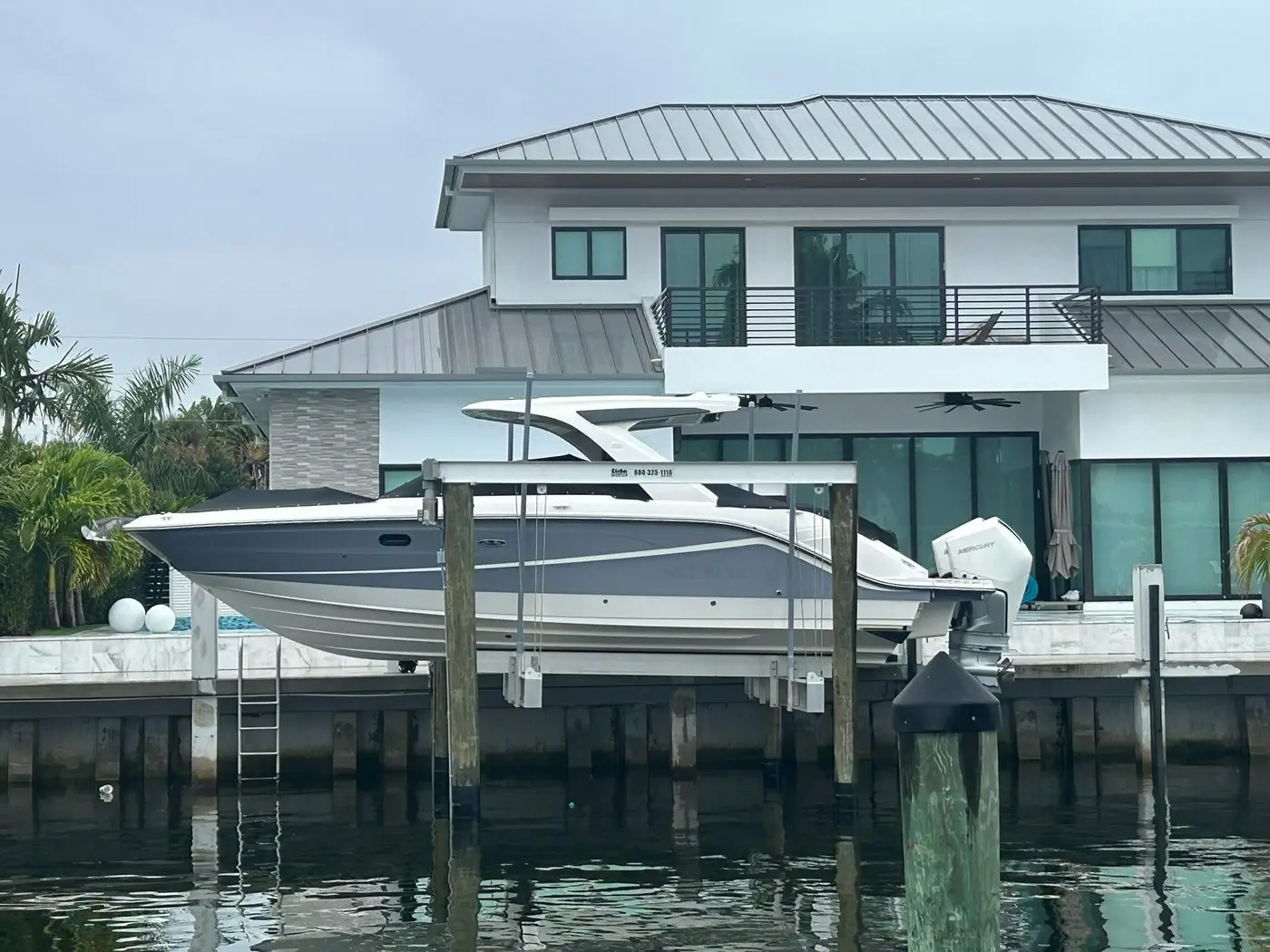
Dock permitting on the Tarpon River works as a rules-driven process governed by shoreline conditions, navigability, environmental constraints, and local code. On Tarpon River waterfront homes, feasibility should be confirmed before design is finalized or demolition begins, because a dock concept that cannot be permitted will reshape the whole project.
The scope items owners of Tarpon River waterfront homes typically request: new dock construction or replacement, dock repair and structural upgrades, boat lift installation, electrical and water pedestals, dock lighting and safety detailing, and seawall tie-ins or shoreline access improvements. Each of these can change the review path, and a lift in particular has to suit the boat you actually own and the depth you actually have.
The constraints that shape what gets approved: setbacks from property lines and neighboring structures; width and length limits for docks and platforms; water depth and practical navigation needs; seagrass and manatee protection requirements; conflicts with channels, turns, or navigability; and neighbor objection risk in edge cases. The documentation that decides your timeline: a current survey with clear boundary information, an assessment of existing seawall condition, engineered drawings for the dock and its attachments, and site photos with shoreline condition notes. Most delays trace back to incomplete or inconsistent paperwork rather than to the design itself. See our dock coordination guide and guide to expediting seawall and flood zone permits.
Run the dock in parallel, not afterward. Well-managed projects start dock feasibility early enough that the house plans never assume a configuration that cannot be permitted, and then run the marine approvals alongside the building permit rather than behind it.
When does the substantial improvement rule apply to Tarpon River waterfront homes?
The substantial improvement rule applies on the Tarpon River when the renovation gets large enough to trigger full floodplain compliance. Under National Flood Insurance Program rules, once improvement costs reach roughly half the structure’s market value, the building is generally treated as substantially improved and must be brought into current floodplain requirements, which can include elevating it.
Why this matters more here than almost anywhere. This is a renovation-driven market with many older homes sitting at older finished floor elevations, so an ambitious remodel can cross the threshold and trigger a requirement to raise the structure, which changes the economics of the entire project and frequently tips the decision toward rebuilding. The threshold is administered locally and how a specific scope is valued varies, so confirm the treatment with the city before committing to a budget rather than after demolition has started. FEMA’s floodplain management resources explain the framework, and our flood-zone retrofitting guide and renovation versus new construction comparison cover the decision.
The documentation that supports it. An elevation certificate records the structure’s height relative to the base flood elevation, is used in insurance rating, and is routinely requested by buyers and lenders. On a renovation it also tells you where mechanical and electrical equipment should ideally sit. See our guides to FEMA elevation certificates, AE, VE, and X flood zones, and flood zone requirements in Broward County.
What do luxury renovations on Tarpon River waterfront homes include?
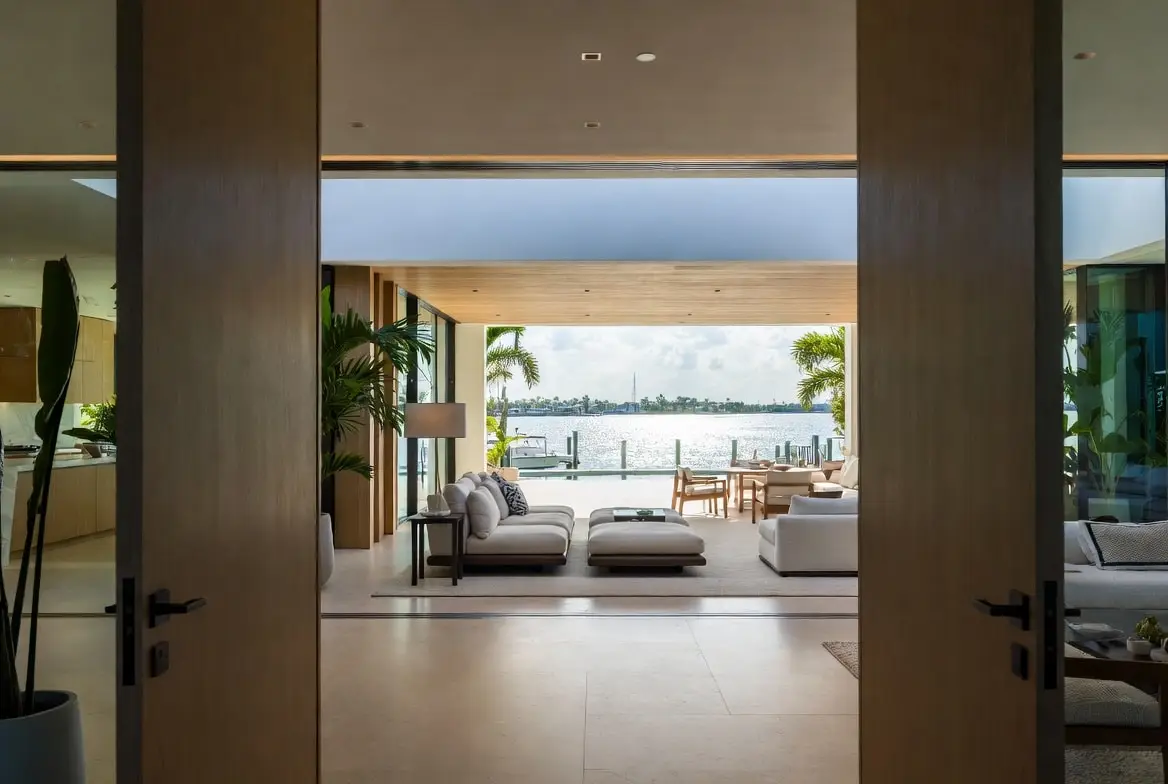
Luxury renovations on the Tarpon River include interior reconfiguration toward the water, a modernized envelope and systems, and waterfront work at the property line. On Tarpon River waterfront homes the projects that hold value get the performance items right before the finish schedule.
Inside, that usually means opening the plan toward the water with protected transitions, kitchen rebuilds with better entertaining zones, spa-grade primary bathrooms with improved ventilation and moisture management, flooring selected for humidity tolerance, and layered lighting with smart-home integration. Our whole-home renovation guide and kitchen remodel ROI guide go deeper.
Outside and at the envelope, impact-rated windows and doors with correctly engineered door packages, roof upgrades aligned to current wind and fastening standards, HVAC zoning with a genuine dehumidification strategy, and corrosion-resistant exterior materials and hardware. Glazing requirements sit in Chapter 24 of the Florida Building Code, and FEMA’s coastal construction guide explains how design elevations are set. See our hurricane-resistant construction guide and corrosion-resistant materials guide.
What is the hidden scope on Tarpon River waterfront homes?
The hidden scope on a Fort Lauderdale waterfront renovation is the seawall, the drainage, and the equipment elevation. On Tarpon River waterfront homes this is the work nobody photographs and everybody pays for, and it is what protects the visible investment.
Start with the seawall. On Tarpon River waterfront homes that means age, movement, cracking, and cap condition; tiebacks and any voids or erosion behind the wall; drainage behind the wall; and cap height relative to intended finished grades. A wall near the end of its life is a substantial scope with its own permitting track, and it belongs in due diligence rather than mid-project, because replacing it later disturbs pools, hardscape, and landscaping that were already built. Our seawall construction and permitting guide, maintenance and cost guide, and costs and ROI analysis cover it.
Then the water on the site. Grading and routing that move water away from the structure without pushing it onto neighbors, deck elevations that do not send runoff back toward openings, and raising and protecting mechanical and electrical equipment. That last item is consistently the highest-value and most-skipped upgrade on a waterfront renovation, because it decides whether a flood event is an inconvenience or a gut job. See smart flood mitigation technologies and how flood zones affect insurance premiums.
How long do Tarpon River renovations take, and what drives cost?
A high-end Tarpon River waterfront renovation often runs 6 to 12 months, and a custom waterfront build often runs 18 to 36 months from design through closeout. On Tarpon River waterfront homes, permitting cycles, marine approvals, and long-lead glazing set the pace rather than construction speed.
The cost drivers worth pricing early: seawall repair or replacement; dock, lift, and marine utility work; impact-rated glazing packages, which are expensive and long-lead; roof replacement or upgrade; mechanical and electrical elevation; corrosion-resistant materials and hardware; drainage and site work; utility upgrades in a mature neighborhood; and the productivity cost of a narrow street with constrained staging. What extends a schedule: late design changes after engineering is complete, incomplete permit submissions, slow finish selections that ripple into ordering, and marine conditions discovered midstream. Our cost to build guide, soft costs breakdown, and guide to avoiding cost overruns break these down, alongside our realistic construction timeline and contract structure comparison.
How do you choose a contractor for Tarpon River waterfront homes?
Look for completed waterfront renovations in Broward County, direct experience with dock and seawall permitting, established marine and engineering relationships, and transparent contract and reporting practices. On Tarpon River waterfront homes, marine permitting experience is the qualification that separates a smooth project from an educational one.
What to ask before you sign. How many waterfront renovations the contractor has completed in this county; who prepares and files the dock and seawall applications, and when; how the contract handles allowances, change orders, and contingency; what the weekly reporting actually delivers; and how concealed work such as waterproofing and flashing is documented before it is covered. Verify any contractor’s license through the Florida DBPR license search, and see our guides to choosing the right luxury builder, the risks of hiring an unqualified builder, and our client stories.
| Constraint | What it means on site | How to plan around it |
|---|---|---|
| Narrow lots | Limited staging and equipment room | Agree a logistics plan before mobilization |
| Restricted access | Tight streets and shared frontages | Schedule deliveries rather than stockpiling |
| Bridge clearance | Low fixed spans on the route out | Set vessel expectations before dock spend |
| Seawall condition | Older walls on many older lots | Inspect before the renovation scope is fixed |
| Flood requirements | Improvement thresholds on major work | Test the numbers before the design is fixed |
| Dock permitting | State and federal review at the water line | Start the marine application early, in parallel |
Which dock and seawall approvals apply on Tarpon River waterfront homes?
Tarpon River waterfront homes sit on a short tidal river between downtown Fort Lauderdale and the New River, and dock permitting there layers city, county, state and sometimes federal review on top of the ordinary renovation permit.
| Approval | Issued by | Triggered by | What it controls |
|---|---|---|---|
| Building permit (dock, lift, seawall) | City building department | Any new dock, lift, pilings or seawall work | Structural design, electrical to the lift, inspections |
| Zoning and waterway setbacks | City planning and marine advisory review | Dock length, side setbacks, mooring of larger vessels | How far the dock may extend and where a vessel may lie relative to neighbors and the channel |
| Environmental resource review | County environmental agency | Work at or below mean high water, new pilings, dredging | Seagrass and manatee protection, turbidity controls, cap elevation minimums |
| State authorization | Florida Department of Environmental Protection | Structures over state-owned submerged land | Exemption, general permit or individual permit, and any sovereignty submerged land lease |
| Federal authorization | U.S. Army Corps of Engineers | Work in navigable waters that falls outside a general permit | Navigation and habitat conditions |
The state side is administered by the Florida Department of Environmental Protection, and the flood zone that governs the house behind the dock is on the FEMA Flood Map Service Center. Our own coverage is in seawall construction and permitting, seawall construction costs and ROI and dock coordination on Sunrise Key.
In what order should a luxury renovation with a dock be run on Tarpon River waterfront homes?
Renovations of Tarpon River waterfront homes that include dock or seawall work need the water side started first, in this order:
- Order an elevation certificate, a structural assessment of the house and a marine engineer’s inspection of the seawall and existing dock.
- Get a structure-only appraisal and price the scope against the 50 percent substantial improvement threshold, as described in retrofitting homes under flood zone regulations.
- Define the vessel program (length, beam, draft, lift capacity) and confirm bridge clearance to the New River and the Intracoastal.
- File the dock and seawall applications with the county and state before the house permit, following expediting CCCL, seawall and flood zone permits.
- Complete construction documents for the house with product approvals attached, then bid on a like-for-like basis using GMP vs cost-plus vs fixed-price contracts.
- Release impact windows, doors and roofing the week the building permit issues.
- Build the seawall and dock first so marine equipment never has to cross finished landscaping, then run the house renovation.
- Close out with inspections, as-built surveys for the environmental permits, warranties and an updated elevation certificate, per quality control, inspections and punch lists.
The whole-home scope that typically accompanies the dock is covered in whole-home luxury renovation in South Florida, and the materials that last on a tidal river in coastal corrosion-resistant materials. The connected waterways are covered in New River waterfront homes and Stranahan River waterfront homes.
Frequently asked questions about Tarpon River waterfront homes
Who has to approve a new dock?
Usually more than one authority. Local building and zoning review applies, shoreline and submerged-lands work falls under Florida DEP, and work affecting navigable water can require Army Corps authorization. Each runs on its own timeline, so start the marine track early.
Can a renovation force me to elevate the house?
It can. If improvement costs approach roughly half the structure’s market value, the project may be treated as a substantial improvement and required to meet current floodplain rules, which can include elevating. Confirm how your scope will be valued before setting the budget.
What limits the size of dock I can build?
Setbacks from property lines and neighbors, width and length limits, water depth and navigation needs, seagrass and manatee protections, and any conflict with channels or turns. Feasibility should be confirmed before the design is finalized.
Can bridge clearance affect my boat?
Yes. The clearance of bridges between your property and open water caps air draft, and it cannot be changed later. Confirm the specific bridges on your route, along with practical depth at the seawall and turning room, before designing the dock.
What causes most dock permitting delays?
Documentation. Incomplete surveys, unclear boundaries, missing seawall assessments, and drawings that are not engineered for the attachments proposed. A complete, consistent submittal package is the single biggest lever on the timeline.
What is the most overlooked item on a waterfront renovation?
Raising and protecting mechanical and electrical equipment. It is unglamorous and rarely photographed, and it consistently determines whether a flood event is an inconvenience or a full gut renovation.
Are Tarpon River waterfront homes a renovation market or a rebuild market?
Both, decided lot by lot. Many Tarpon River waterfront homes are older structures on valuable water, so the choice turns on foundation condition, elevation, and how much of the existing home the new program can reuse. Tarpon River waterfront homes that fight their structure often cost more to renovate than to rebuild.
How walkable are Tarpon River waterfront homes to downtown Fort Lauderdale?
Proximity is the neighborhood’s calling card. Tarpon River waterfront homes sit minutes from the downtown core, which is why Tarpon River waterfront homes attract owners who want water frontage without giving up an urban routine. That demand also keeps renovation activity steady.
What insurance questions come with Tarpon River waterfront homes?
Elevation drives the conversation. Insurers price Tarpon River waterfront homes against flood zone, elevation certificates, and the age of roof and systems, so a renovation that documents those improvements can change the insurance picture. Confirm specifics with your carrier rather than assumptions.
How do you start planning a renovation on the Tarpon River?
Kass Construction renovates and builds luxury waterfront residences across Broward, Palm Beach, and Miami-Dade counties, coordinating the house, the seawall, and the dock as one project rather than three. With four decades in Florida real estate, law and construction and 100+ luxury residences delivered by Mitchell Kass and the firms he has led, and with Mitch Kass serving as both a licensed general contractor, license CGC1529472, and an attorney, contracts, permitting, and risk get unusual attention. To discuss a Tarpon River property, get in touch or call 954-607-4335.
Related waterfront guidance. See our companion guides to Intracoastal Waterway homes and Atlantic Ocean waterfront homes, along with Las Olas, Colee Hammock, and Fort Lauderdale.