Wilton Manors waterfront homes sit along canals and connected river frontage, and that adjacency shapes construction decisions from day one. Even a straightforward interior update can reach into building envelope, elevation, moisture, drainage, or permitting questions that change cost, timeline, and resale.
Key takeaways
- What counts as a waterfront home in Wilton Manors?
A waterfront home in Wilton Manors is typically a property bordering a canal or connected river system, where flood exposure, wind-driven rain, and salt-air durability shape design and construction. - Where do waterfront renovations get complicated?
In Wilton Manors, flood zone rules and insurance underwriting can influence what you build, how you build it, and how long it takes. - Which renovation priorities actually move the needle?
On Wilton Manors waterfront homes, envelope, systems, and water management come first, finishes second. On Wilton Manors waterfront homes the work that protects value is impact-rated openings, roof assemblies matched to current standards, real humidity control, and drainage that moves water away from the structure. - When should you renovate rather than rebuild?
In Wilton Manors, renovate when the structure is sound, the elevation already works, and the systems can be modernized without structural rework.
Most owners start with the same intent: modernize the house, improve indoor-outdoor living, and protect the investment. The complication is that waterfront property punishes shortcuts. Materials corrode faster, hidden moisture is more common, site access is tighter, and flood and insurance requirements quietly steer design choices. This guide covers what actually drives scope here, where projects get complicated, what owner’s representation adds, and the permitting, timeline, and budget realities to plan around.
What counts as a waterfront home in Wilton Manors?
A waterfront home in Wilton Manors is typically a property bordering a canal or connected river system, where flood exposure, wind-driven rain, and salt-air durability shape design and construction. On Wilton Manors waterfront homes that adjacency influences drainage, elevations, exterior materials, and how improvements get permitted and insured.
The conditions that change the work. Seawall condition, cap, coping, and water-side settlement affect yard work, drainage planning, and long-term maintenance. Dock, lift, or waterfront platform work brings specialized load paths and a separate permitting track. Salt air shows up early on fasteners, railings, lighting, pool equipment, and HVAC components even on interior canals. Grading, roof runoff, surface drains, and hardscape detailing matter more when the yard meets a waterway. And tighter lots limit staging and deliveries, which shows up in the schedule rather than the drawings.
Why this matters on a renovation specifically. A rebuild lets you design around these conditions from a clean sheet. A renovation has to work with what is already there, which is why the existing seawall, the existing drainage, and the existing elevation deserve inspection before scope is set rather than after demolition starts. Our guides to seawall construction and permitting, seawall maintenance and costs, and corrosion-resistant materials cover these conditions in depth.
Where do waterfront renovations get complicated?
In Wilton Manors, flood zone rules and insurance underwriting can influence what you build, how you build it, and how long it takes. On Wilton Manors waterfront homes the safest approach is confirming flood requirements early, then aligning design, engineering, and permitting so nothing has to be redesigned midstream.
The specific pressure points. Elevation certificates affect insurance rating and also tell you where sensitive systems should live. Flood vent and enclosure rules matter if there are lower-level enclosed areas. Mechanical and electrical placement, meaning raising equipment, protecting it, and routing it safely, changes remodel plans more often than owners expect. An elevation certificate documents what was actually built and at what height, and FEMA’s Map Service Center is where the mapped designation gets confirmed. See our guides to FEMA elevation certificates, AE, VE, and X flood zones, and how flood zones affect insurance premiums.
The threshold that decides projects. Under National Flood Insurance Program rules, once improvement costs reach roughly half the structure’s market value, the building is generally treated as substantially improved and must be brought into current floodplain compliance, which can include elevating it. That single rule is why a large renovation sometimes becomes a rebuild. It is applied locally, so confirm how your scope will be valued before you commit to it. Our flood-zone retrofitting guide covers the practical side.
Which renovation priorities actually move the needle?
On Wilton Manors waterfront homes, envelope, systems, and water management come first, finishes second. On Wilton Manors waterfront homes the work that protects value is impact-rated openings, roof assemblies matched to current standards, real humidity control, and drainage that moves water away from the structure.
Start with the envelope and the mechanical systems. Impact-rated windows and doors with correctly engineered door packages, roof upgrades aligned to current wind and fastening standards, HVAC zoning with improved returns, and a genuine dehumidification strategy rather than an oversized air conditioner. Insulation and air sealing reduce moisture intrusion, which protects both finishes and air quality. The EPA’s guidance on mold, moisture, and your home is a useful reference on why humidity control is a structural concern here, not a comfort preference. Glazing requirements sit in Chapter 24 of the Florida Building Code.
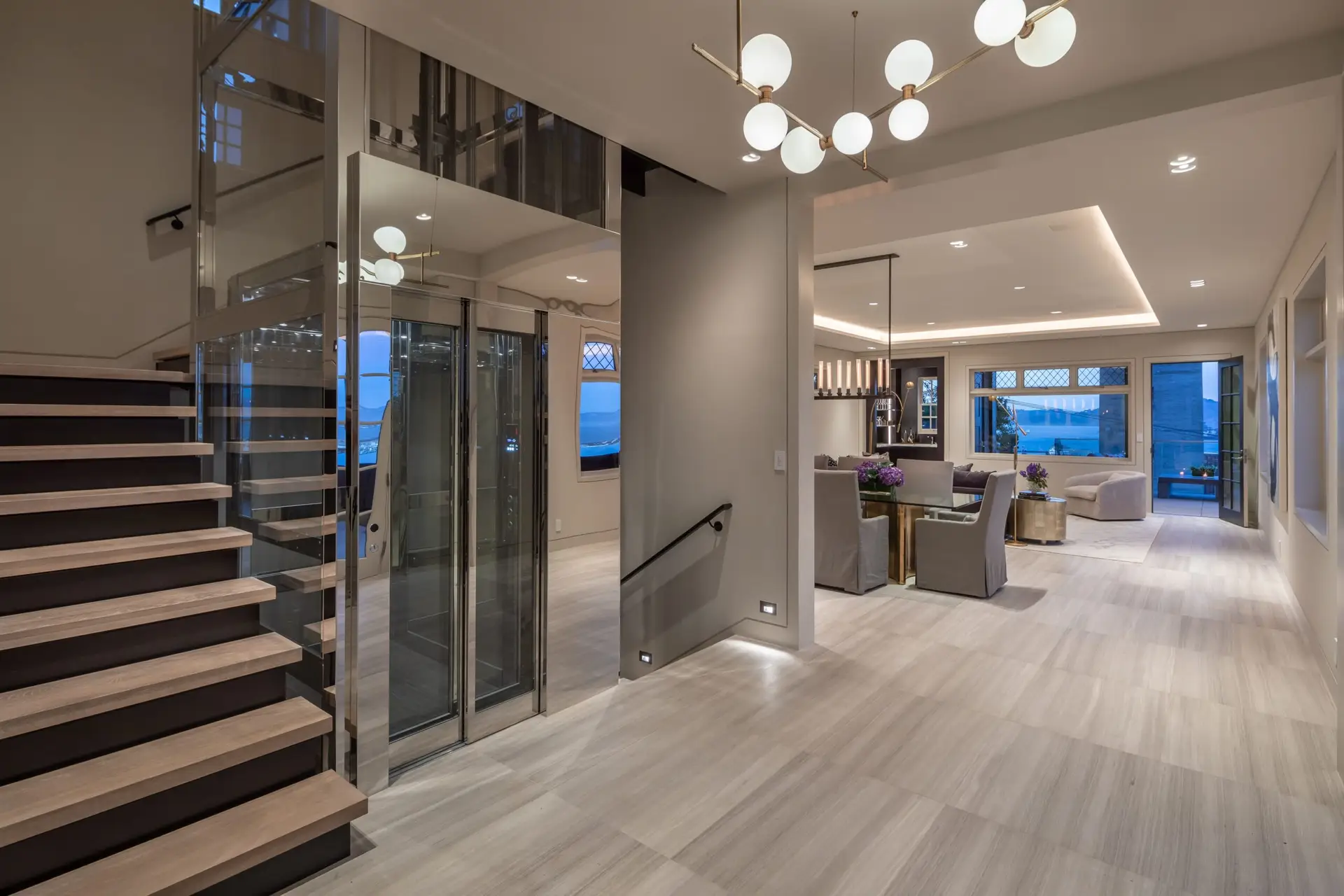
Then the living space. Interior reconfiguration to open the plan toward the water, kitchen rebuilds with better entertaining zones, spa-grade primary bathrooms with improved ventilation, flooring selected for humidity tolerance, and layered lighting with smart-home integration. Elevating mechanical and electrical equipment is frequently the highest-value item on the list and the one most often skipped. Our whole-home renovation guide, kitchen remodel ROI guide, and hurricane-resistant construction guide go deeper, and smart flood mitigation technologies covers monitoring and automatic shutoff for owners who travel.
When should you renovate rather than rebuild?
In Wilton Manors, renovate when the structure is sound, the elevation already works, and the systems can be modernized without structural rework. Rebuild when the finished floor sits too low or the layout cannot deliver what you want. On Wilton Manors waterfront homes the elevation question usually decides it.
What the comparison turns on: existing elevation relative to current requirements; roof age and condition, since an assembly near end of life reshapes the plan; the state of plumbing, electrical, and HVAC, because older systems turn a cosmetic remodel into a full systems project; whether setbacks and massing favor the existing footprint; seawall condition, which can add a major scope on its own; and permit history, because unpermitted work by prior owners complicates future approvals. Compare the paths in our teardown versus renovation guide and financial and timeline comparison.

What is owner’s representation, and when does it matter?
Owner’s representation on a Wilton Manors renovation is professional management of the owner’s side of a project: decisions, documentation, coordination, and standards. On Wilton Manors waterfront homes it matters most when the owner travels, works long hours, lives out of state, or simply does not want to arbitrate construction questions weekly.
What the role covers day to day. Holding the decision calendar so selections do not slip and stall procurement. Reviewing change orders before they become accomplished facts. Verifying that documentation is actually being produced rather than promised. Checking that concealed work is photographed before it is covered. And giving the owner one accountable point of contact across architect, engineers, and trades instead of a group thread. See our guides to choosing the right owner’s representative, owner’s rep versus in-house builder teams, and managing a build remotely.
Where it pays for itself. Usually in three places: catching a scope or specification drift early, keeping the schedule from absorbing quiet delays, and making sure the closeout package actually arrives. On Wilton Manors waterfront homes the documentation matters more than usual, because so much of the important work, meaning waterproofing, flashing, and mechanical elevation, disappears permanently behind finishes. Our contract structure comparison explains how the agreement itself allocates that risk.
What permitting applies to Wilton Manors waterfront homes?
Wilton Manors waterfront homes go through local building and zoning review, floodplain compliance with elevation documentation, wind-load and product approval requirements, and separate marine approvals for seawall, dock, or lift work. On Wilton Manors waterfront homes the marine track usually runs on its own longer timeline.
What the submittal generally includes: architectural, structural, and mechanical drawings; product approvals and notices of acceptance for impact-rated openings and roofing; elevation documentation where applicable; engineering letters; and as-builts at closeout. Shoreline and submerged-lands work falls under the Florida DEP submerged lands program. Verify any builder’s license through the Florida DBPR license search.
What actually causes delay: incomplete submittals that force re-review, missing product approvals, late finish selections that force substitutions, and poor inspection readiness. Our guides to why permits get delayed, permit expediting, and permitting timelines cover the workflow.
How long do Wilton Manors waterfront homes renovations take?
A high-end Wilton Manors waterfront renovation often runs 6 to 12 months, and a custom waterfront build often runs 18 to 36 months from design through closeout, depending on scope, approvals, and procurement. On Wilton Manors waterfront homes, permitting cycles and long-lead glazing are usually the pacing items.
What extends a schedule: late design changes after engineering is complete, incomplete permit submissions, slow finish selections that ripple into ordering, long-lead items identified too late, and seawall or marine conditions discovered midstream. What protects it: making selections early, locking scope before demolition, ordering long-lead items during preconstruction, and holding a consistent weekly decision cadence. Milestone-based reporting is what surfaces the silent delays that otherwise stack up unnoticed. See our realistic construction timeline and how long a custom build takes.
What drives cost, and how should you compare bids?
Cost on a Wilton Manors waterfront renovation is driven by envelope specification, mechanical scope, waterfront edge work, and site access. On Wilton Manors waterfront homes the most useful bid comparison is not the bottom-line number but whether each bid carries the same scope, the same allowances, and the same contingency.
The cost drivers worth pricing early: impact-rated glazing packages, which are expensive and long-lead; roof replacement or upgrade; seawall repair, which can be a substantial scope on its own; dock and lift work; mechanical and electrical elevation; corrosion-resistant exterior materials and hardware; drainage and site work; and the productivity cost of a tight lot with constrained staging.
When comparing bids on Wilton Manors waterfront homes, look for identical allowance levels, a clear contingency, named products rather than generic descriptions, and an explicit statement of what is excluded. A low bid with vague allowances is usually the most expensive one. Our cost to build guide, soft costs breakdown, guide to avoiding cost overruns, and the risks of hiring an unqualified builder cover this in detail.
How do you plan for storm season during a renovation?
Plan a Wilton Manors renovation for storm season by treating the envelope as the first priority and the schedule as weather-aware. On Wilton Manors waterfront homes a renovation that opens the roof or the openings needs a defined dry-in plan and a contingency for the months when weather is most likely to interrupt work.
What that looks like in practice: sequencing envelope work so the structure is dried in before the highest-risk stretch, keeping temporary protection materials on site rather than ordering them when a storm is named, protecting stored finishes and equipment, and agreeing in advance who secures the site and on what trigger. NOAA’s hurricane resource collection is a useful primer on the seasonal pattern, and FEMA’s coastal construction guide covers how design requirements get set.
| Item | What to confirm | Why it changes the price |
|---|---|---|
| Scope exhibit | Drawings by number, with exclusions stated | Anything unstated becomes a change order |
| Allowances | Tested against three selections you would accept | Low allowances understate the contract sum |
| Permit history | What was built with approval | Legalizing prior work is added scope |
| Structure | What can be removed and what must stay | Beams and posts are rarely in the first estimate |
| Systems | Age and capacity of mechanical and electrical | Replacement is usual, not optional |
| Payment terms | Draws against verified progress, with retainage | Front-loaded payment removes your leverage |
Which renovation priorities matter most on Wilton Manors waterfront homes?
Wilton Manors waterfront homes sit on the Middle River and its canals, and most were built between the 1950s and 1970s, so a high-end renovation has to rank structure, water and storm protection ahead of finishes.
| Priority | Why it comes first on the river | Typical scope |
|---|---|---|
| Seawall and cap | A failing wall undermines the yard, pool and sometimes the slab; it also sets the finished grade for everything behind it | Engineer’s inspection, cap raise or full replacement, new tie-backs |
| Roof, openings and connections | The High-Velocity Hurricane Zone code governs any roof or window replacement and drives insurance | Impact windows and doors, roof-to-wall strapping, secondary water barrier |
| Flood-related work | Improvements over 50 percent of value trigger full elevation compliance | Elevation certificate, substantial improvement tracking, flood vents or mechanical relocation |
| Plumbing, electrical and mechanical | Cast iron drains, aluminum wiring and undersized service are common in homes of this age | Re-pipe, panel and service upgrade, HVAC relocated above flood elevation |
| Kitchen, baths and outdoor living | Highest resale visibility, but only worth doing once the items above are settled | Whole-home finish package, pool and terrace tied to the seawall level |
The substantial improvement threshold is explained by FEMA, and the wind provisions come from the Florida Building Code. Our guides to seawall construction and permitting, modernizing an older waterfront estate and kitchen remodel ROI in luxury homes expand on the rows above.
How should a renovation of Wilton Manors waterfront homes be sequenced?
High-end renovations on Wilton Manors waterfront homes stay on budget when the work is ordered from the water inward:
- Order an elevation certificate, a structural assessment and a seawall inspection, so the flood math and the hidden conditions are known before design; see FEMA elevation certificates.
- Decide whether the project will stay under, or deliberately exceed, the 50 percent substantial improvement threshold, using a feasibility study for tear-down versus renovate.
- Engage an owner’s representative if the owner will not be on site or the scope is large; the selection criteria are in how to choose the right owner’s rep.
- File the seawall or dock application first, since county environmental review runs longest.
- Produce construction documents that replace allowances with specified products, then bid them on a like-for-like basis, as described in GMP vs cost-plus vs fixed-price contracts.
- Order impact windows, doors and roofing the week the building permit issues.
- Demolish selectively to expose structure early, and price any concrete repair while the design can still respond.
- Close out with inspections, warranties and an updated elevation certificate for the insurance file, following quality control, inspections and punch lists.
Materials that survive brackish air are covered in coastal corrosion-resistant materials, and the way cost gets away from owners in luxury construction cost overruns. The same river conditions apply next door; compare Middle River waterfront homes and Oakland Park waterfront homes.
Frequently asked questions about Wilton Manors waterfront homes
Can a simple interior remodel really trigger flood requirements?
It can, depending on valuation. If improvement costs approach roughly half the structure’s market value, the project may be treated as a substantial improvement and required to meet current floodplain rules. Confirm how your scope will be assessed before setting the budget.
Does an elevation certificate help even without a rebuild?
Yes. It documents the structure’s elevation relative to the base flood elevation, is used in insurance rating, and is routinely requested by buyers and lenders. It also tells you where mechanical and electrical equipment should ideally be placed.
Should the seawall be inspected before a renovation?
Yes, during due diligence rather than mid-project. Seawall repair can be a substantial scope with its own permitting track, and discovering it after a renovation budget is committed is one of the more common ways waterfront projects go over.
What is the most overlooked upgrade on a waterfront renovation?
Raising and protecting mechanical and electrical equipment. It is unglamorous, rarely photographed, and consistently the item that determines whether a flood event is an inconvenience or a gut renovation.
Do I need an owner’s representative if I already have a good builder?
Not necessarily. The role matters most when you cannot be present regularly, when the project is large enough that decisions arrive faster than you can process them, or when you want documentation and standards enforced independently.
How should I compare two renovation bids?
Match the scope before comparing the number. Check that allowances, contingency, named products, and exclusions are equivalent. A bid that is lower because its allowances are lower is not actually lower, it just defers the cost.
Why are renovations so common among Wilton Manors waterfront homes?
The housing stock explains it. Many Wilton Manors waterfront homes were built decades ago on excellent lots, so owners modernize rather than move. Renovating Wilton Manors waterfront homes keeps the location and the water frontage while bringing structure, systems, and finishes up to current expectations.
Do Wilton Manors waterfront homes face the same flood rules as oceanfront properties?
The framework is the same even though the water is calmer. Wilton Manors waterfront homes are mapped into flood zones that govern elevation and floodproofing requirements for substantial improvements, so budgets for Wilton Manors waterfront homes should be tested against those thresholds early.
How long does a major renovation of Wilton Manors waterfront homes take?
High-end waterfront renovation often runs 6 to 12 months depending on scope, complexity, approvals, and procurement. Structural changes, additions, and work near the seawall sit at the longer end, and honest scheduling up front beats optimistic dates that slip later.
What adds the most value to Wilton Manors waterfront homes?
Buyers pay for the water working properly. Sound seawalls, usable dockage, opened sight lines to the canal, and outdoor living that connects to the frontage tend to return more than interior finish upgrades alone, because they are the reasons Wilton Manors waterfront homes command their premium.
Is upgrading the dock worth it for Wilton Manors waterfront homes?
Usually, when the water is the point. Dockage sized and wired for a real vessel extends the usable frontage of Wilton Manors waterfront homes, and buyers read a modern dock as proof the waterfront actually works. Coordinate dock work with any seawall repairs so the marine contractor mobilizes once instead of twice.
How do you start a renovation on Wilton Manors waterfront homes?
Kass Construction renovates and builds luxury waterfront residences across Broward, Palm Beach, and Miami-Dade counties, and also serves as owner’s representative for owners who need decisions managed and standards protected. With four decades in Florida real estate, law and construction and 100+ luxury residences delivered by Mitchell Kass and the firms he has led, and with Mitch Kass serving as both a licensed general contractor, license CGC1529472, and an attorney, contracts and risk are handled with unusual attention. To discuss a property in Wilton Manors, get in touch or call 954-607-4335.
Nearby waterfront markets. If you are comparing locations, see our guides to Poinsettia Heights, Lake Ridge, Imperial Point, Fort Lauderdale, and Victoria Park.